Artwork
Et parlant a sa portière ainsi déclarée...
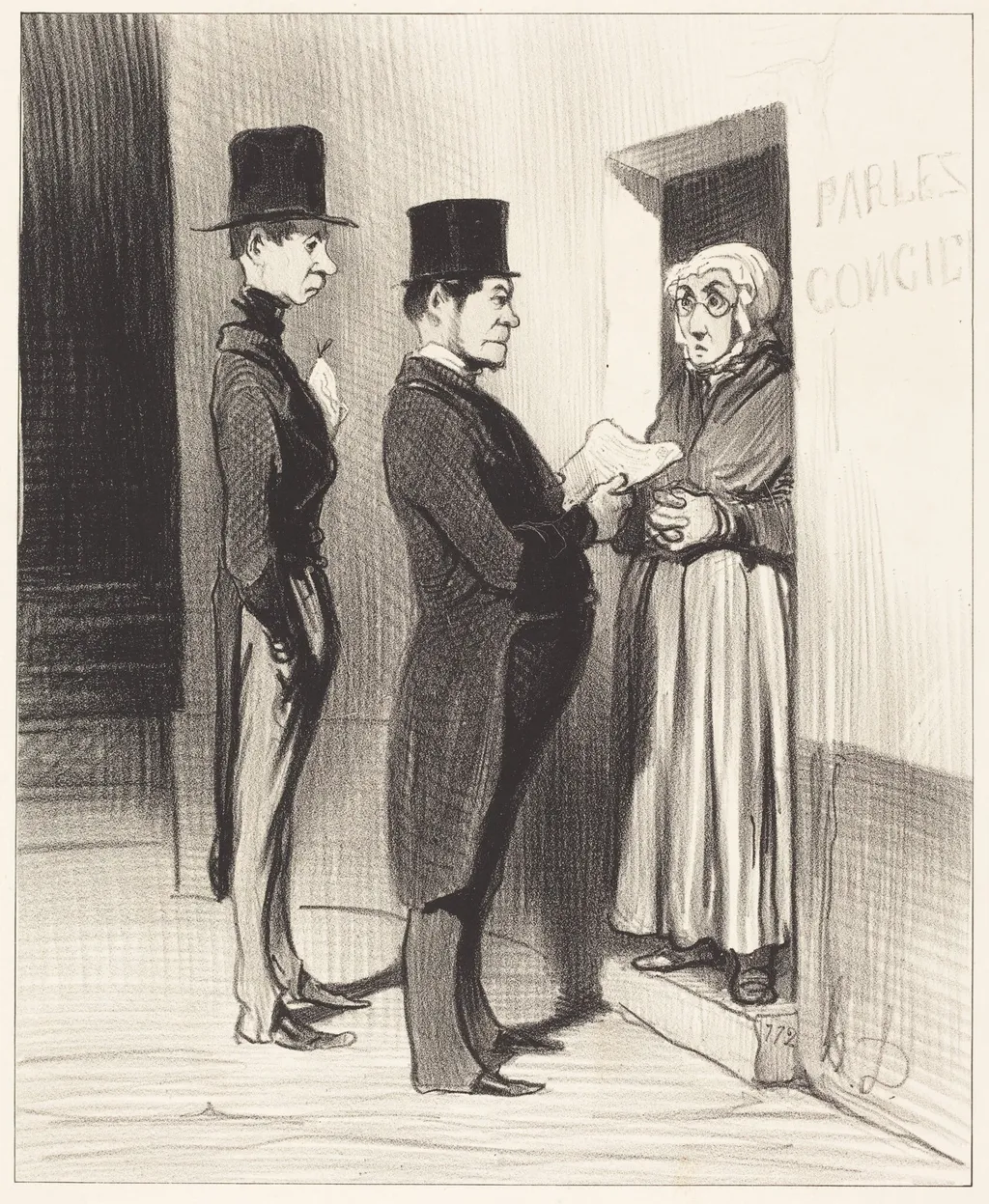
Et parlant a sa portière ainsi déclarée... is an ink print by the Romanticist artist Honoré Daumier. It dates from 1845 and is held in the collection of the National Gallery of Art. Et parlant a sa portière ainsi déclarée.
About this work
Overview
Et parlant a sa portière ainsi déclarée... is a lithograph created by Honoré Daumier in 1845, exemplifying his satirical approach to social and political commentary.
Subject & Meaning
The print depicts a scene of three figures in a dimly lit hallway: two solemn men in tall hats and a woman in a bonnet, handing them a paper. The specifics of the interaction are left ambiguous, but the overall tone suggests a commentary on the social dynamics of the time, potentially alluding to the political and class tensions Daumier often critiqued.
Technique & Style
Characterized by quick, sketchy lines, the lithograph showcases Daumier's expressive use of lithography. The dark, high-contrast lighting emphasizes the figures against a plain background, drawing attention to their interactions and expressions.
History & Provenance
Produced during a period of political upheaval in France, this 1845 work reflects Daumier's republican democratic sympathies. Originally published in a satirical journal like *La Caricature* or *Le Charivari*, where Daumier was a frequent contributor, the exact provenance of this specific print is not detailed here.
Context
This lithograph is part of Daumier's broader body of work critiquing the monarchy, aristocracy, and clergy. It captures the political and social anxieties of mid-19th century France, where such satirical works played a significant role in public discourse.
Legacy
As with much of Daumier's satirical output, *Et parlant a sa portière ainsi déclarée...* contributes to his legacy as a keen observer and critic of French society during the 19th century, influencing subsequent generations of artists and caricaturists.
Artist & collection
Artist
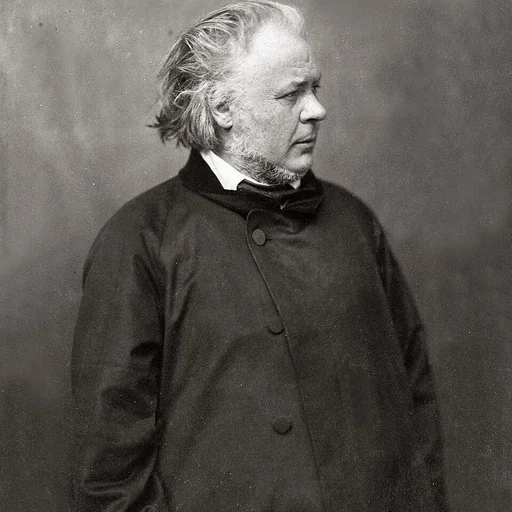
Honoré-Victorin Daumier was a French painter, sculptor, and printmaker, whose many works offer commentary on the social and political life in France, from the Revolution of 1830 to the fall of the Second French Empire in 1870.

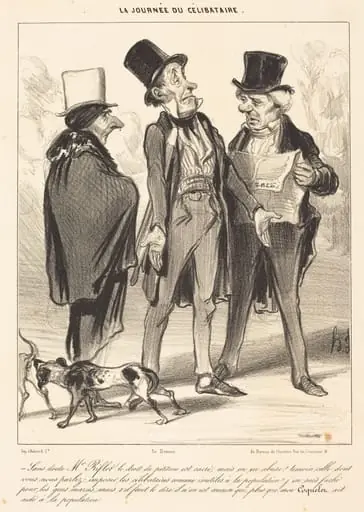 Sans doute M. Riflot le droit...
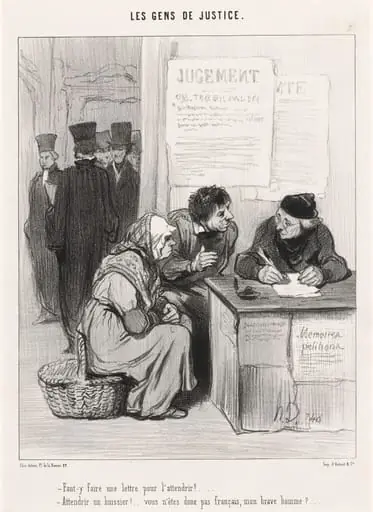 Faut-y faire une lettre pour l'attendrir?
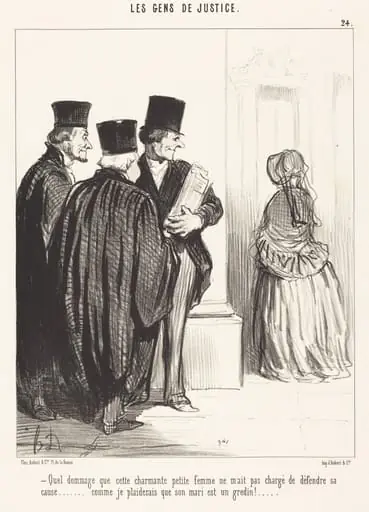 Quel dommage que cette charmante... femme...
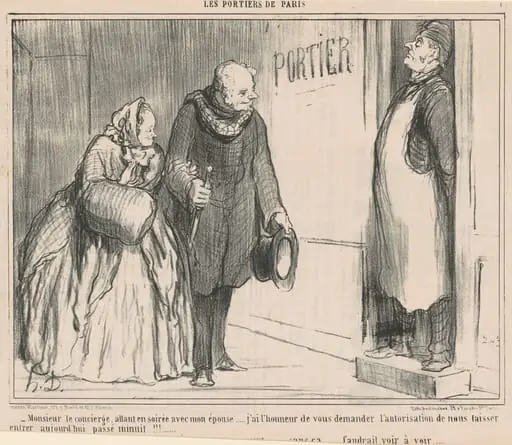 Monsieur le concierge, allant en soirée
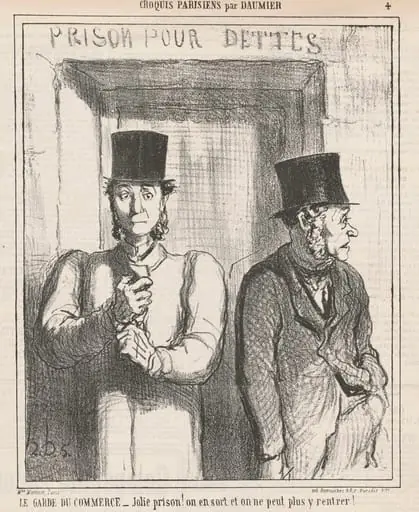 Le garde du commerce
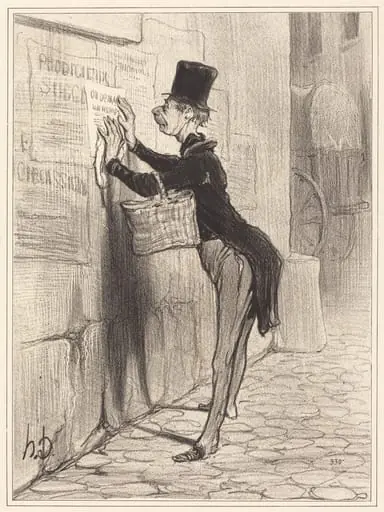 Le Placeur
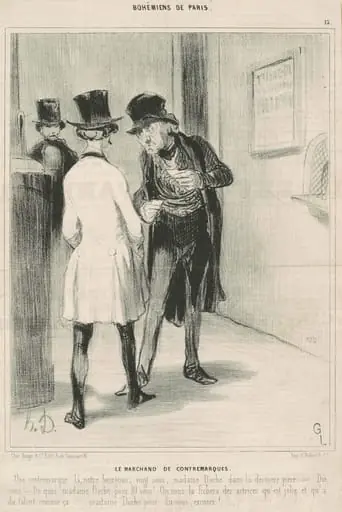 Le marchand de contremarques
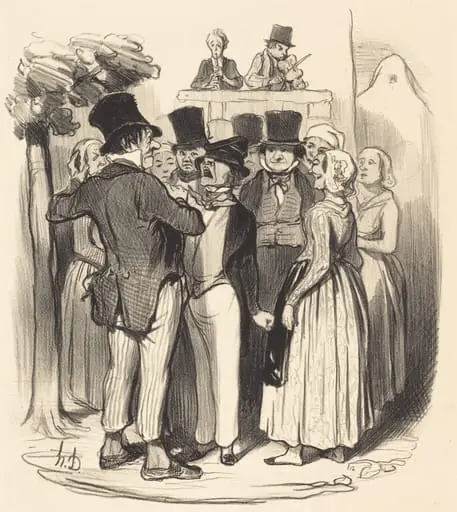 Ah! Gringalet d'Paris... tu viendras faire danser...
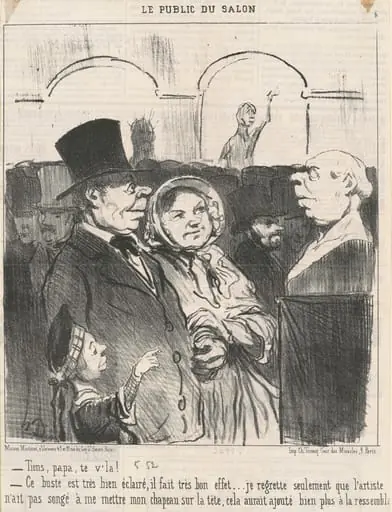 Tiens, papa, te v'la! ...
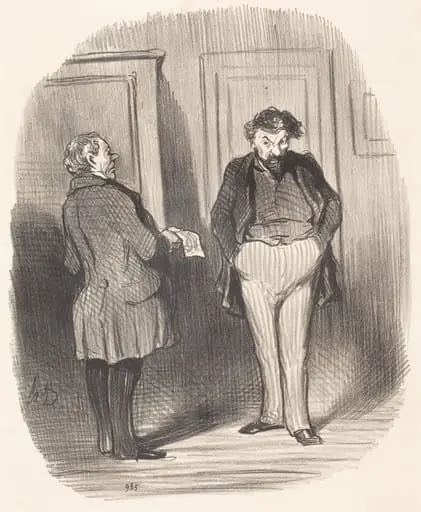 Pourriez-vous me dire...? J'ai la grippe!...