Artwork
Pourriez-vous me dire...? J'ai la grippe!...
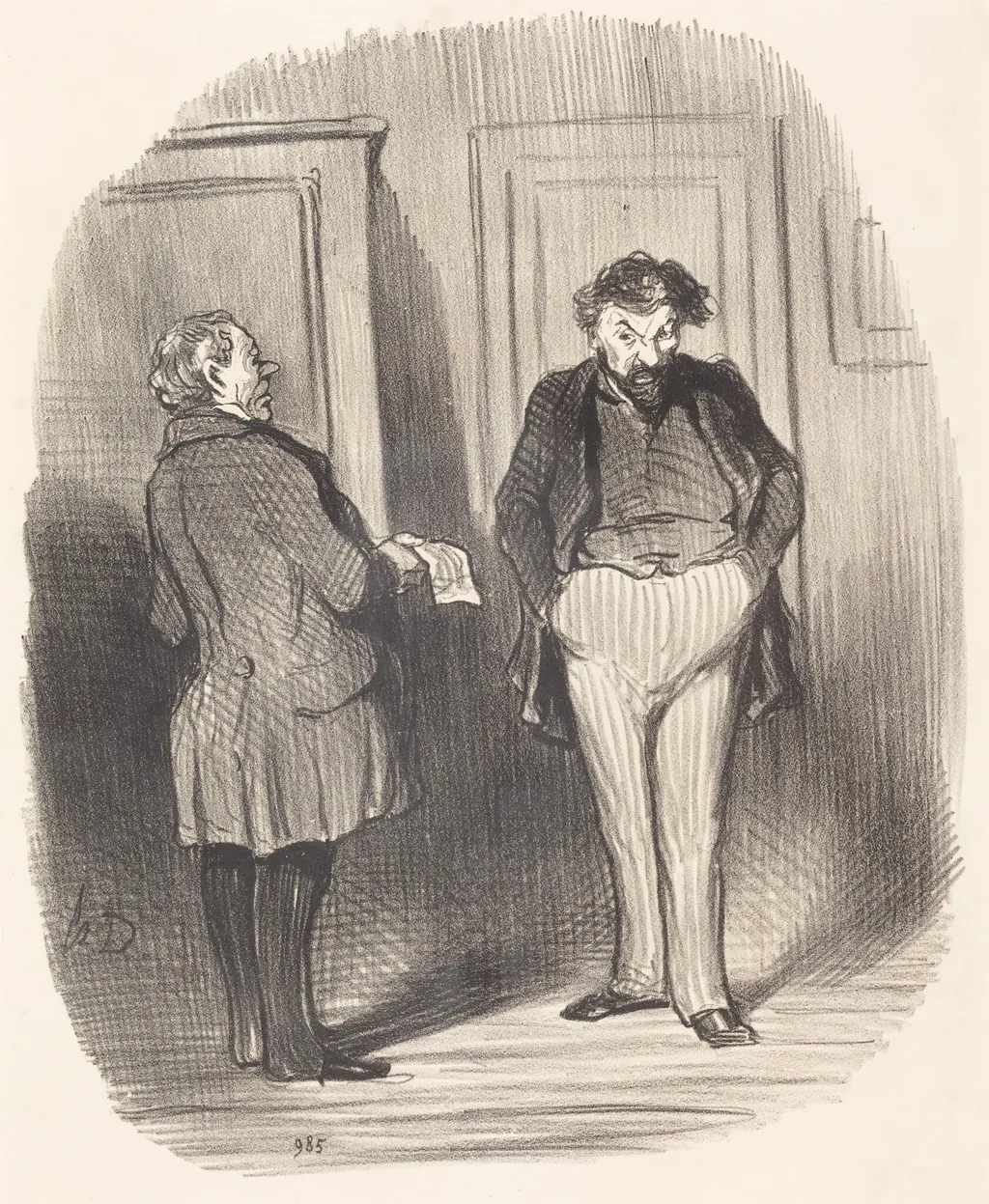
Pourriez-vous me dire...? J'ai la grippe!... is an ink print by the Impressionist artist Honoré Daumier. It dates from 1858 and is held in the collection of the National Gallery of Art.
About this work
Overview
Executed in the lithographic technique, it reflects his long-standing engagement with everyday French life through print media.
Created in 1858, this lithograph by Honoré Daumier captures a quiet, unguarded moment of domestic discomfort. Executed in the lithographic technique, it reflects his long-standing engagement with everyday French life through print media. Unlike his more overt political caricatures, this piece focuses on interpersonal tension in a private setting, revealing his sensitivity to human behavior beyond satire.
Subject & Meaning
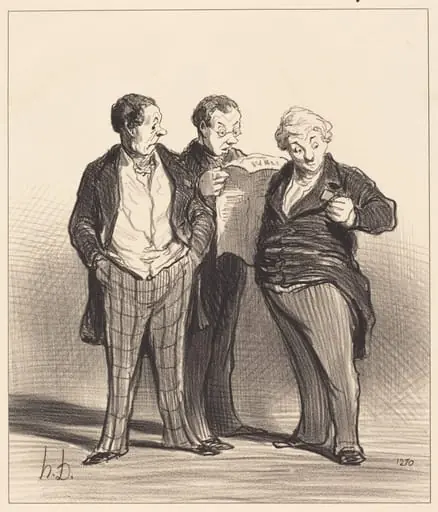
Two men stand in a dim hallway: one, visibly unwell, offers a handkerchief, while the other, clutching his abdomen, responds with visible irritation. The scene suggests an awkward exchange between a sick man seeking sympathy and a weary companion unable to offer comfort. Daumier avoids melodrama, instead highlighting the subtle friction of shared domestic space, where illness disrupts routine and patience.
Technique & Style
Daumier drew directly onto a limestone slab, exploiting lithography’s capacity for spontaneous, fluid line work. The composition relies on loose, expressive strokes and tonal contrasts to define form and mood. Shadows dominate the space, emphasizing the cramped hallway and the figures’ isolation. His economy of detail—suggestive rather than precise—enhances the immediacy of the moment.
History & Provenance
The print was produced during Daumier’s prolific period contributing to the Parisian satirical press, particularly *Le Charivari*. Though not published in the magazine, it aligns with his broader output of observational lithographs from the 1850s. Its survival reflects its status as a personal study, preserved among his private works rather than distributed as public commentary.
Context
In mid-19th century France, urban living conditions often intensified minor ailments into social burdens. Daumier’s focus on domestic friction mirrors broader societal shifts: rising middle-class norms, the erosion of traditional hierarchies, and the quiet stresses of urban life. His work captures these tensions without overt political messaging, grounding observation in the mundane.
Legacy
This lithograph exemplifies Daumier’s shift from overt political satire toward nuanced human portraiture. It influenced later realist and modernist artists who valued psychological depth over narrative spectacle. Its quiet power lies in its restraint—offering no resolution, only a fleeting, relatable moment of human vulnerability and irritation.
Artist & collection

Artist
Honoré-Victorin Daumier was a French painter, sculptor, and printmaker, whose many works offer commentary on the social and political life in France, from the Revolution of 1830 to the fall of the Second French Empire in 1870.









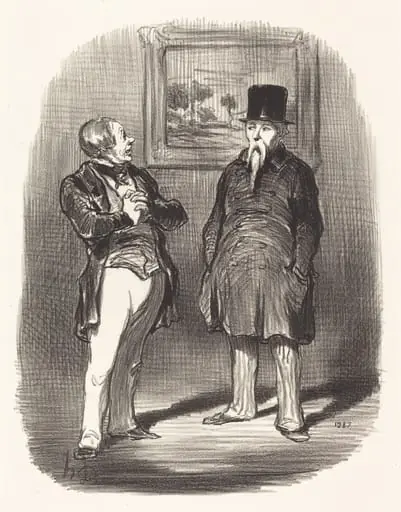 Tiens... je ne te reconnaissais pas...
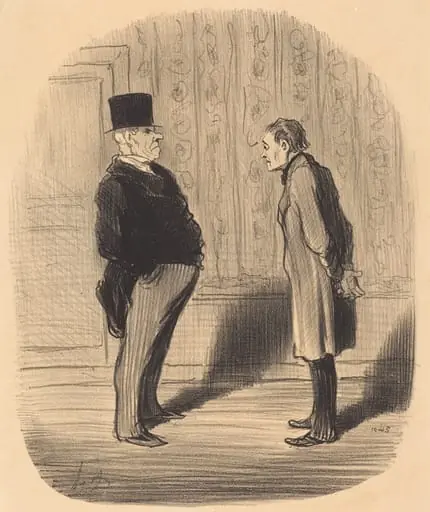 Eh! bien monsieur et mes trois termes...
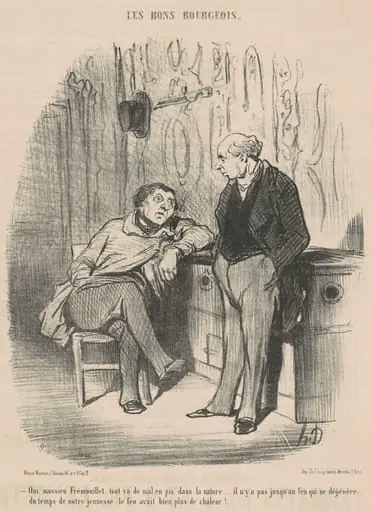 Oui, Mossieu Fremouillet, tout va de mal en pis ...
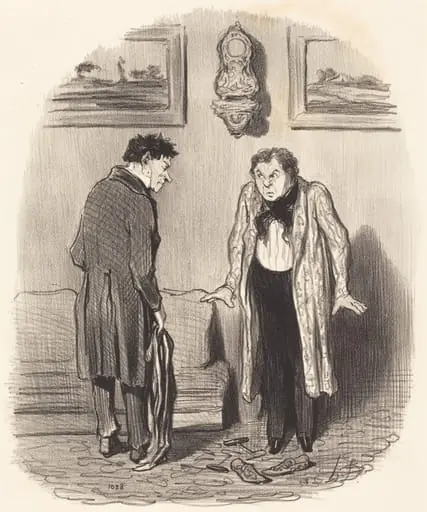 Mais quand je vous dis que je ne peux pas remuer les pieds...
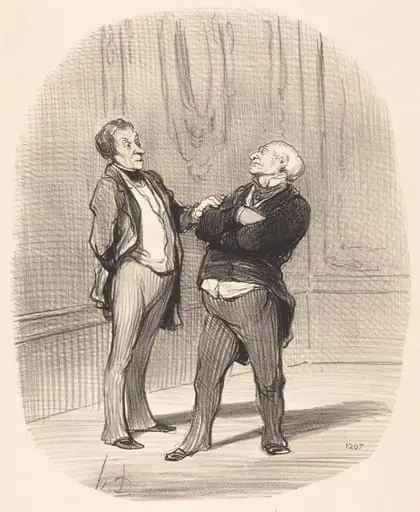 Il y a la guerre... les loyers vont... diminuer...
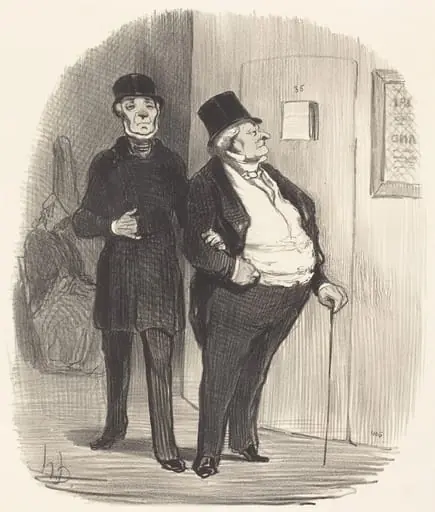 Un Jour de représentation a bénéfice...
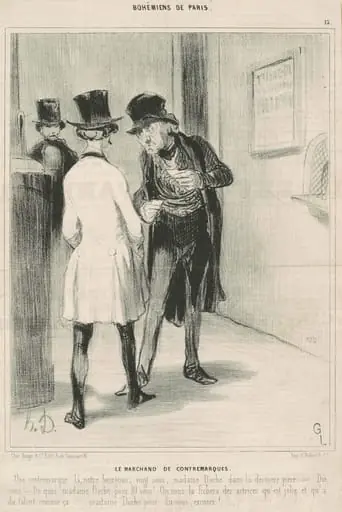 Le marchand de contremarques
 L'Interdiction du port des décorations
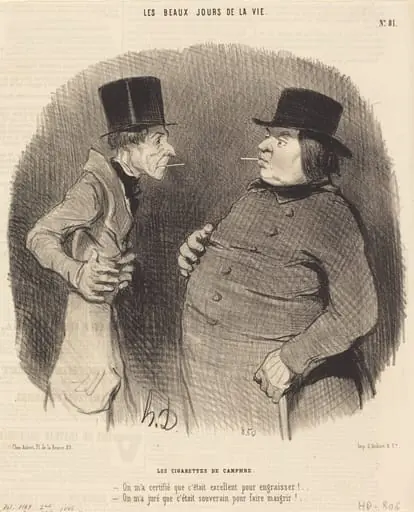 Les Cigarettes de camphre