Artwork
Faut-y faire une lettre pour l'attendrir?
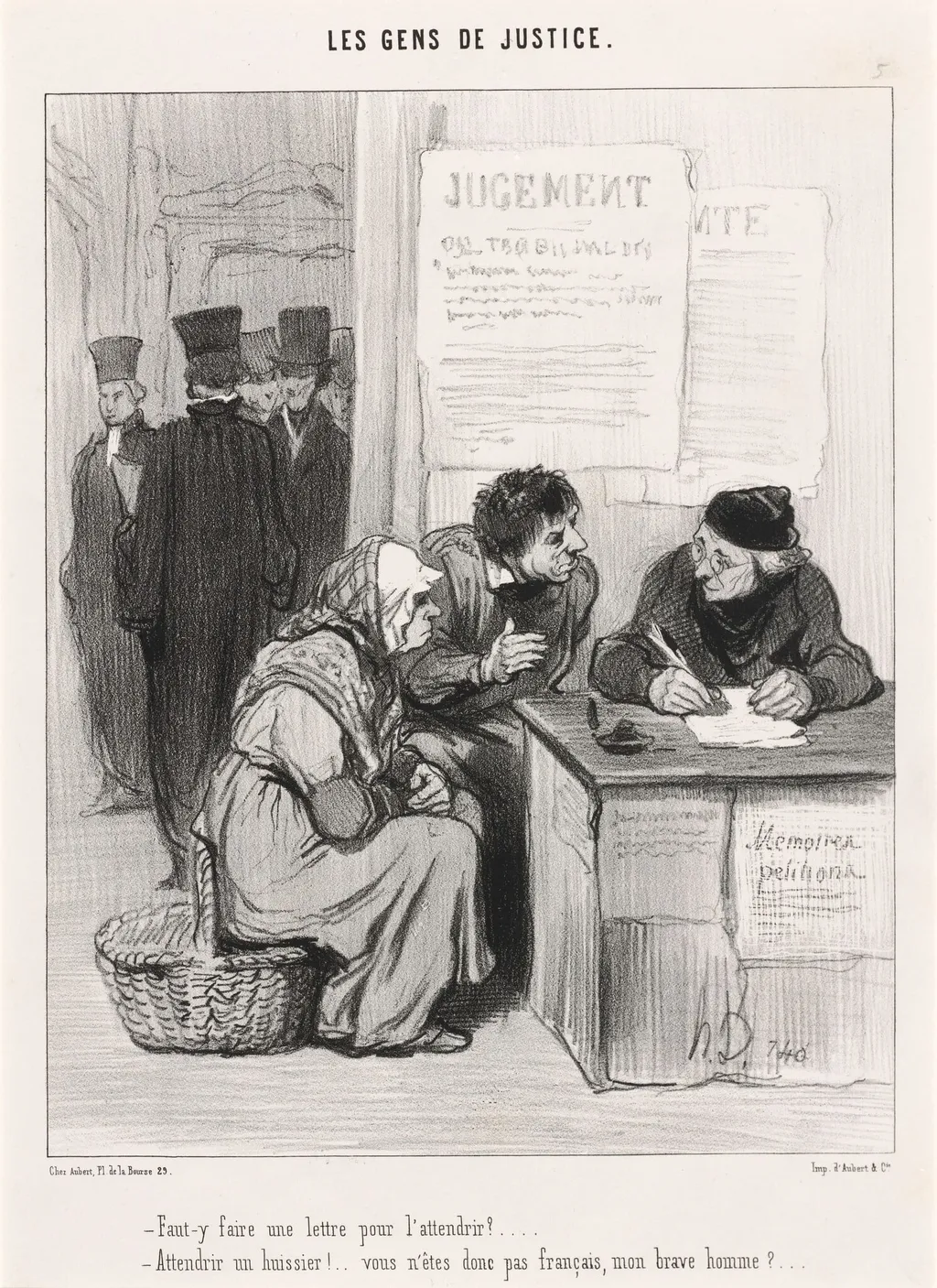
Faut-y faire une lettre pour l'attendrir? is an ink print by the Romanticist artist Honoré Daumier. It dates from 1845 and is held in the collection of the National Gallery of Art.
About this work
Overview
As part of his prolific output for satirical journals, Daumier used the medium to observe everyday institutions with critical clarity.
Created in 1845, this lithograph by Honoré Daumier captures a moment in a French courtroom with quiet intensity. As part of his prolific output for satirical journals, Daumier used the medium to observe everyday institutions with critical clarity. The image is neither grand nor heroic, but intimate and grounded, revealing the bureaucratic machinery of justice through ordinary figures and a single, pointed question.
Subject & Meaning
The scene depicts a woman pleading for leniency in a modest courtroom, surrounded by officials and a clerk. The title—whether to write a letter to soften the judge—hints at the informal, often arbitrary nature of legal appeals. Daumier underscores the vulnerability of the powerless, suggesting that justice may hinge not on law but on personal appeals and social connections, a subtle critique of systemic inequality.
Technique & Style
Daumier employed lithography to achieve rapid, expressive lines with tonal variation. His sketch-like rendering emphasizes gesture over detail: slumped shoulders, hunched postures, and sparse background elements convey atmosphere without ornament. The rough walls and minimal furnishings focus attention on the figures’ interactions, while the stark contrast between the woman’s humility and the officials’ detachment heightens the emotional tension.
History & Provenance
Produced during the July Monarchy, the print likely appeared in *Le Charivari*, where Daumier regularly published political and social satire. Though the original publication context is unrecorded, the work survives as part of a broader body of lithographs that led to Daumier’s imprisonment in 1832 for caricaturing King Louis-Philippe. Its endurance reflects its resonance as a document of judicial culture under political repression.
Context
In mid-19th-century France, legal proceedings were often influenced by personal networks and written petitions, especially among the lower classes. Daumier’s depiction aligns with contemporary critiques of a justice system that favored the connected. The presence of officials in tall hats and the word 'Jugement' on the wall signals institutional authority, yet the scene’s cramped, unadorned space reveals its fragility and human cost.
Legacy
This lithograph exemplifies Daumier’s enduring influence on social realism in graphic art. His ability to distill complex societal tensions into single, unembellished moments inspired later artists and cartoonists. Though not widely exhibited in his lifetime, such works became foundational to modern visual commentary, offering a quiet but persistent record of institutional power and its discontents.
Own this work as a print
Artist & collection
Artist
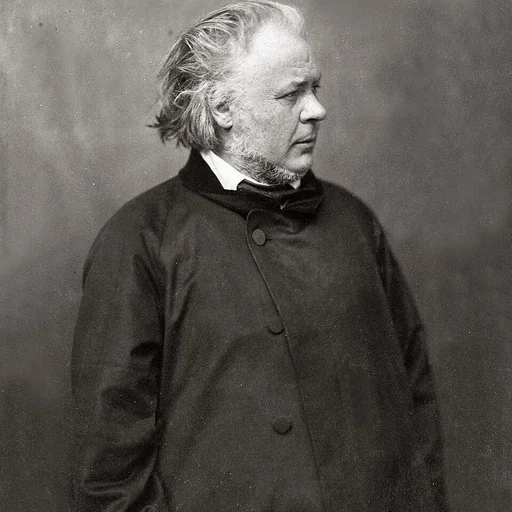
Honoré-Victorin Daumier was a French painter, sculptor, and printmaker, whose many works offer commentary on the social and political life in France, from the Revolution of 1830 to the fall of the Second French Empire in 1870.


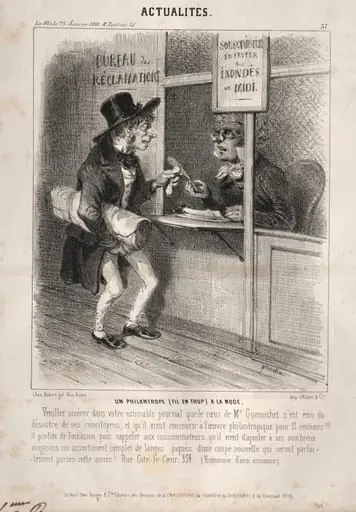 Actualités: Un Philantrope à la mode
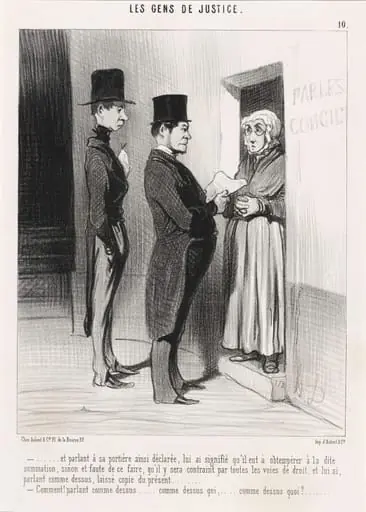 Et parlant a sa portière ainsi déclarée...
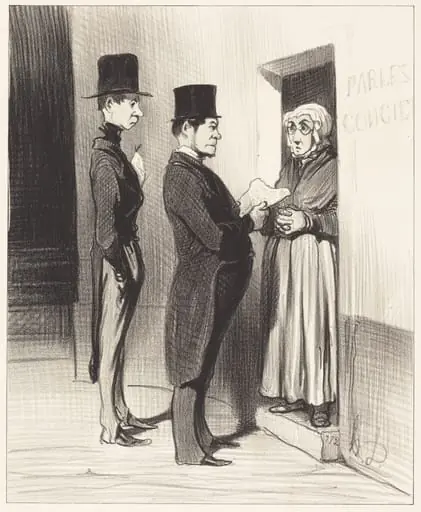 Et parlant a sa portière ainsi déclarée...
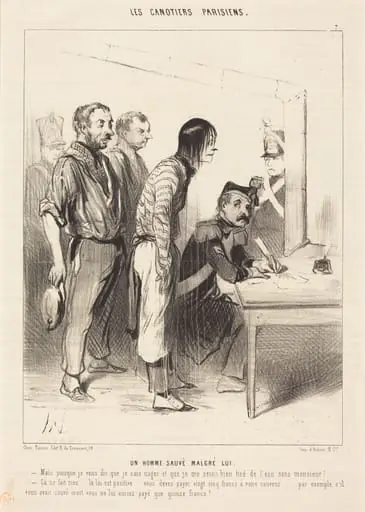 Un Homme sauvé malgré lui
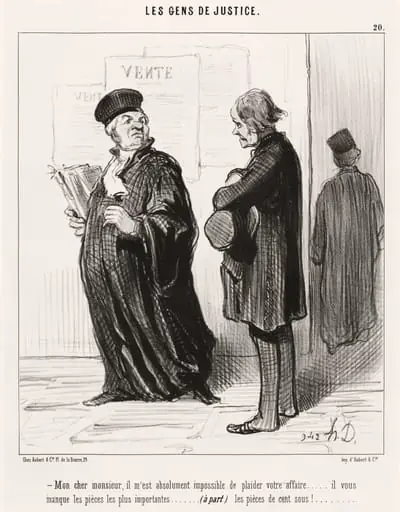 Mon cher monsieur... impossible de plaider votre affaire
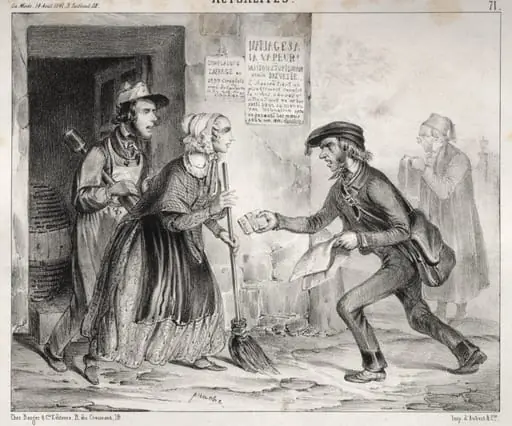 Actualités: Gare la Question d'Orient!
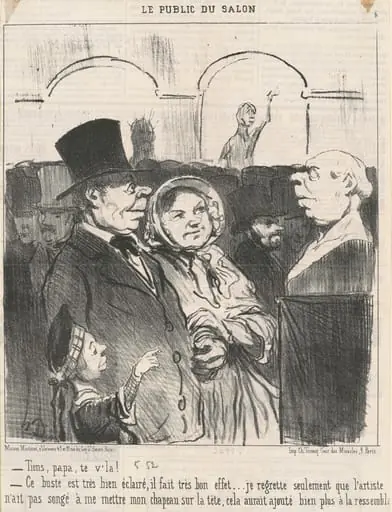 Tiens, papa, te v'la! ...
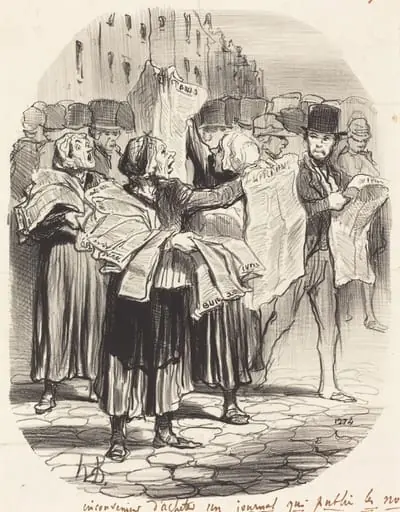 Inconvénient d'acheter un journal...
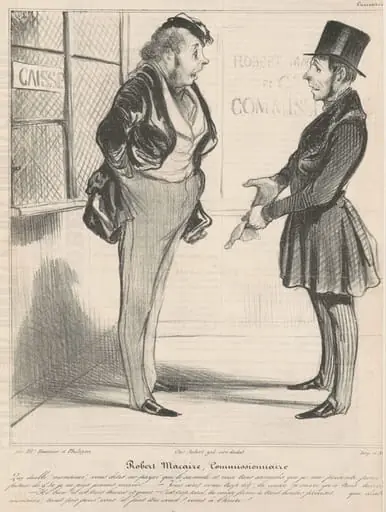 Robert Macaire commissionnaire
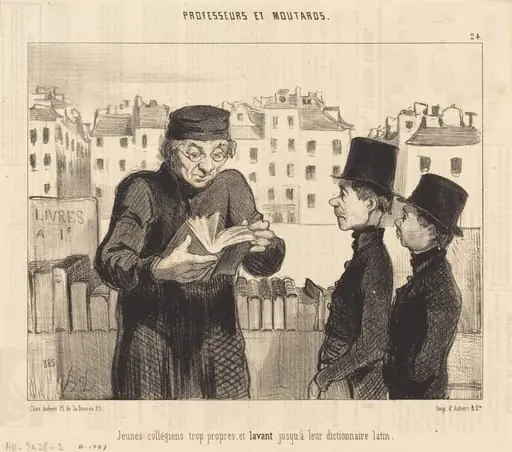 Jeunes collégiens... lavant jusqu'a leur dictionnaire latin
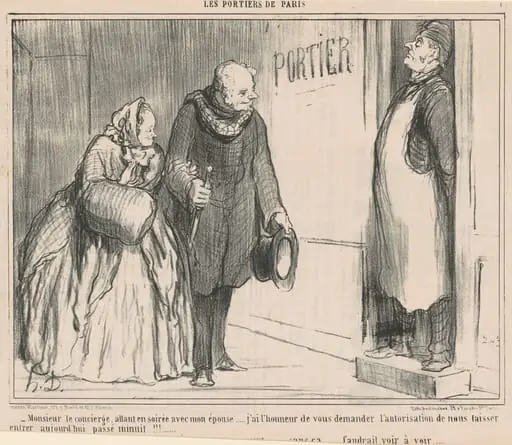 Monsieur le concierge, allant en soirée
 M. Vautour: Je ne saurais trop ...