Artwork
Un Homme sauvé malgré lui
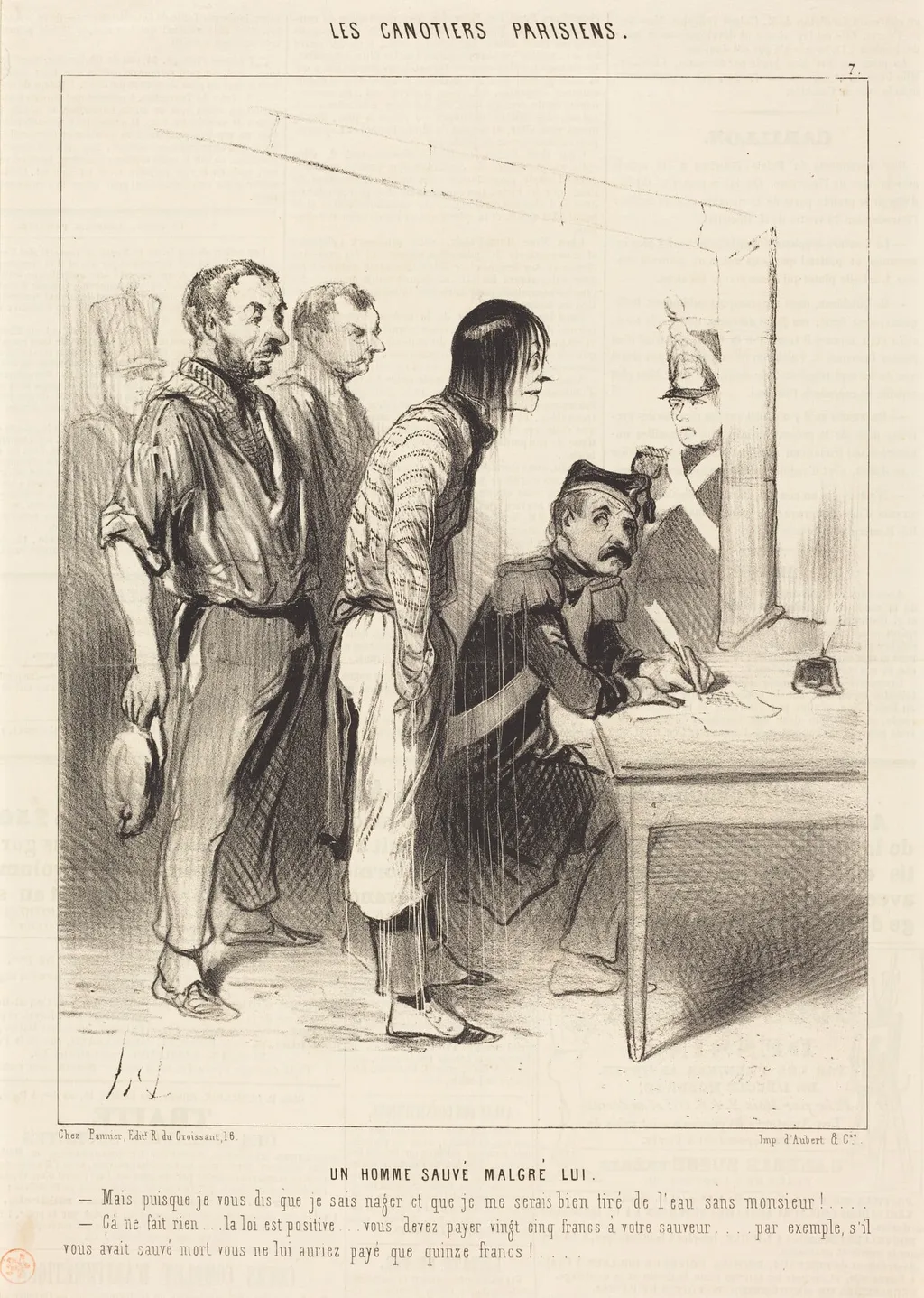
Un Homme sauvé malgré lui is an ink print by the Romanticist artist Honoré Daumier. It dates from 1843 and is held in the collection of the National Gallery of Art.
About this work
Overview
Created in 1843, this lithograph on newsprint by Honoré Daumier captures a fleeting, humorous moment in a crowded interior.
Created in 1843, this lithograph on newsprint by Honoré Daumier captures a fleeting, humorous moment in a crowded interior. Executed with rapid, sketch-like lines, it reflects Daumier’s role as a political illustrator for satirical journals. The medium—newsprint—underscores its ephemeral nature, intended for daily readers rather than long-term display. Its informal quality aligns with the urgent, topical character of 19th-century French caricature.
Subject & Meaning
The scene depicts five figures in a dim room, suggesting an accidental rescue: a man in uniform leans over a seated clerk, while others observe a woman holding a dog. The title, 'A Man Saved Despite Himself,' implies irony—perhaps the rescued individual did not wish to be saved, or the act of rescue is absurd. Daumier uses the moment to mock bureaucratic or social interference, common targets in his critique of French institutions.
Technique & Style
Daumier employed lithography to achieve a spontaneous, almost hurried aesthetic. His use of rough, expressive lines and minimal shading mimics the immediacy of a newspaper sketch. The lack of fine detail and the loose composition enhance the sense of motion and improvisation. The choice of newsprint, a cheap and transient material, reinforces the print’s function as timely social commentary rather than fine art.
History & Provenance
Produced during Daumier’s most active period as a political cartoonist, the work emerged from the vibrant press culture of post-1830 France. It likely appeared in *Le Charivari*, where his satires regularly challenged authority. Though originally distributed widely, surviving examples are now rare, held in museum collections as artifacts of journalistic dissent during a period of strict censorship and political upheaval.
Context
Daumier’s prints responded to the volatile political climate following the July Revolution and preceding the 1848 uprisings. His imagery targeted the hypocrisy of the bourgeoisie, the military, and the legal system. This lithograph fits within a broader tradition of French satirical printmaking that used humor to expose power imbalances, operating under the constant threat of prosecution for libel and sedition.
Legacy
Daumier’s work laid groundwork for modern editorial cartooning and expressionist drawing. His ability to distill complex social tensions into single, vivid scenes influenced later artists across Europe and America. Though created for mass circulation, these prints are now studied for their incisive observation of human behavior and their quiet resistance to authoritarian norms.
Artist & collection
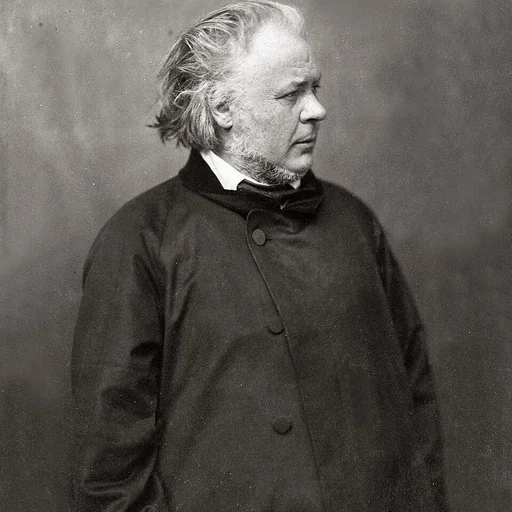
Artist
Honoré-Victorin Daumier was a French painter, sculptor, and printmaker, whose many works offer commentary on the social and political life in France, from the Revolution of 1830 to the fall of the Second French Empire in 1870.









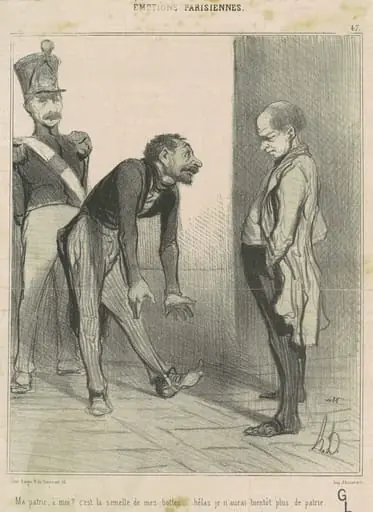 Ma patrie, a moi?...
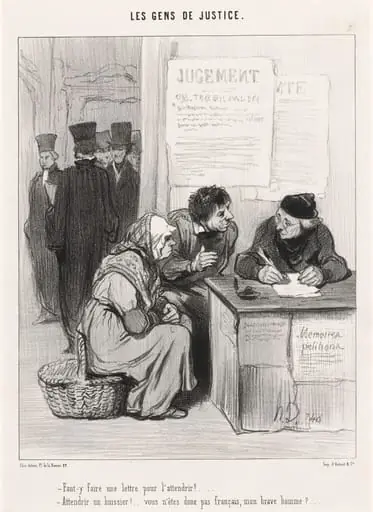 Faut-y faire une lettre pour l'attendrir?
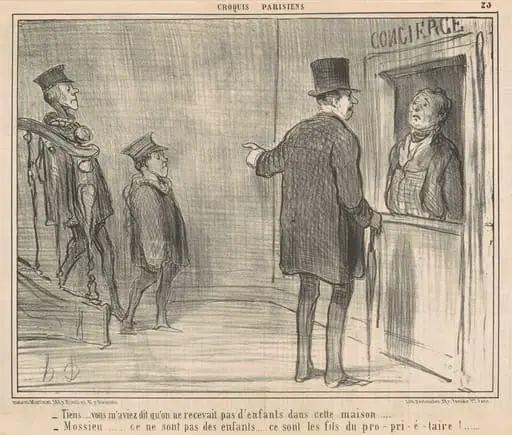 Tiens ... vous m'aviez dit ...
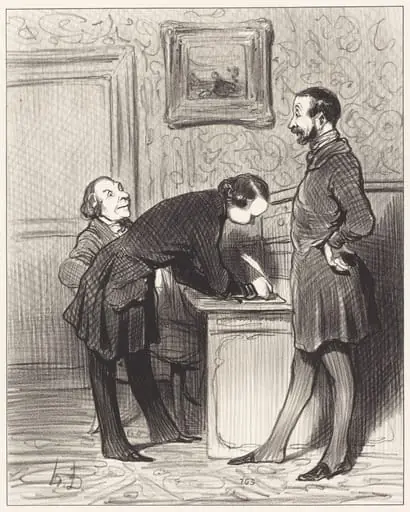 C'est bien parce que c'est votre ami...
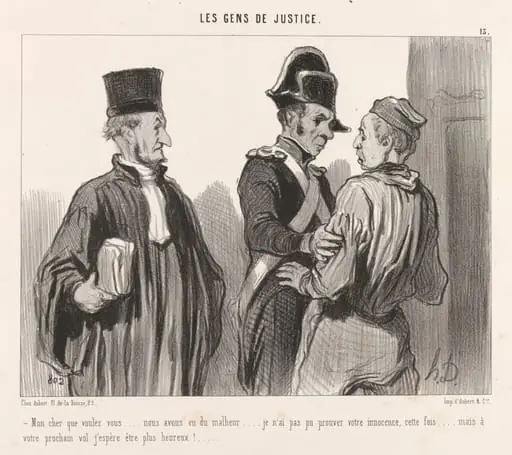 Mon cher que voulez-vous...
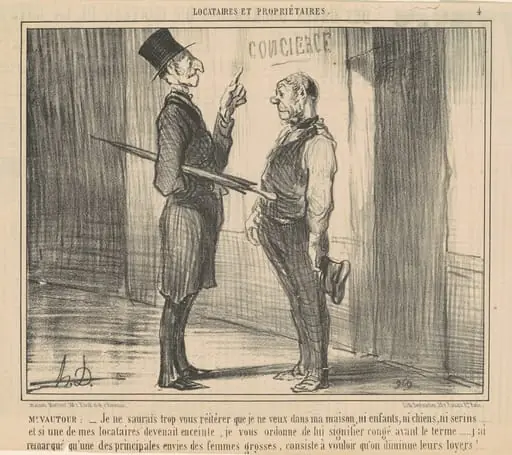 M. Vautour: Je ne saurais trop ...
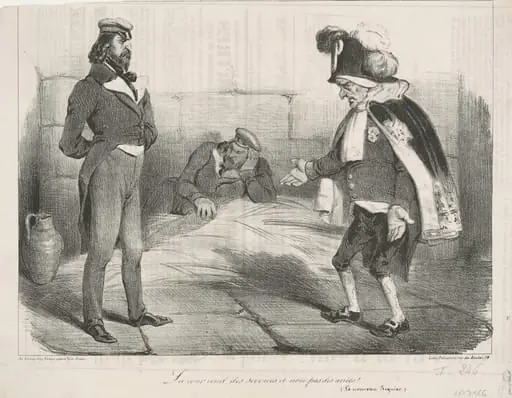 La cour rend des services et non pas des arrêts!
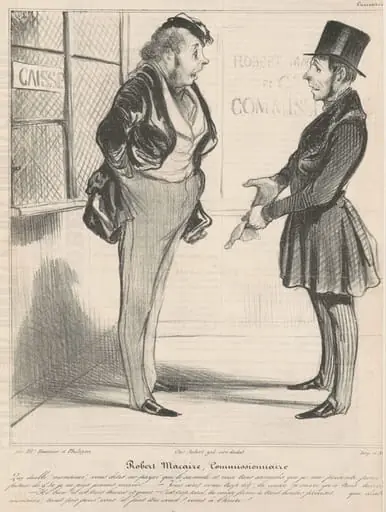 Robert Macaire commissionnaire
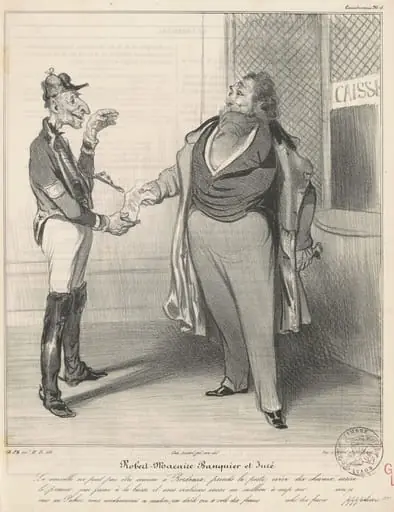 Robert Macaire banquier et juré
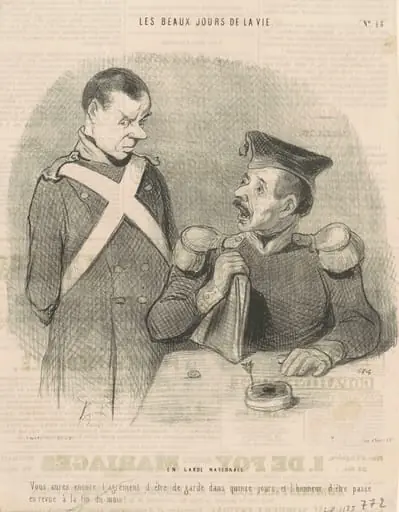 En garde national
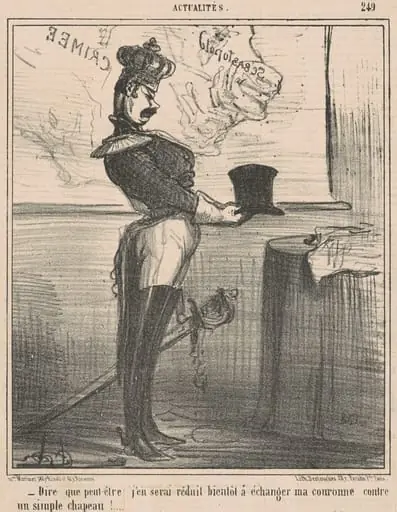 Dire que peut-être j'en serai réduit ...
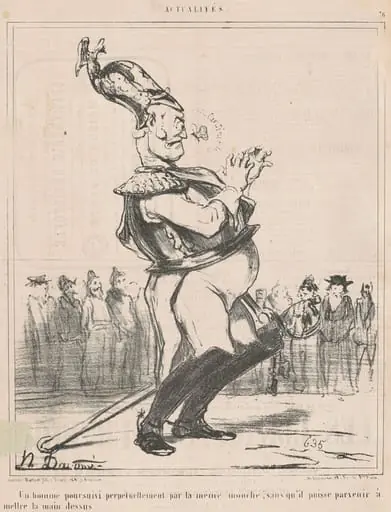 Un homme poursuivi ...