Artwork
Histoire d'un règne
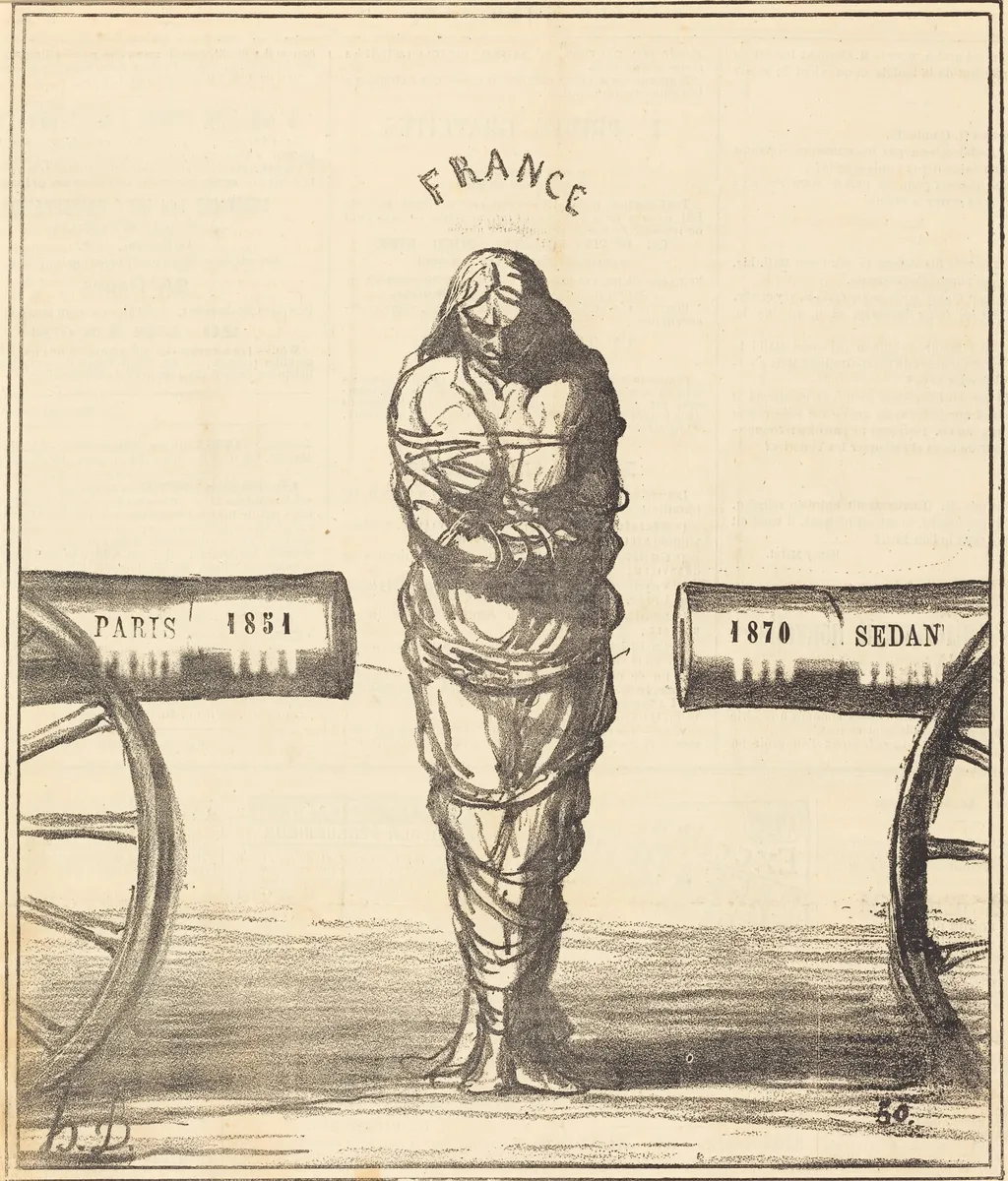
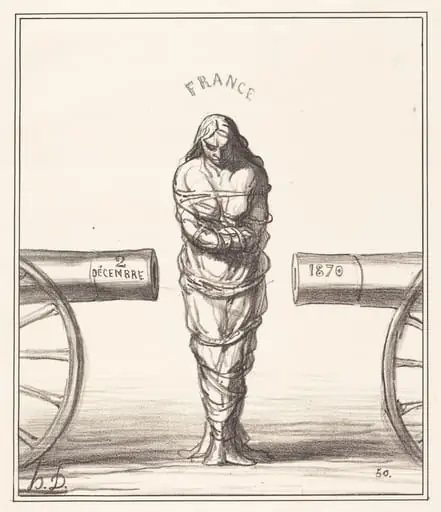
Histoire d'un règne is a print by the Impressionist artist Honoré Daumier. It dates from 1870 and is held in the collection of the National Gallery of Art.
About this work
The artist's use of chiaroscuro creates a sense of depth and dimensionality, drawing the viewer's eye to the central figure.
The image depicts a woman bound in ropes, standing between two cannons. The cannon on the left is labeled "PARIS 1851", while the one on the right reads "SEDAN 1870". The woman's head is bowed, and she appears to be in a state of distress.
The scene is rendered in a somber tone, with muted colors that convey a sense of melancholy. The artist's use of chiaroscuro creates a sense of depth and dimensionality, drawing the viewer's eye to the central figure.
This painting is a powerful allegory that invites the viewer to reflect on the themes of oppression and resistance. To explore more works like this, look into the artist Daumier, Honoré.
Overview
Honoré Daumier’s *Histoire d’un règne* is a photogravure printed on newsprint, created in 1870 as part of his sustained critique of French political power. Unlike his earlier lithographs for satirical journals, this piece employs a more somber, monochromatic technique suited to its elegiac tone. It distills decades of his engagement with state authority into a single, symbolic image, marking a shift from sharp caricature to quiet lament.
Subject & Meaning
The print portrays a bound woman standing between two cannons inscribed with the years 1851 and 1870—dates marking Louis-Napoléon Bonaparte’s coup and France’s defeat at Sedan. She represents the nation, subdued and silent, caught between two authoritarian turning points. The absence of human figures beyond her underscores collective helplessness. The work functions as an allegory of cyclical oppression, not a direct satire of individuals.
Technique & Style
Daumier used photogravure on inexpensive newsprint, a medium that allowed wide distribution but limited tonal range. He relied on stark contrasts and heavy shadows to model form, creating depth through chiaroscuro rather than color. The rough texture of the paper and the muted ink enhance the sense of decay and urgency. The composition is minimal, focusing all attention on the central figure and the cannons flanking her.
History & Provenance
Created during the collapse of the Second Empire, the print was likely produced for private circulation or limited publication, as Daumier’s political imagery faced increasing censorship. It was not widely exhibited in his lifetime. The work entered public collections decades later, recognized as a late, poignant culmination of his career-long resistance to tyranny through visual metaphor.
Context
Daumier had spent forty years lampooning the regime in *Le Charivari*, but by 1870, the political climate had grown too volatile for overt satire. The fall of Napoleon III and the Franco-Prussian War shifted his focus from ridicule to mourning. This piece reflects a broader cultural exhaustion with imperial rule and the disillusionment following military defeat.
Legacy
Though not as widely reproduced as his earlier caricatures, *Histoire d’un règne* is now seen as one of Daumier’s most emotionally resonant works. Its restrained symbolism influenced later artists who turned to allegory to address political trauma. The print endures as a quiet testament to the cost of authoritarianism, valued for its emotional honesty over its immediate impact.
Artist & collection
Artist
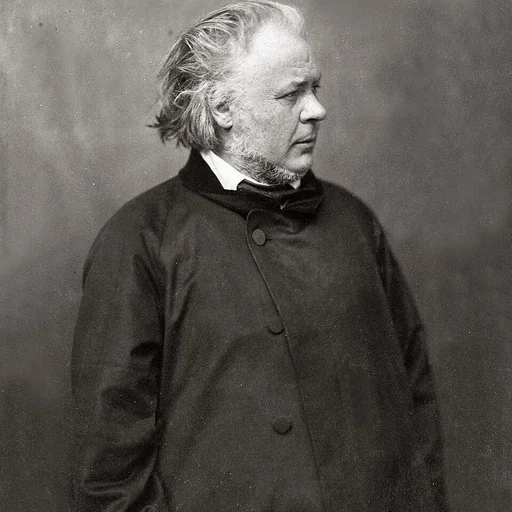
Honoré-Victorin Daumier was a French painter, sculptor, and printmaker, whose many works offer commentary on the social and political life in France, from the Revolution of 1830 to the fall of the Second French Empire in 1870.









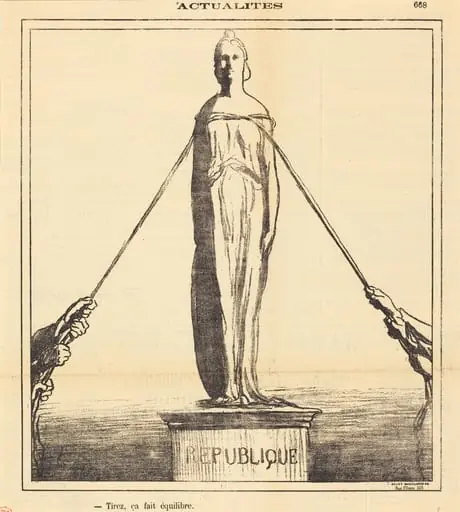 Tirez, ça fait équilibre
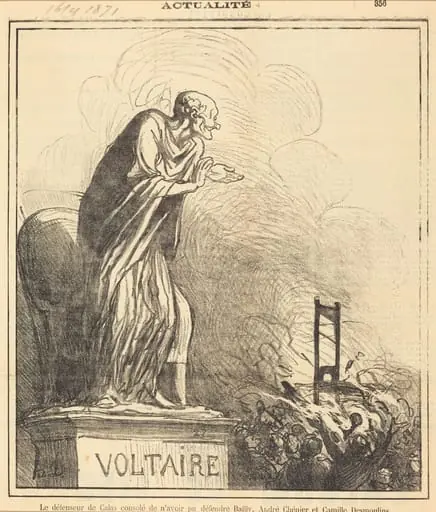 Le défenseur de Calas consolé...
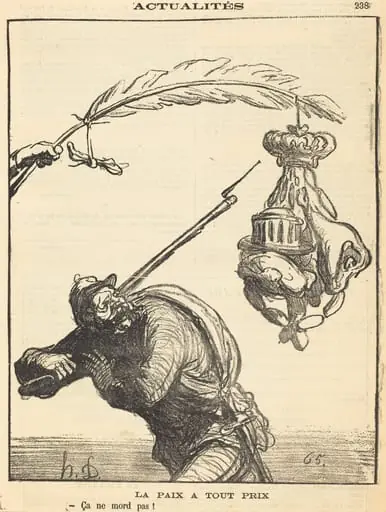 La paix a tout prix
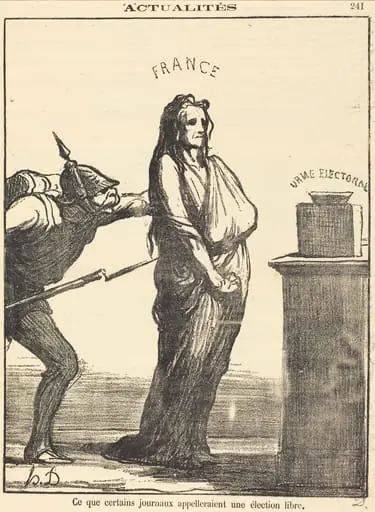 Ce que certains journaux appeleraient...
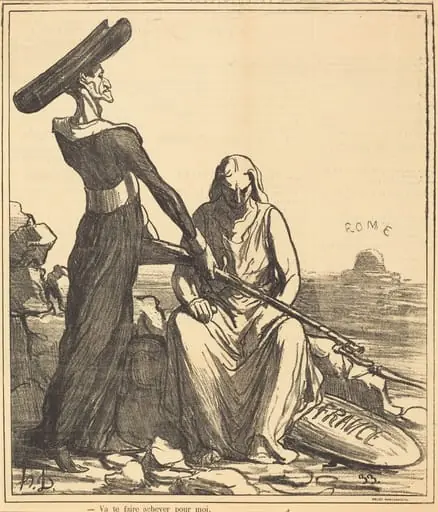 Va te faire achever pour moi
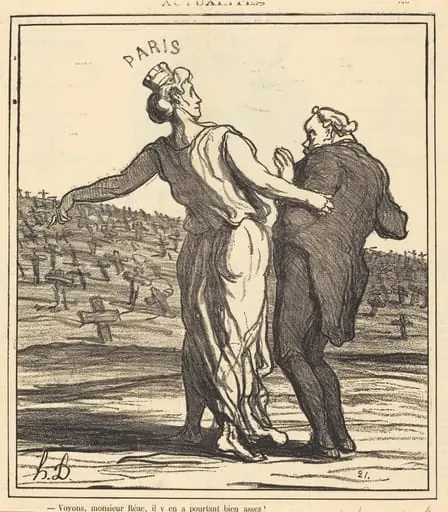 Voyons, monsieur Réac...
![Journée du 16 Octobre 1793 [exécution de Marie-Antoinette], by Antoine-Jean Duclos](https://artifactworldgallery.com/img/antoine-jean-duclos--journee-du-16-octobre-1793-execution-de-marie-antoinette--73c01cea870190cc-w320.webp) Journée du 16 Octobre 1793 [exécution de Marie-Antoinette]
Journée du 16 Octobre 1793 [exécution de Marie-Antoinette]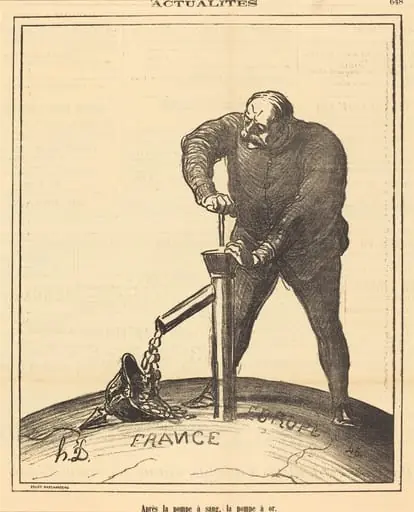 Après la pompe a sang, la pompe à or
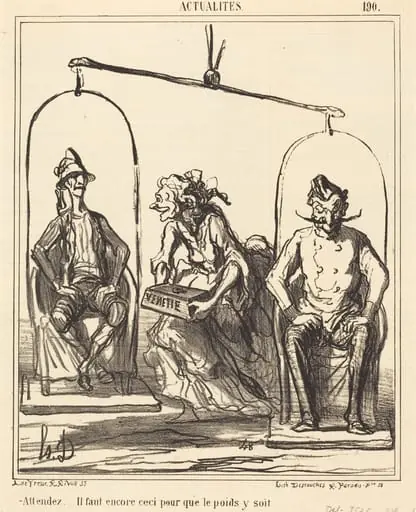 Attendez... il faut encore ceci...
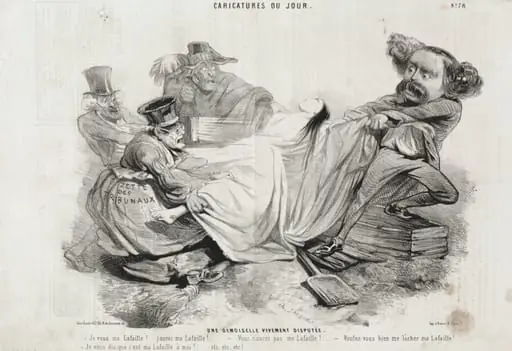 An Intensely Contested Young Woman
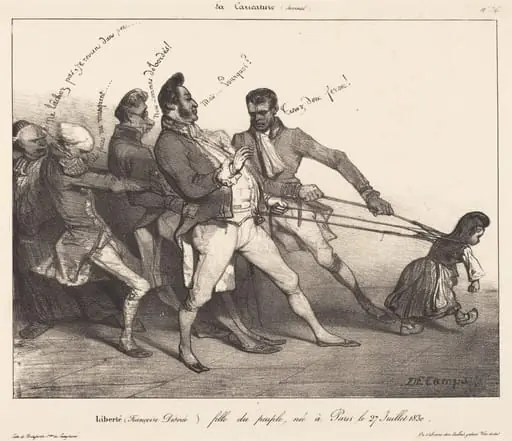 Liberté
 Histoire d'un règne