Artwork
Impressions et compressions de voyage
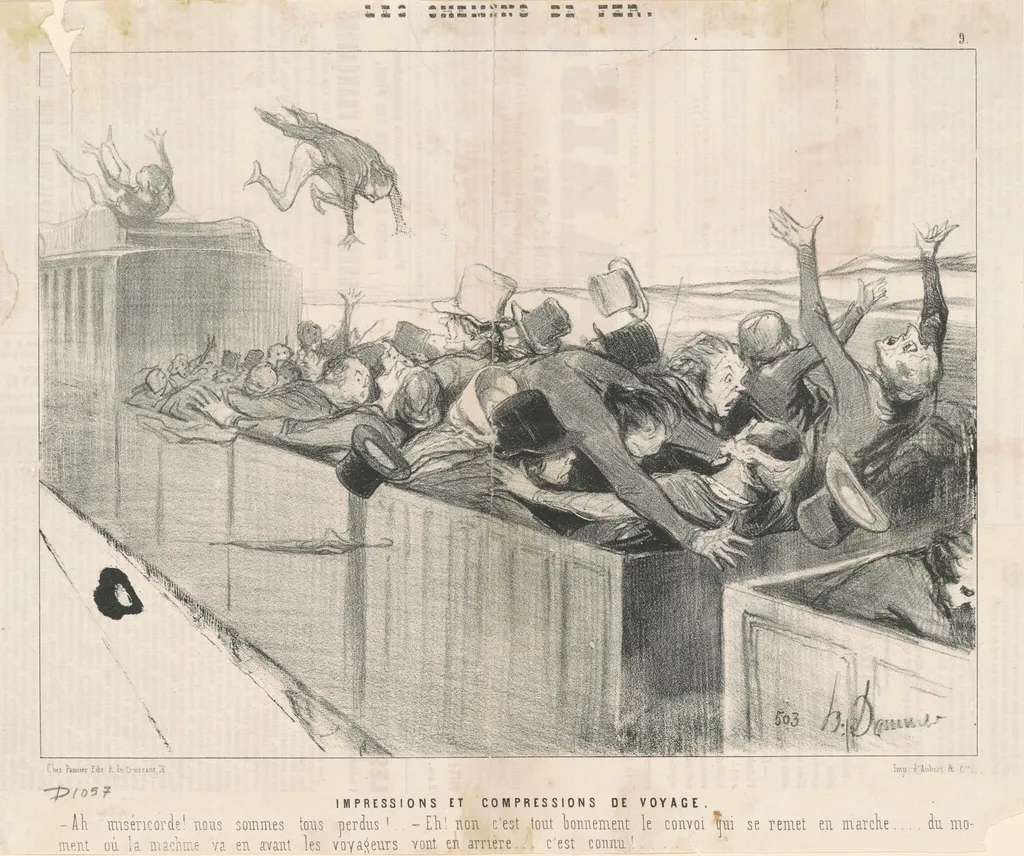
Impressions et compressions de voyage is an ink print by the Romanticist artist Honoré Daumier. It dates from 1843 and is held in the collection of the National Gallery of Art.
About this work
Overview
“Impressions et compressions de voyage” is a lithographic print by Honoré Daumier that captures a bustling railway carriage. The composition is filled with passengers caught in the moment the train starts moving, their bodies contorted and faces animated in surprise.
Subject & Meaning
The scene presents a crowded car where travelers react with startled gestures—gripping seats, flailing arms, wide-eyed expressions. Daumier’s treatment exaggerates these reactions, turning a common travel inconvenience into a satirical commentary on the anxieties of modern mobility.
Technique & Style
Executed in lithography, a relatively inexpensive printing process, the work features Daumier’s characteristic loose, scratchy line work. The fluid strokes give the figures a rubber‑like elasticity, emphasizing motion and heightening the comic effect through caricatured distortion.
Context
Created during a period when railway travel was expanding, the print responds to contemporary advertising that glorified train journeys. By juxtaposing the promised elegance of travel with the chaotic reality inside the carriage, Daumier offers a visual critique of the era’s promotional narratives.
Legacy
The lithograph exemplifies Daumian humor and his skill in translating everyday scenes into biting social observation. It stands alongside his other caricatures that explore public life, reinforcing his reputation as a chronicler of 19th‑century French society.
Artist & collection

Artist
Honoré-Victorin Daumier was a French painter, sculptor, and printmaker, whose many works offer commentary on the social and political life in France, from the Revolution of 1830 to the fall of the Second French Empire in 1870.









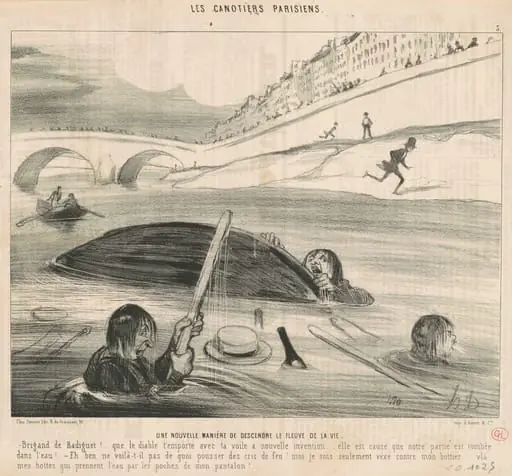 Une nouvelle maniére de descendre le fleuve de la vie
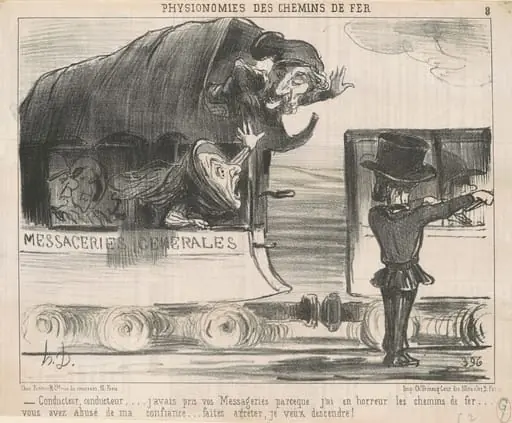 Conducteur ... j'avais pris vos messageries ...
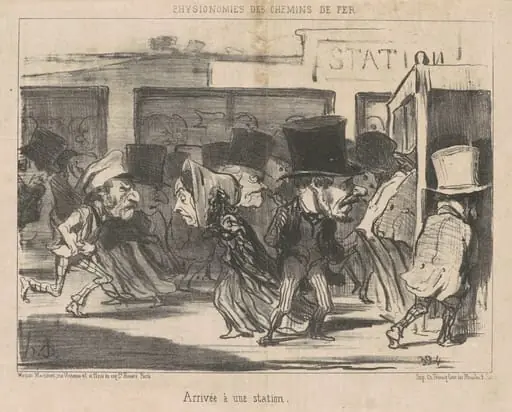 Arrivée a une station
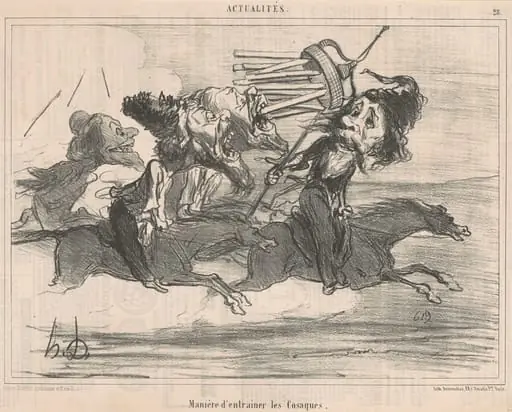 Maniére d'entrainer les cosaques
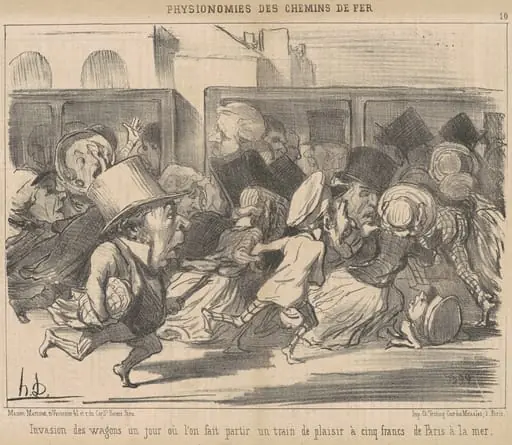 Invasion es wagons un jour ou l'on fait partir
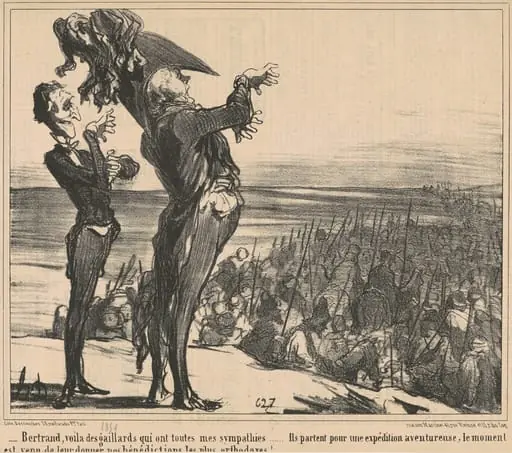 Bertrand, voila des gaillards ...
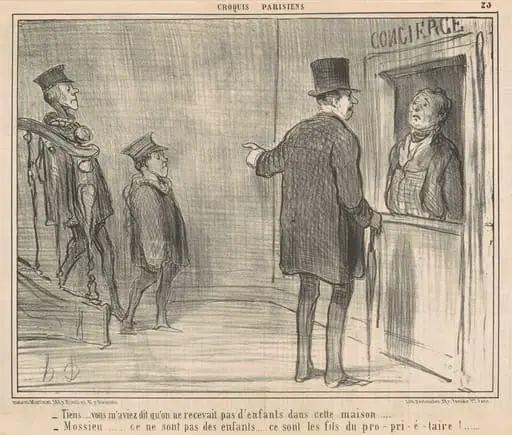 Tiens ... vous m'aviez dit ...
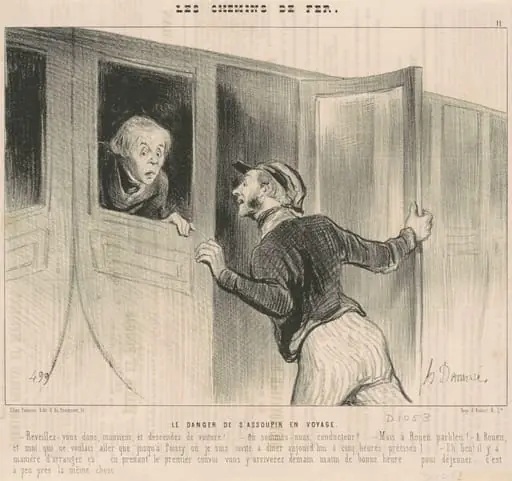 Le danger de s'assoupir en voyage
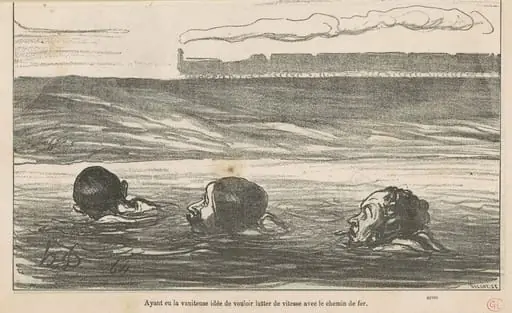 Ayant eu la vaniteuse idée de vouloir ...