Artwork
Jos. Ant. Ronjac
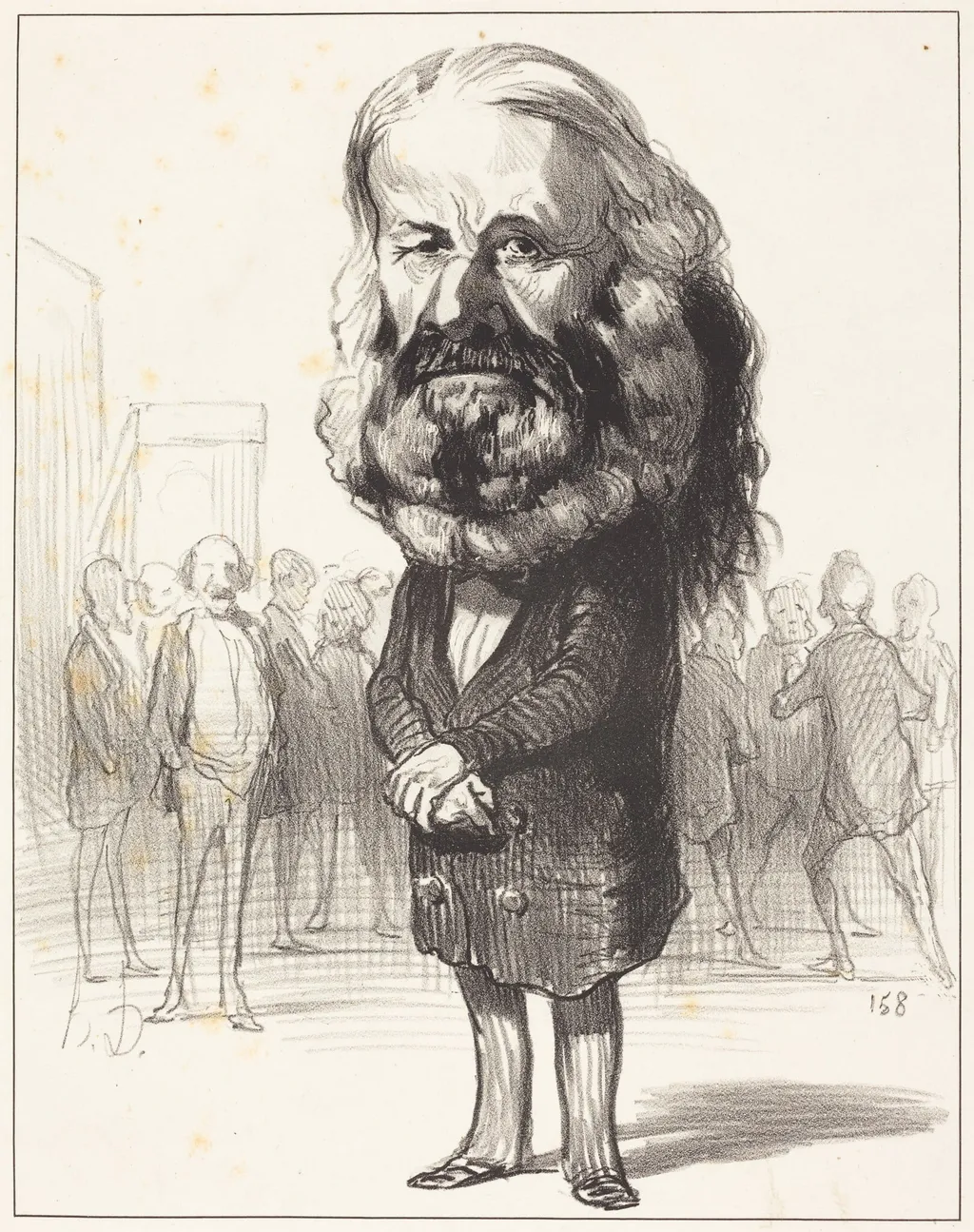
Jos. Ant. Ronjac is an ink print by the Romanticist artist Honoré Daumier. It dates from 1849 and is held in the collection of the National Gallery of Art. Created in 1849, *Jos.
About this work
Overview
Ronjac* is a lithograph by Honoré Daumier, one of hundreds of satirical prints he produced for French periodicals.
Created in 1849, *Jos. Ant. Ronjac* is a lithograph by Honoré Daumier, one of hundreds of satirical prints he produced for French periodicals. The work belongs to a body of imagery that targeted public figures and institutional power through visual wit. Daumier’s role as a graphic commentator for publications like *Le Charivari* placed him at the center of political discourse, using printmaking to reach a broad audience with incisive social observation.
Subject & Meaning
The figure depicted, likely a fictional or composite representation of a self-important official, is rendered with an outsized head and stern expression, suggesting inflated self-regard. His clasped hands and solemn posture contrast with the blurred, passive crowd behind him, implying a disconnect between authority and the public. The caricature critiques the performative gravitas of bureaucratic figures, reducing their presence to absurdity through disproportionate scale and minimal detail.
Technique & Style
Daumier employed lithography to achieve rapid, expressive lines with tonal variation, characteristic of his journalistic approach. The face is rendered with dense, heavy strokes, while the body and background are loosely sketched, drawing focus to the exaggerated features. This deliberate imbalance—magnifying the head while minimizing the rest—uses visual distortion as a rhetorical tool, a hallmark of Daumier’s satirical method that prioritized emotional impact over realism.
History & Provenance
The print was produced during a period of political instability in France, following the 1848 Revolution and the rise of the Second Republic. Daumier’s work from this era often faced censorship, yet he continued to publish through subtle allegory. *Jos. Ant. Ronjac* was likely distributed in *Le Charivari*, where his images circulated widely among urban readers. Its survival in museum collections reflects its recognition as a representative example of 19th-century political graphic art.
Context
Daumier’s prints emerged in a media landscape where illustrated newspapers reached an expanding literate public. His caricatures responded to the tensions between democratic ideals and entrenched hierarchies. By mocking the pomposity of officials, he aligned with republican values and the growing critique of state authority. The lithograph format allowed quick reproduction, making his critiques accessible and timely, unlike painted works confined to elite circles.
Legacy
Daumier’s use of caricature in print influenced later generations of political illustrators and cartoonists, establishing a visual language for social critique. His ability to distill complex political dynamics into a single, resonant image set a precedent for editorial art. *Jos. Ant. Ronjac* exemplifies how graphic satire can function as both documentation and dissent, preserving the tone of an era through its visual economy and unflinching observation.
Artist & collection
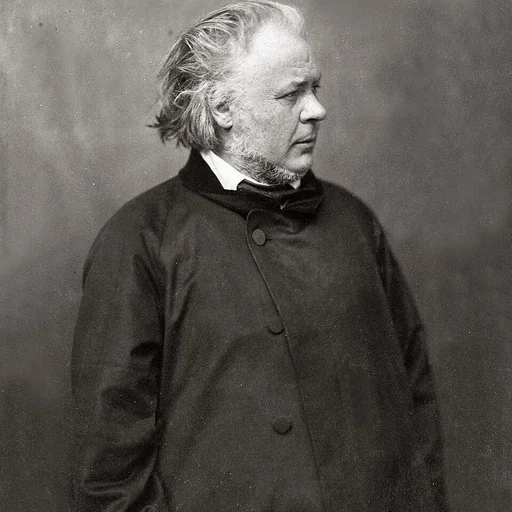
Artist
Honoré-Victorin Daumier was a French painter, sculptor, and printmaker, whose many works offer commentary on the social and political life in France, from the Revolution of 1830 to the fall of the Second French Empire in 1870.









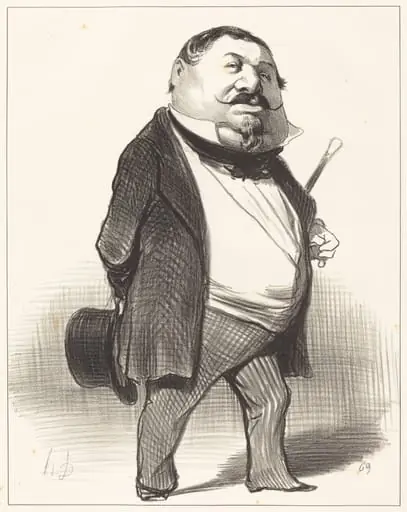 Prince Lucien Murat
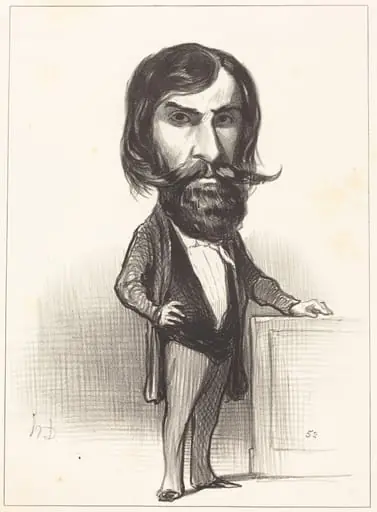 Ch. Ferdinand Gambon
 Manet Seated, Turned to the Left (Manet assis, tourné à gauche)
 Gustave Sautayra
 Vanity Fair: "Modern Poetry"
 Vanity Fair: Men of the Day, No. 39 "The Novelist who invented Sensation"
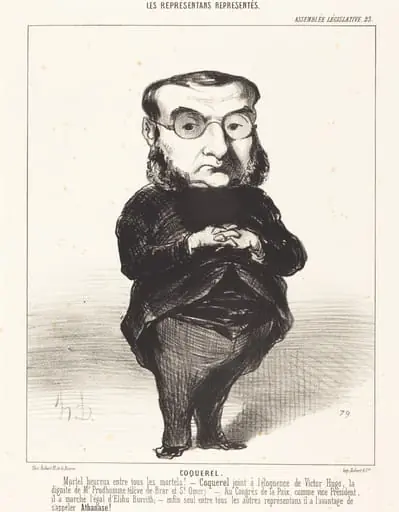 Ath. L. Charles Coquerel
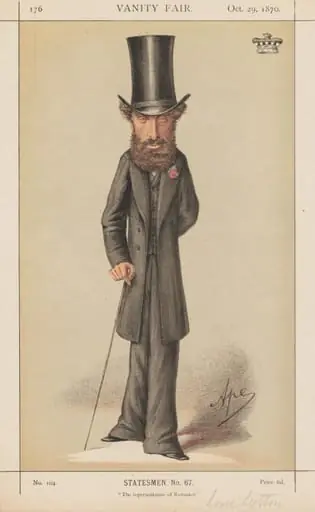 Vanity Fair: Statesmen No. 67 "The representative of Romance"
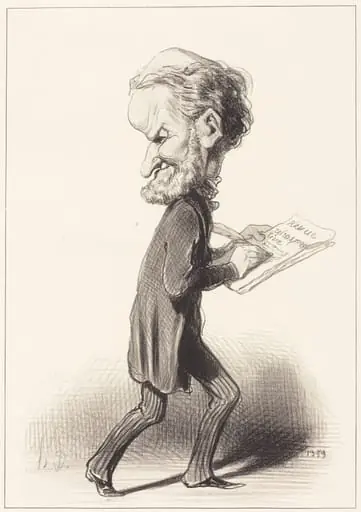 J. Antoine Taschereau
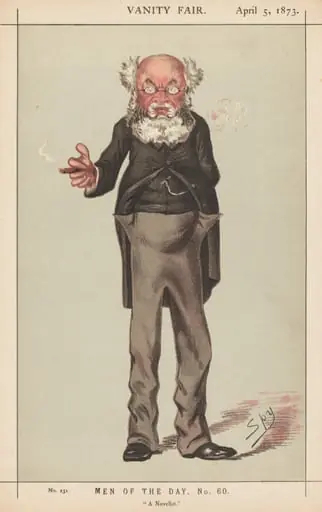 Vanity Fair: Men of the Day, No. 60, "A Novelist"
 Vanity Fair: "Emotional Music"
 Marie Denis Larabit