Artwork
L'appel de leurs réserves
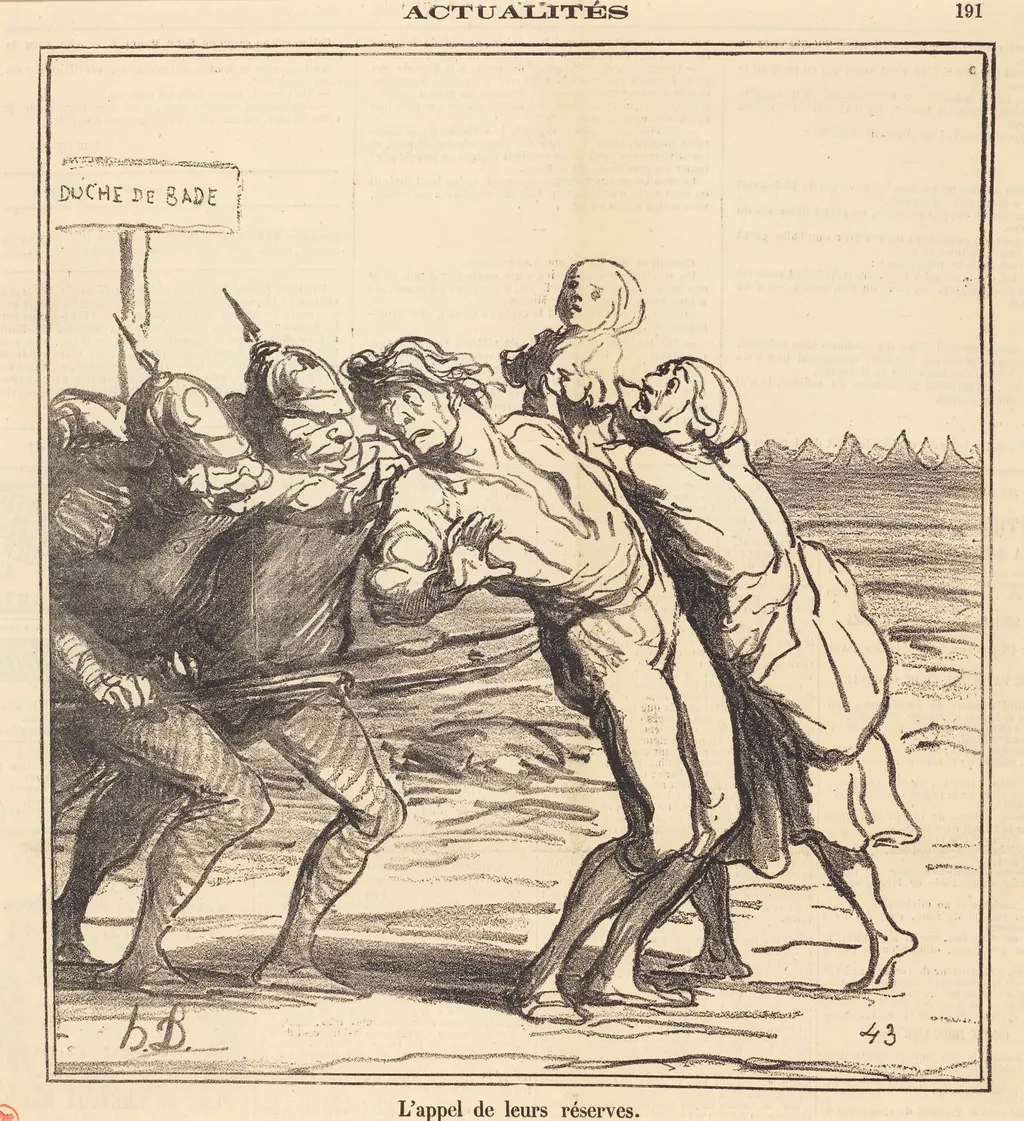
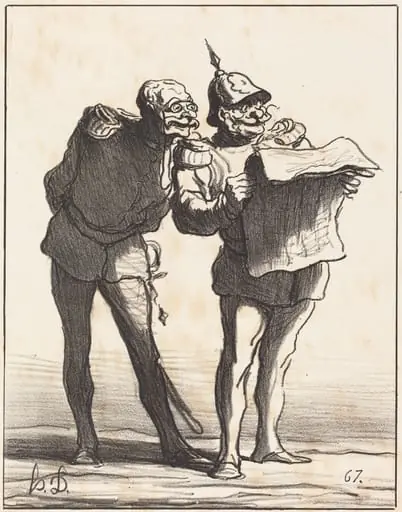
L'appel de leurs réserves is a print by the Impressionist artist Honoré Daumier. It dates from 1870 and is held in the collection of the National Gallery of Art.
About this work
Overview
Honoré Daumier created *L'appel de leurs réserves* in 1870 as a gillotage printed on newsprint, part of his extensive output as a social satirist.
Honoré Daumier created *L'appel de leurs réserves* in 1870 as a gillotage printed on newsprint, part of his extensive output as a social satirist. The work emerged during the Second Empire, a period marked by political tension and censorship. Daumier’s prints, often published in weekly journals, used visual wit to expose societal flaws. This piece exemplifies his commitment to accessible, immediate commentary, prioritizing expressive urgency over technical refinement.
Subject & Meaning
The image depicts four men entangled in a chaotic struggle, their bodies strained in mutual exertion. One is hoisted by the legs, another clings to his back, and a third lifts a smaller figure overhead. The title suggests a call to mobilize reserves—possibly a metaphor for conscription or political mobilization. Daumier uses physical chaos to imply systemic disorder, critiquing the absurdity of authority and the burdens placed on ordinary citizens.
Technique & Style
Daumier employed gillotage, a photomechanical process that reproduced his pen-and-ink drawings for mass printing on newsprint. The lines are swift, irregular, and deliberately rough, capturing motion and emotion over detail. Background elements are suggested with faint, indistinct waves, avoiding narrative clarity to focus attention on the figures’ exertion. This raw aesthetic aligns with the immediacy of periodical publication and reinforces the work’s unpolished, urgent tone.
History & Provenance
Created during the final years of Napoleon III’s rule, the print likely appeared in a liberal journal such as *Le Charivari*, where Daumier had contributed for decades. Though the original publication context is unrecorded, its survival in collections reflects its status as a representative example of 19th-century French political satire. Its fragile medium—newsprint—means few impressions remain, making existing copies historically significant.
Context
Daumier worked under strict censorship, forcing him to encode criticism in metaphor and caricature. The July Monarchy and Second Empire suppressed overt dissent, so he turned to scenes of everyday life to imply larger injustices. *L'appel de leurs réserves* fits within a broader body of work where physical struggle symbolized political entanglement—ordinary people caught in systems beyond their control, their labor exploited by unseen powers.
Legacy
Daumier’s approach influenced later generations of social realists and graphic satirists, demonstrating how simple, urgent imagery could convey complex critique. His use of mass media to reach a broad audience prefigured modern editorial cartooning. Though his work was once dismissed as journalistic, it is now recognized for its psychological depth and formal innovation in capturing the rhythms of public life under repression.
Artist & collection

Artist
Honoré-Victorin Daumier was a French painter, sculptor, and printmaker, whose many works offer commentary on the social and political life in France, from the Revolution of 1830 to the fall of the Second French Empire in 1870.









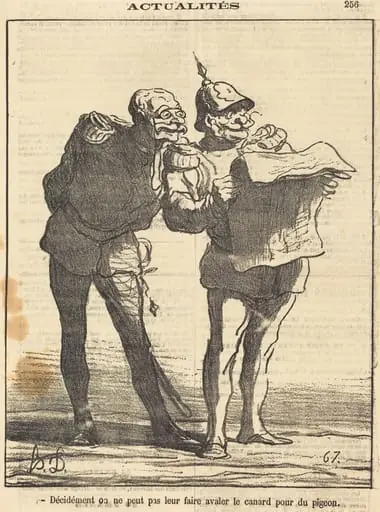 Décidément on ne peut pas...
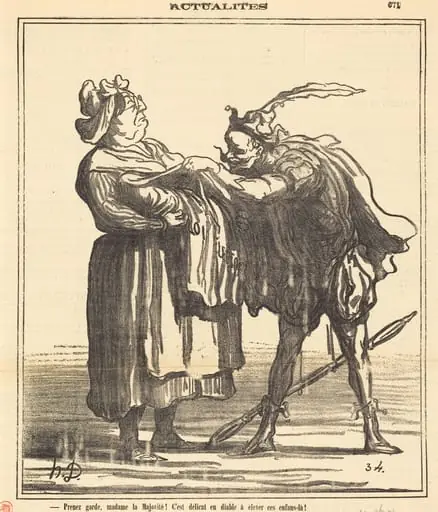 Prenez garde, madame la Majorité!
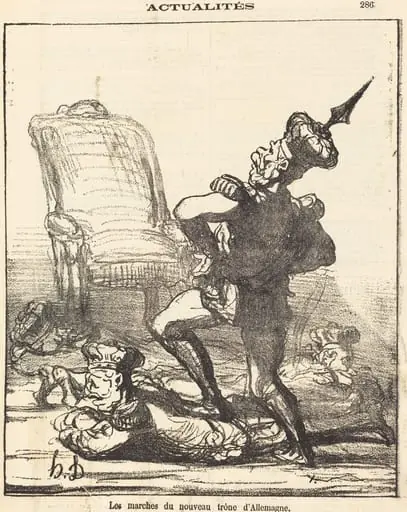 Les marches du nouveau trone d'Allemagne
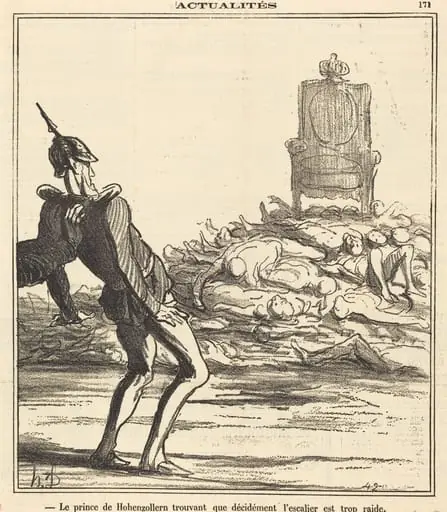 Le Prince de Hohenzollern...
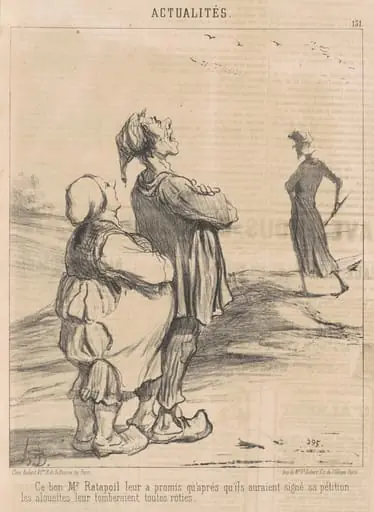 Ce bon M. Ratapoil leur a promis ...
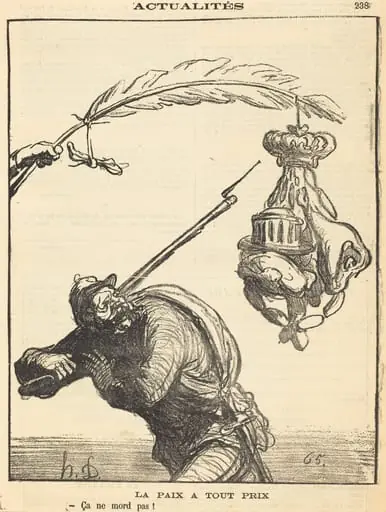 La paix a tout prix
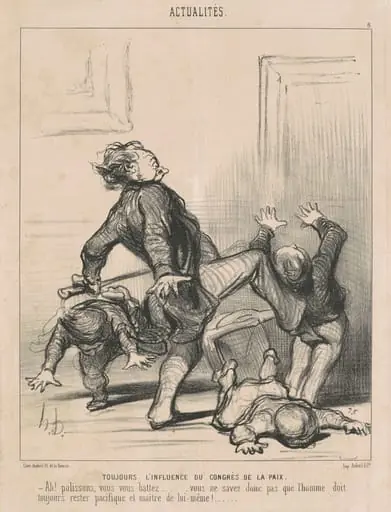 Toujours l'influence du congres de la paix ...
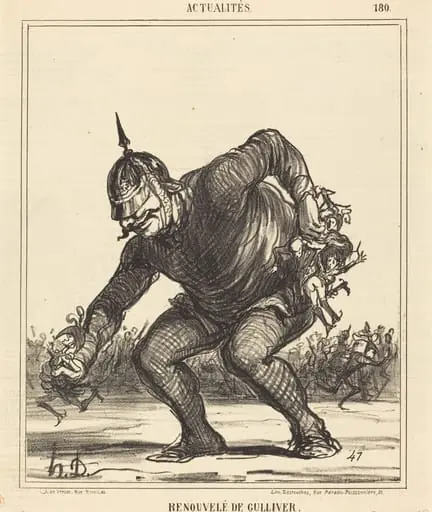 Renouvele de Gulliver
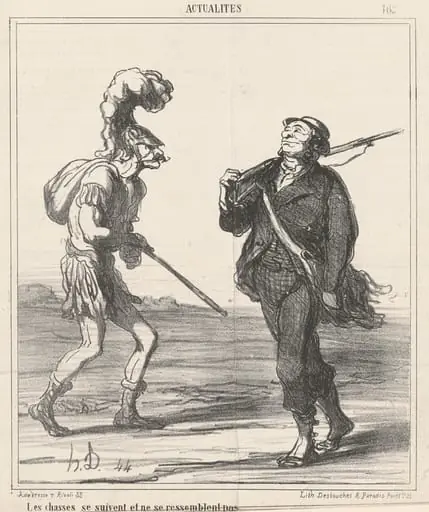 Les chasses ... ne se ressemblent pas
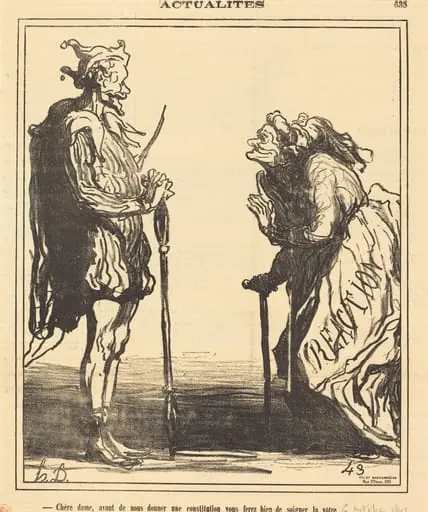 Chère dame, avant de nous donner...
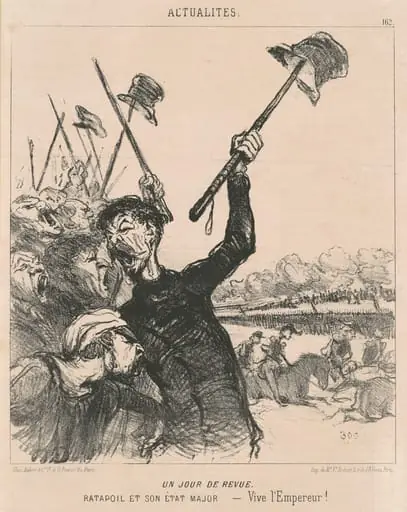 Un jour de revue
 Décidément on ne peut pas...