Artwork
Probité chinoise
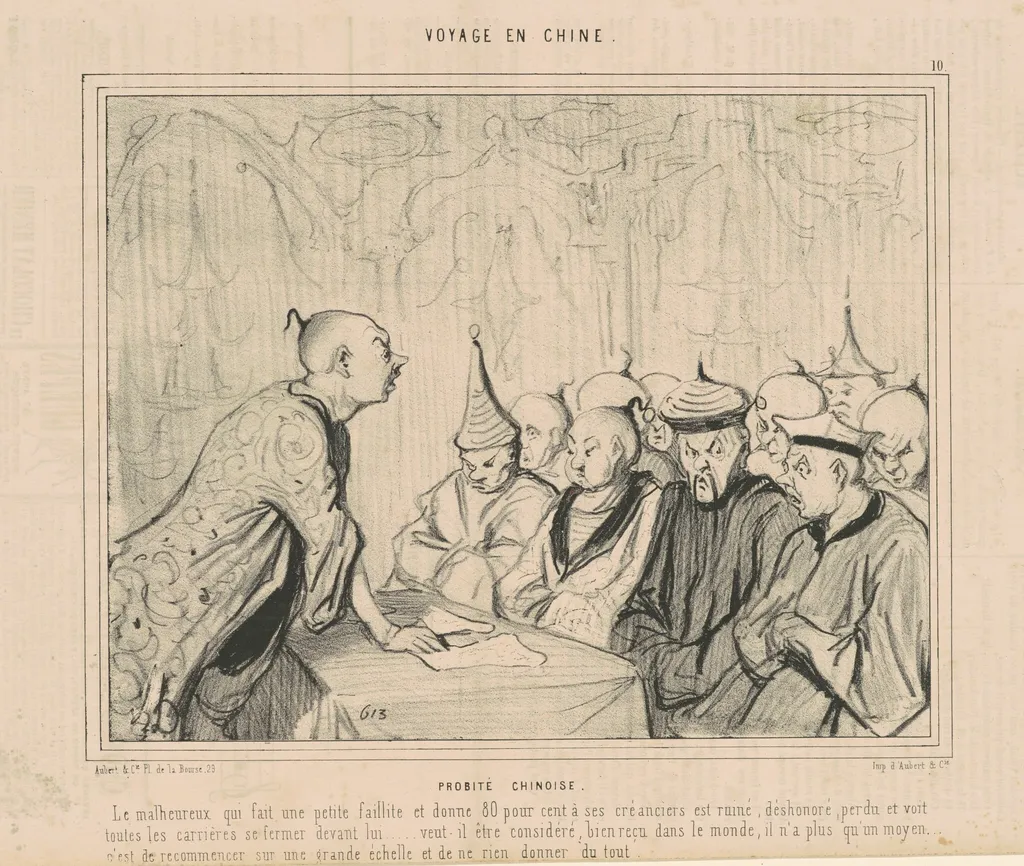
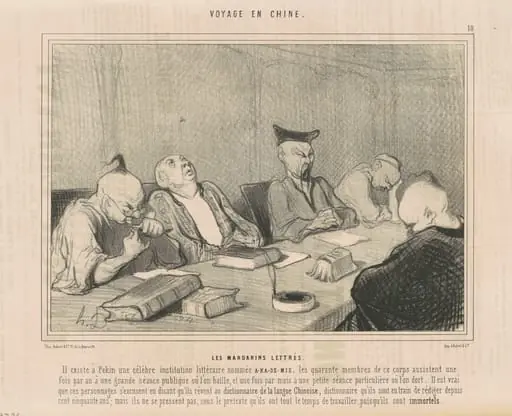
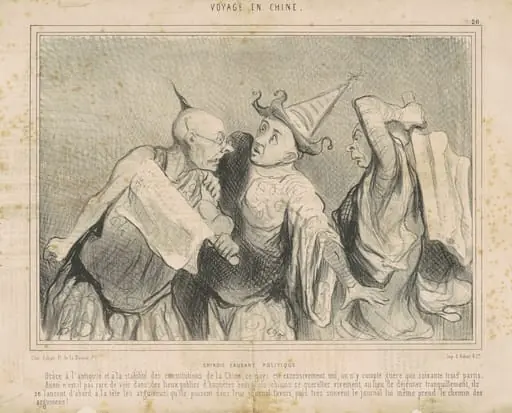
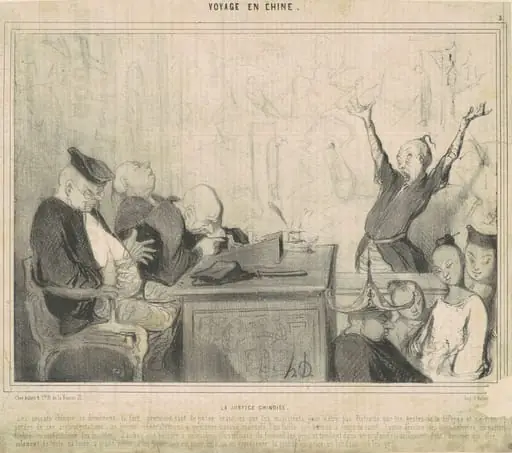
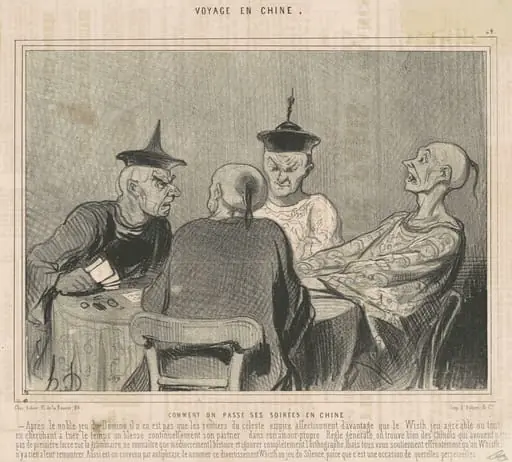
Probité chinoise is an ink print by the Romanticist artist Honoré Daumier. It dates from 1846 and is held in the collection of the National Gallery of Art.
About this work
Overview
The composition emphasizes physical tension and exaggerated gestures, reflecting Daumier’s interest in the performative nature of public discourse.
Created in 1846 by Honoré Daumier, Probité chinoise is a lithograph that captures a group of men in close proximity around a table, locked in a moment of intense verbal exchange. The composition emphasizes physical tension and exaggerated gestures, reflecting Daumier’s interest in the performative nature of public discourse. Rendered in ink on paper, the work belongs to a series of satirical prints targeting political culture in mid-19th century France.
Subject & Meaning
The figures, all male, are engaged in what appears to be a heated debate, though their expressions border on the absurd. The standing figure, draped in an ornate robe, dominates the scene with an aggressive posture, while seated men display contorted faces of exaggerated concentration. Daumier uses caricature to question the sincerity of political rhetoric, suggesting that earnestness often masks performative posturing rather than genuine conviction.
Technique & Style
Daumier employed lithography to achieve rapid, expressive lines and strong contrasts of light and shadow. His brushwork is loose yet precise, with ink washes deepening areas of shadow to model form and heighten emotional intensity. The figures are simplified into essential gestures, stripping away individual detail to focus on collective behavior. This stylistic economy amplifies the satire, making the absurdity of the scene more immediate and biting.
History & Provenance
Produced during Daumier’s most active period of political satire, the print was likely circulated in periodicals or as a standalone sheet among Parisian intellectuals. It was not commissioned but emerged from his ongoing critique of the July Monarchy’s political elite. The work entered public collections in the late 19th or early 20th century, preserved as part of a broader archive of Daumier’s social commentary.
Context
In 1846, France was under the July Monarchy, a regime increasingly criticized for corruption and hollow rhetoric. Daumier, a vocal opponent of political hypocrisy, regularly depicted officials as buffoons trapped in their own pretensions. Probité chinoise reflects this climate, using the guise of a scholarly gathering to expose the emptiness of institutional discourse. The title, ironically invoking Chinese virtue, underscores the gap between ideal and reality.
Legacy
The print remains a key example of Daumier’s ability to distill complex social dynamics into visually arresting caricature. It influenced later satirists and cartoonists who adopted his blend of realism and exaggeration. While not widely exhibited today, it is studied for its formal innovation and its unflinching portrayal of power, performance, and the fragility of public trust.
Artist & collection
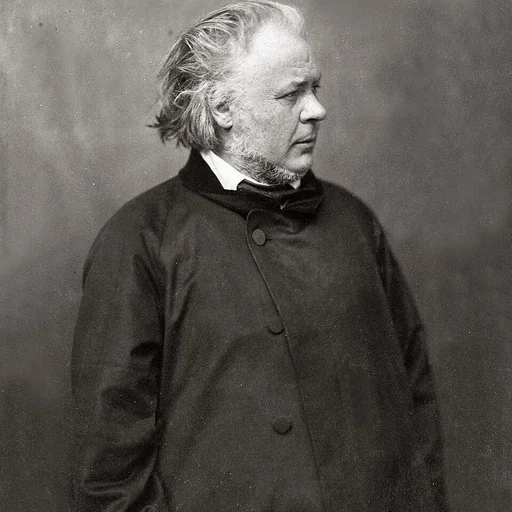
Artist
Honoré-Victorin Daumier was a French painter, sculptor, and printmaker, whose many works offer commentary on the social and political life in France, from the Revolution of 1830 to the fall of the Second French Empire in 1870.