Artwork
Plus souvent que je te conduirai... au bal...
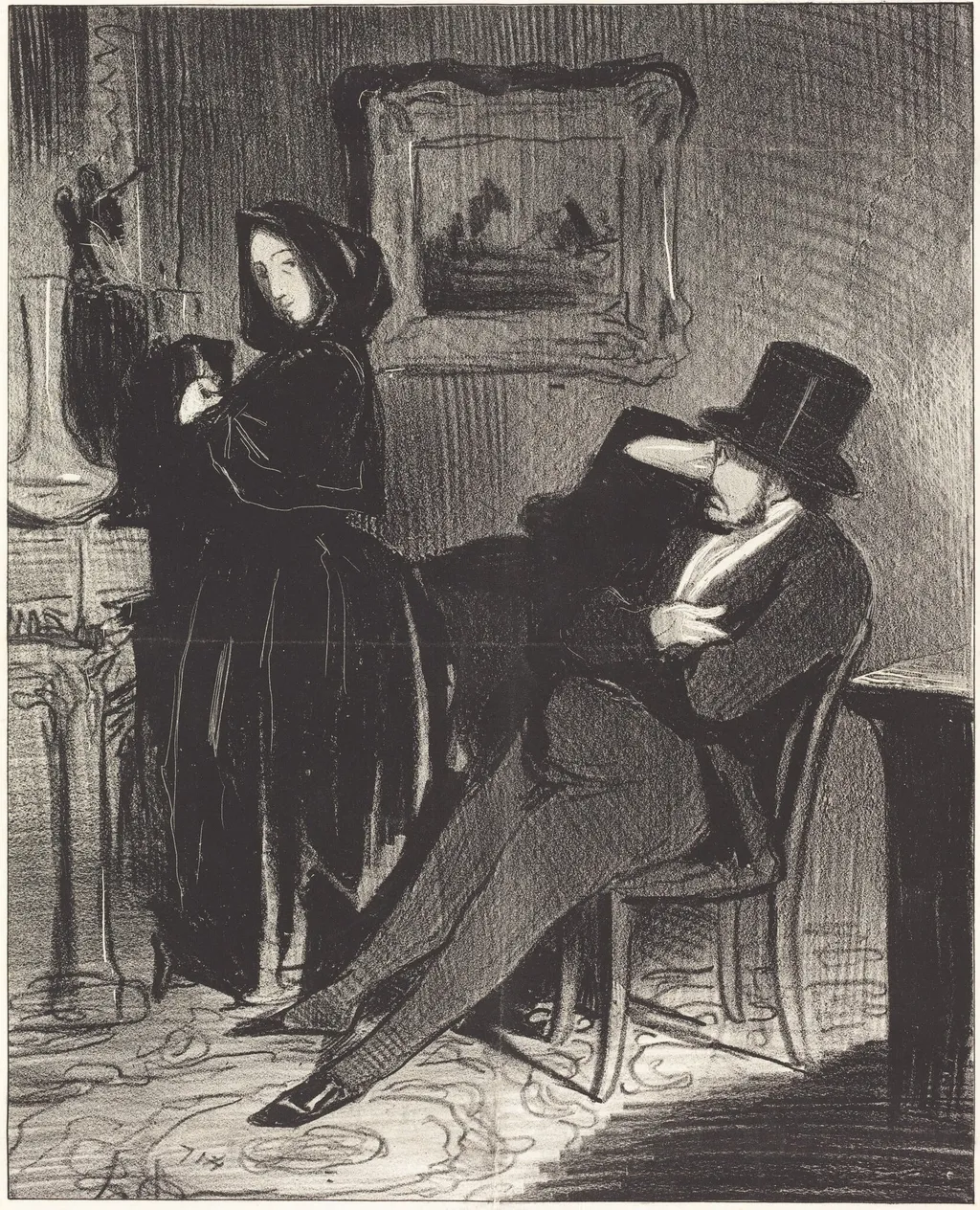
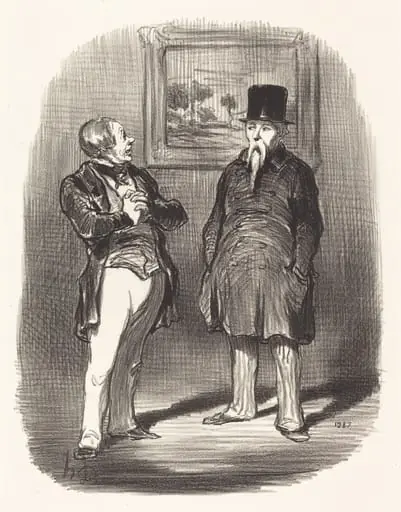
Plus souvent que je te conduirai... au bal... is an ink print by the Romanticist artist Honoré Daumier. It dates from 1845 and is held in the collection of the National Gallery of Art.
About this work
Overview
The work belongs to a series of prints that explore domestic dynamics, revealing tensions beneath the surface of everyday life in mid-century France.
Created in 1845, this lithograph by Honoré Daumier captures a quiet, psychologically charged moment between two figures in a modest interior. Produced during the July Monarchy, it reflects Daumier’s shift from overt political satire toward more nuanced social observation. The work belongs to a series of prints that explore domestic dynamics, revealing tensions beneath the surface of everyday life in mid-century France.
Subject & Meaning
The scene depicts a man seated, bent over paper, and a woman standing with a fan, their postures suggesting an unspoken exchange. The title, referencing a promise to escort someone to a ball, carries ironic weight—its romantic tone contrasts with the somber atmosphere. Daumier implies the fragility of social rituals and the hidden strains within personal relationships, particularly among the lower middle class navigating shifting class expectations.
Technique & Style
Daumier employed lithography’s capacity for rapid, expressive line work to convey mood over detail. Loose, fluid strokes define the figures and furnishings, while the dim interior is suggested through tonal contrasts rather than precise rendering. The mirror above the fireplace introduces a subtle layer of reflection, both literal and metaphorical, amplifying the sense of introspection and unspoken tension in the scene.
History & Provenance
The print was likely published in *Le Charivari*, the satirical journal where Daumier regularly contributed. Though less overtly political than his earlier works, it emerged from the same cultural milieu shaped by censorship and public scrutiny. Its survival in museum collections today reflects its status as a significant example of Daumier’s transition from caricature to psychological realism in printmaking.
Context
Under Louis-Philippe’s July Monarchy, public discourse was tightly controlled, pushing artists like Daumier to encode critique in domestic scenes. Lithography allowed for wide distribution, making such images accessible to urban audiences. This work aligns with a broader trend in French visual culture that used intimate settings to comment on social mobility, gender roles, and the erosion of traditional hierarchies.
Legacy
Daumier’s ability to convey complex human dynamics through minimal means influenced later realist and modernist printmakers. This lithograph exemplifies his move away from caricature toward empathetic observation, anticipating the quiet intensity found in 20th-century narrative art. Its enduring presence in collections underscores its role in redefining the potential of print as a medium for emotional depth.
Artist & collection

Artist
Honoré-Victorin Daumier was a French painter, sculptor, and printmaker, whose many works offer commentary on the social and political life in France, from the Revolution of 1830 to the fall of the Second French Empire in 1870.









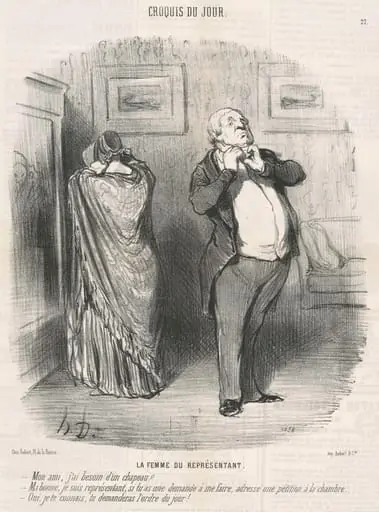 La femme du représentant
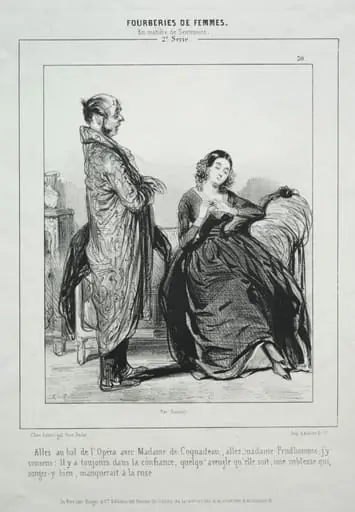 Fourberies de Femmes En Matière de Sentiment
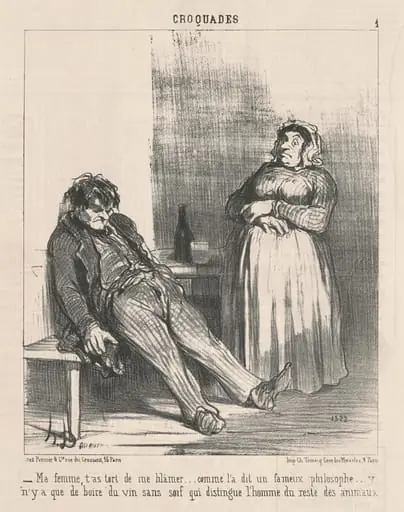 Ma femme, t'as tort de me blamer ...
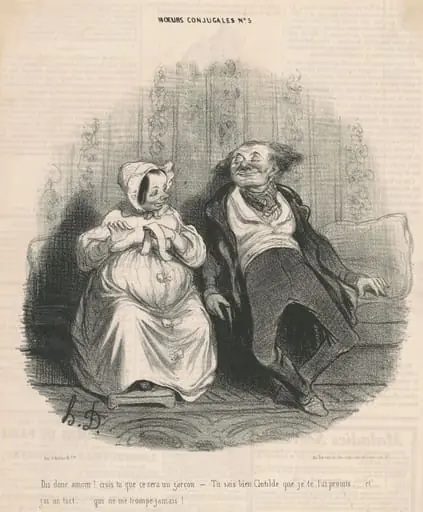 Dis donc amour! Crois-tu que ce sera un garçon. -Tu sais bien Clothilde que je te l'ai promis . . . Et j'ai un tact . . . Qui ne me trompe jamais!
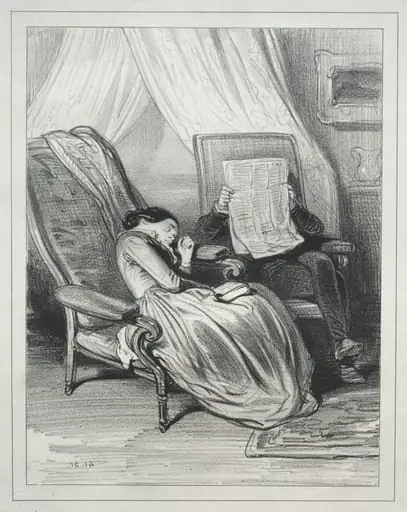 Les Martyrs
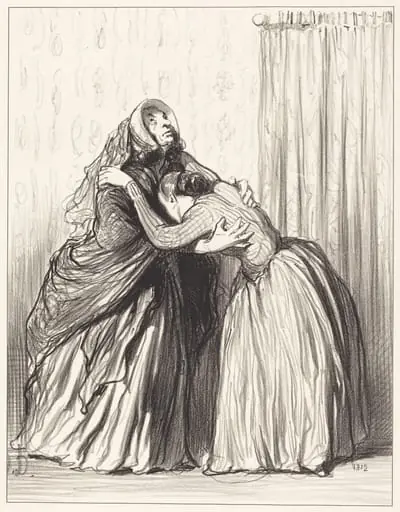 Oui, ma chère, mon mari a ravalé ma dignité...
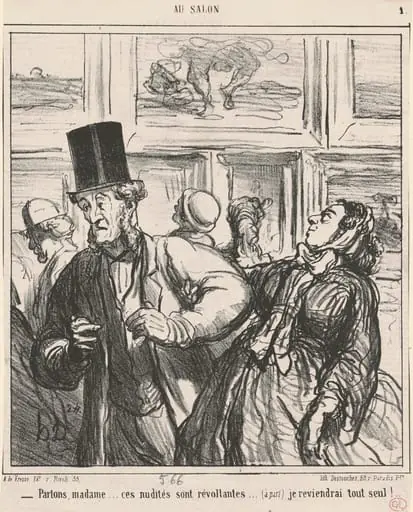 Parlons, Madame...ces nudités sont révoltantes...
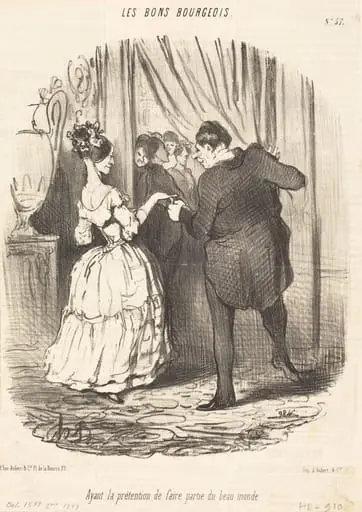 Ayant la prétention de faire partie du beau monde
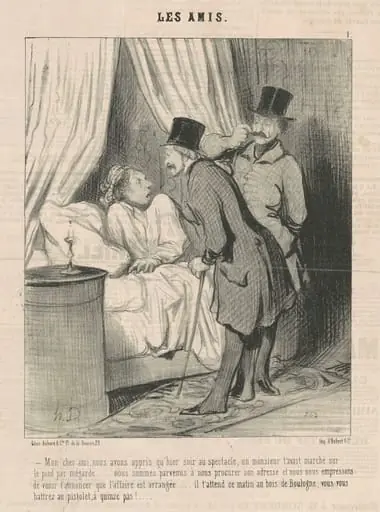 Mon cher ami, nous avons appris ...
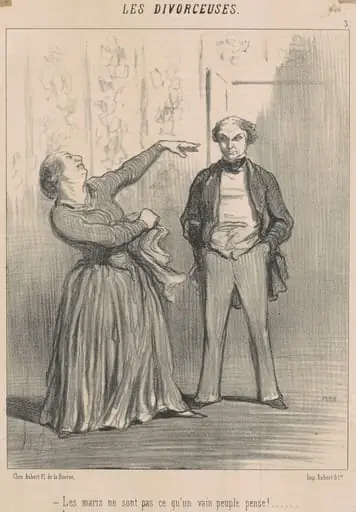 Les maris ne sont pas ce qu'un vain peuple pense!
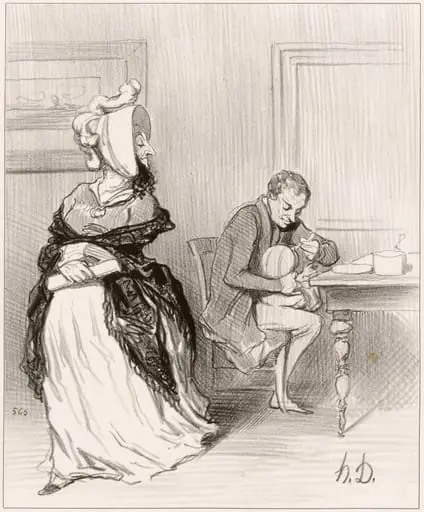 Adieu, mon cher, je vais chez mes éditeurs...
 Tiens... je ne te reconnaissais pas...