Artwork
Le portrait au daguéréotype
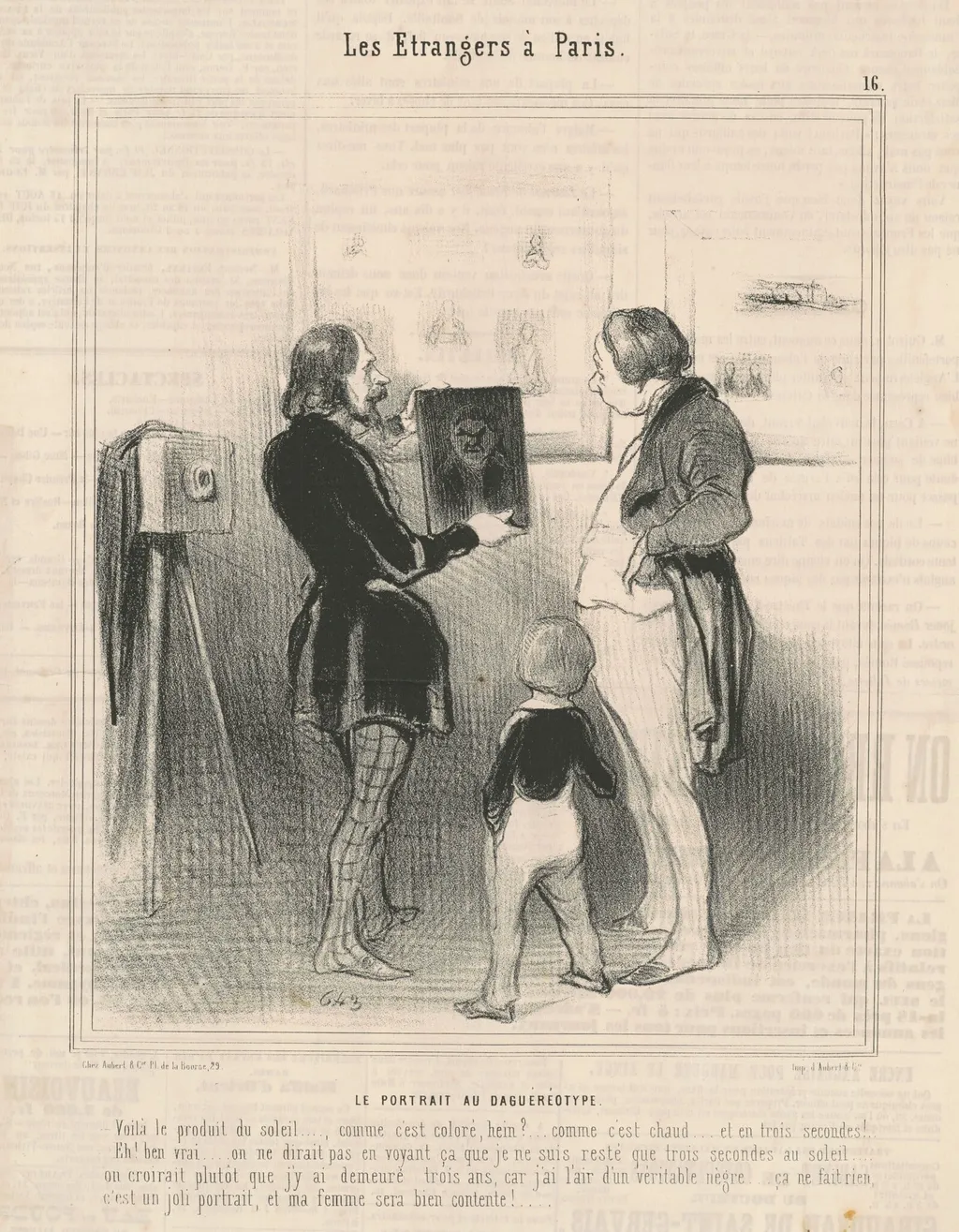
Le portrait au daguéréotype is an ink print by the Romanticist artist Honoré Daumier. It dates from 1844 and is held in the collection of the National Gallery of Art.
About this work
Overview
Le Portrait au Daguéréotype is a lithograph by Honoré Daumier, featuring three figures in an interior space filled with photographic elements, highlighting the burgeoning interest in photography during the mid-19th century.
Subject & Meaning
The lithograph depicts a man examining a photograph in profile, a woman draped in a light outfit with a dark shawl, and a child turned away, set amidst a camera and framed pictures, underscoring the era's fascination with the new medium of photography.
Technique & Style
Created using lithography, the work showcases Daumier's use of this printmaking technique to convey the domestic embrace of photography, with the medium's expressive capabilities suiting the scene's everyday, observational quality.
Context
Produced in the mid-19th century, the piece reflects the period's transitional moment in visual culture, as photography began to influence societal habits and artistic practices, with the lithograph serving as a commentary on this shift.
History & Provenance
While specific ownership histories are not detailed here, the work's creation aligns with Daumier's prolific output of socially observant lithographs, suggesting its origin within his broader critique and reflection of contemporary Parisian life.
Legacy
Le Portrait au Daguéréotype contributes to the historical record of photography's early impact on society, offering a visual document of its integration into daily life, as captured through Daumier's lithographic lens.
Artist & collection

Artist
Honoré-Victorin Daumier was a French painter, sculptor, and printmaker, whose many works offer commentary on the social and political life in France, from the Revolution of 1830 to the fall of the Second French Empire in 1870.









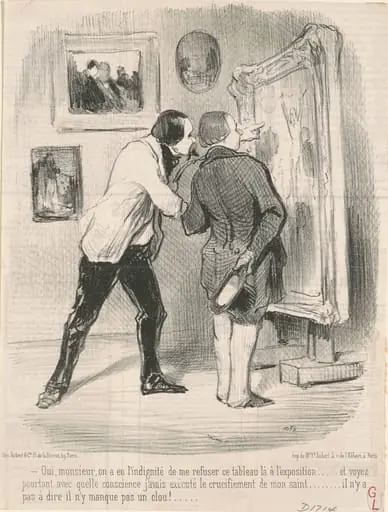 Oui ... on a eu l'indignité de me refuser ce tableau ...
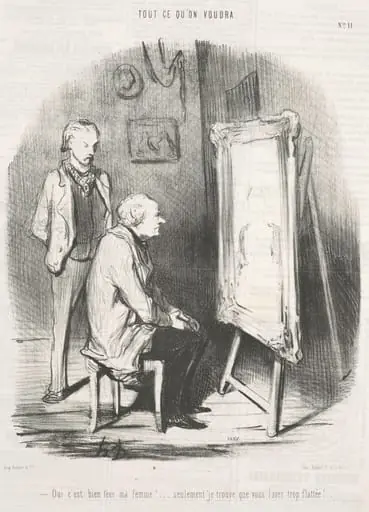 Oui c'est bien feue ma femme! ...
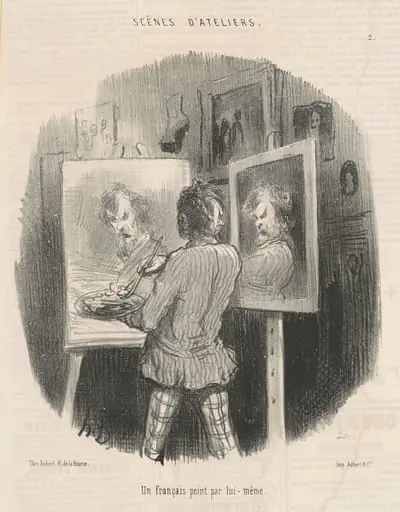 Un français peint par lui-même
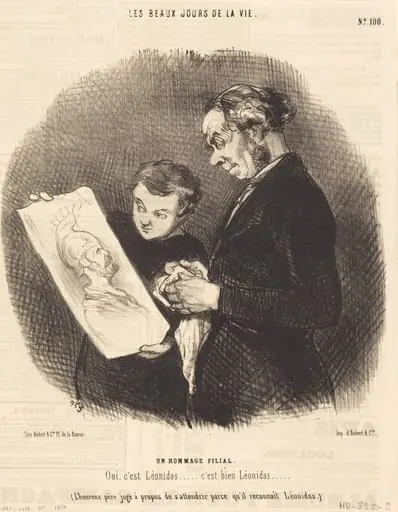 Un Hommage filial
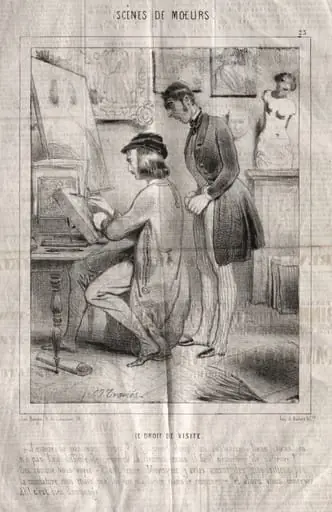 Scènes de moeurs: La Droit de visite. J'espère ne pas vous gener?...
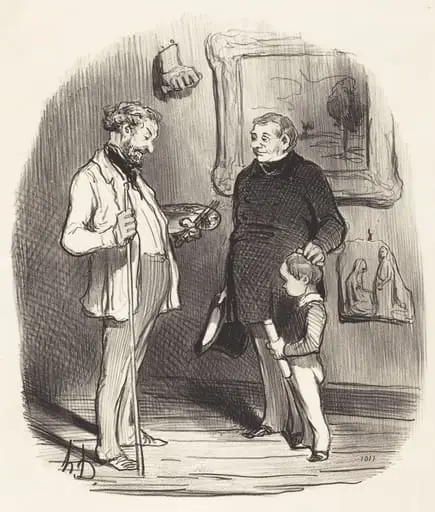 V'la mon petit... s'il n'a pas assez de moyens...
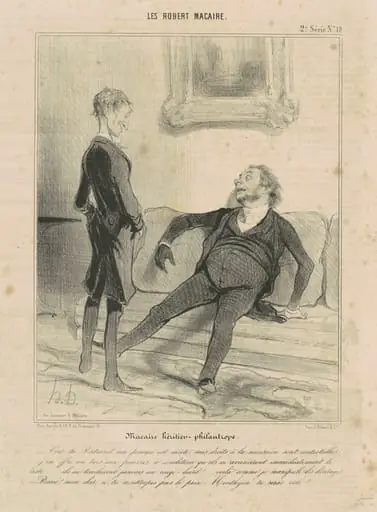 Macaire Hértier-Philantrope
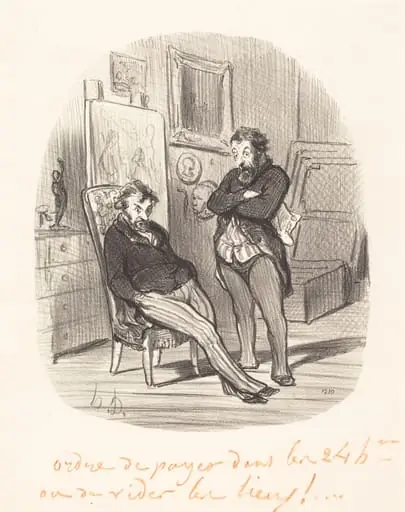 Inconvénient d'envoyer un mauvais tableau...
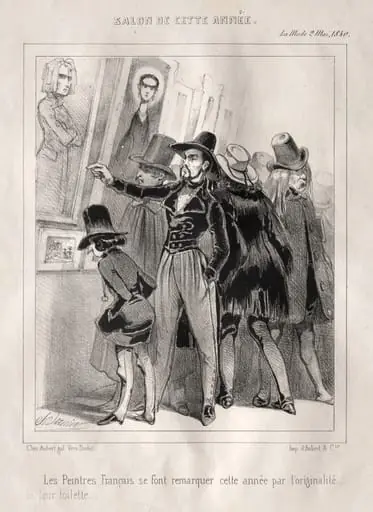 Les Peintres français se font remarquer cette année par l'originalité de leur toilette
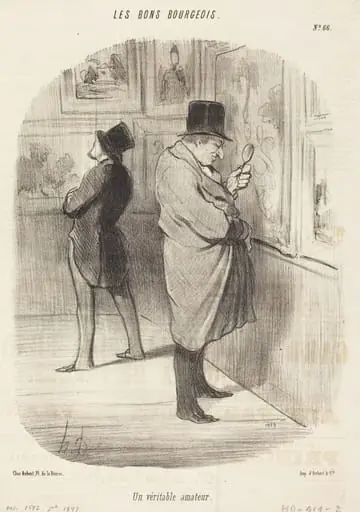 Un Veritable amateur