Artwork
Inconvénient d'envoyer un mauvais tableau...
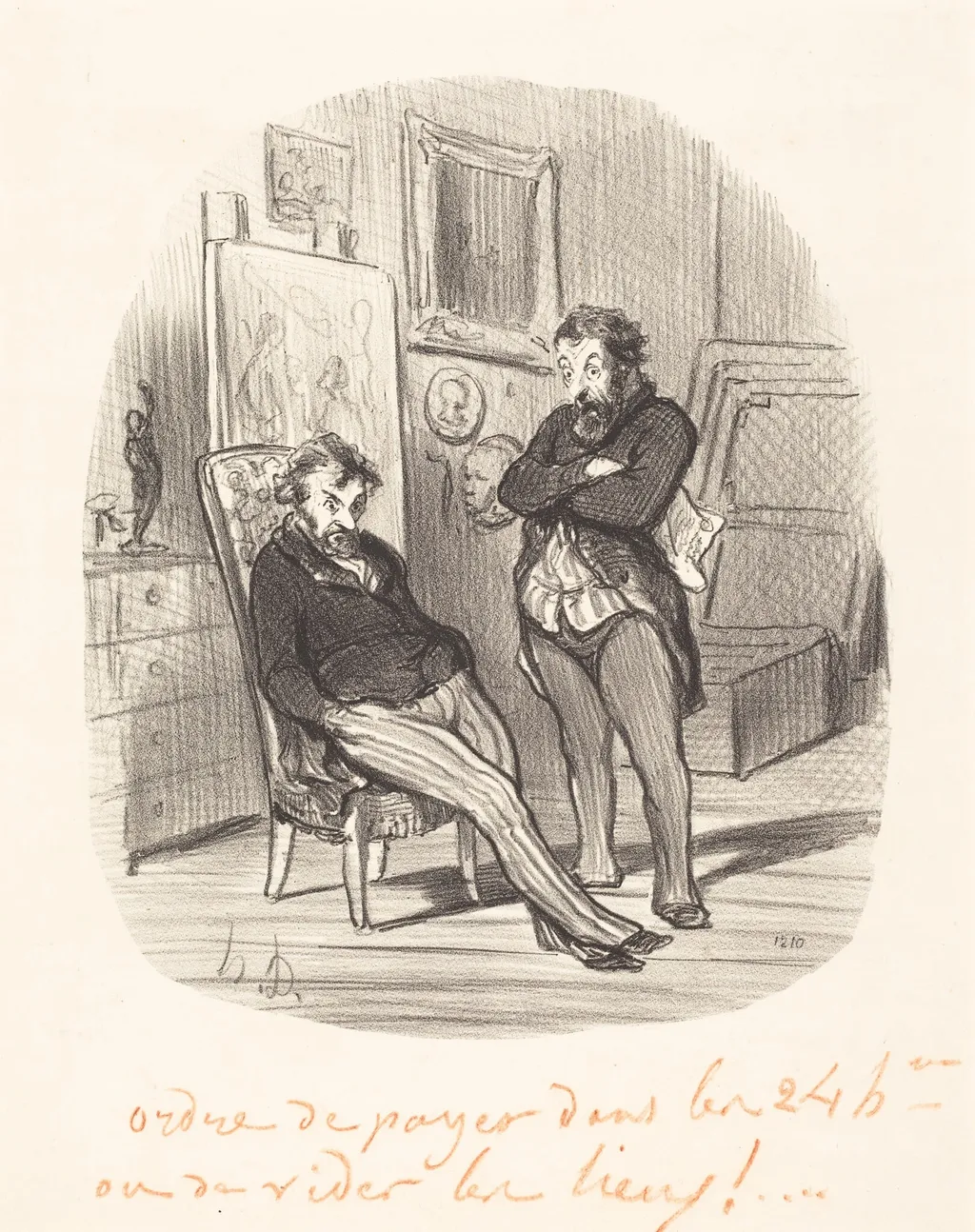
Inconvénient d'envoyer un mauvais tableau... is an ink print by the Romanticist artist Honoré Daumier. It dates from 1848 and is held in the collection of the National Gallery of Art. Created in 1848, the lithograph titled *Inconvénient d'envoyer un mauvais tableau.
About this work
Overview
An easel bearing an unfinished canvas, shelves crowded with artworks, and a modest statue complete the scene, conveying a moment of artistic dispute.
Created in 1848, the lithograph titled *Inconvénient d'envoyer un mauvais tableau...* presents a cramped interior where two men confront each other amid a tangle of artistic paraphernalia. One figure, seated and clutching a small dog, appears resigned, while the other stands, gesturing sharply and holding a rolled document. An easel bearing an unfinished canvas, shelves crowded with artworks, and a modest statue complete the scene, conveying a moment of artistic dispute.
Subject & Meaning
The composition captures a dispute over a painting’s quality, suggesting tension between creator and patron or critic. The seated man's grip on the dog may imply a desire for comfort amid criticism, whereas the standing man's animated posture reflects frustration. The cluttered studio, filled with half‑finished works, underscores the pressures of artistic production and hints at Daumier’s broader critique of the art market and its patrons.
Technique & Style
Executed as a lithograph, the work employs the medium’s capacity for fine line work and tonal variation to render the cramped space and expressive gestures. Daumier’s characteristic satirical edge appears in the exaggerated postures and the stark contrast between the figures, while the detailed rendering of objects—easel, shelves, statue—demonstrates his command of the printmaking process to convey narrative depth within a single sheet.
Context
The year of its production coincided with the revolutionary upheavals that followed the 1848 French February Revolution. Daumier, already known for his politically charged caricatures in publications such as *La Caricature* and *Le Charivari*, used this image to reflect republican sentiments, subtly critiquing the established artistic hierarchy and the influence of aristocratic and clerical patrons during a period of social transformation.
History & Provenance
The lithograph was produced as part of Daumier’s prolific output of prints intended for wide distribution, aligning with his practice of reaching a broad audience through affordable media. Original impressions circulated among collectors of the period, and subsequent holdings have been documented in several European museum collections, confirming its continued relevance to studies of 19th‑century French print culture.
Artist & collection
Artist
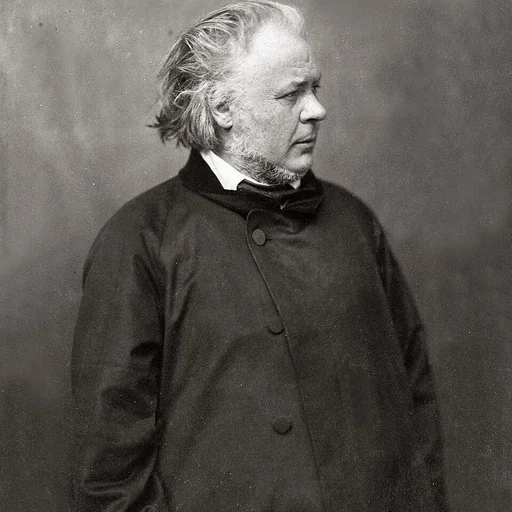
Honoré-Victorin Daumier was a French painter, sculptor, and printmaker, whose many works offer commentary on the social and political life in France, from the Revolution of 1830 to the fall of the Second French Empire in 1870.









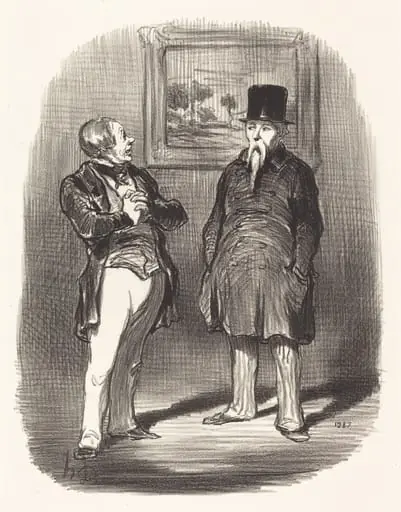 Tiens... je ne te reconnaissais pas...
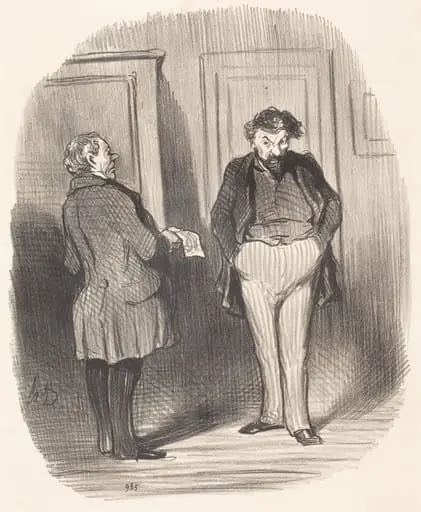 Pourriez-vous me dire...? J'ai la grippe!...
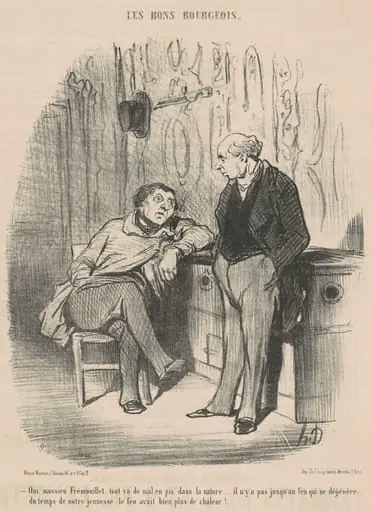 Oui, Mossieu Fremouillet, tout va de mal en pis ...
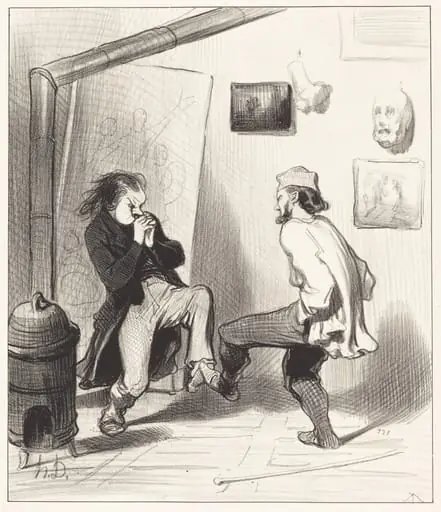 Quand on a brulé son dernier chevalet!
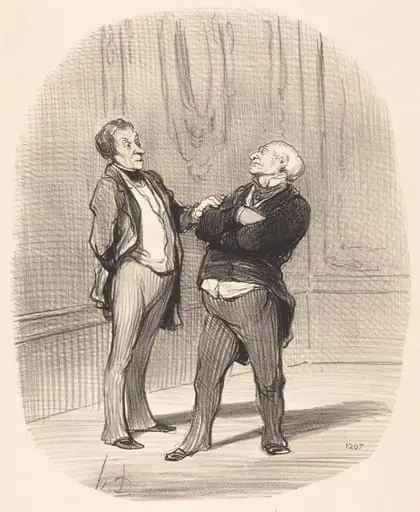 Il y a la guerre... les loyers vont... diminuer...
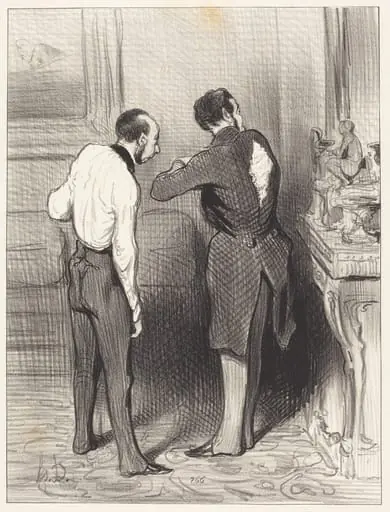 Ton habit me convient, je te l'emprunte...
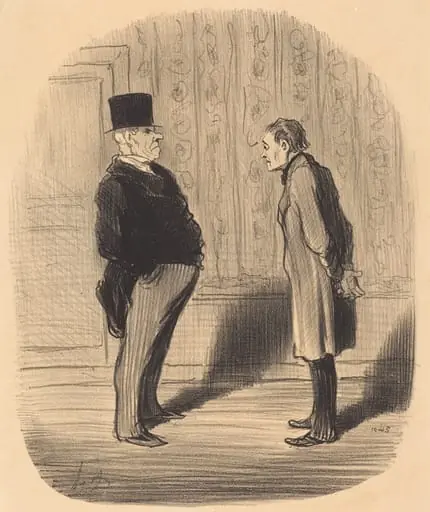 Eh! bien monsieur et mes trois termes...
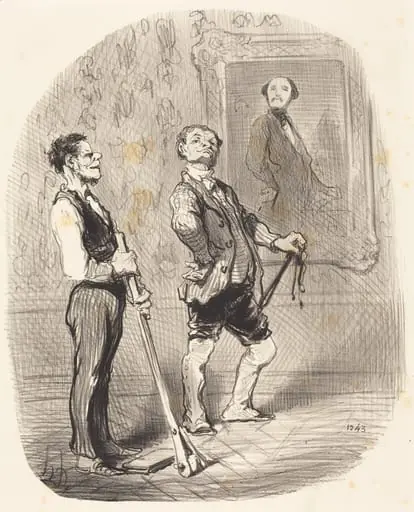 Il y a trois mois, m'sieu l'vicomte posait... comme ça...
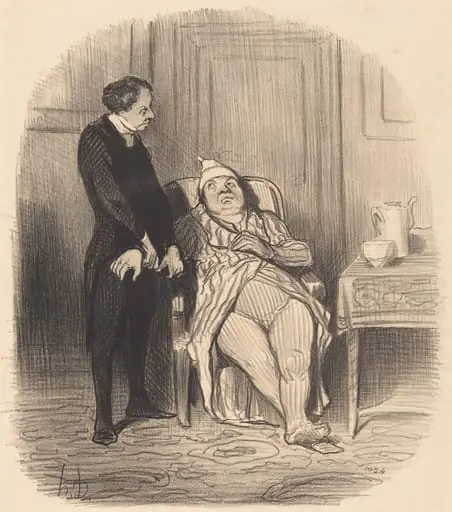 Ah! docteur... je crois... que j'suis poitrinaire!
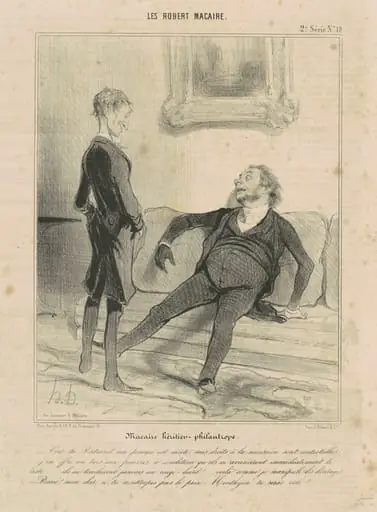 Macaire Hértier-Philantrope