Artwork
Macaire Hértier-Philantrope
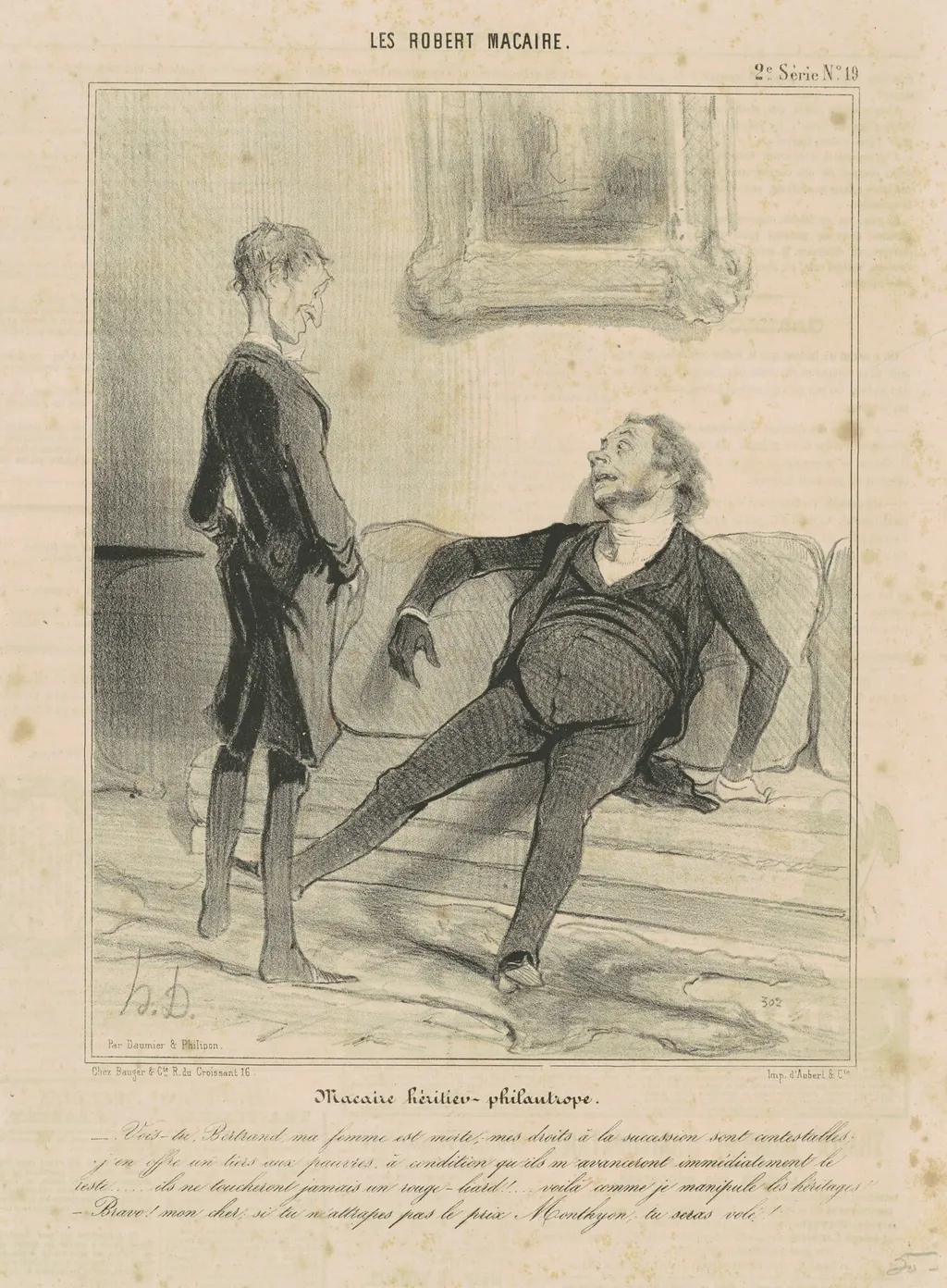
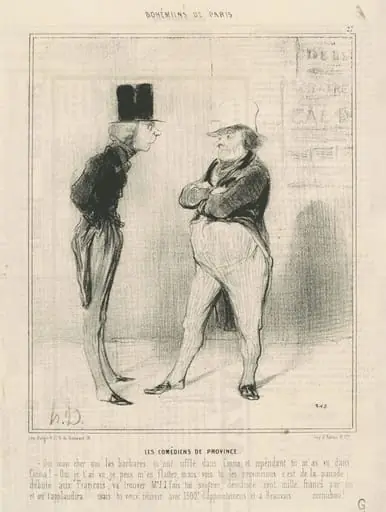
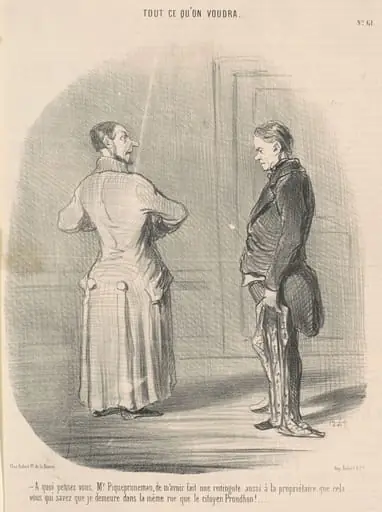
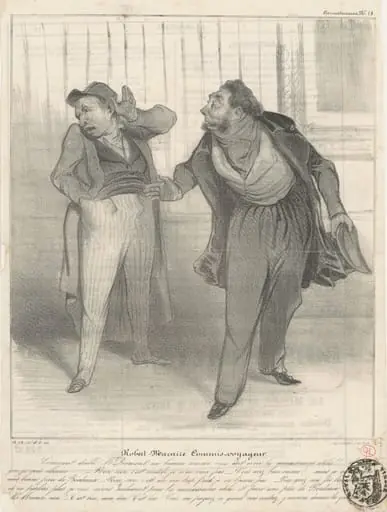
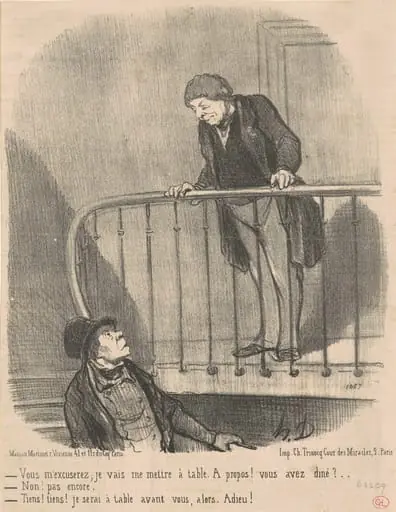
Macaire Hértier-Philantrope is an ink print by the Romanticist artist Honoré Daumier. It dates from 1841 and is held in the collection of the National Gallery of Art.
About this work
Overview
Honoré Daumier created the lithograph 'Macaire Hértier-Philantrope' as part of his series of satirical prints examining French society in the mid-19th century.
Honoré Daumier created the lithograph 'Macaire Hértier-Philantrope' as part of his series of satirical prints examining French society in the mid-19th century. Rendered in stark monochrome, the work captures a quiet moment between two men, using minimal detail to convey psychological tension and social dynamics. The print exemplifies Daumier’s ability to distill complex human interactions into a single, evocative image.
Subject & Meaning
The scene portrays two men in an interior space: one stands upright with an air of assurance, while the other lounges on a couch, appearing passive or resigned. Their contrasting postures suggest a power imbalance or unspoken transaction, possibly reflecting themes of patronage, manipulation, or social pretense. Daumier avoids explicit narrative, instead inviting viewers to infer the nature of their relationship through subtle gesture and posture.
Technique & Style
Daumier employed lithography to achieve sharp contrasts between ink and paper, using bold, fluid lines to define form without shading or texture. The background is nearly empty, focusing attention entirely on the figures’ expressions and body language. His economy of line—reducing detail to essentials—enhances the psychological immediacy of the scene, a hallmark of his graphic style.
History & Provenance
Created around 1845–1850, the print was likely published in a periodical or as part of a portfolio targeting middle-class audiences. Daumier regularly contributed to satirical journals like 'La Caricature' and 'Le Charivari,' where such images circulated widely. The title references a fictional or symbolic figure, reinforcing the work’s role as social critique rather than portraiture.
Context
During the July Monarchy and early Second Republic, French society was undergoing rapid change, with new class dynamics and public scrutiny of wealth and influence. Daumier’s prints responded to this climate, using humor and irony to expose hypocrisy among the bourgeoisie. 'Macaire Hértier-Philantrope' fits within a broader body of work that questioned the moral claims of the powerful.
Legacy
Daumier’s lithographs, including this one, influenced later generations of illustrators and expressionist artists for their psychological depth and formal restraint. Though not widely exhibited in his lifetime, his prints gained recognition in the 20th century as pioneering works of social realism. Today, they remain key examples of how printmaking could serve as a vehicle for critical observation.
Artist & collection

Artist
Honoré-Victorin Daumier was a French painter, sculptor, and printmaker, whose many works offer commentary on the social and political life in France, from the Revolution of 1830 to the fall of the Second French Empire in 1870.