Artwork
Les Voisines devant le Juge de paix
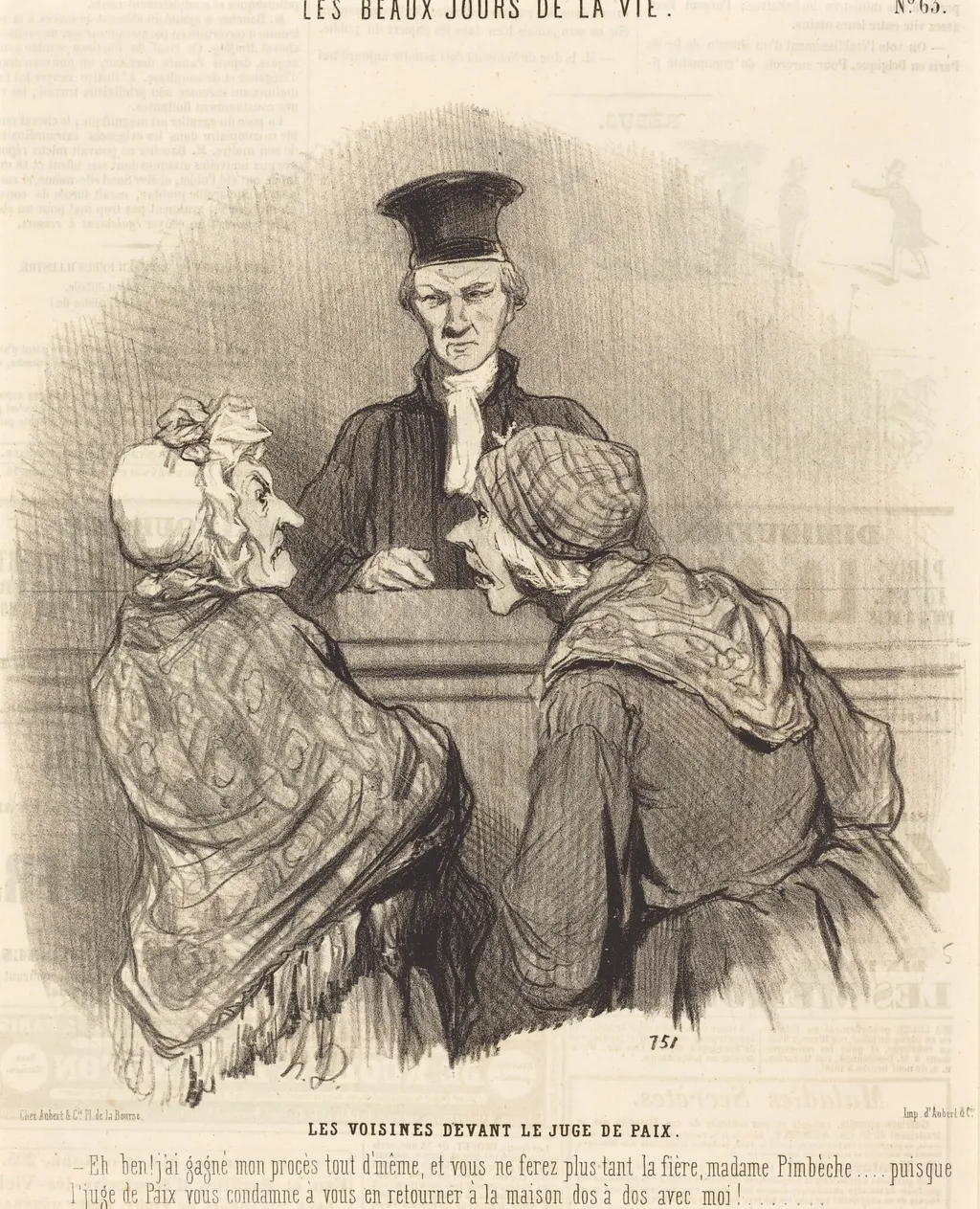
Les Voisines devant le Juge de paix is an ink print by the Romanticist artist Honoré Daumier. It dates from 1845 and is held in the collection of the National Gallery of Art.
About this work
Overview
The work belongs to a larger body of satirical imagery critiquing everyday French society, particularly its bureaucratic and judicial routines.
Created in 1845, this lithograph by Honoré Daumier captures a minor legal proceeding between two women in a magistrate’s office. Executed on newsprint, it was likely published in a periodical, reflecting Daumier’s practice of using print media to reach a broad audience. The work belongs to a larger body of satirical imagery critiquing everyday French society, particularly its bureaucratic and judicial routines.
Subject & Meaning
The scene portrays two neighbors brought before a justice of the peace, their dispute likely over trivial matters like noise or property. The judge, rigid and detached, looms above them, while the women appear weary and disheveled. Daumier highlights the absurdity of elevating petty grievances to formal legal proceedings, subtly mocking the pretensions of authority and the burdens placed on ordinary citizens by the system.
Technique & Style
Daumier employed rapid, expressive linework characteristic of lithography on newsprint, allowing for swift reproduction in newspapers. The figures are rendered with minimal detail, yet their postures and expressions convey psychological depth. The contrast between the judge’s stiff formality and the women’s slumped, disarrayed bodies enhances the narrative tension, emphasizing social imbalance through visual economy.
History & Provenance
Produced during Daumier’s most active period of political and social commentary, the print emerged from his collaboration with French illustrated journals. Though originally intended for ephemeral publication, its cultural resonance preserved it in private and institutional collections. Its survival reflects the growing recognition of print as a legitimate medium for artistic and critical expression in 19th-century France.
Context
In mid-19th-century France, the justice of the peace was a common point of contact between citizens and state authority, often handling minor civil disputes. Daumier’s depiction aligns with broader public skepticism toward legal institutions, especially under the July Monarchy. His work tapped into republican ideals, portraying ordinary people as victims of bureaucratic overreach rather than as subjects of justice.
Legacy
Daumier’s lithographs, including this one, influenced later generations of social realists and cartoonists by demonstrating how everyday scenes could carry critical weight. His use of accessible media and sharp observation helped redefine printmaking as a tool for democratic critique, paving the way for modern editorial illustration and the visual language of social commentary.
Artist & collection
Artist
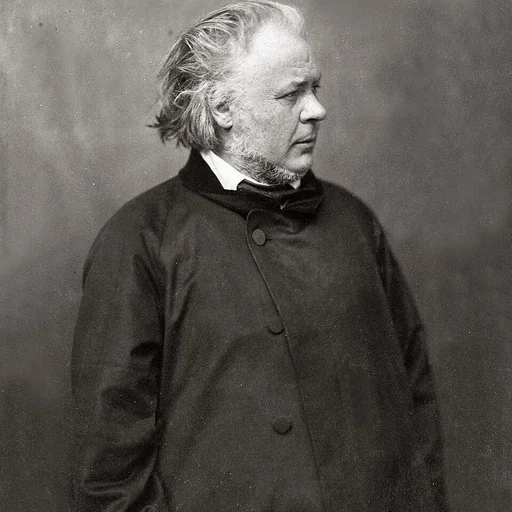
Honoré-Victorin Daumier was a French painter, sculptor, and printmaker, whose many works offer commentary on the social and political life in France, from the Revolution of 1830 to the fall of the Second French Empire in 1870.

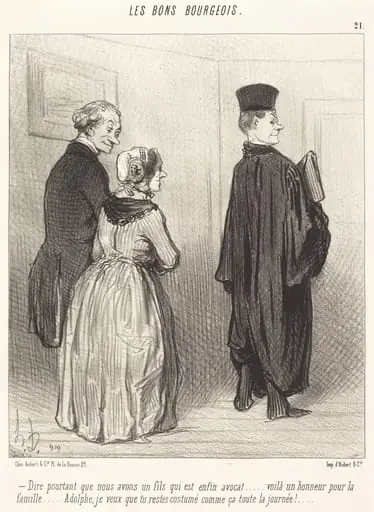 Dire... que nous avons un fils qui est... avocat...
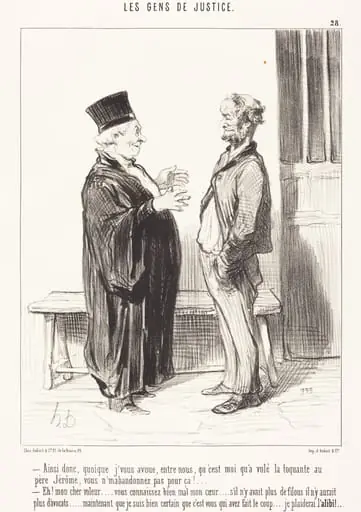 Ainsi donc, quoique j'vous avoue...
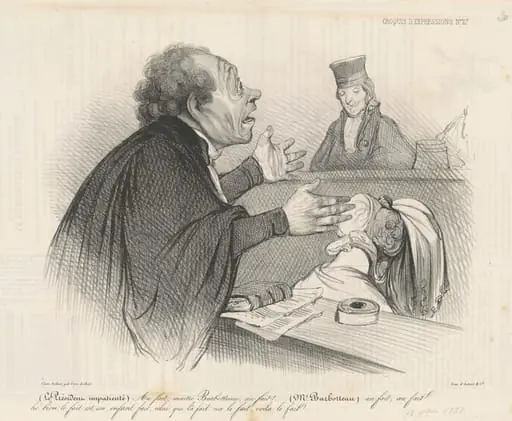 Au fait, maitre Barbotteau...
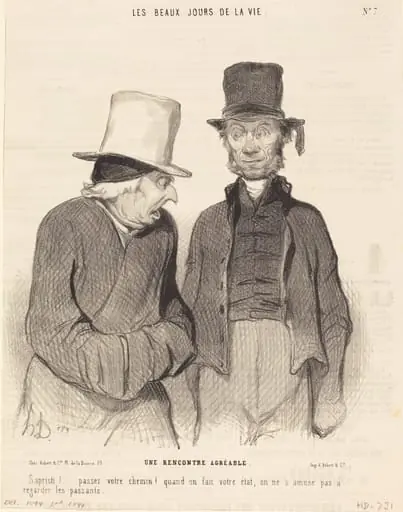 Une Rencontre agréable
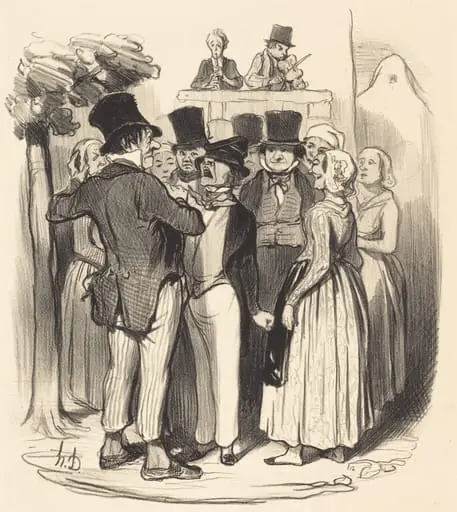 Ah! Gringalet d'Paris... tu viendras faire danser...
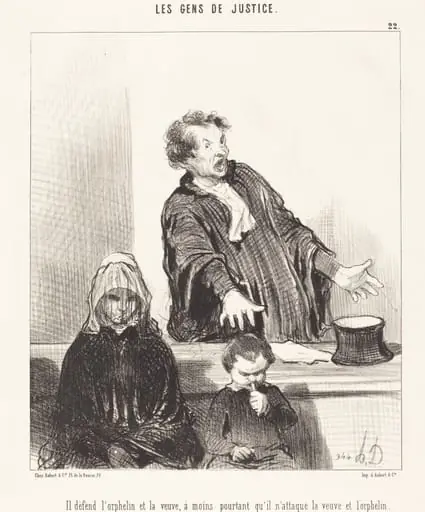 Il défend l'orphelin et la veuve, a moins...
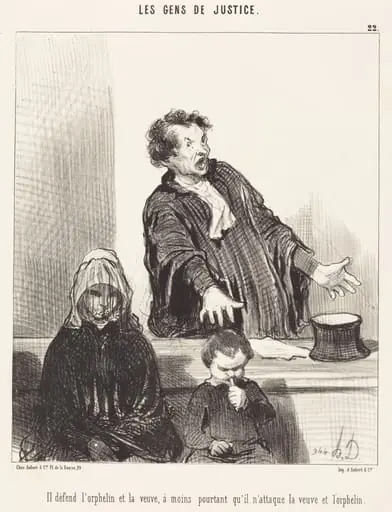 Il défend l'orphelin et la veuve, a moins...
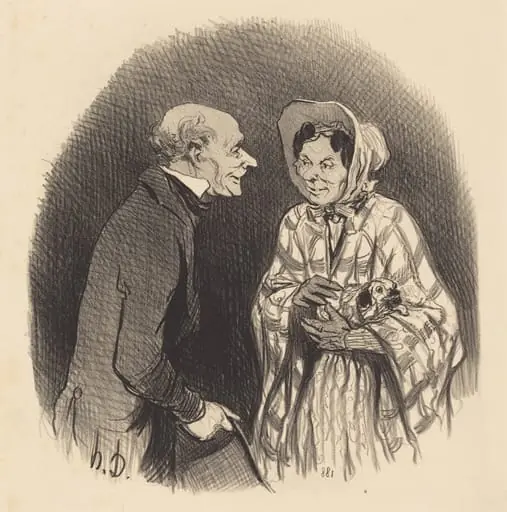 Une Nouvelle connaissance