Artwork
Il défend l'orphelin et la veuve, a moins...
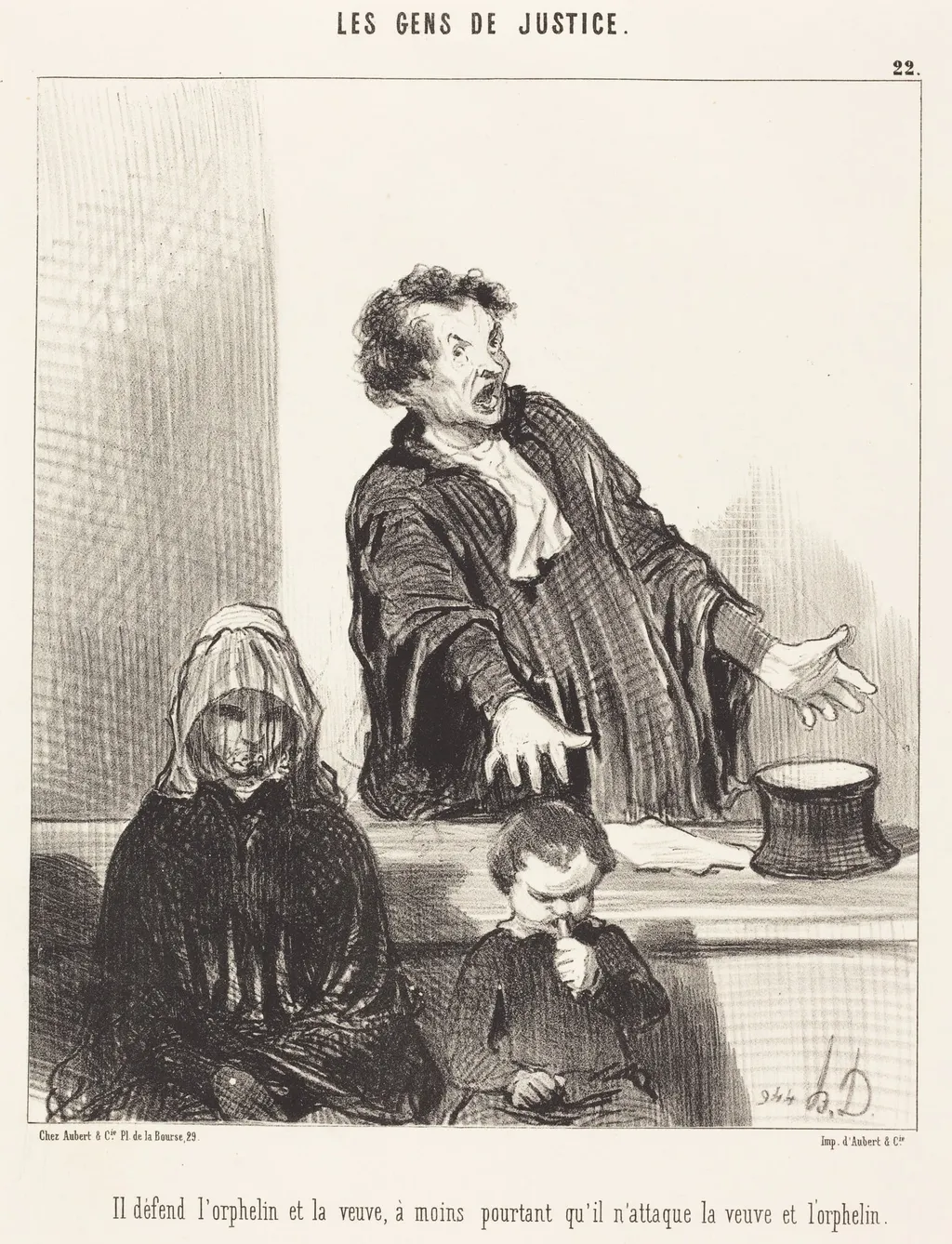
Il défend l'orphelin et la veuve, a moins... is an ink print by the Romanticist artist Honoré Daumier. It dates from 1846 and is held in the collection of the National Gallery of Art.
About this work
Overview
Created in 1846, this lithograph by Honoré Daumier is one of many political satires produced for French periodicals like *Le Charivari*.
Created in 1846, this lithograph by Honoré Daumier is one of many political satires produced for French periodicals like *Le Charivari*. It captures a moment of performative justice, using minimal detail to convey moral hypocrisy. Daumier’s work often targeted the legal and political elite, and this piece reflects his commitment to exposing institutional failures through accessible, widely distributed imagery.
Subject & Meaning
The scene depicts a magistrate, face contorted in outrage, gesturing toward a cowering woman and child. The title, translating to 'He defends the orphan and the widow, unless...', implies a breach of moral duty. Rather than offering protection, the figure embodies the corruption of justice—using the language of virtue to mask indifference or exploitation. The figures’ postures suggest vulnerability and fear, contrasting sharply with the official’s theatrical fury.
Technique & Style
Daumier employed lithography to achieve rapid, expressive lines with strong tonal contrasts. His loose, energetic strokes define the judge’s agitated form and the passive figures behind him. The lack of fine detail focuses attention on gesture and composition. The stark black-and-white medium amplifies the moral dichotomy, turning the image into a visual indictment rather than a literal narrative.
History & Provenance
The print was published in 1846 during the July Monarchy, a time of increasing censorship and social unrest. Daumier had previously been imprisoned for caricaturing King Louis-Philippe, yet continued producing critical work under pseudonyms. This lithograph likely appeared in *Le Charivari*, where his satires reached a broad urban audience. Its survival in museum collections reflects its enduring status as a document of 19th-century political dissent.
Context
In mid-19th century France, the legal system was widely perceived as favoring the wealthy and powerful. Daumier’s prints responded to public disillusionment, especially after the 1830 revolution failed to deliver meaningful reform. By depicting a judge who invokes moral duty while embodying its opposite, he tapped into widespread skepticism toward institutions meant to protect the vulnerable.
Legacy
Daumier’s lithographs influenced later generations of social realists and political cartoonists. His ability to distill complex societal critiques into single, potent images set a precedent for visual journalism. Though created for ephemeral publications, works like this one endured as testaments to the power of satire in holding authority accountable, remaining relevant in discussions of justice and representation.
Artist & collection
Artist
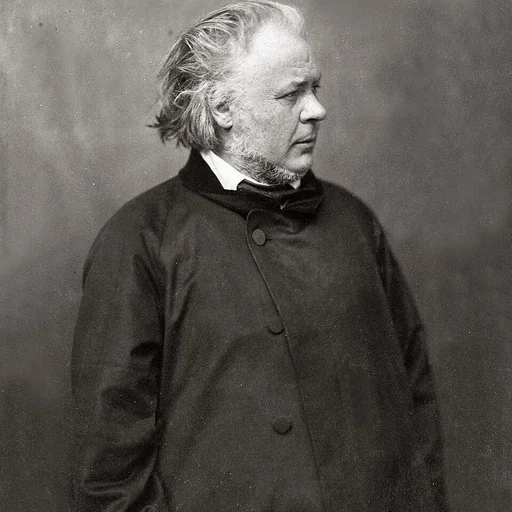
Honoré-Victorin Daumier was a French painter, sculptor, and printmaker, whose many works offer commentary on the social and political life in France, from the Revolution of 1830 to the fall of the Second French Empire in 1870.

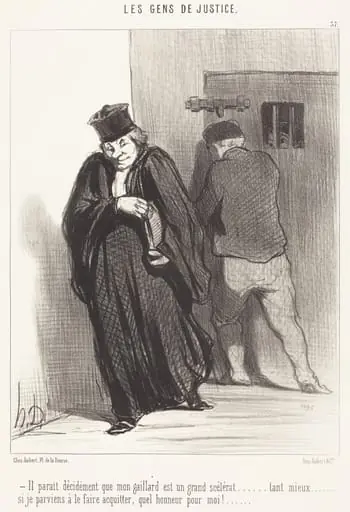 Il parait... que mon gaillard est un grand scélérat...
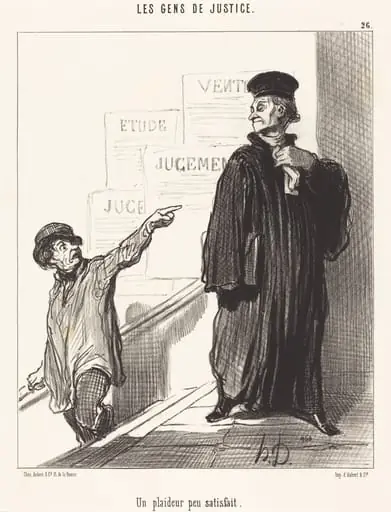 Un Plaideur peu satisfait
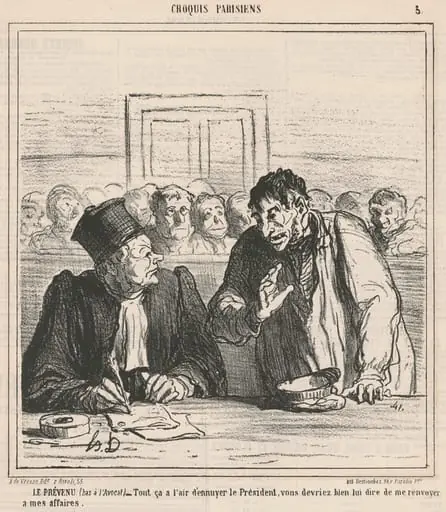 Le prèvenu
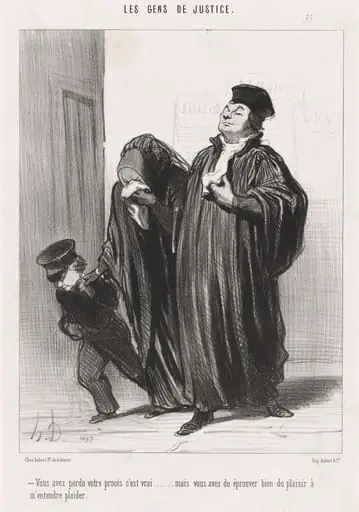 Vous avez perdu votre procès c'est vrai...
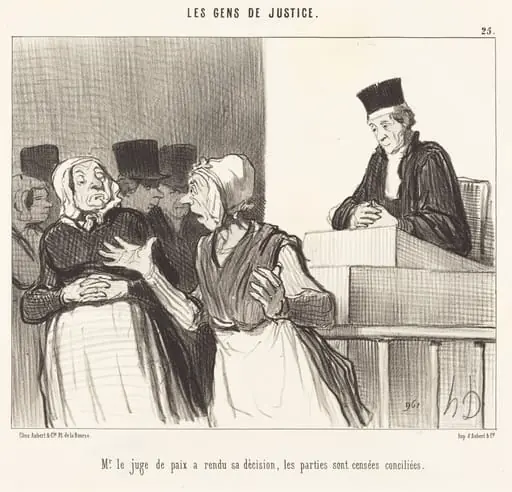 Mr. le Juge de paix a rendu sa décision...
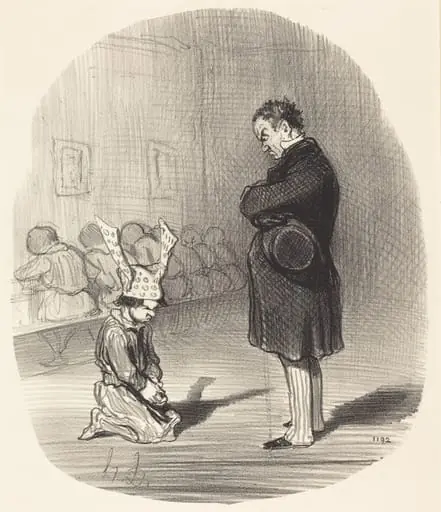 Les Suites d'une insurrection
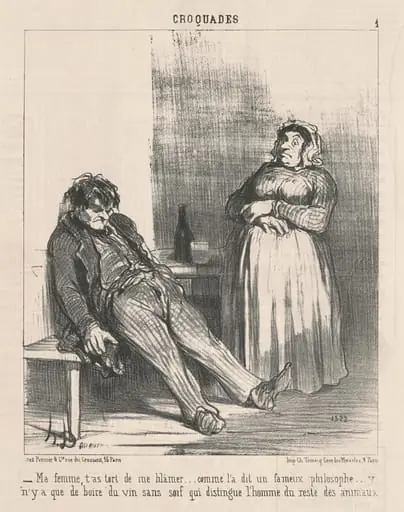 Ma femme, t'as tort de me blamer ...
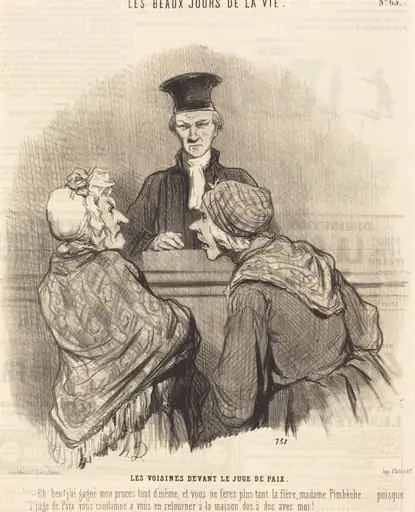 Les Voisines devant le Juge de paix
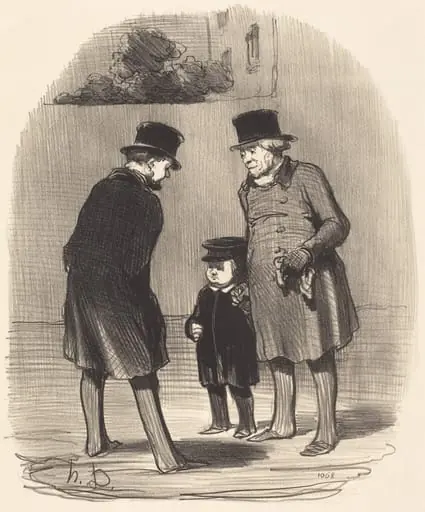 Oui, monsieur Chapuzot...
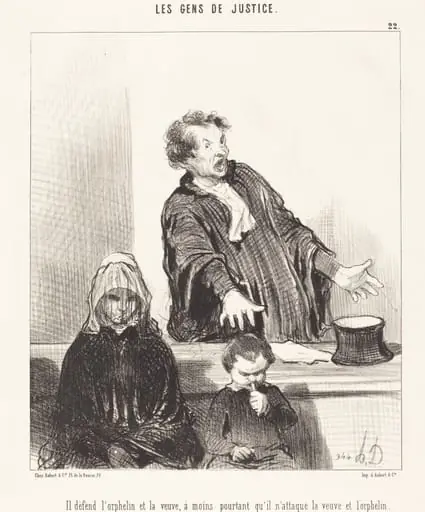 Il défend l'orphelin et la veuve, a moins...