Artwork
Ohé! ... Combien votre lievre? ...
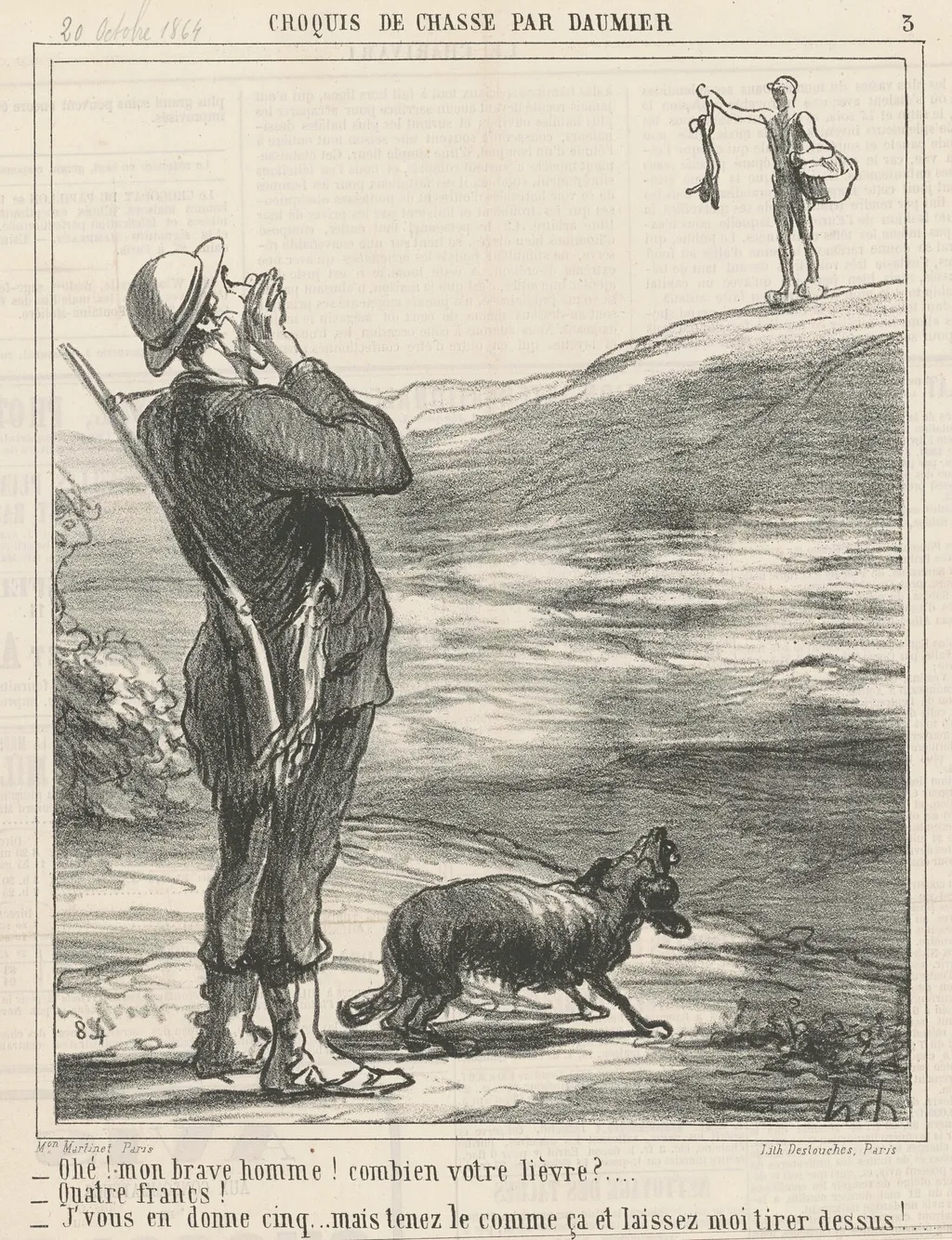
Ohé! ... Combien votre lievre? ... is an ink print by the Impressionist artist Honoré Daumier. It dates from 1864 and is held in the collection of the National Gallery of Art.
About this work
Overview
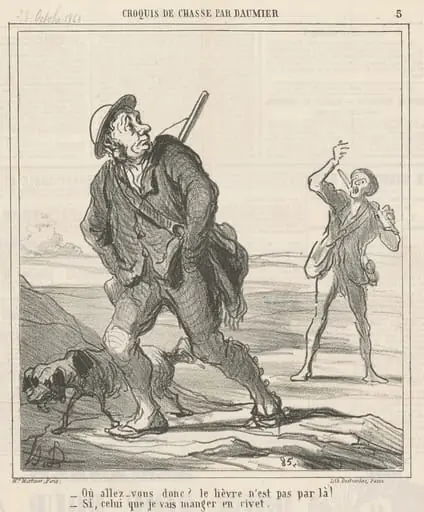
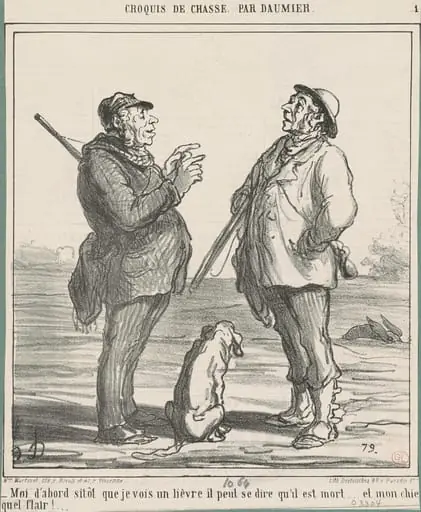
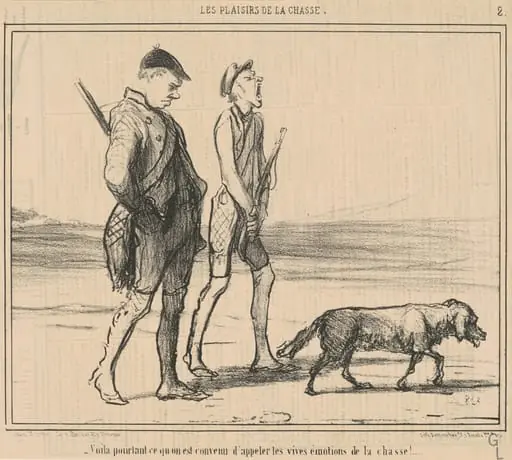
Honoré Daumier’s lithograph titled Ohé! … Combien votre lièvre? presents a brief, lively tableau of a hunt. In the foreground a man shouts toward a companion who holds a caught hare, while a dog lingers nearby. The composition captures a moment of interaction, rendered in the medium of stone‑based printmaking.
Subject & Meaning
The scene juxtaposes the hunter’s call with the tangible result of the chase, a captured hare, suggesting a playful commentary on the rituals of sport. Daumier’s inclusion of the dog and the exaggerated gestures hints at a satirical observation of social customs surrounding leisure and competition in his era.
Technique & Style
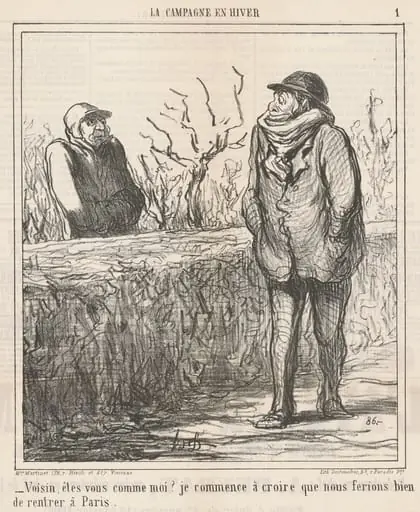
Executed in lithography, the work relies on bold, sweeping lines that define figures and convey movement. Daumier’s characteristic use of stark contrast and fluid contours gives the print a dynamic, almost caricatured quality, reinforcing the humorous tone while maintaining a clear visual narrative.
Context
Created during the mid‑19th century, the print reflects Daumier’s broader engagement with everyday French life, where he often employed wit to critique contemporary society. Hunting, a popular pastime among the bourgeoisie, serves here as a vehicle for subtle social commentary, aligning with the artist’s reputation for satirical illustration.
Artist & collection

Artist
Honoré-Victorin Daumier was a French painter, sculptor, and printmaker, whose many works offer commentary on the social and political life in France, from the Revolution of 1830 to the fall of the Second French Empire in 1870.