Artwork
Mon dieu, mon dieu ... pourvu ...
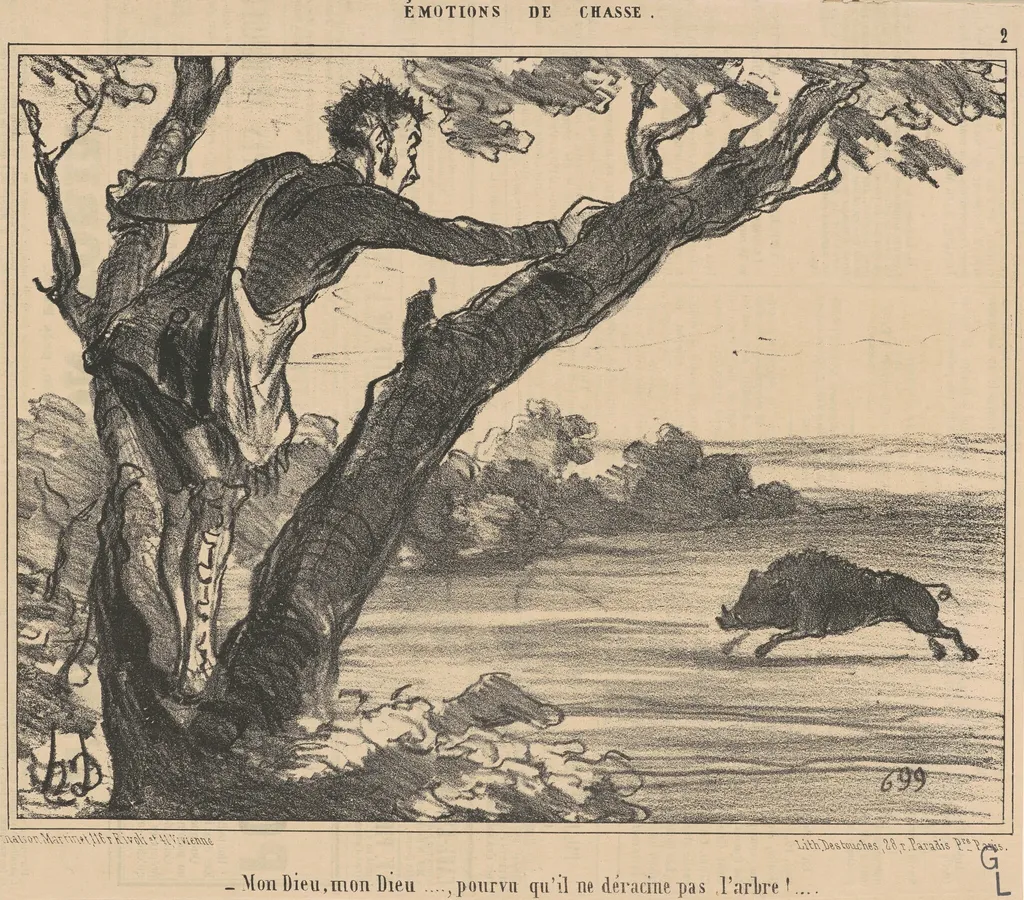
Mon dieu, mon dieu ... pourvu ... is an ink print by the Impressionist artist Honoré Daumier. It dates from 1854 and is held in the collection of the National Gallery of Art.
About this work
Overview
This lithograph by Honoré Daumier captures a quiet moment of observation: a man seated high in a tree, watching a wild boar sprint through the underbrush below.
This lithograph by Honoré Daumier captures a quiet moment of observation: a man seated high in a tree, watching a wild boar sprint through the underbrush below. Rendered in stark, energetic lines, the print conveys motion and stillness in sharp contrast. The composition relies on minimal detail and strong graphic force, typical of Daumier’s approach to printmaking as a medium for social and natural observation.
Subject & Meaning
The scene presents a solitary human figure in passive surveillance, detached from the animal’s urgent motion. There is no clear narrative of threat or hunt—only observation. This ambiguity invites interpretation: the man may be a hunter, a traveler, or simply a witness. The boar’s wild energy contrasts with the man’s stillness, suggesting a tension between human detachment and the untamed natural world.
Technique & Style
Daumier employed bold, fluid lines to define form and movement, exploiting the lithographic medium’s capacity for rapid, expressive mark-making. The boar’s limbs blur with kinetic energy, while the man’s silhouette remains sharply defined and static. Shading is minimal, relying on contrast and contour to convey depth and motion. The technique prioritizes immediacy over detail, reinforcing the sense of a fleeting, observed moment.
History & Provenance
Created during Daumier’s prolific period of printmaking in the mid-19th century, this work likely appeared in a periodical or portfolio, as was common for his satirical and observational images. Though not among his most widely published pieces, it reflects his consistent interest in rural life and animal behavior. Its provenance traces to private collections and institutional holdings focused on French graphic art of the era.
Context
Daumier produced hundreds of lithographs during a time of rapid social change in France, often depicting ordinary people and animals in unidealized settings. This image aligns with his broader practice of observing nature and human behavior with detached realism. Unlike romanticized depictions of wildlife, his boar is unglamorous, grounded in the physicality of the French countryside.
Legacy
This work exemplifies Daumier’s influence on modern printmaking through his emphasis on expressive line and psychological nuance over decorative finish. Later artists, particularly those in the Expressionist tradition, drew from his ability to convey motion and emotion with economy. Though lesser known than his political cartoons, such images underscore his enduring interest in the raw rhythms of life beyond urban satire.
Artist & collection
Artist
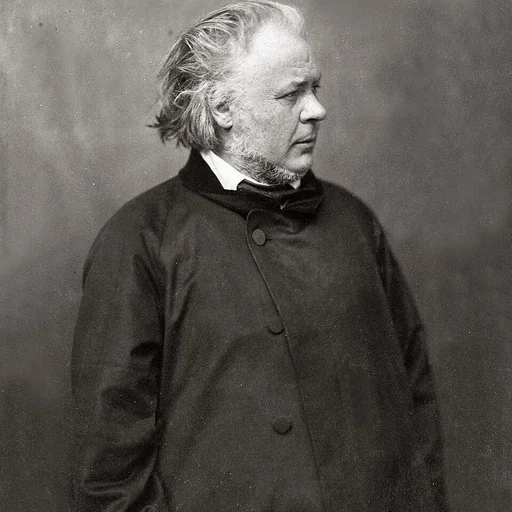
Honoré-Victorin Daumier was a French painter, sculptor, and printmaker, whose many works offer commentary on the social and political life in France, from the Revolution of 1830 to the fall of the Second French Empire in 1870.









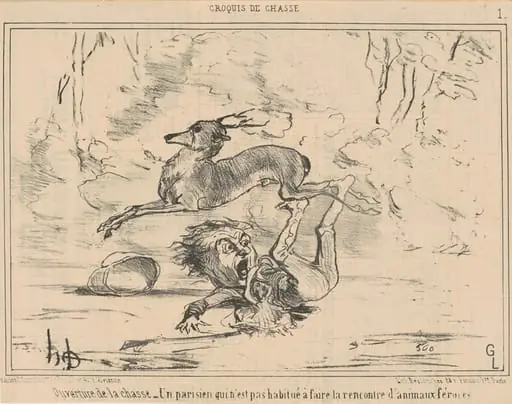 Ouverture de la chasse
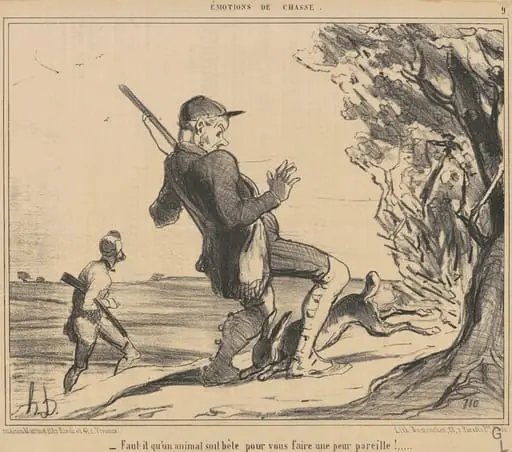 Faut-il qu'un animal soit bête
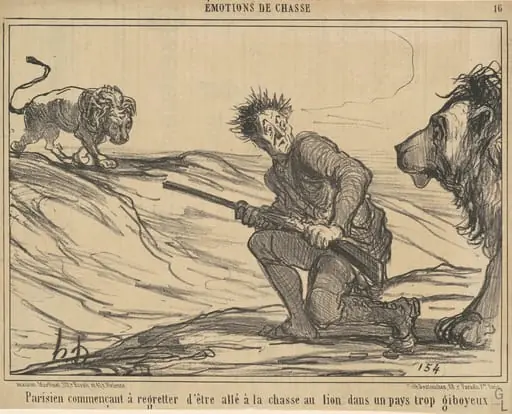 Parisien commencant a regretter ... la chasse au lion ...
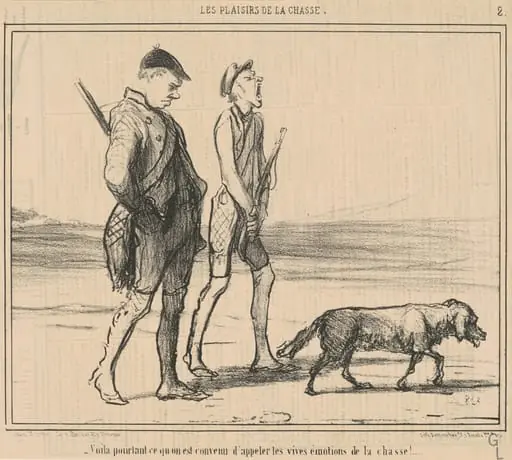 Voila pourtant ce qu'on est convenu d'appeler ...
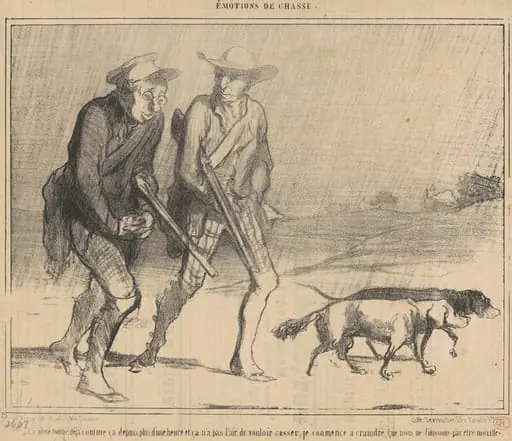 La pluie tombe déja comme ça depuis ...
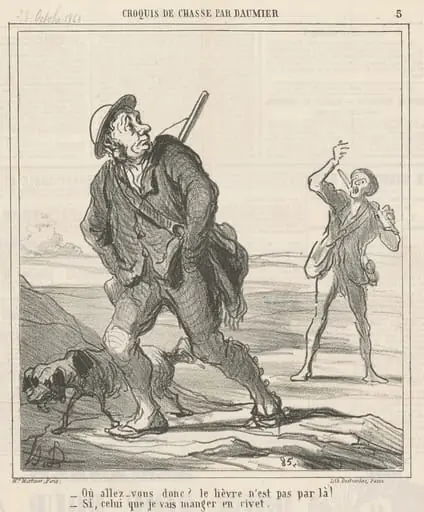 Ou allez-vous donc?
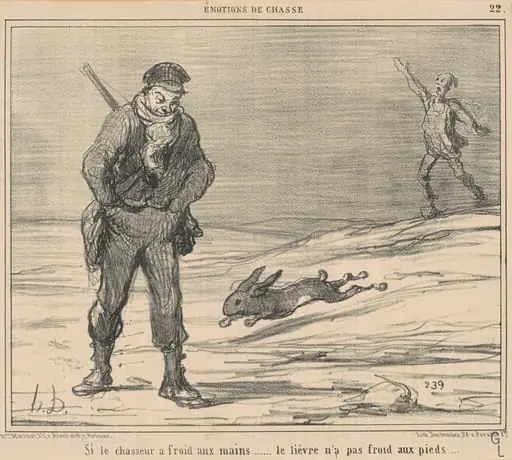 Si le chasseur a froiD ... le lièvre n'a pas froid ...
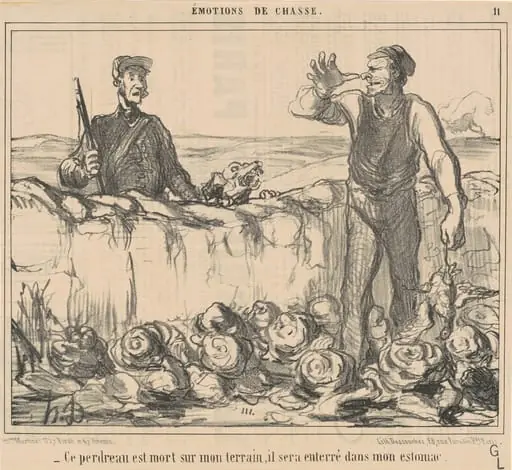 Ce perdreau est mort sur mon terrain ...
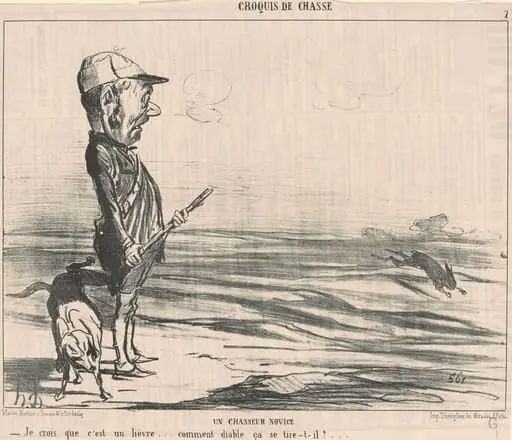 Je crois que c'est un lièvre...
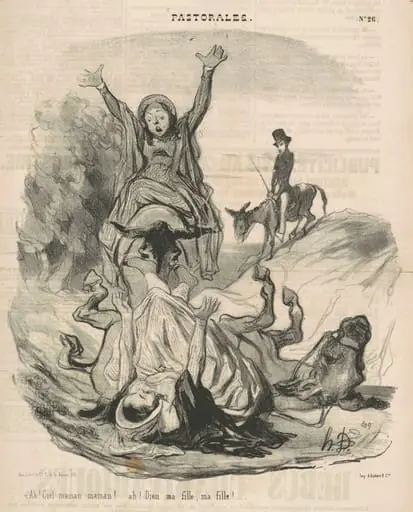 Ah! Ciel maman maman ... Ah! Dieu ma fille ...
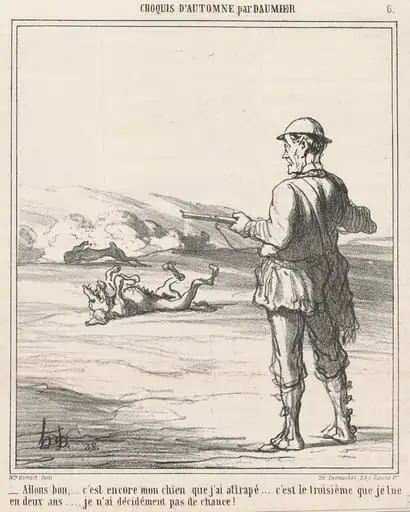 Allons bon ... c'est encore mon chien ...