Artwork
Vue prise aux bains a quatre sous
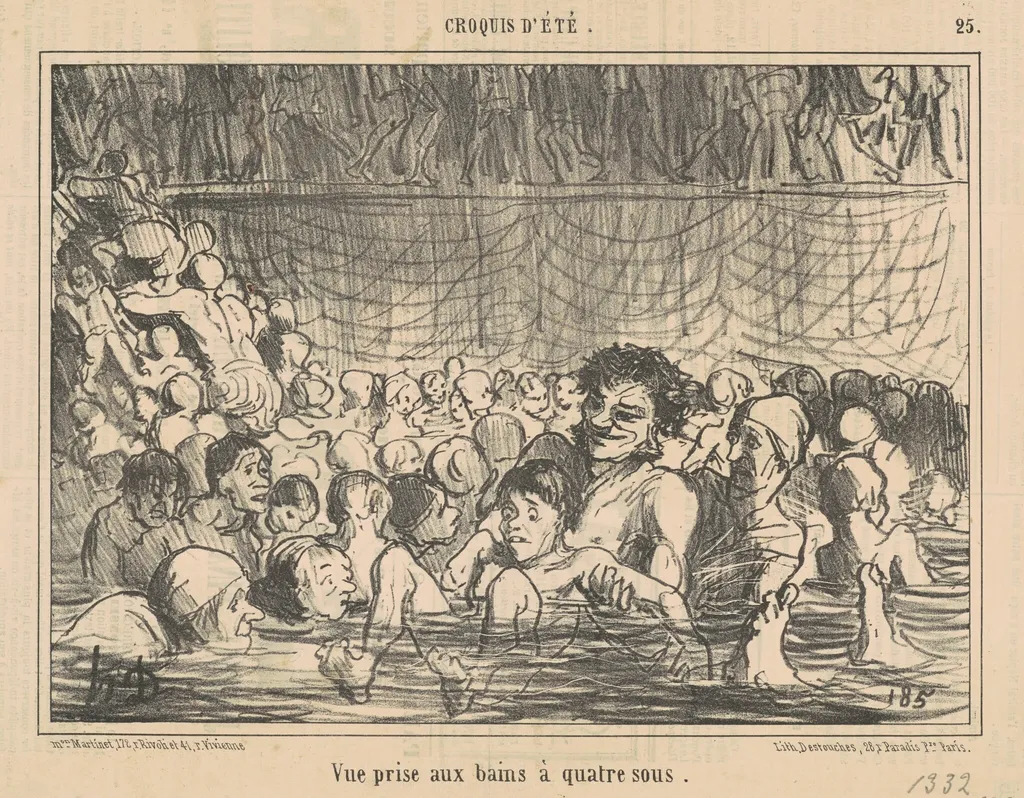
Vue prise aux bains a quatre sous is an ink print by the Impressionist artist Honoré Daumier. It dates from 1858 and is held in the collection of the National Gallery of Art.
About this work
Overview
Daumier’s focus on collective behavior, rather than individual identity, underscores the social character of such environments.
This lithograph by Honoré Daumier portrays a densely packed public bathhouse, where swimmers are shown only from the shoulders up, their heads and caps forming a mosaic of human presence. Created in the mid-19th century, the work reflects the rise of accessible leisure spaces for urban working-class citizens. Daumier’s focus on collective behavior, rather than individual identity, underscores the social character of such environments.
Subject & Meaning
The scene captures ordinary people engaged in mundane activities—adjusting caps, reading newspapers, or simply enduring the crush. Daumier avoids idealization, presenting the bathhouse as a microcosm of public life: chaotic, unglamorous, and revealing of class and gender norms. The absence of nudity and the prevalence of caps suggest modesty and regulation, even in informal settings.
Technique & Style
Daumier employed lithography for its capacity to produce rapid, expressive prints with strong contrasts and fluid lines. His brushwork is economical yet precise, using overlapping silhouettes and minimal detail to convey volume and movement. The medium allowed for wide distribution, aligning with his intent to reach a broad audience through illustrated periodicals.
History & Provenance
Created around 1864, the print was likely published in a French satirical journal, consistent with Daumier’s regular contributions to Le Charivari. It was part of a series documenting Parisian public life, often targeting social pretensions. The work survived through private collections and institutional acquisitions, becoming a documented example of his social commentary in print.
Context
In mid-19th century Paris, public baths were newly established as hygienic and affordable alternatives for the urban poor. These spaces became sites of social mixing, drawing attention from reformers and satirists alike. Daumier’s depiction aligns with broader cultural debates about public health, class, and the changing nature of leisure in industrializing cities.
Legacy
The lithograph remains a key example of Daumier’s commitment to documenting everyday life without sentimentality. Its influence extends to later realist and modernist artists who sought to portray crowds and public spaces with psychological nuance. Though not widely exhibited in his lifetime, it now anchors discussions of 19th-century print culture and social observation.
Artist & collection

Artist
Honoré-Victorin Daumier was a French painter, sculptor, and printmaker, whose many works offer commentary on the social and political life in France, from the Revolution of 1830 to the fall of the Second French Empire in 1870.









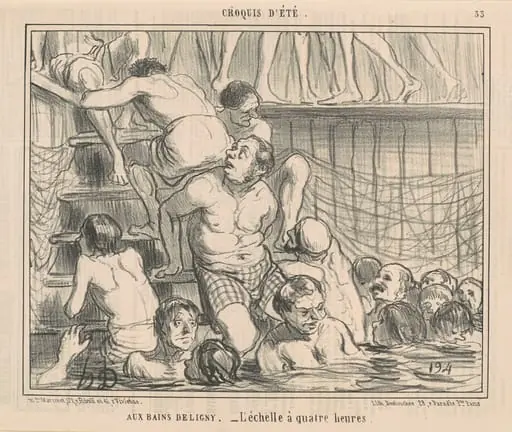 Aux bains Deligny
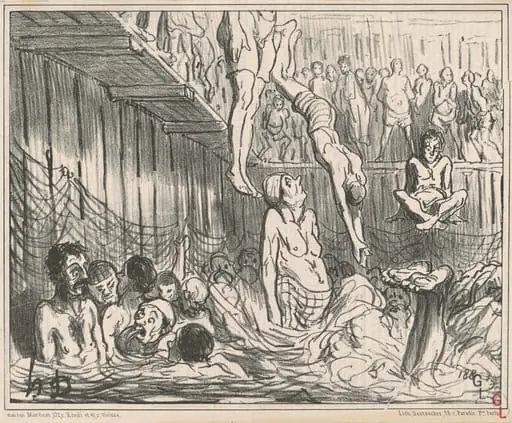 Les bains a quatre sous
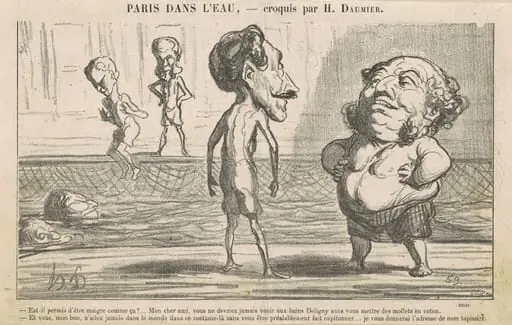 Est-il permis d'être maigre comme ca! ...
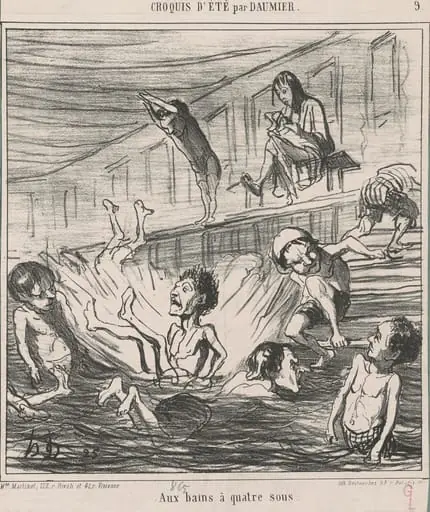 Aux bains a quatre sous
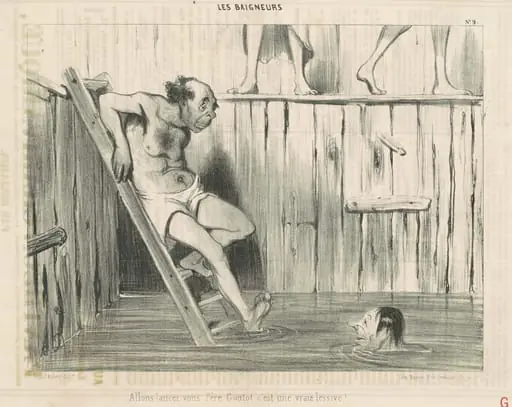 Allons lancez vous père goutot...
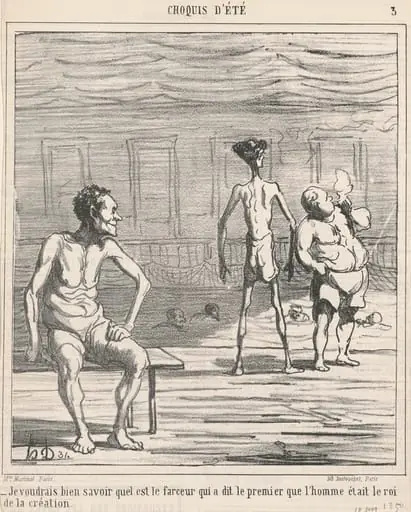 Je voudrais bien savoir quel est ...
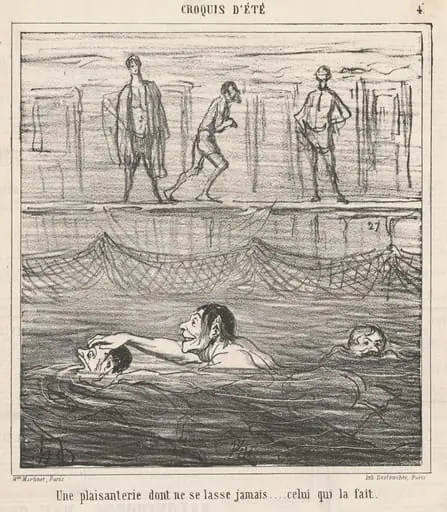 Une plaisanterie dont ne se lasse ...
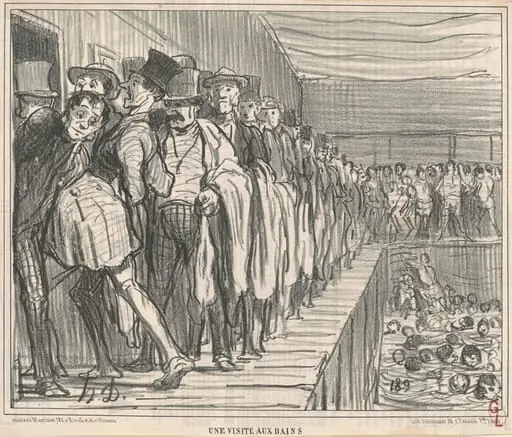 Une visite aux bains
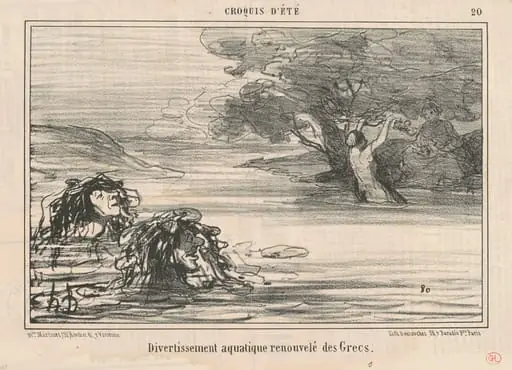 Divertissement ... renouvelé des Grecs
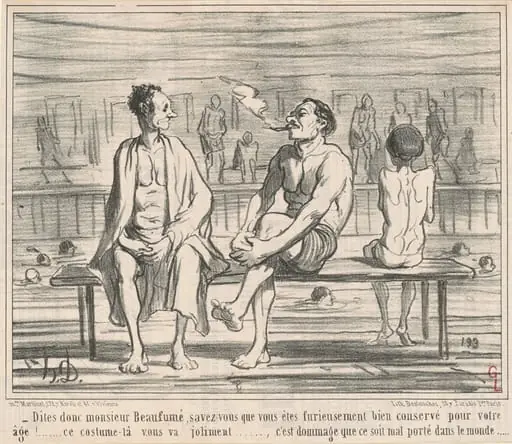 Dites donc, monsieur Beaufumé ...
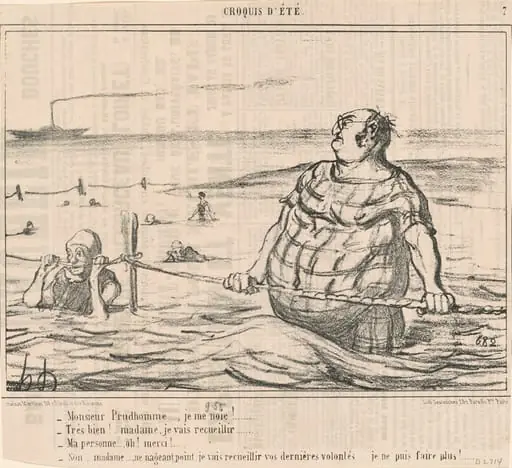 Monsieur Prudhomme ... Je me noie! ...
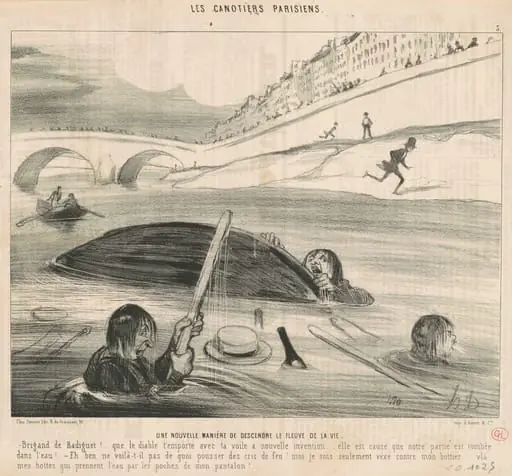 Une nouvelle maniére de descendre le fleuve de la vie