Artwork
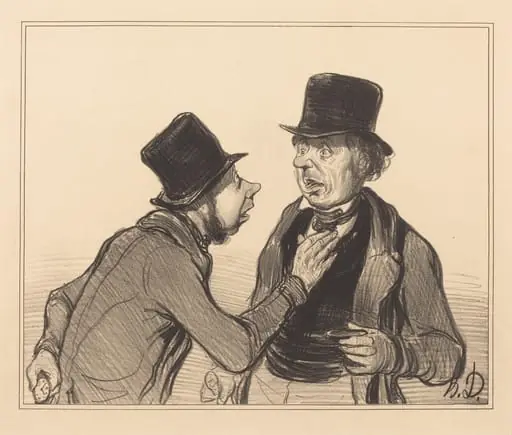
Mossieu ... je suis ce mari aux dépens duquel
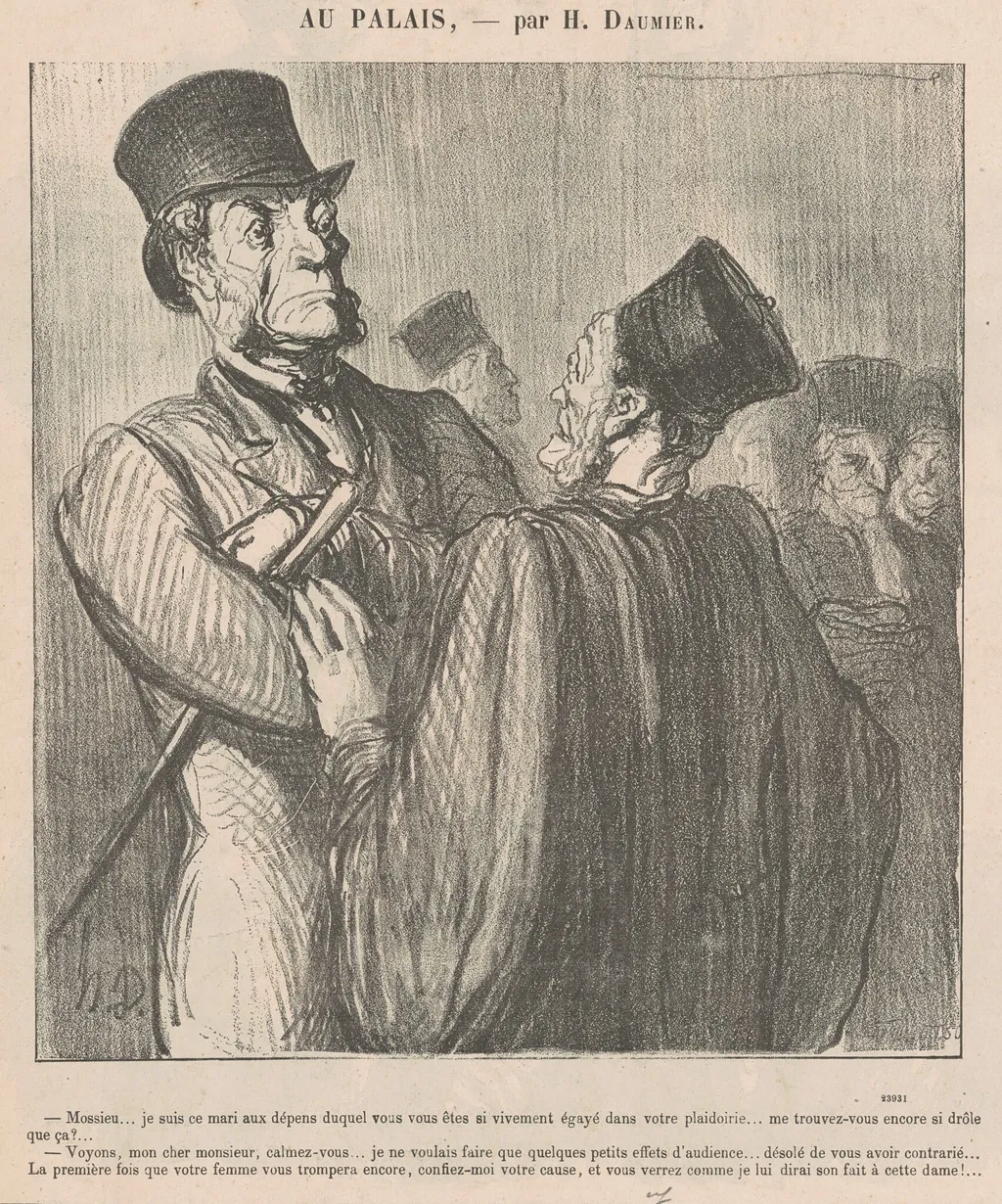
Mossieu ... je suis ce mari aux dépens duquel is an ink print by the Impressionist artist Honoré Daumier. It dates from 1866 and is held in the collection of the National Gallery of Art.
About this work
Overview
The work belongs to Daumier’s broader series of social satires, produced during a period of intense public scrutiny of bourgeois behavior in France.
Created in 1866 by Honoré Daumier, this lithograph presents a sharply observed confrontation between two men, rendered with caricatured features and elaborate attire. The work belongs to Daumier’s broader series of social satires, produced during a period of intense public scrutiny of bourgeois behavior in France. Its title, fragmentary and ironic, hints at a domestic dispute over financial dependence, framing the scene as both personal and emblematic.
Subject & Meaning
The two figures, dressed in overdressed, almost theatrical fashion, appear locked in a heated exchange. One gestures defensively, the other with accusatory intensity, suggesting a conflict rooted in economic imbalance—likely a husband resentful of his wife’s financial control. Daumier uses physical exaggeration to expose the absurdity of male pride in a shifting social order, where traditional gender and class roles were being renegotiated.
Technique & Style
Executed in lithography, the image relies on fluid ink lines and tonal contrasts to heighten emotional expression. Daumier’s hand is swift and economical, using minimal detail to suggest texture and movement. The stark black-and-white palette amplifies the drama, while the loose, almost sketch-like quality conveys immediacy, as if capturing a fleeting moment of social tension.
History & Provenance
This print emerged during Daumier’s later years, after his earlier political caricatures had drawn official censure. He turned increasingly to domestic and marital themes, often drawing from newspaper anecdotes and public gossip. The work was likely published in a periodical or as a standalone sheet, circulating among middle-class audiences familiar with its satirical targets.
Context
In 1860s France, rising urban middle classes were increasingly visible—and vulnerable—to public ridicule. Marriage, inheritance, and financial autonomy became topics of widespread debate, particularly as women gained limited legal rights. Daumier’s lithographs responded to these tensions, portraying domestic life not as serene but as a stage for power struggles masked by propriety.
Legacy
Daumier’s approach to lithography influenced generations of illustrators and cartoonists who sought to blend social critique with visual wit. Though less celebrated than his political works, this piece exemplifies his enduring ability to distill complex social dynamics into a single, resonant image—using humor not to mock, but to reveal the fragility of social posturing.
Artist & collection
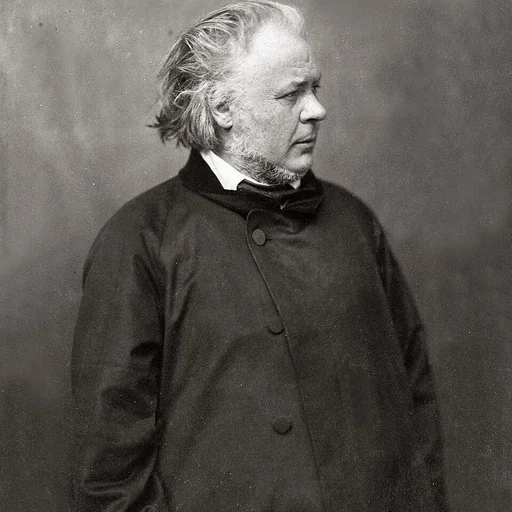
Artist
Honoré-Victorin Daumier was a French painter, sculptor, and printmaker, whose many works offer commentary on the social and political life in France, from the Revolution of 1830 to the fall of the Second French Empire in 1870.

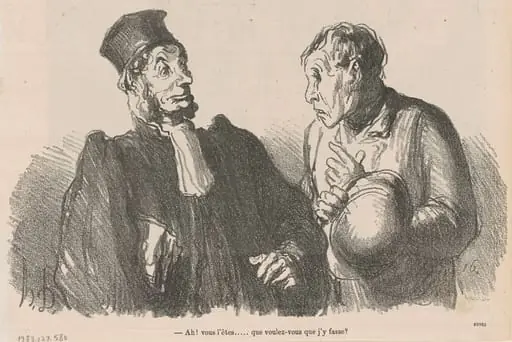 Ah! Vous l'êtes ... que voulez-vous que ...
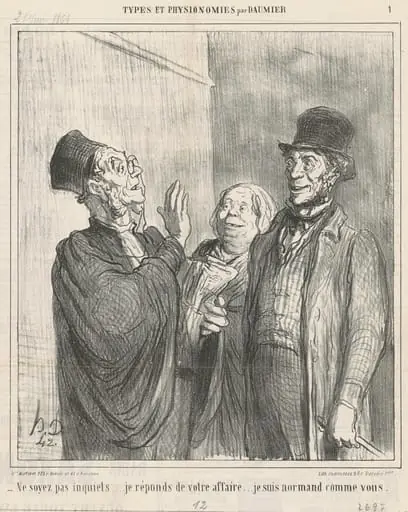 Ne soyez pas inquiets ...
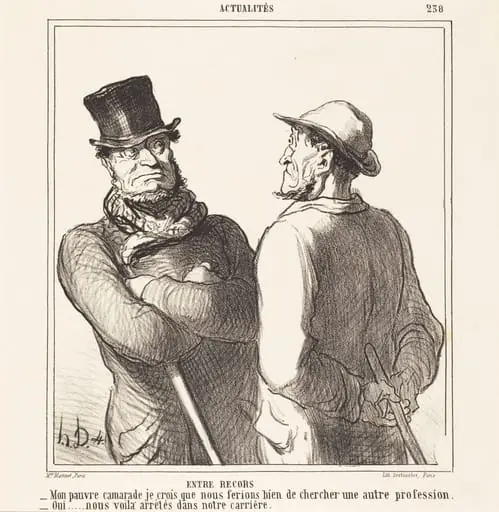 Entre recors
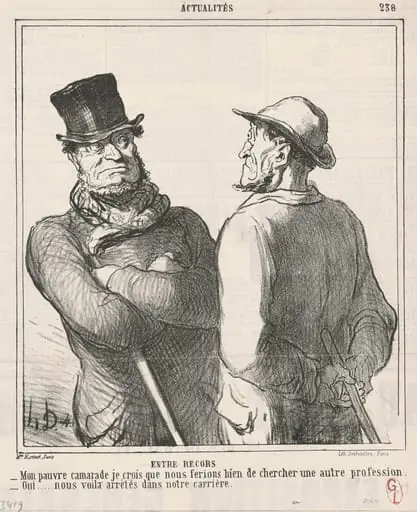 Entre recors
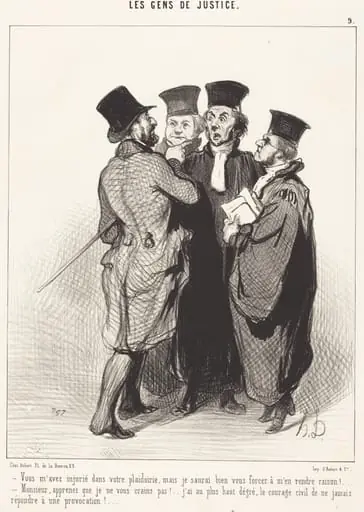 Vous m'avez injurié dans votre plaidoirie...
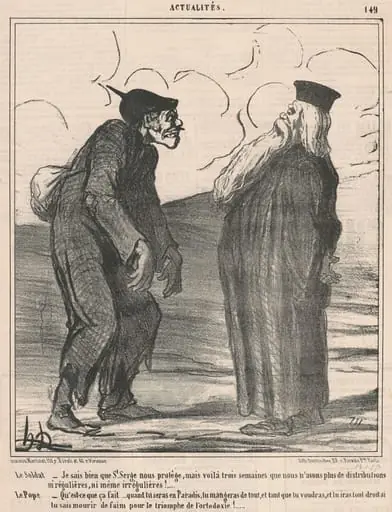 Le soldat...Je sais...
 Oui Monsieur vous n'êtes pas de Paris...
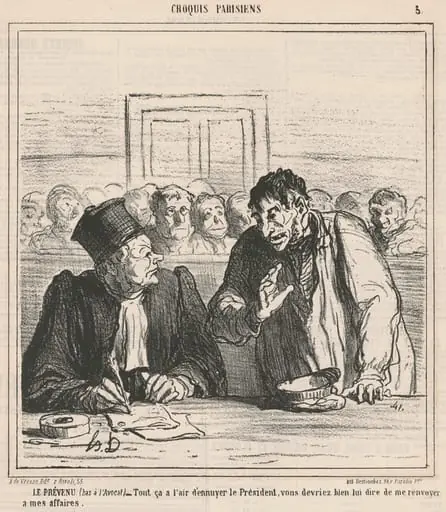 Le prèvenu
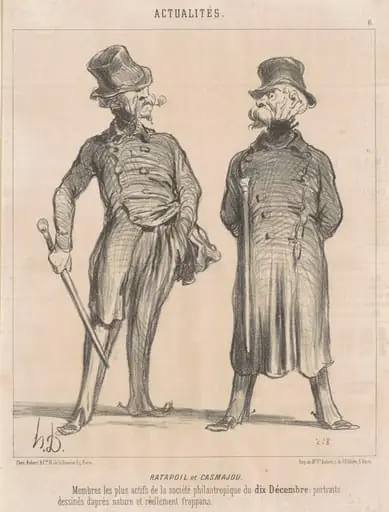 Ratapoil et Casmajou
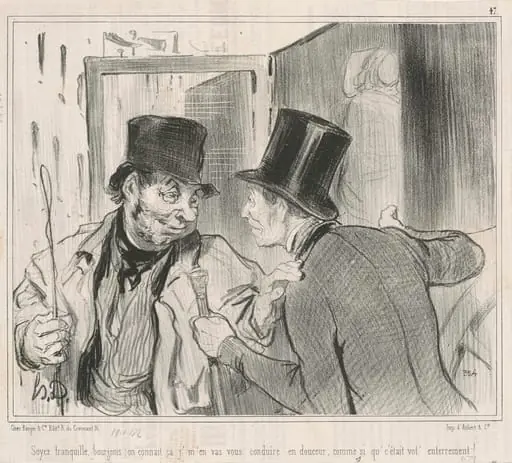 Soyez tranquille bourgeois, on connait
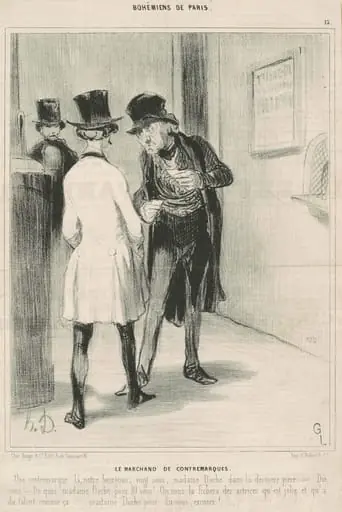 Le marchand de contremarques
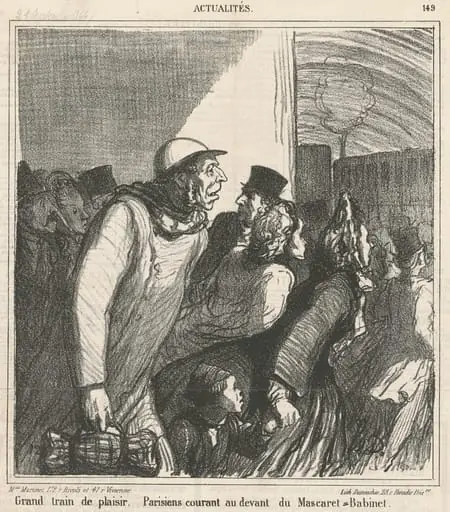 Grand train de plaisir