Artwork
Musique pyrothecnique, Charivarique et Diabolique
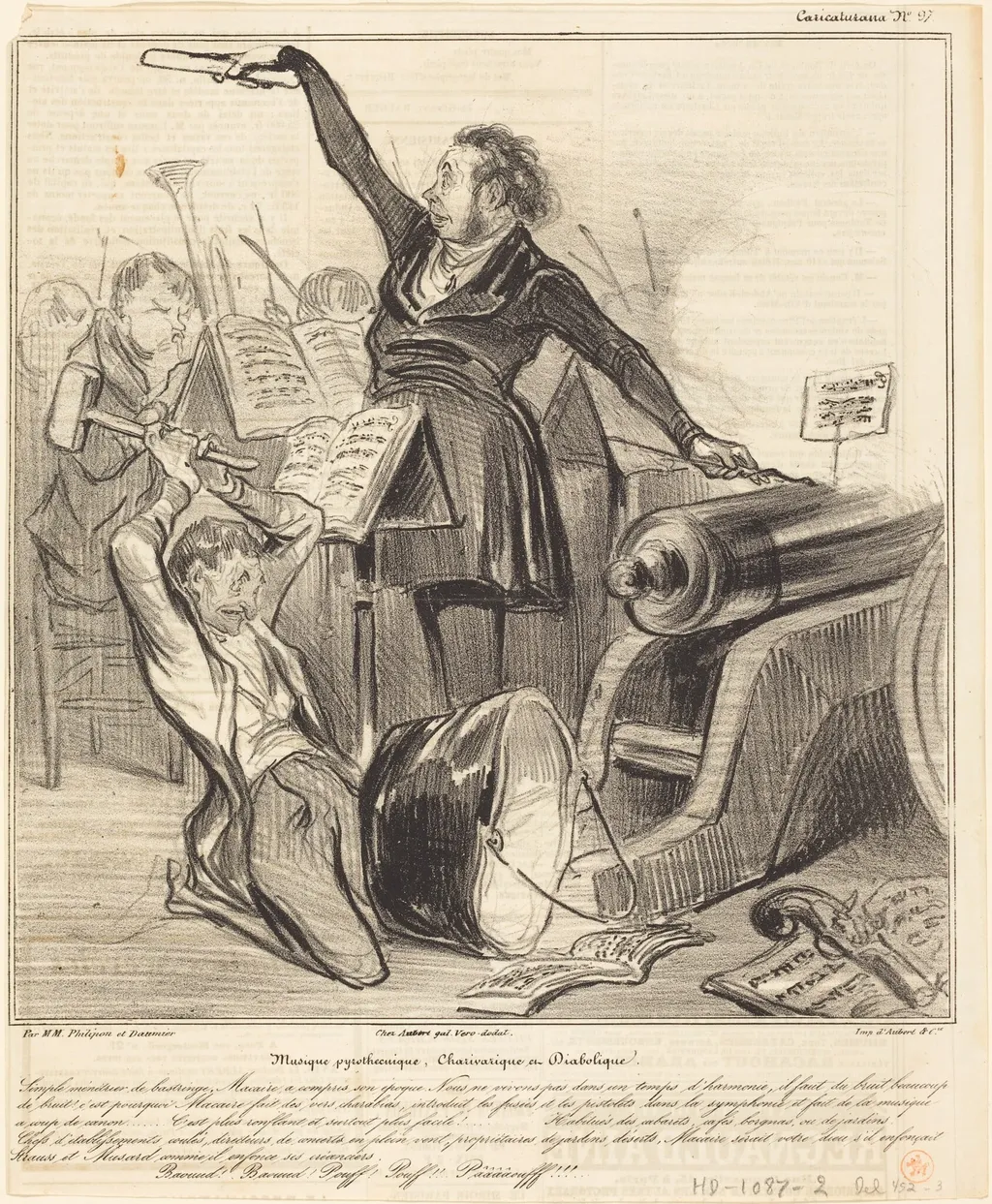
Musique pyrothecnique, Charivarique et Diabolique is an ink print by the Romanticist artist Honoré Daumier. It dates from 1838 and is held in the collection of the National Gallery of Art. Created in 1838, this lithograph on newsprint presents a disorderly musical ensemble under a flamboyant conductor.
About this work
Overview
The scene is cramped, with musicians tangled in instruments, a piano tucked in a corner, and a chaotic arrangement of furniture.
Created in 1838, this lithograph on newsprint presents a disorderly musical ensemble under a flamboyant conductor. The scene is cramped, with musicians tangled in instruments, a piano tucked in a corner, and a chaotic arrangement of furniture. The title, suggesting a “pyrotechnic, charivarian and diabolical” performance, signals that the image is a satirical parody rather than a faithful depiction of a concert.
Subject & Meaning
The work lampoons the pretensions of public performances, using the disarray of the orchestra to comment on broader social disorder. By exaggerating the musicians’ frustration and the conductor’s exaggerated gestures, Daumier critiques the superficiality and inefficiency he perceived in contemporary institutions, aligning the visual joke with his broader republican and anti‑establishment stance.
Technique & Style
Executed as a lithograph, the image employs the fluid, bold lines characteristic of Daumier’s printmaking. The use of newsprint as a substrate reflects the artist’s connection to the period’s satirical press, allowing rapid production and wide dissemination. The stark contrasts and exaggerated caricature amplify the comedic effect while retaining a keen observational quality.
History & Provenance
The lithograph emerged during Daumier’s prolific period of political and social commentary, spanning the July Revolution of 1830 to the end of the Second Empire. It was likely produced for circulation in satirical journals such as *La Caricature* or *Le Charivari*, venues through which Daumier reached a broad audience and cemented his reputation as a critical voice in French visual culture.
Artist & collection
Artist
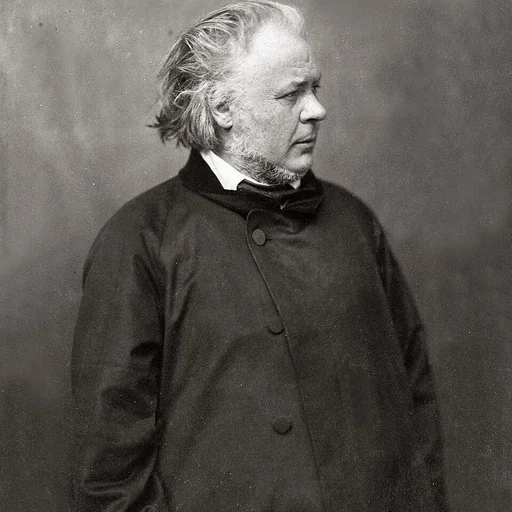
Honoré-Victorin Daumier was a French painter, sculptor, and printmaker, whose many works offer commentary on the social and political life in France, from the Revolution of 1830 to the fall of the Second French Empire in 1870.

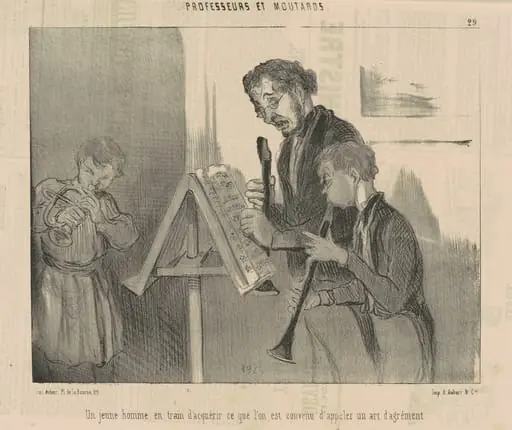 Un jeune homme en train d'acquérir ... un art d'agrément
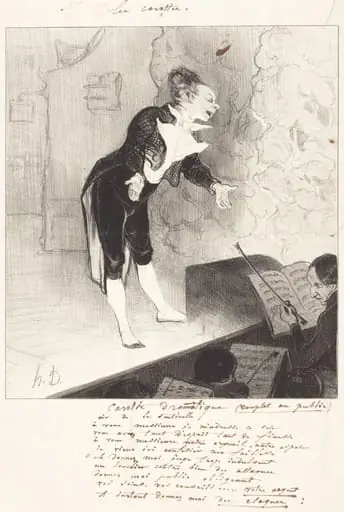 Carotte dramatique
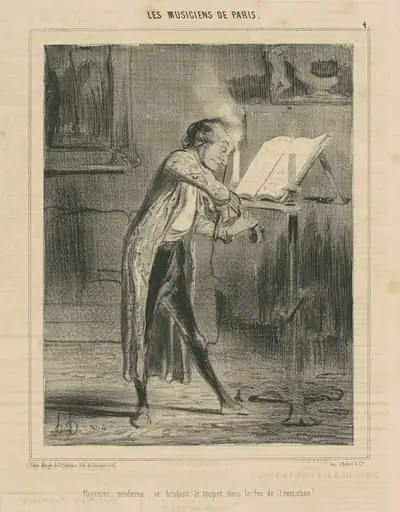 Paganini moderne ...
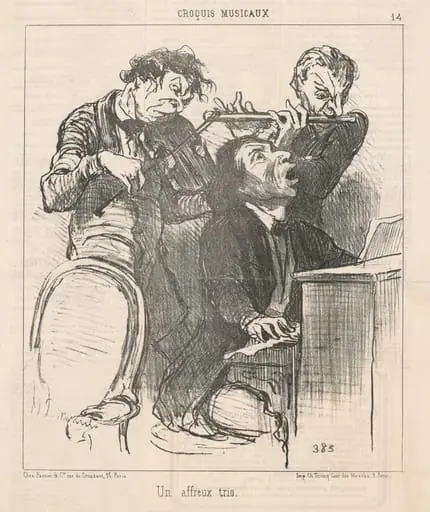 Un affeux trio
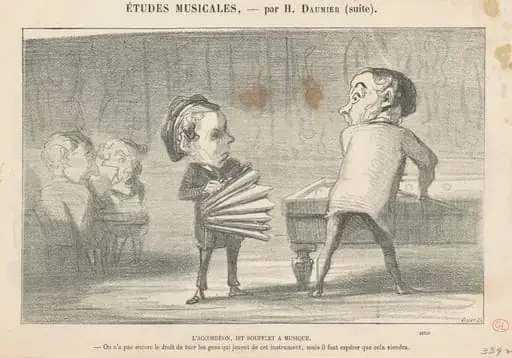 L'accordéon, dit soufflet à musique
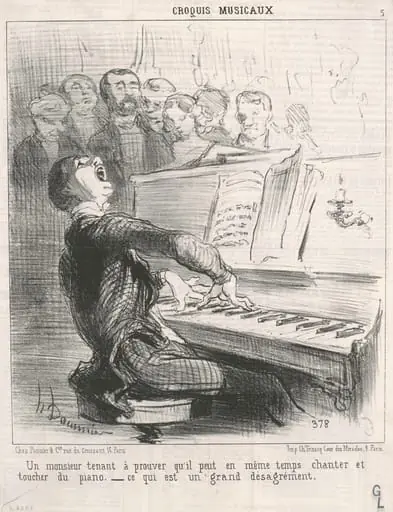 Un Monsieur tenant à prouver qu'il peut...
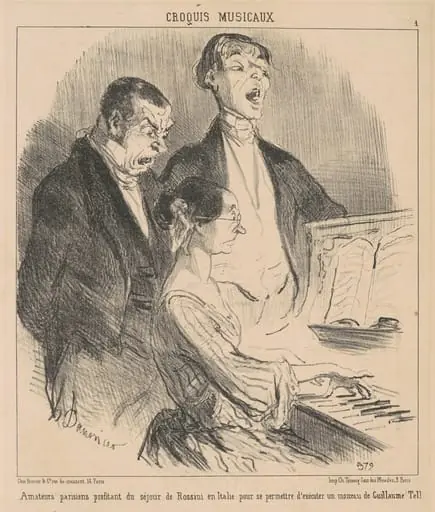 Amateurs parisiens profitant du séjour de Rossini
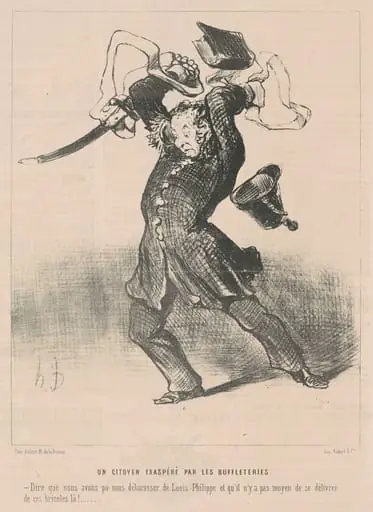 Un citoyen exaspéré par les buffleteries
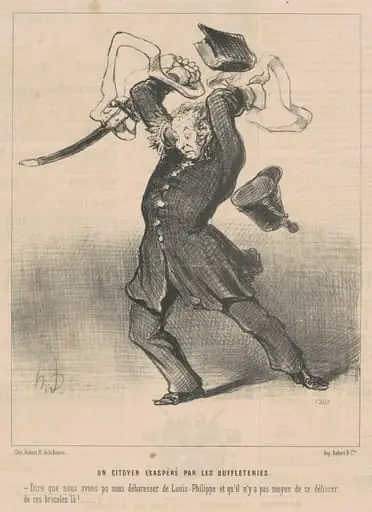 Un citoyen exaspéré par les buffleteries
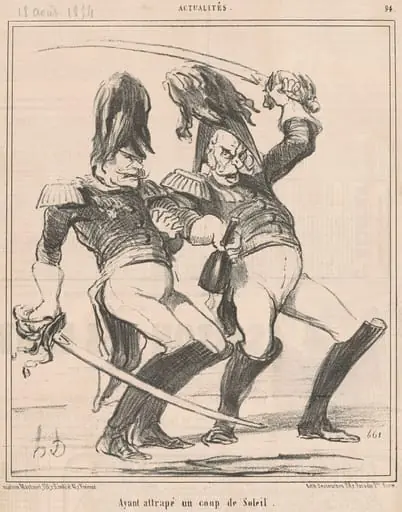 Ayant attrapé un coup de soleil
 Poète classique composant une églogue...
 Il demande tous les jours la parole ...