Artwork
Napoléon Lannes
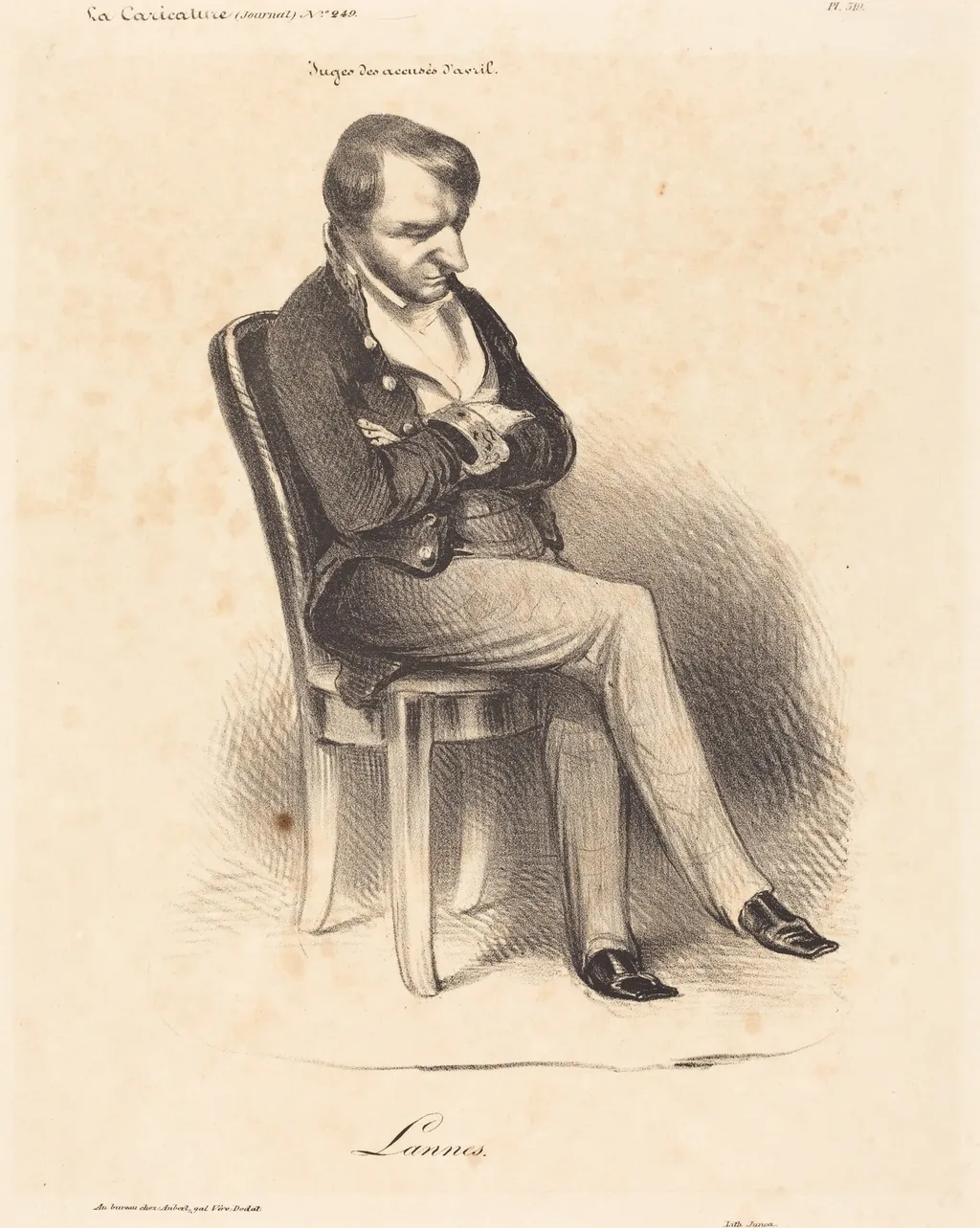
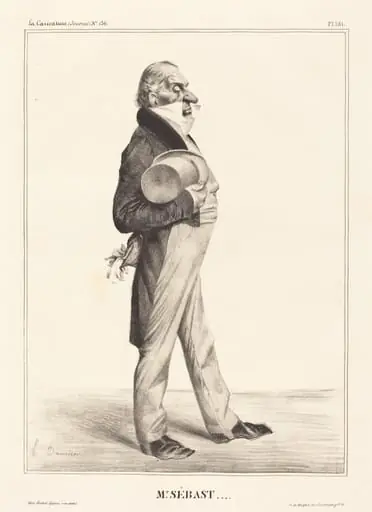
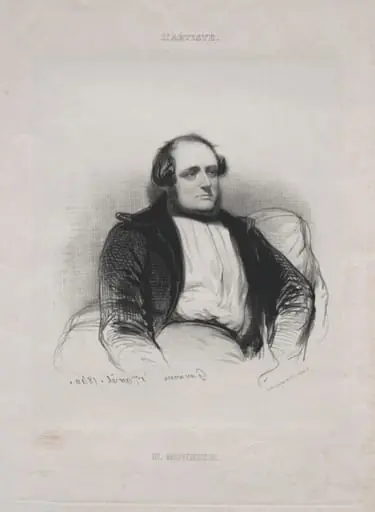
Napoléon Lannes is an ink print by the Romanticist artist Honoré Daumier. It dates from 1835 and is held in the collection of the National Gallery of Art.
About this work
Overview
Honoré Daumier’s 1835 lithograph titled *Napoléon Lannes* presents a solitary figure seated with crossed arms, head bowed, and legs crossed at the ankles.
Honoré Daumier’s 1835 lithograph titled *Napoléon Lannes* presents a solitary figure seated with crossed arms, head bowed, and legs crossed at the ankles. The sitter wears a dark jacket trimmed with gold buttons and light trousers, his hair neatly arranged. The composition rests against a pale beige background that subtly offsets the dark clothing, giving the work a restrained, contemplative atmosphere.
Subject & Meaning
The image captures a somber, introspective man whose downward gaze and folded posture suggest a moment of private reflection or resignation. While the identity of the figure is not explicitly stated, Daumier’s reputation for political satire implies that the portrait may serve as a commentary on the demeanor of a public figure or class during the turbulent July Monarchy.
Technique & Style
Executed in lithography, Daumier exploits the medium’s capacity for fine line work and tonal variation to render depth and texture in the figure’s clothing and facial features. The contrast between the dark attire and the light background is achieved through careful manipulation of ink density, producing a nuanced gradation that enhances the sense of volume and mood.
Context
Created in 1835, the print belongs to Daumier’s early period of political caricature, a time when he contributed regularly to satirical journals such as *La Caricature* and *Le Charivari*. The work reflects his republican sympathies and his broader engagement with French political life from the 1830 Revolution through the later Second Empire, using print media to critique authority and social hierarchy.
Artist & collection
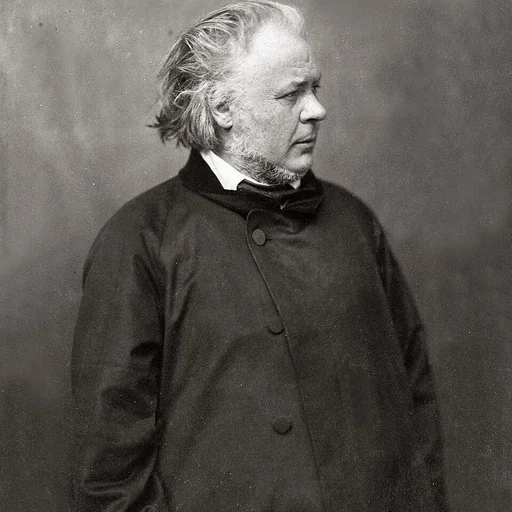
Artist
Honoré-Victorin Daumier was a French painter, sculptor, and printmaker, whose many works offer commentary on the social and political life in France, from the Revolution of 1830 to the fall of the Second French Empire in 1870.