Artwork
Non... vous n'êtes pas de cette pièce-la!
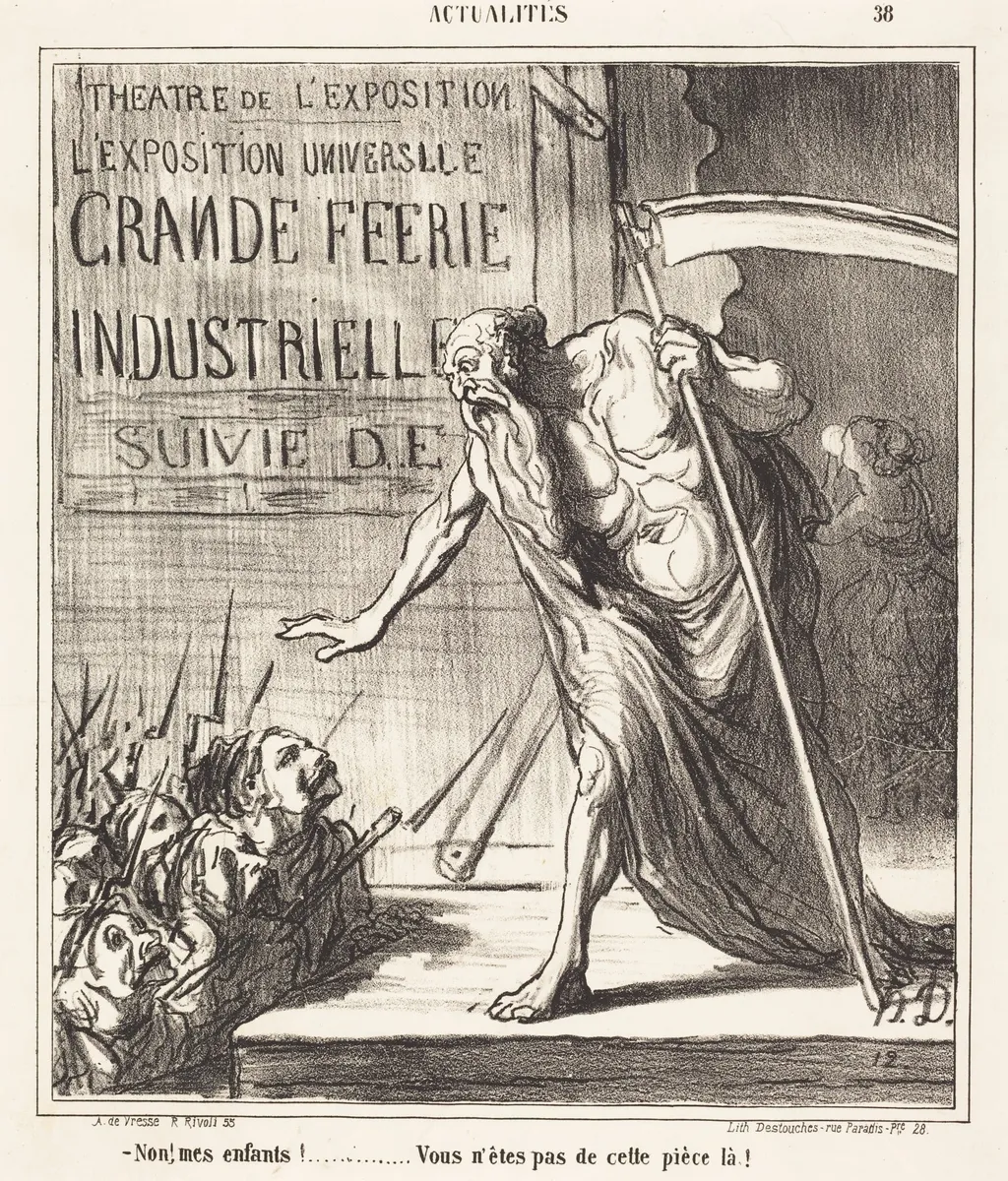
Non... vous n'êtes pas de cette pièce-la! is an ink print by the Impressionist artist Honoré Daumier. It dates from 1867 and is held in the collection of the National Gallery of Art.
About this work
Overview
Created in 1867, this lithograph by Honoré Daumier is part of a body of work that critiqued French society through visual satire.
Created in 1867, this lithograph by Honoré Daumier is part of a body of work that critiqued French society through visual satire. Executed in black ink on paper, it employs stark contrasts and simplified forms to convey a political message. Daumier, long associated with satirical journals like *Le Charivari*, used lithography to reach a broad public audience, often targeting institutional power and social pretension with incisive clarity.
Subject & Meaning
The image depicts a towering figure pulling back a heavy curtain to reveal a stage labeled 'Grande Férie Industrielle,' while two smaller figures observe from the shadows. The central figure’s warning—'No, my children... you don’t belong in this play!'—suggests exclusion from a spectacle of power. Daumier implies that the working class is being manipulated or barred from participating in the grand narratives of industry and state, framing societal theater as a performance designed to obscure inequality.
Technique & Style
Daumier employed lithography for its capacity to produce bold, expressive lines with rapid execution. The image relies on strong contrasts between dark, heavy forms and empty space, with minimal detail and no tonal gradation. The figures are rendered with exaggerated proportions—muscular and monumental versus small and vulnerable—emphasizing imbalance in social power. The absence of color heightens the starkness, reinforcing the print’s critical tone.
History & Provenance
The print was produced during the later years of the Second French Empire, a period marked by state censorship and suppression of dissent. Though Daumier had faced imprisonment for earlier caricatures, he continued producing work for underground or less regulated publications. This piece likely circulated privately or in limited editions, avoiding direct confrontation with authorities while still conveying its message to those attuned to its symbolism.
Context
In the 1860s, France was undergoing rapid industrialization and political repression under Napoleon III. Public spectacles, including industrial expositions, were used to project national progress and unity. Daumier’s work subtly undermines these narratives, portraying them as staged illusions. The curtain becomes a metaphor for the veil between official rhetoric and lived reality, particularly for laborers excluded from the benefits of the so-called 'industrial fair.'
Legacy
Daumier’s lithographs influenced later generations of social realists and political illustrators, demonstrating how print media could serve as a tool for public critique. His ability to distill complex social tensions into single, potent images set a precedent for visual journalism. Though not widely exhibited in his lifetime, his work gained recognition in the 20th century as foundational to modern graphic satire and the art of political commentary.
Artist & collection

Artist
Honoré-Victorin Daumier was a French painter, sculptor, and printmaker, whose many works offer commentary on the social and political life in France, from the Revolution of 1830 to the fall of the Second French Empire in 1870.









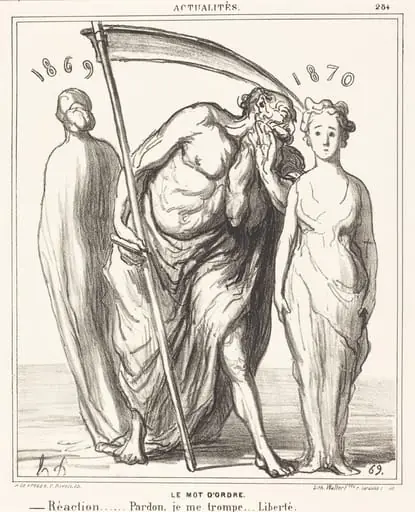 Le Mot d'ordre: Réaction... Pardon... Liberté
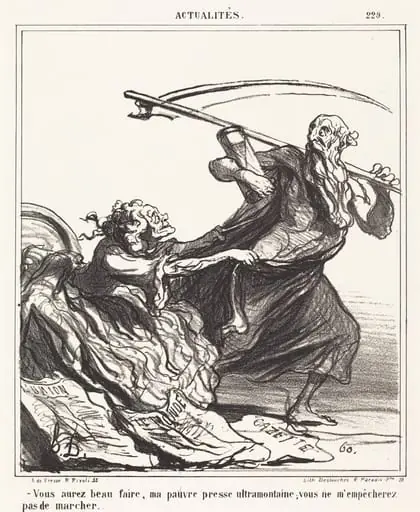 Vous aurez beau faire, ma pauvre presse...
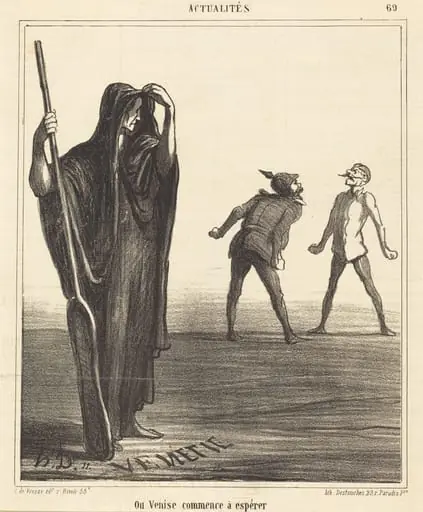 Ou Venise commence a espérer
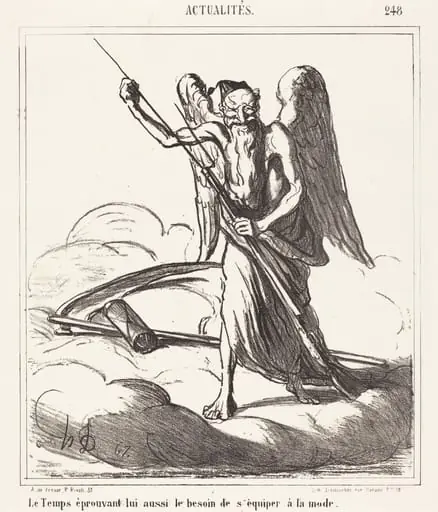 Le Temps éprouvant lui aussi le besoin de s'équiper a la mode
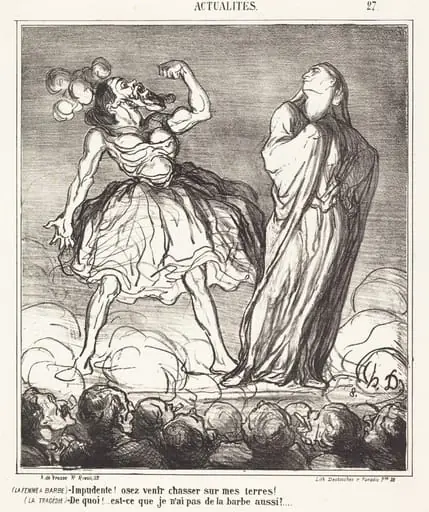 La Femme a barbe
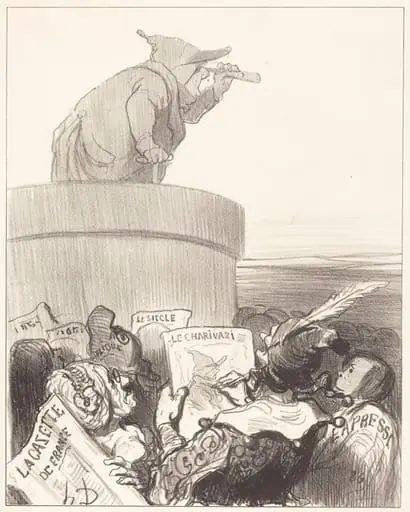 Le Constitutionnel contemplant l'horizon politique
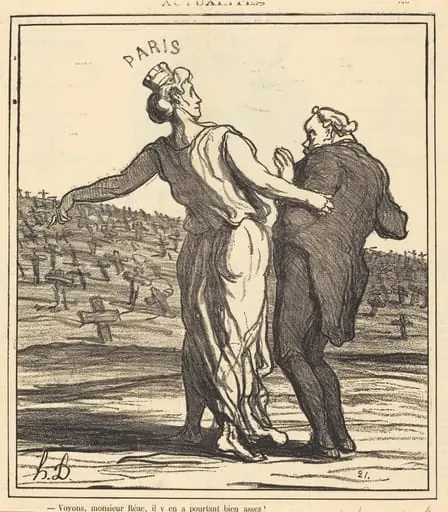 Voyons, monsieur Réac...
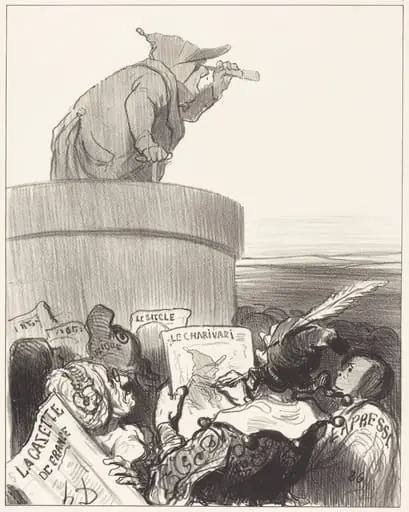 Le Constitutionnel contemplant l'horizon politique
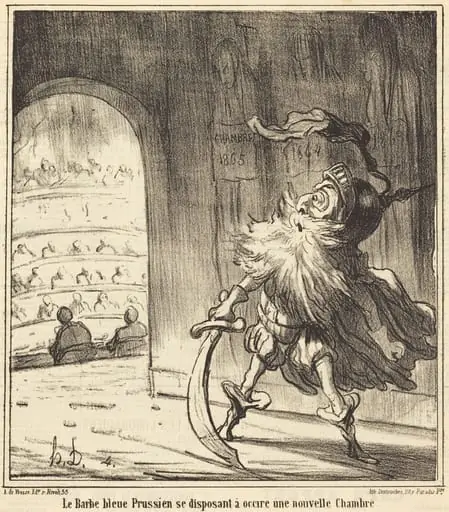 Le Barbe bleu Prussien...
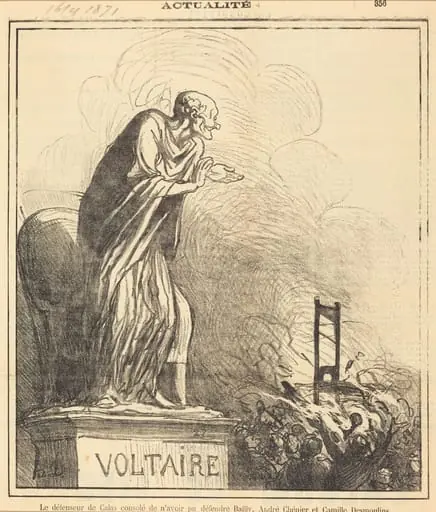 Le défenseur de Calas consolé...