Artwork
Ou Venise commence a espérer
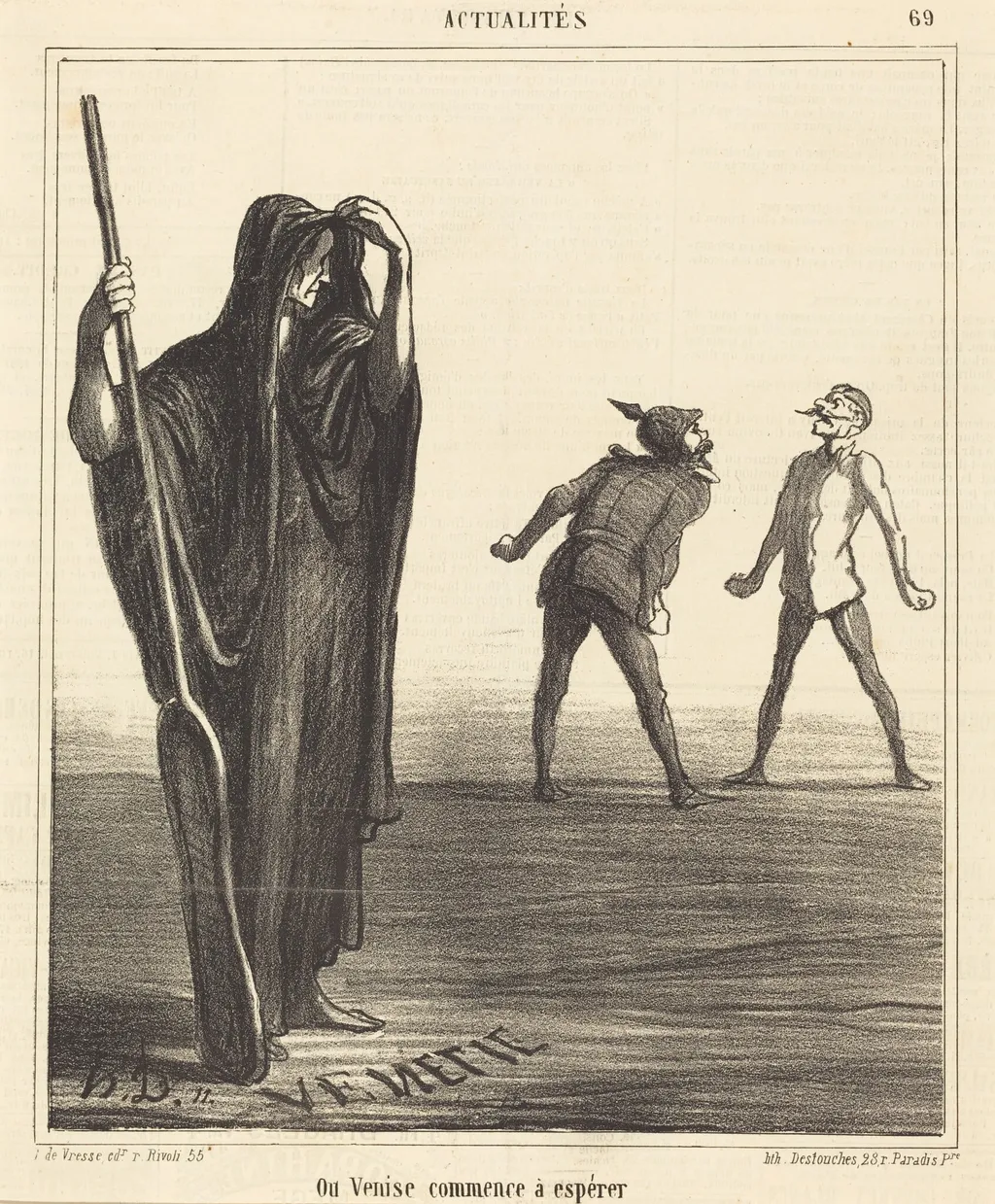
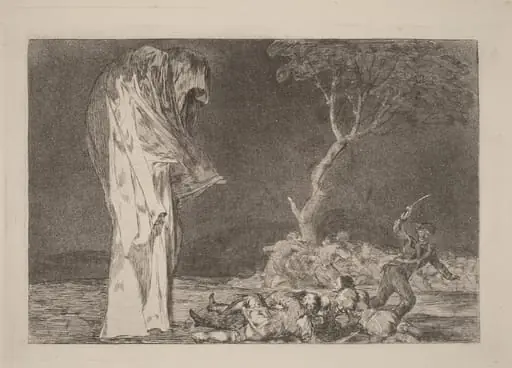
Ou Venise commence a espérer is an ink print by the Impressionist artist Honoré Daumier. It dates from 1866 and is held in the collection of the National Gallery of Art. Created in 1866, *Ou Venise commence à espérer* is a lithographic print executed on newsprint.
About this work
Overview
Created in 1866, *Ou Venise commence à espérer* is a lithographic print executed on newsprint. The work belongs to the French artist Honoré Daumier, whose practice spanned painting, sculpture and printmaking. It exemplifies his engagement with socially charged imagery during the mid‑nineteenth century.
Subject & Meaning
The composition centers on a cloaked, hooded figure—interpreted as a personification of Death—standing on the left. The figure grips a staff with the right hand while the left hand is raised to the head. Behind it, two men assume a dramatic stance, one appearing to shout or gesture toward the specter, suggesting a confrontation between mortality and human agency.
Technique & Style
Daumier employed lithography on inexpensive newsprint, a medium that allowed swift production and wide dissemination. The print relies on stark tonal contrasts: the dark silhouette of the hooded figure dominates a lighter background, creating depth and a textured surface that heightens the ominous atmosphere.
History & Provenance
The print emerged during Daumier’s most prolific period of political satire, when his caricatures appeared in periodicals such as *La Caricature* and *Le Charivari*. While specific ownership records for this particular sheet are limited, it reflects the artist’s broader output intended for public consumption in the press.
Context
In the 1860s France, Daumier’s work frequently targeted the monarchy, aristocracy and clergy, critiquing the social order through allegory and humor. This lithograph, with its somber tone, aligns with his critical stance, using the figure of Death to comment on the precariousness of contemporary life.
Artist & collection

Artist
Honoré-Victorin Daumier was a French painter, sculptor, and printmaker, whose many works offer commentary on the social and political life in France, from the Revolution of 1830 to the fall of the Second French Empire in 1870.









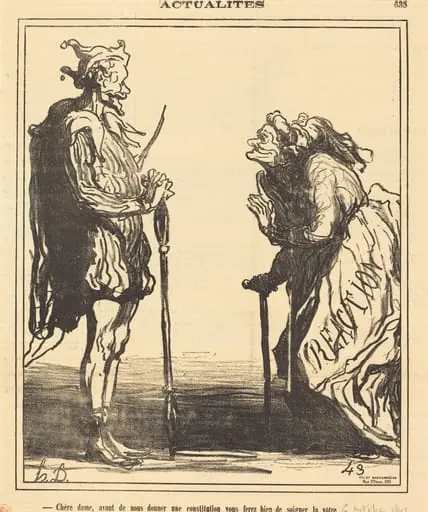 Chère dame, avant de nous donner...
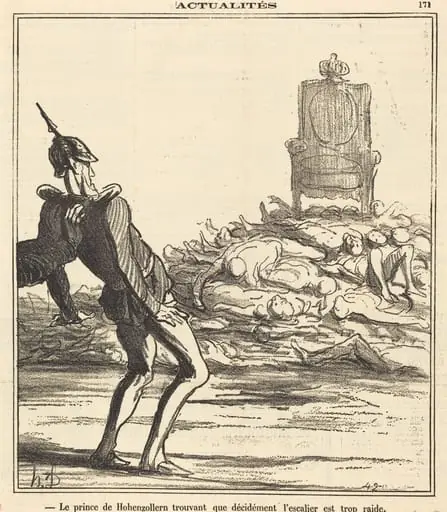 Le Prince de Hohenzollern...
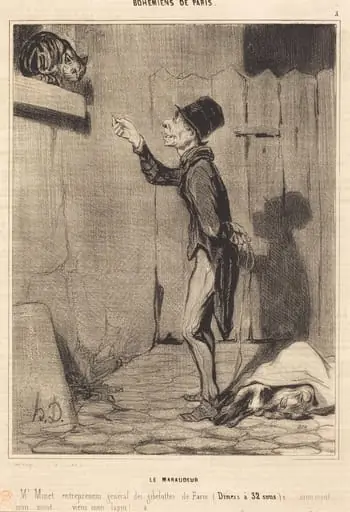 Le Maraudeur
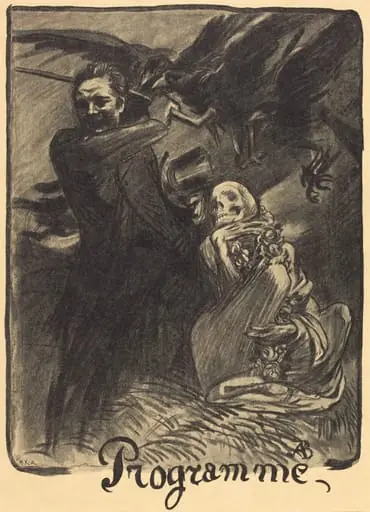 Les Honnêtes femmes; Conférence, Poésies inédites d'Henry Becque; La Parisienne
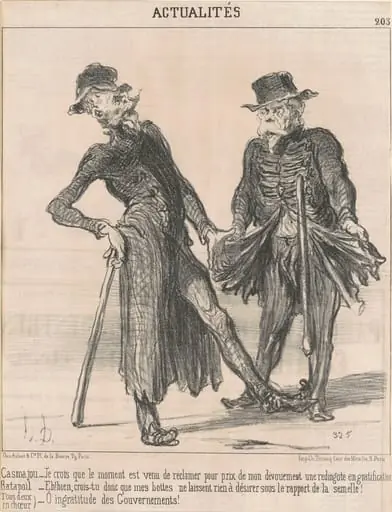 Casmajou -- Ratapoil (tous deux en choeur)
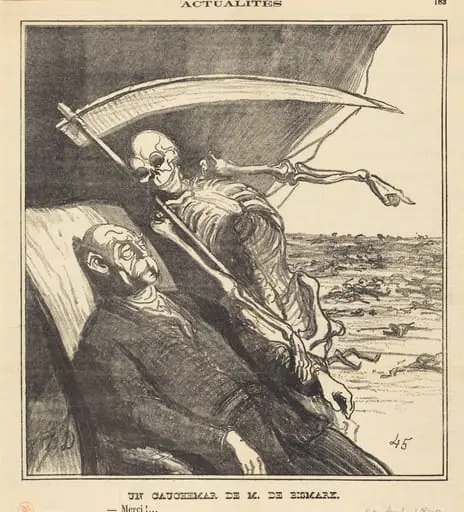 Un cauchemar de M. Bismarck
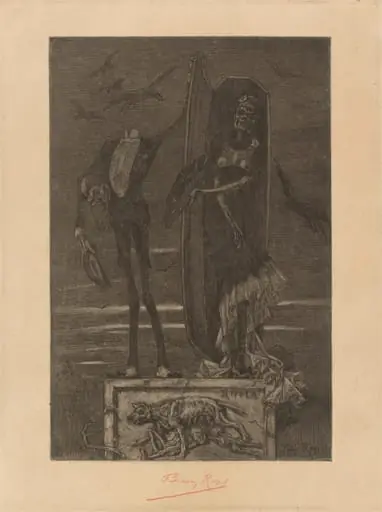 Le Vice suprème: Frontispiece
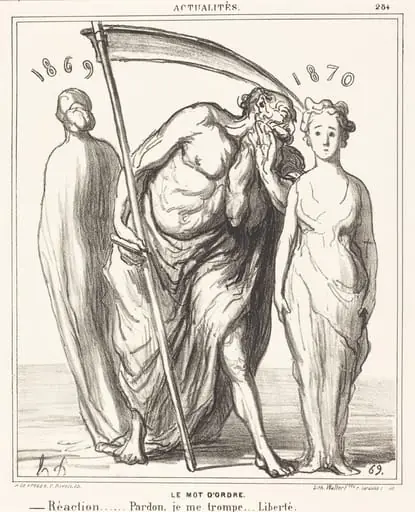 Le Mot d'ordre: Réaction... Pardon... Liberté
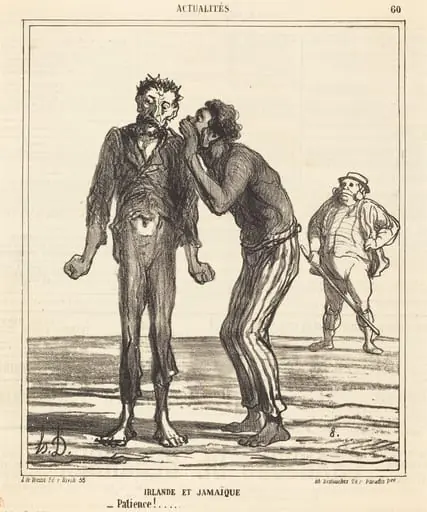 Irlande et Jamaique - Patience!...
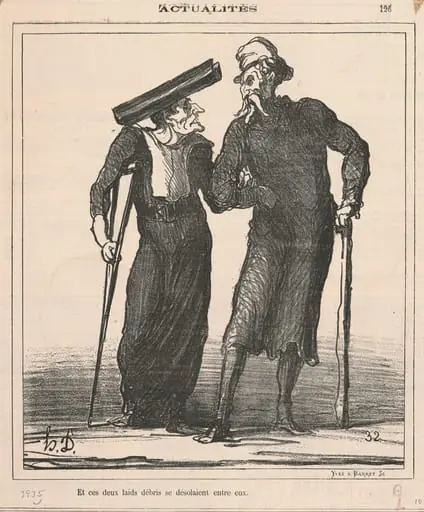 Et ces deux laids débris se désolaient entre eux
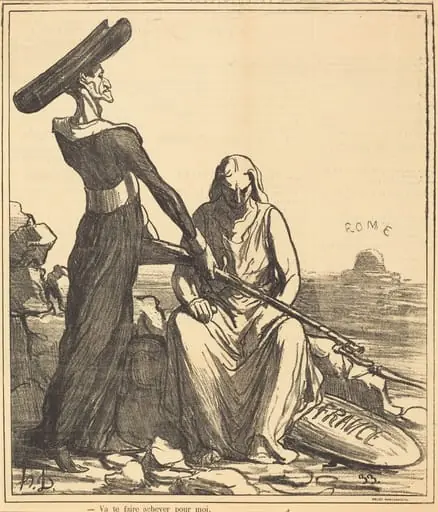 Va te faire achever pour moi
 Disparate de miedo (Folly of Fear)