Artwork
On a beau dire, l'antique est toujours beau...
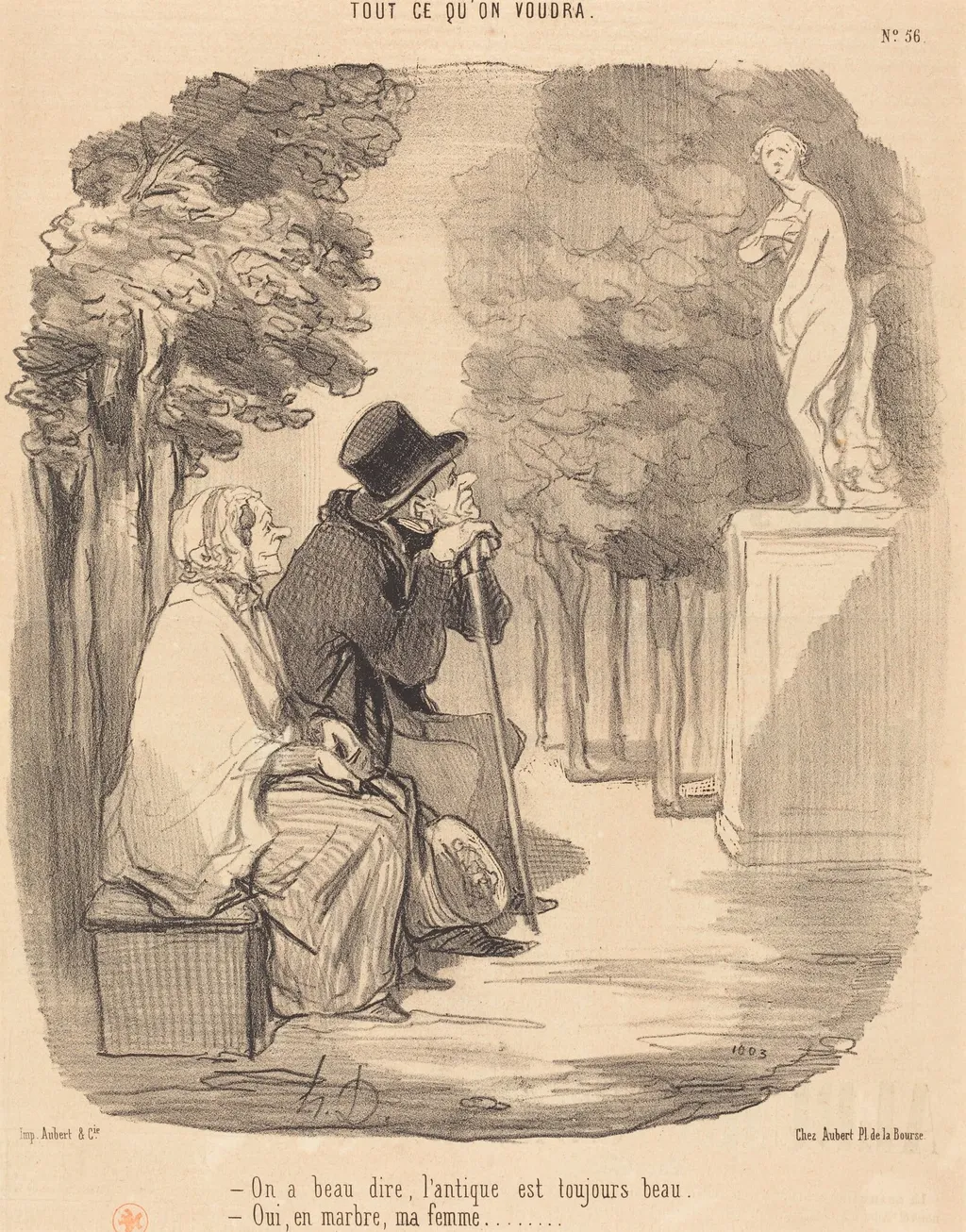
On a beau dire, l'antique est toujours beau... is an ink print by the Impressionist artist Honoré Daumier. It dates from 1850 and is held in the collection of the National Gallery of Art.
About this work
Overview
The composition is executed in swift, unfilled lines, lacking any color, and includes a caption that plays on the enduring appeal of classical art.
Honoré Daumier’s 1850 lithograph titled *On a beau dire, l’antique est toujours beau…* presents a brief, sketch‑like scene rendered on newsprint. Two men sit on a stone bench before a marble statue of a female figure, while a tall tree rises behind them. The composition is executed in swift, unfilled lines, lacking any color, and includes a caption that plays on the enduring appeal of classical art.
Subject & Meaning
The work juxtaposes a casual conversation between the two figures with the solemn presence of an ancient statue, suggesting a humorous commentary on the timelessness of classical beauty. The accompanying text, “Tout ce qu’on voudra” and the titular phrase, underscores Daumier’s satirical tone, hinting that regardless of contemporary opinions, the allure of antiquity persists.
Technique & Style
Daumier employed lithography, a printmaking process that allows for rapid, gestural drawing directly onto a stone surface before transferring the image onto paper. The use of newsprint as the support emphasizes the work’s immediacy and aligns with his practice of producing inexpensive, widely circulated images for satirical journals.
History & Provenance
Created during Daumier’s prolific period as a caricaturist for publications such as *La Caricature* and *Le Charivari*, the lithograph reflects his engagement with republican ideas and criticism of the established order. While the original print’s ownership trail is not extensively documented, it remains associated with the artist’s broader output of socially charged prints from the mid‑nineteenth century.
Context
The image belongs to a series of works in which Daumier juxtaposed everyday scenes with classical motifs to mock pretensions of the aristocracy and clergy. By placing ordinary men in a garden setting before a revered antique, he highlights the contrast between popular culture and elite aesthetic values prevalent in post‑revolutionary France.
Artist & collection
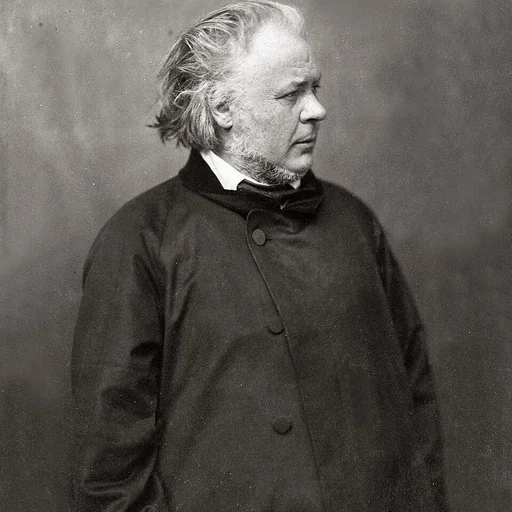
Artist
Honoré-Victorin Daumier was a French painter, sculptor, and printmaker, whose many works offer commentary on the social and political life in France, from the Revolution of 1830 to the fall of the Second French Empire in 1870.









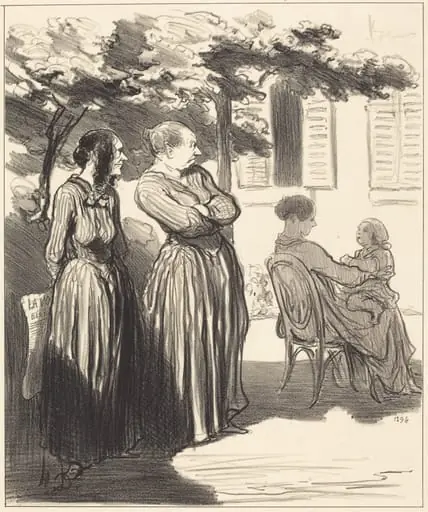 Voila une femme qui, a l'heure solennelle...
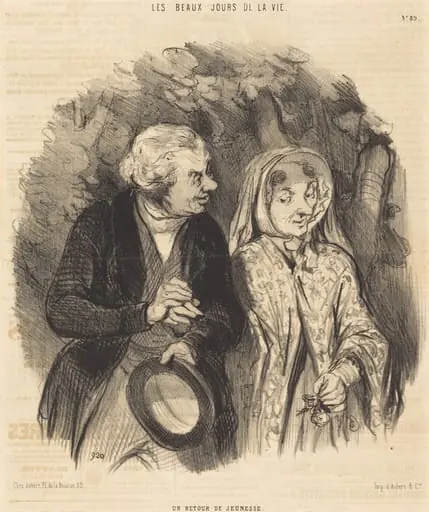 Un Retour de jeunesse
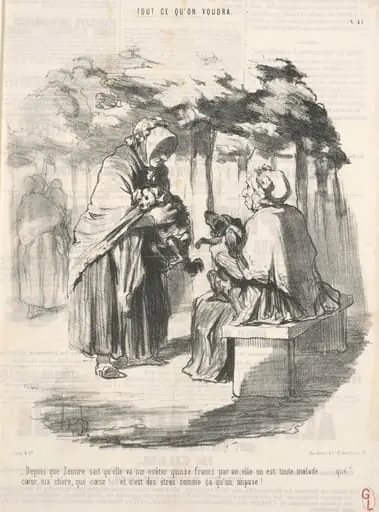 Depuis que Zémire sait qu'elle va me couter quinze francs ...
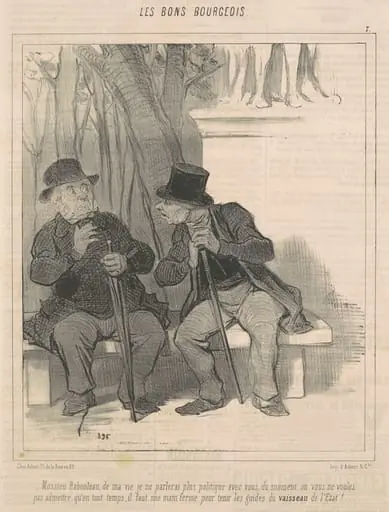 Mossieu Rabourdeau ... je ne parlerai plus politique avec vous ..
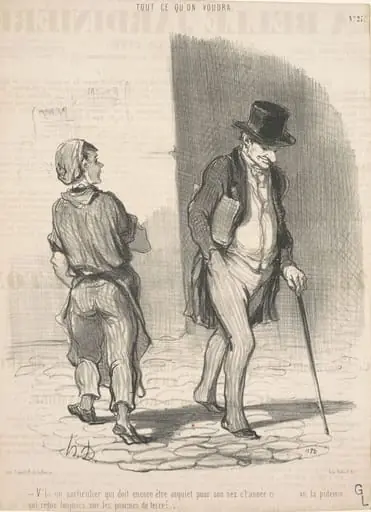 V'la un particulier qui doit ...être inquiet ...
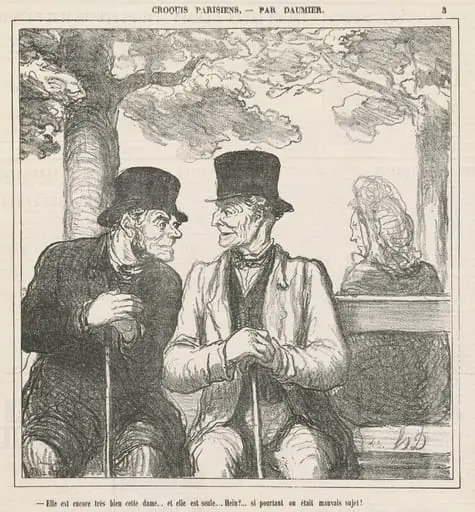 Elle est encore très bien, cette dame ...
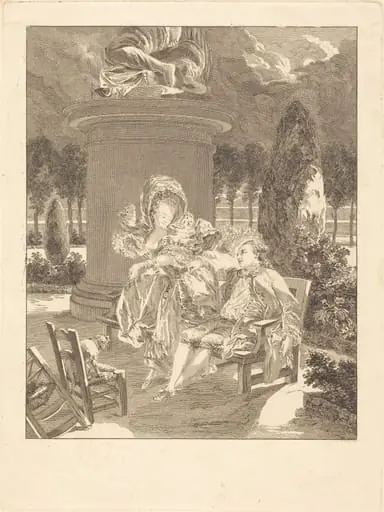 La soiree des Thuileries
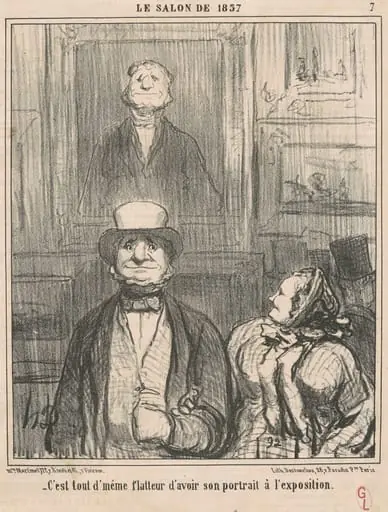 C'est tout d'même flatteur d'avoir
 C'est tout d'même flatteur d'avoir ...
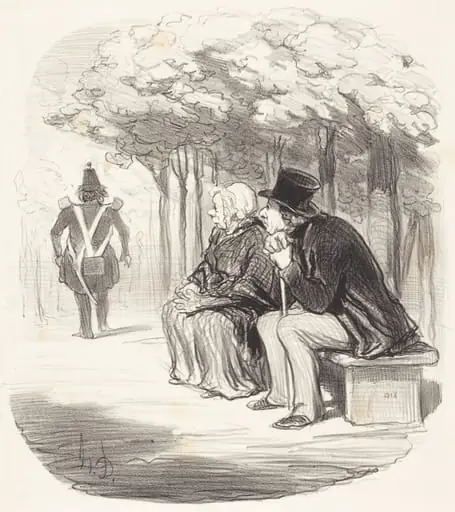 Je n'métonne pas si les femmes ont... du goût...
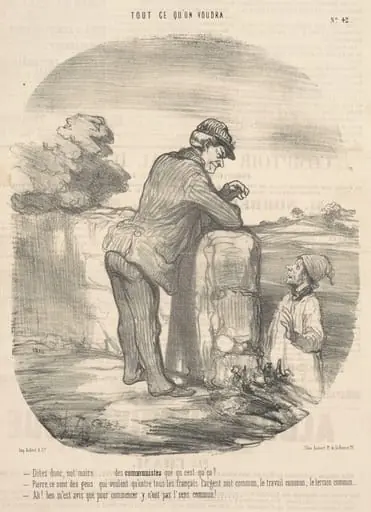 Dites donc, not'maire ... des communistes qué qu'c'est ça?
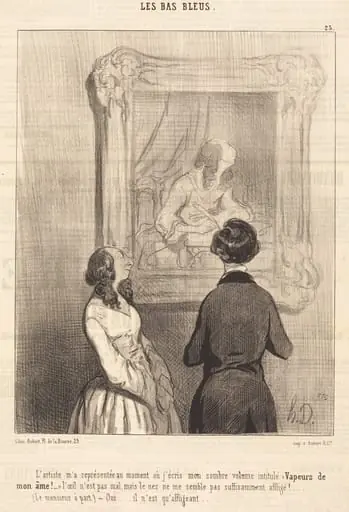 L'Artiste m'a représentée au moment ou j'écris