Artwork
Le Beau sexe a l'école de natation
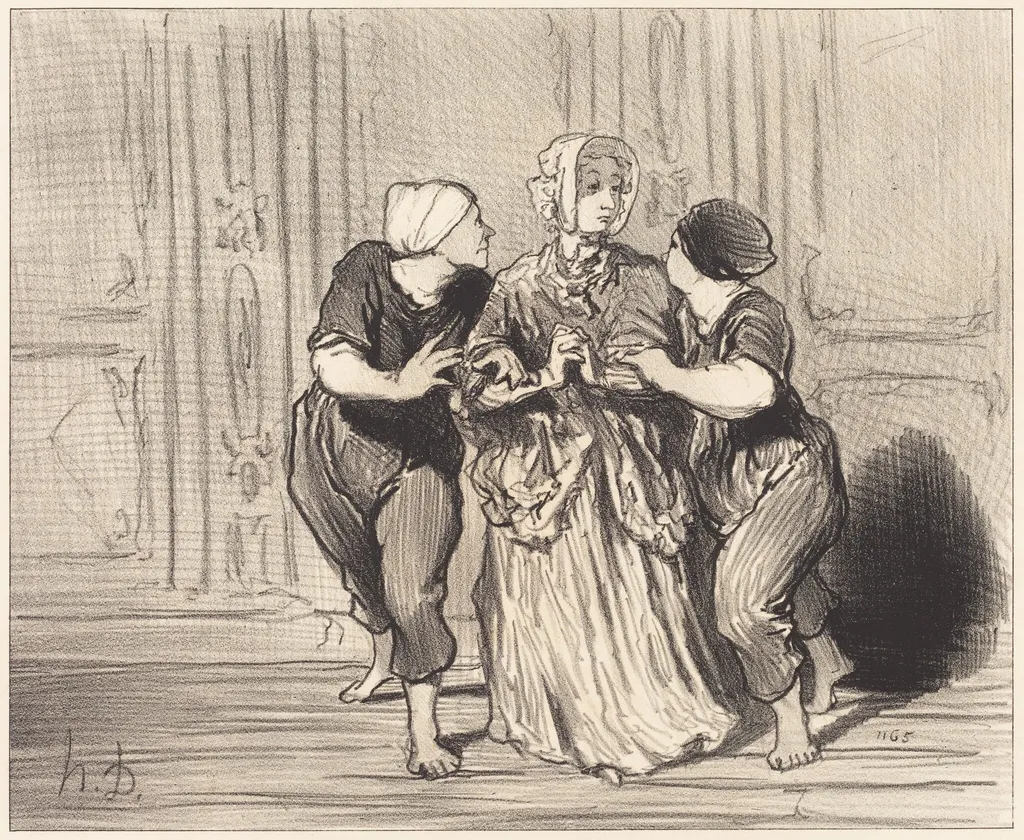
Le Beau sexe a l'école de natation is an ink print by the Impressionist artist Honoré Daumier. It dates from 1852 and is held in the collection of the National Gallery of Art.
About this work
Overview
Le Beau sexe à l'école de natation is a lithograph created by Honoré Daumier in 1852, exemplifying his satirical approach to French societal critique through printmaking.
Subject & Meaning
The work depicts three women in a humble, dimly lit setting with rough stone walls. The central figure, barefoot and in a flowing dress, is assisted by two others, whose simple, worn attire suggests a modest social status. Their serious, tense expressions convey a sense of solemnity or urgency in their interaction.
Technique & Style
Daumier employed quick, expressive lines to capture movement and emotion, characteristic of his style. The uneven lighting, with shadows accentuating the scene, adds depth. This approach reflects his background in caricature, blending observation with a subtle, humorous undertone.
History & Provenance
Produced during the Second French Empire, this lithograph aligns with Daumier's republican democratic views, critiquing social hierarchies and public behavior. Originally published in satirical journals like *La Caricature* and *Le Charivari*, its exact provenance since creation is not detailed here.
Context
This work is part of Daumier's broader commentary on class and power dynamics in 19th-century France, using satire to engage with the political and social climate of his time.
Artist & collection

Artist
Honoré-Victorin Daumier was a French painter, sculptor, and printmaker, whose many works offer commentary on the social and political life in France, from the Revolution of 1830 to the fall of the Second French Empire in 1870.









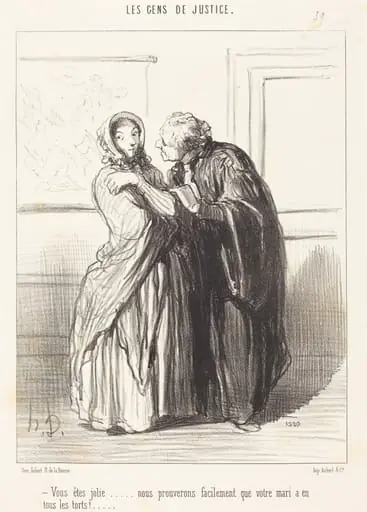 Vous êtes jolie...
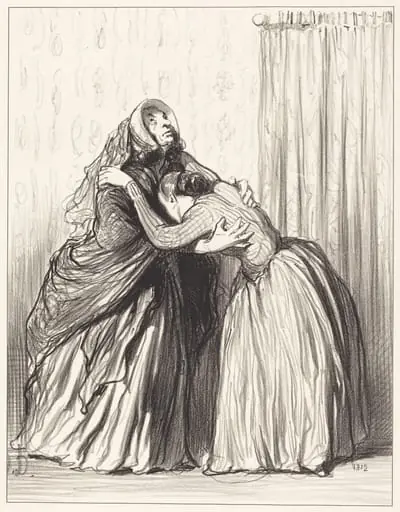 Oui, ma chère, mon mari a ravalé ma dignité...
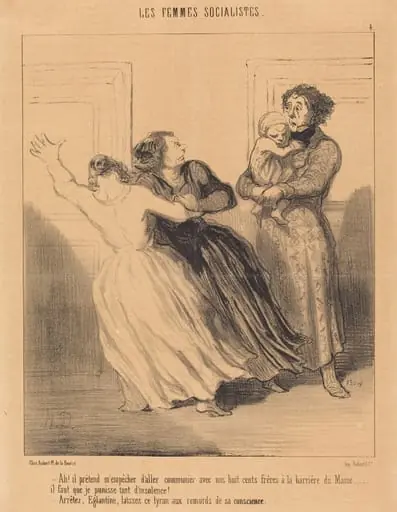 Ah! il prétend m'empêcher d'aller...
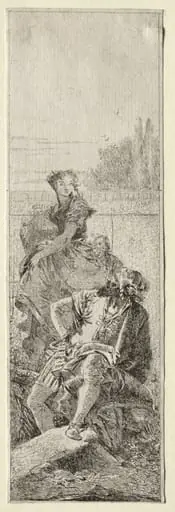 Two Peasants
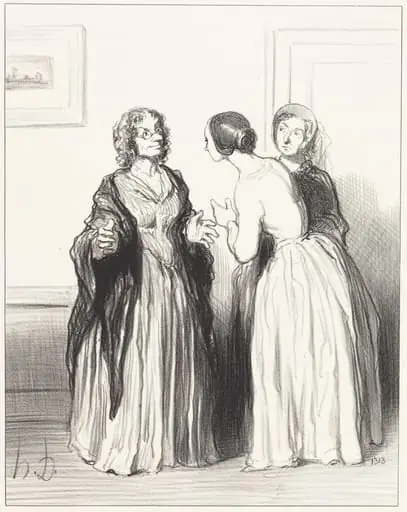 (1er Bas Bleu) - Profitons de l'occasion...
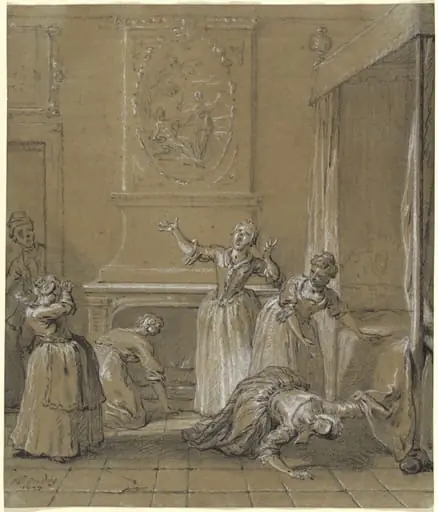 On trouve le corps mort de l'hote que l'on avait cache
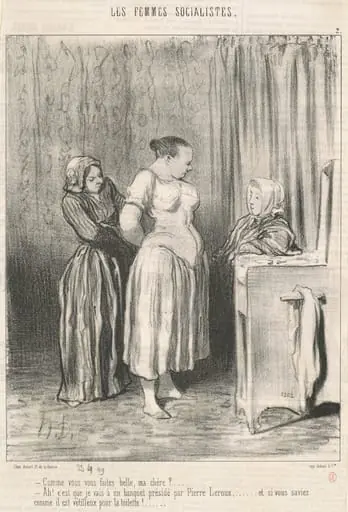 Comme vous faites belle, ma chère? ...
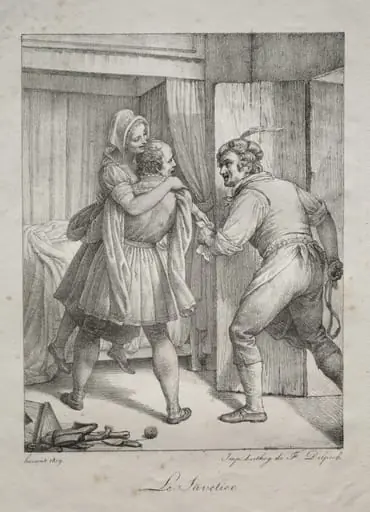 The Cobbler
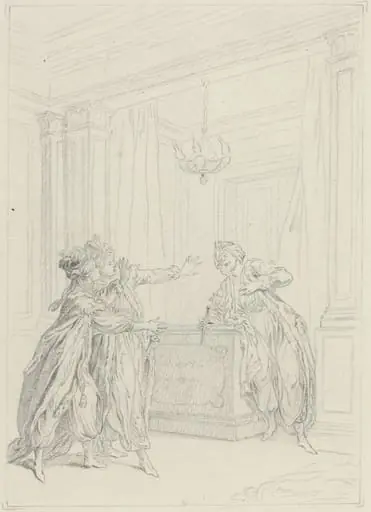 Calmine, quel objet vient Effrayer ma vue?
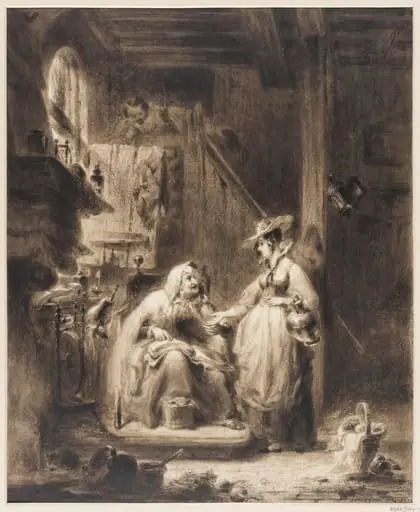 The Fortune Teller
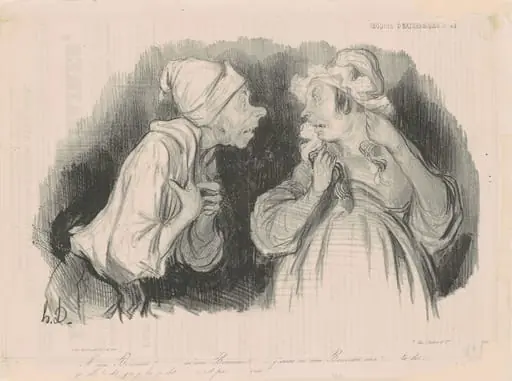 M'ame Bonneau... J'aime m'ame Bonneau moi!...
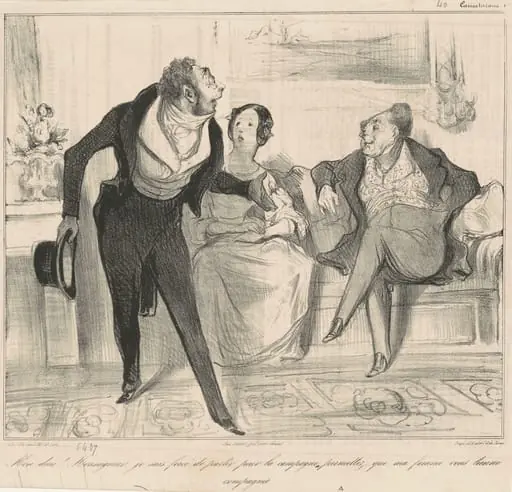 Mon Dieu! Monseigneur, je suis...