Artwork
Prosecutor
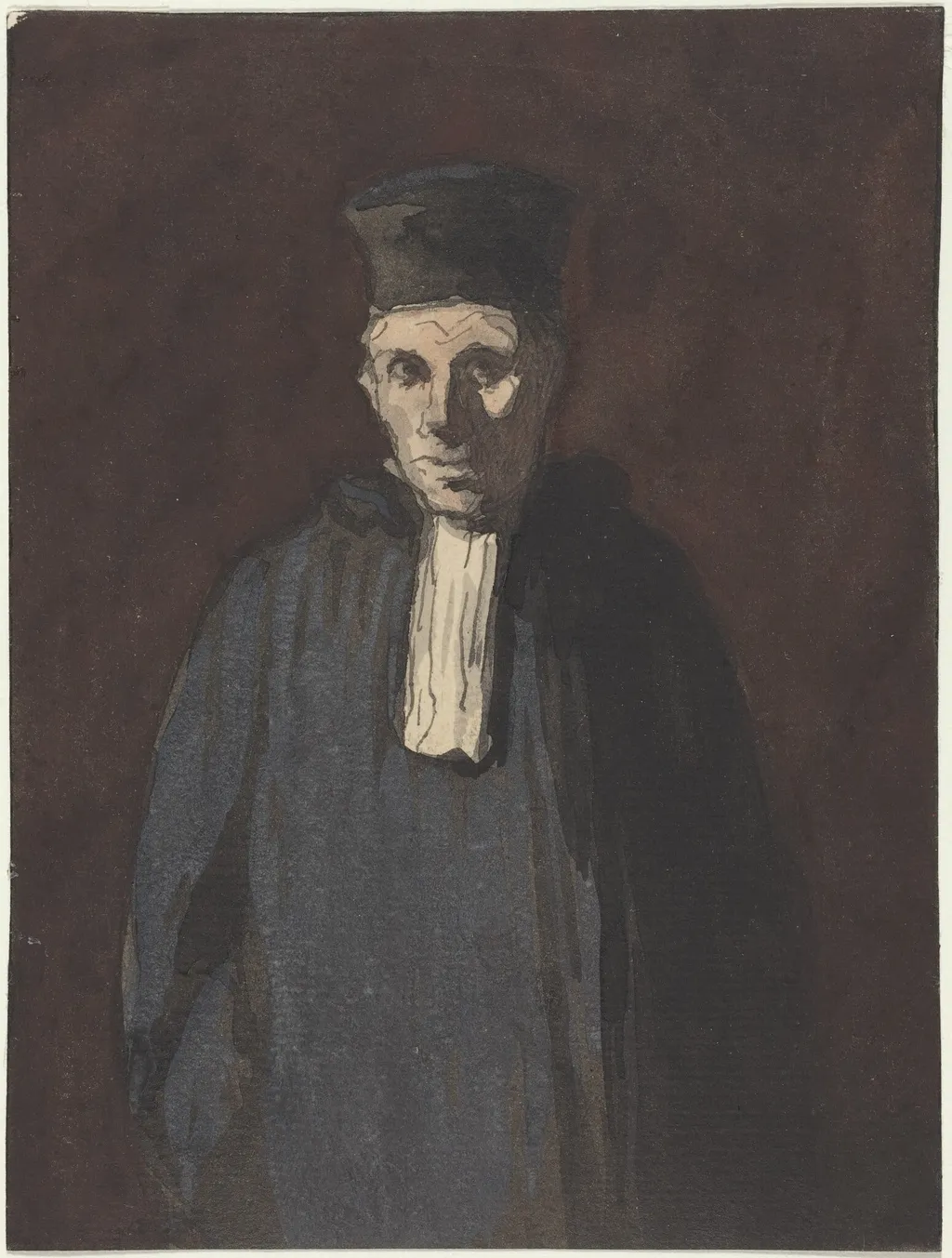
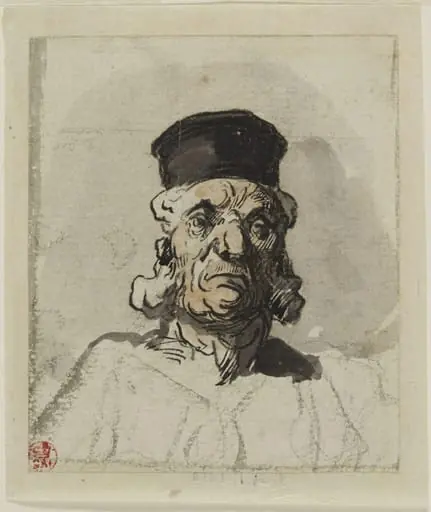
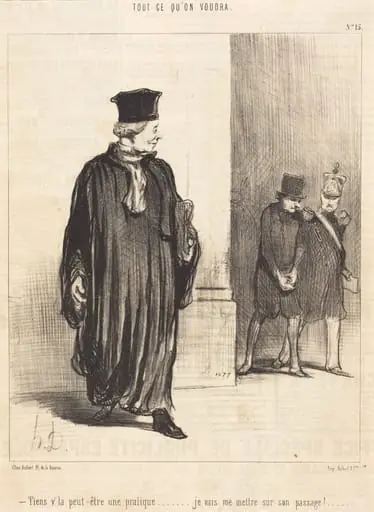
Prosecutor is an ink drawing by the Romanticist artist Honoré Daumier. It dates from 1844 and is held in the collection of the National Gallery of Art.
About this work
Overview
It belongs to a body of work produced during a time of political tension in France, when Daumier used visual satire to interrogate institutional power.
Created in 1844, *Prosecutor* is a pen and ink drawing with watercolor on laid paper by French artist Honoré Daumier. It belongs to a body of work produced during a time of political tension in France, when Daumier used visual satire to interrogate institutional power. The piece is unadorned in format, emphasizing immediacy and emotional weight over finish, characteristic of his approach to social commentary.
Subject & Meaning
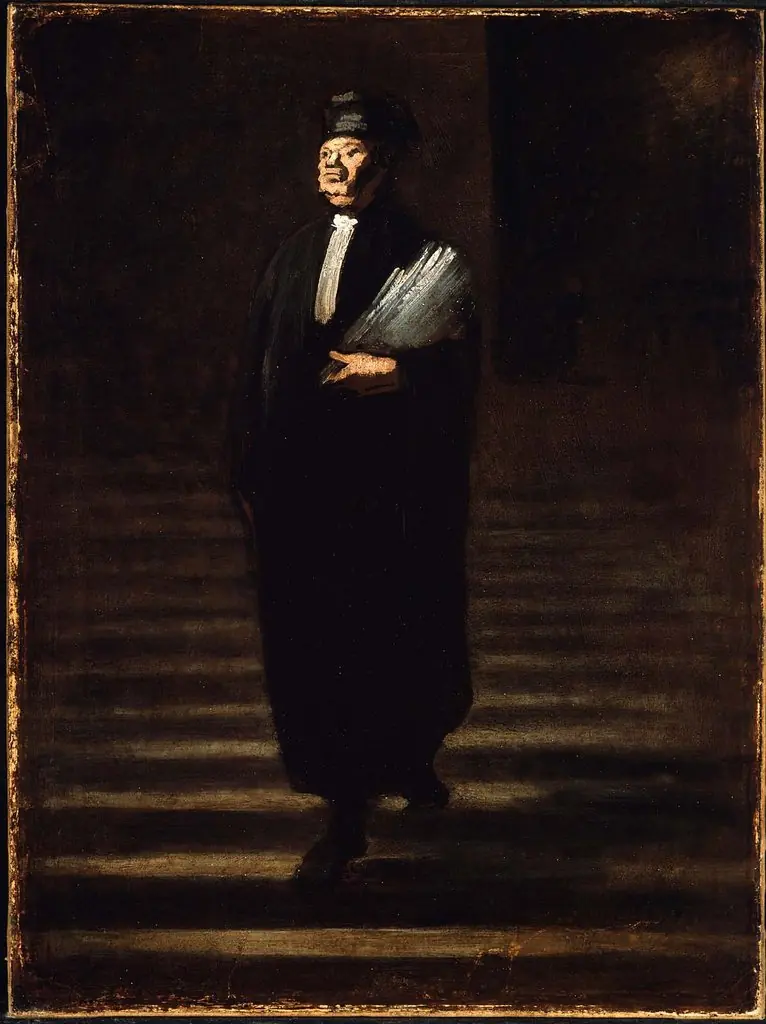
The figure depicts a judicial official in a black robe and cap, his pale face rendered with a stern, furrowed expression. Daumier does not portray a specific individual but rather embodies the authority and rigidity of the legal system under the July Monarchy. The absence of context and the oppressive darkness surrounding the figure suggest moral ambiguity and the isolating nature of institutional power.
Technique & Style
Daumier employed swift, economical pen strokes and diluted watercolor to build form and shadow, avoiding detailed rendering. The background is nearly void of detail, forcing focus onto the figure’s face and posture. This rough, expressive technique conveys urgency and psychological depth, aligning with his journalistic approach—capturing essence over polish, observation over idealization.
History & Provenance
The drawing was made during Daumier’s most active period of political satire, following his imprisonment for caricaturing King Louis-Philippe. Though not published in a periodical like *Le Charivari*, it shares the same critical spirit as his widely circulated lithographs. Its survival as a standalone work suggests it was kept as a personal study or private statement rather than a commercial print.
Context
In 1844, France was under the July Monarchy, a regime Daumier viewed as corrupt and self-serving. The judiciary, often aligned with elite interests, became a frequent target of his critique. Works like *Prosecutor* emerged from a climate where visual satire was both a tool of dissent and a risk to personal freedom, making such images acts of quiet resistance.
Legacy
Daumier’s *Prosecutor* exemplifies his influence on modern figurative art through its psychological realism and rejection of academic convention. Later artists, including those in the Expressionist movement, drew from his ability to convey character through minimal means. The drawing remains a testament to the power of the sketch as a vehicle for social critique.
Own this work as a print
Artist & collection

Artist
Honoré-Victorin Daumier was a French painter, sculptor, and printmaker, whose many works offer commentary on the social and political life in France, from the Revolution of 1830 to the fall of the Second French Empire in 1870.









![Man Wearing a Cloak [recto], by Edouard Manet](https://artifactworldgallery.com/img/edouard-manet--man-wearing-a-cloak-recto--6f165c0376318d82-w320.webp)