Artwork
Qué qu'vous êtes ... devenu, m'sieu Lebrun? ...
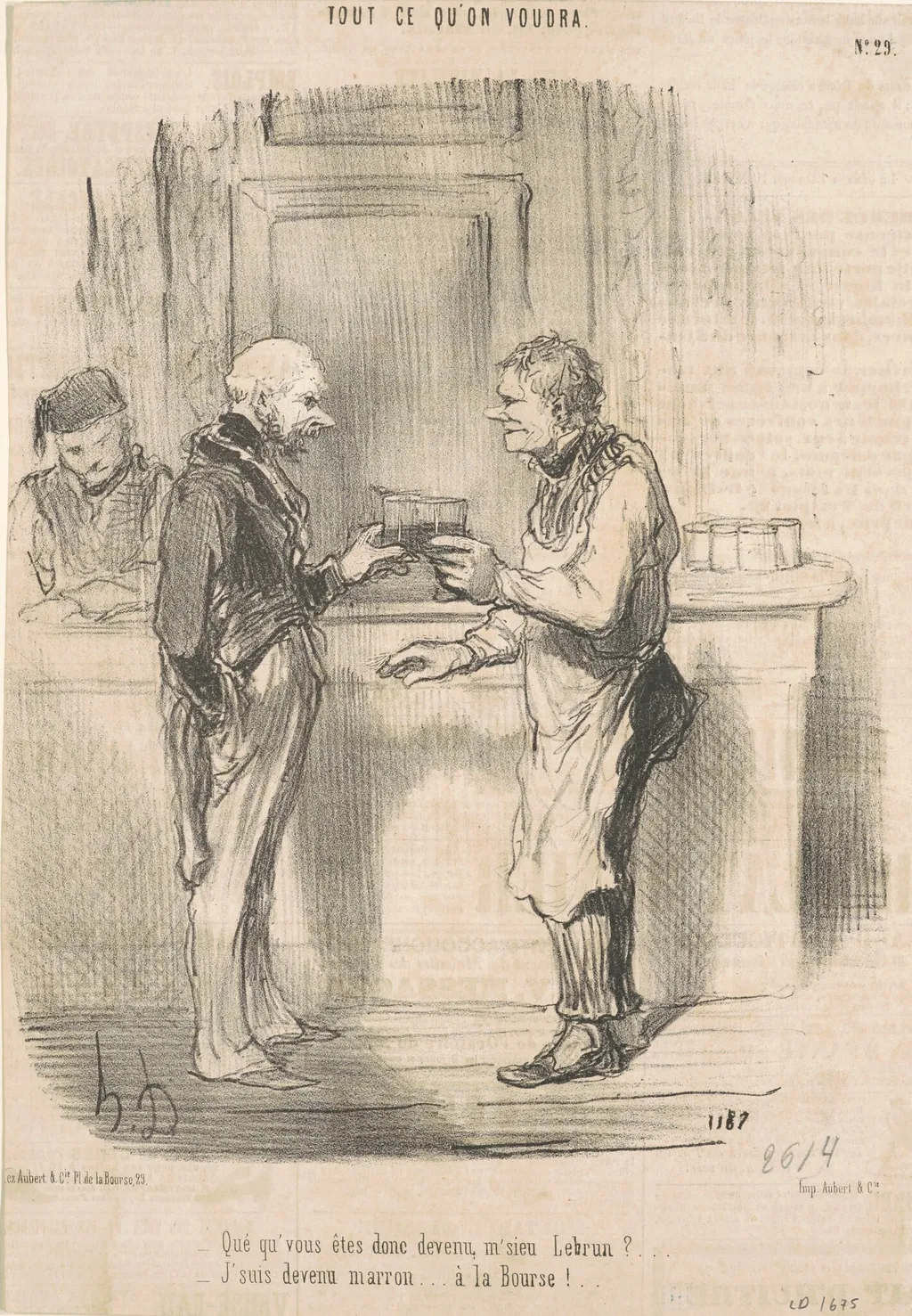
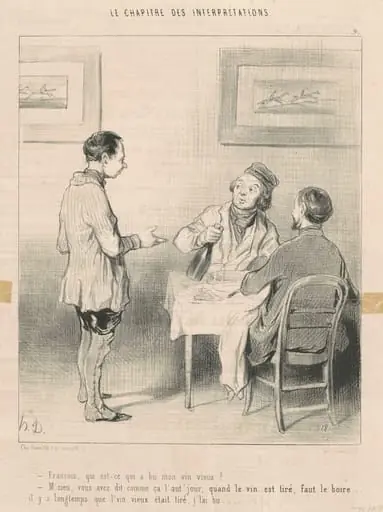
Qué qu'vous êtes ... devenu, m'sieu Lebrun? ... is an ink print by the Romanticist artist Honoré Daumier. It dates from 1848 and is held in the collection of the National Gallery of Art.
About this work
Overview
Honoré Daumier’s lithograph titled “Qué qu’vous êtes … devenu, m’sieu Lebrun?” presents a brief encounter between two men in a bustling market. The scene is rendered with clear contours and modest shading, emphasizing the immediacy of everyday life in mid‑19th‑century France.
Subject & Meaning
One figure is dressed in formal attire, suggesting middle‑class respectability, while his companion wears the rougher garb of a street vendor. Their juxtaposition invites reflection on the social stratification of the period, illustrating how individuals from disparate economic backgrounds might briefly intersect in public spaces.
Technique & Style
Executed as a lithograph, the work relies on bold outlines and limited tonal variation, hallmarks of Daumier’s graphic approach. The medium allows for swift, expressive line work that captures movement and gesture without elaborate detail, reinforcing the scene’s spontaneous character.
Context
Created during a time when Parisian markets served as microcosms of the city’s diverse populace, the image reflects Daumier’s ongoing interest in the quotidian realities of French society. His focus on ordinary encounters aligns with the broader realist tendency to document social conditions.
Artist & collection
Artist
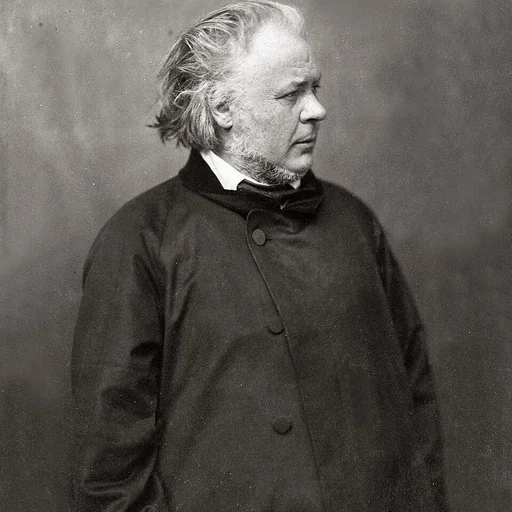
Honoré-Victorin Daumier was a French painter, sculptor, and printmaker, whose many works offer commentary on the social and political life in France, from the Revolution of 1830 to the fall of the Second French Empire in 1870.









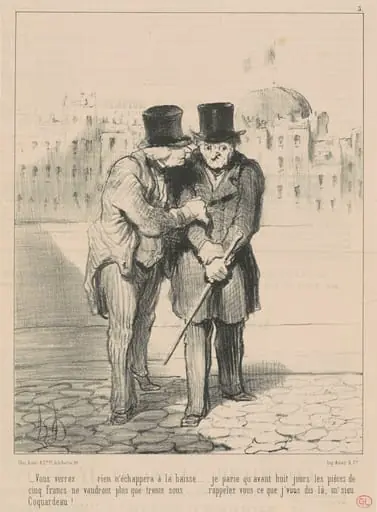 Vous verrez ... rien n'échappera a la baisse ...
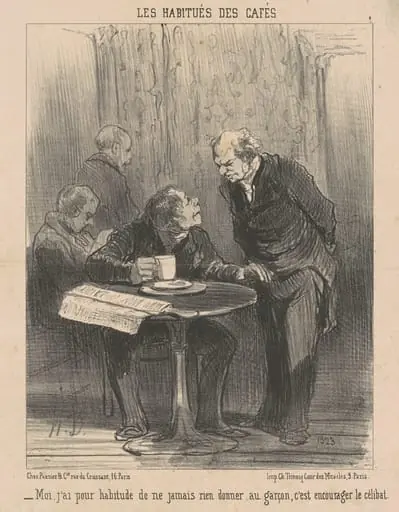 Moi, j'ai habitude de ne ... rien donner
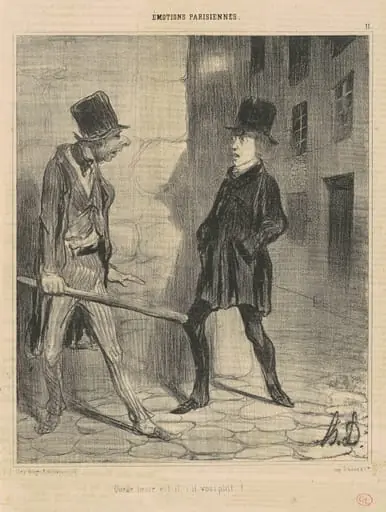 Quelle heure est'il, s'il vous plait?...
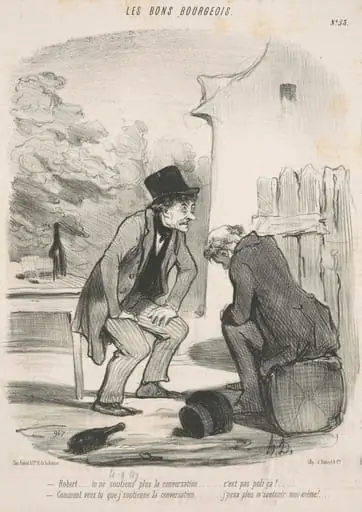 Robert ... tu ne soutiens plus la conversation ...
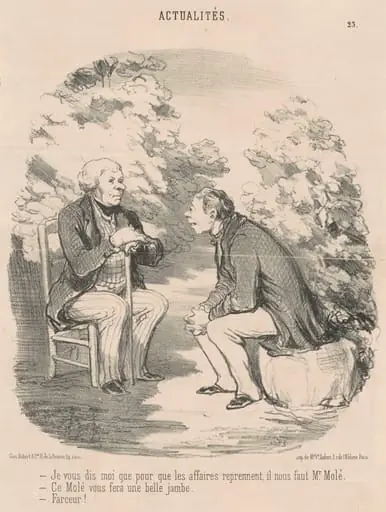 Je vous dis que ... il nous faut M. Molé ...
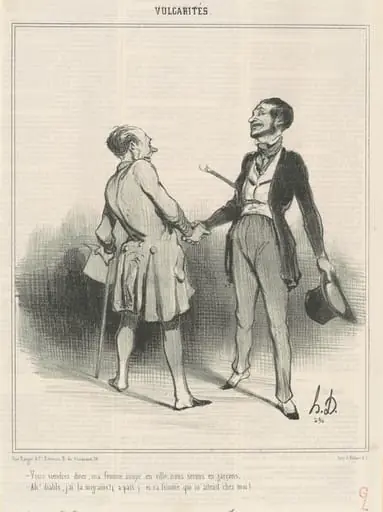 Vous viendrez diner, ma femme soupe en ville ...
 François, qui est-ce qui a bu mon vin ...