Artwork
Rencontre de la payse
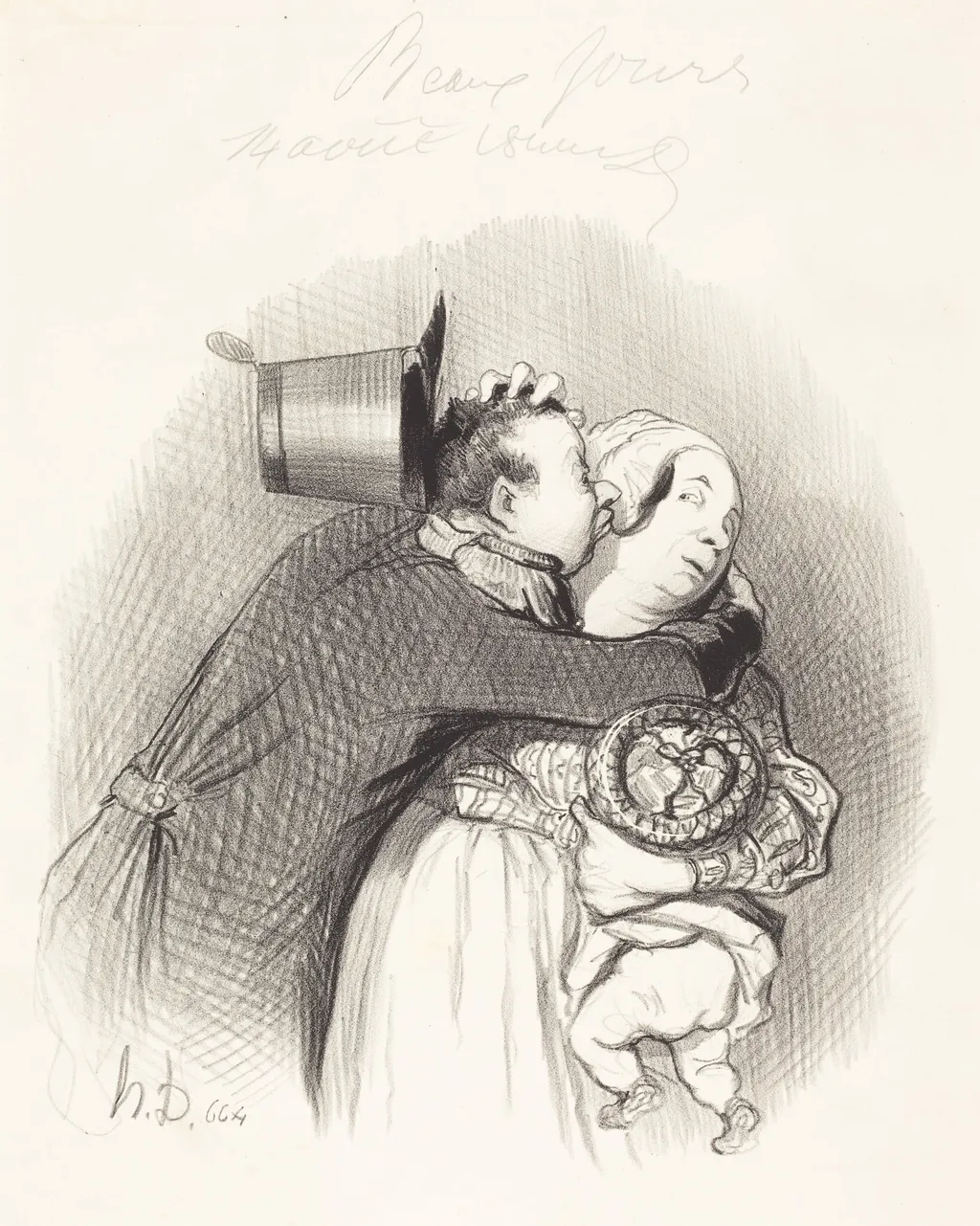
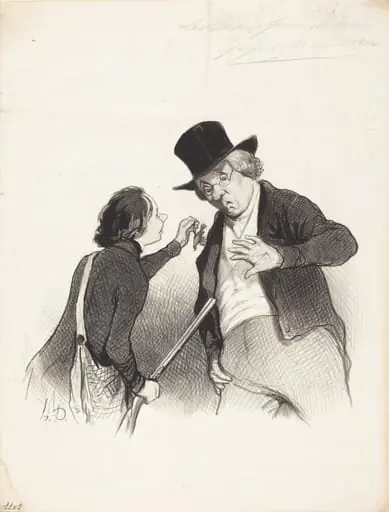
Rencontre de la payse is an ink print by the Romanticist artist Honoré Daumier. It dates from 1844 and is held in the collection of the National Gallery of Art.
About this work
Overview
Created in 1844, *Rencontre de la payse* is a lithograph by Honoré Daumier that captures a quiet, intimate moment between two rural figures.
Created in 1844, *Rencontre de la payse* is a lithograph by Honoré Daumier that captures a quiet, intimate moment between two rural figures. As part of his extensive printmaking output, Daumier used this medium to observe everyday life with subtle irony. Unlike his more overt political satires, this work focuses on personal interaction, reflecting his broader interest in the lives of ordinary people under France’s shifting political regimes.
Subject & Meaning
The image depicts a woman holding a wrapped bundle and a balding man in a dark coat, their faces turned toward each other in a moment of private exchange. Set in a dim, indistinct interior, the scene avoids grand narrative, instead suggesting a transaction or conversation rooted in rural economy or domestic necessity. The lack of context invites interpretation, emphasizing the dignity and quiet complexity of common lives often overlooked in official histories.
Technique & Style
Daumier employed rapid, fluid lines typical of lithographic sketching, allowing expressive gestures to define form rather than precise detail. The background is deliberately blurred, focusing attention on the figures’ postures and facial expressions. The contrast between the sharpness of their features and the softness of the surroundings creates a sense of immediacy, as if the moment was captured in passing rather than staged.
History & Provenance
Produced during Daumier’s most active period as a social commentator, the print likely appeared in a periodical such as *Le Charivari*, where his work reached a broad urban audience. Though not as widely known as his political caricatures, this piece aligns with his consistent focus on the working class. Its survival in institutional collections suggests early recognition of its artistic merit beyond its satirical function.
Context
In 1844, France was under the July Monarchy, a time of growing tension between the bourgeoisie and the rural poor. Daumier’s prints often subtly challenged class hierarchies, and this image reflects his interest in the quiet resilience of peasants and laborers. While avoiding direct political symbolism, the work quietly asserts the humanity of those excluded from public discourse.
Legacy
Daumier’s lithographs, including *Rencontre de la payse*, influenced later realist and modernist artists who valued observational depth over idealization. His ability to convey emotional nuance through minimal means helped redefine printmaking as a vehicle for psychological insight. The work remains a quiet testament to his commitment to portraying the unremarkable with unflinching attention.
Artist & collection

Artist
Honoré-Victorin Daumier was a French painter, sculptor, and printmaker, whose many works offer commentary on the social and political life in France, from the Revolution of 1830 to the fall of the Second French Empire in 1870.









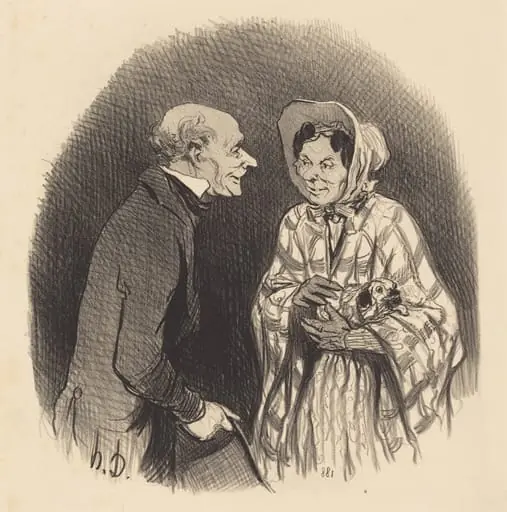 Une Nouvelle connaissance
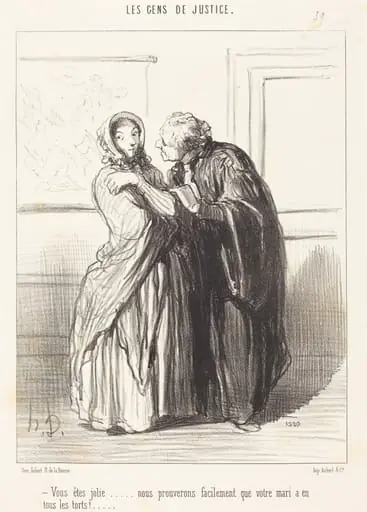 Vous êtes jolie...
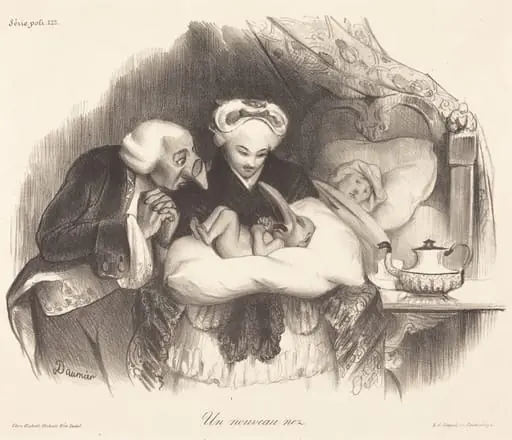 Un nouveau nez
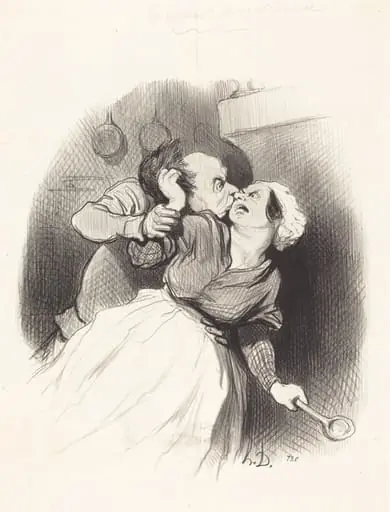 Un Retour de jeunesse
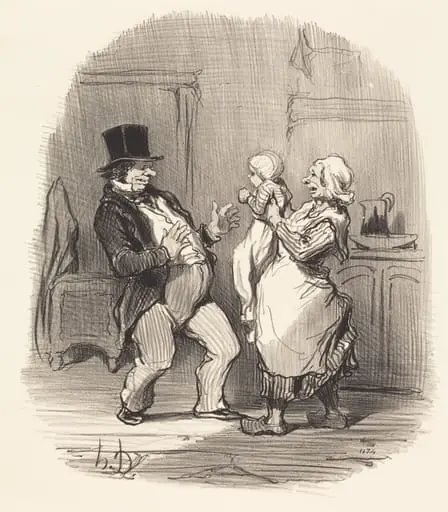 Ah! monsieur... faut pas lui rire comme ça...
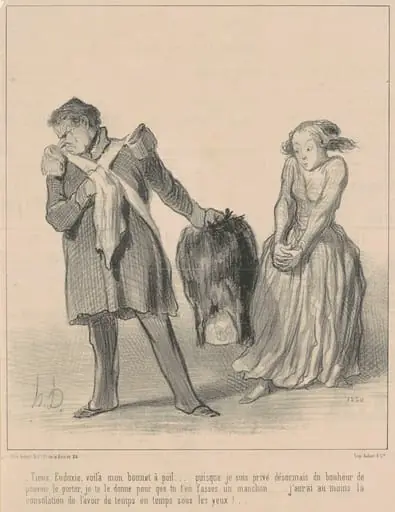 Tiens, Eudoxie, voila mon bonnet a poil ...
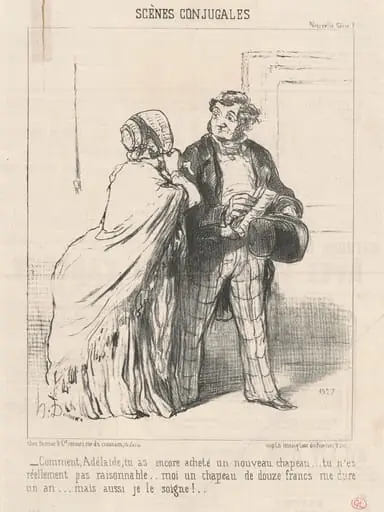 Comment ... tu as encore acheté un ... chapeau ...
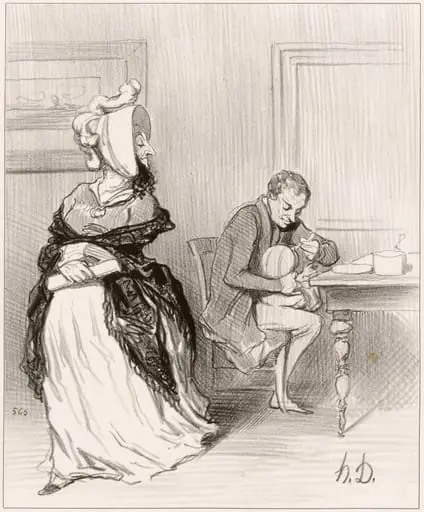 Adieu, mon cher, je vais chez mes éditeurs...
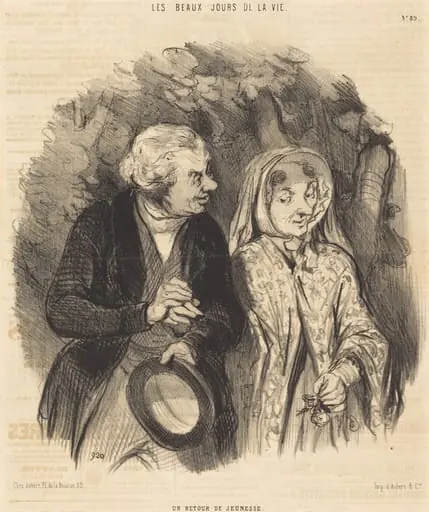 Un Retour de jeunesse
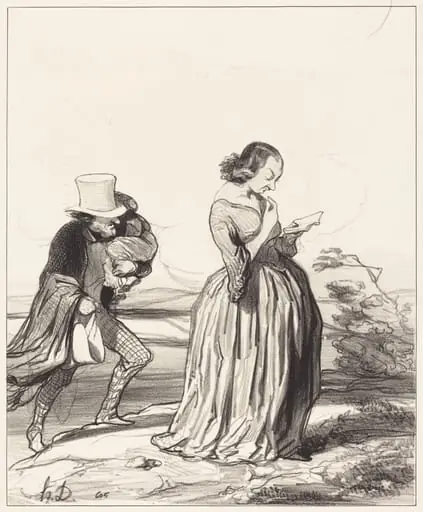 Saperlotte!... que je voudrais... que ma femme ait fini...
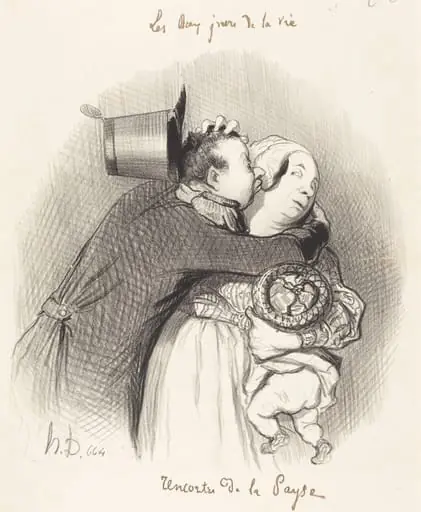 Rencontre de la payse
 Un Début a la chasse