Artwork
Socrate chez aspasie
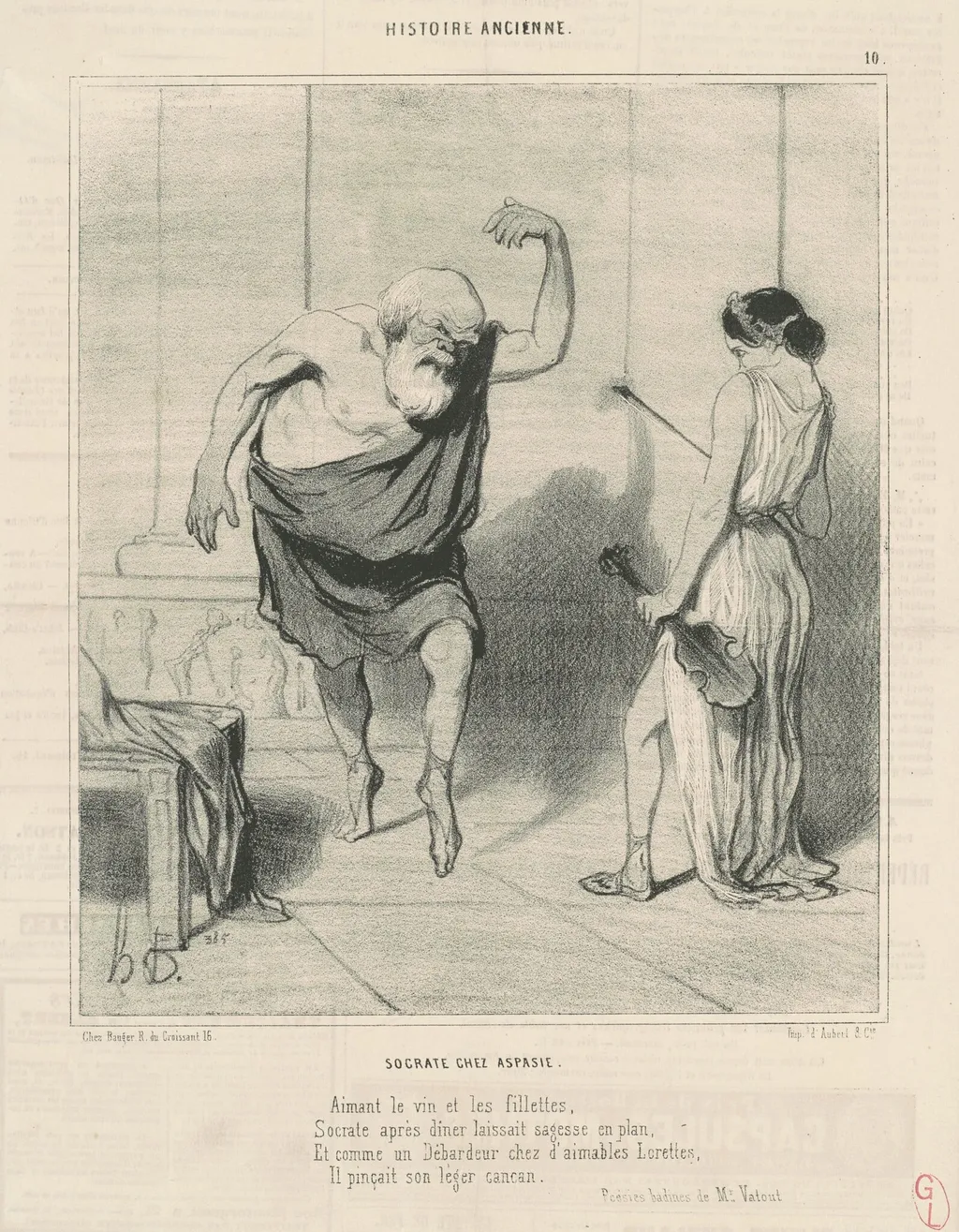
Socrate chez aspasie is an ink print by the Romanticist artist Honoré Daumier. It dates from 1842 and is held in the collection of the National Gallery of Art.
About this work
Overview
Socrate chez Aspasie, a lithograph by Honoré Daumier, presents an intimate, emotionally charged indoor scene featuring two central figures: an older, vulnerable man with an exposed chest and distinctive beard, and a woman in a long robe, engaged in a tense conversation.
Subject & Meaning
The work identifies the older man as Socrates, the renowned philosopher, and the woman as Aspasie, suggesting a dynamic where Aspasie appears to hold the upper hand. The scene juxtaposes everyday domesticity with profound philosophical undertones, characteristic of Daumier's thematic layering.
Technique & Style
Executed in lithography, the piece showcases Daumier's mastery of the medium, leveraging its expressive capabilities to convey the nuanced emotions and power dynamics at play in the depicted moment.
History & Provenance
No specific historical or provenance details are provided for 'Socrate chez Aspasie' beyond its attribution to Honoré Daumier, highlighting a need for further research into its creation context and ownership history.
Context
The work reflects Daumier's interest in blending the mundane with the philosophical, a common thread in his oeuvre, which often explored human nature and social dynamics through recognizable, relatable settings.
Legacy
While specific legacy details of 'Socrate chez Aspasie' are not outlined, the piece contributes to Daumier's broader legacy of using lithography to engage with both everyday life and deeper intellectual themes, influencing subsequent artists in their exploration of similar contrasts.
Artist & collection

Artist
Honoré-Victorin Daumier was a French painter, sculptor, and printmaker, whose many works offer commentary on the social and political life in France, from the Revolution of 1830 to the fall of the Second French Empire in 1870.









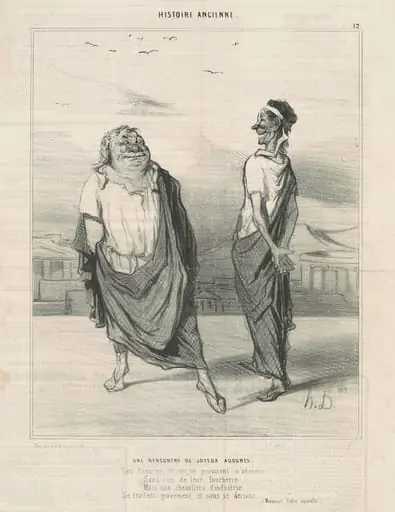 Une rencontre de jouyeauz augures
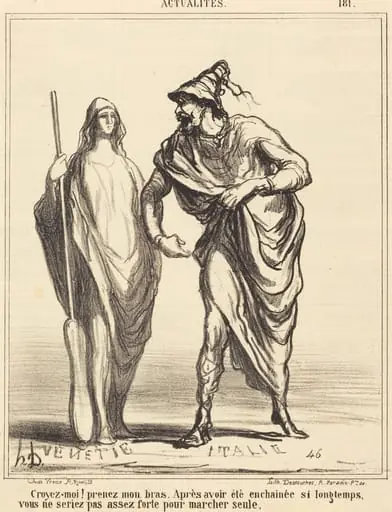 Croyez-moi! prenez mon bras...
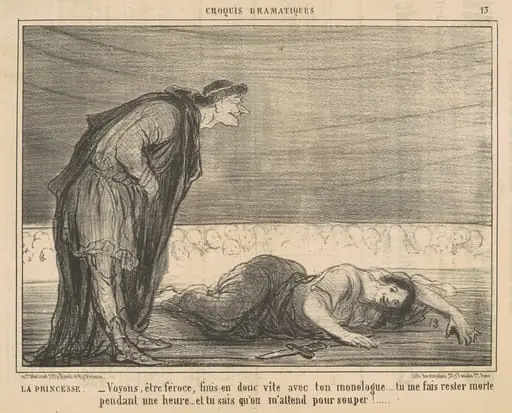 La princesse
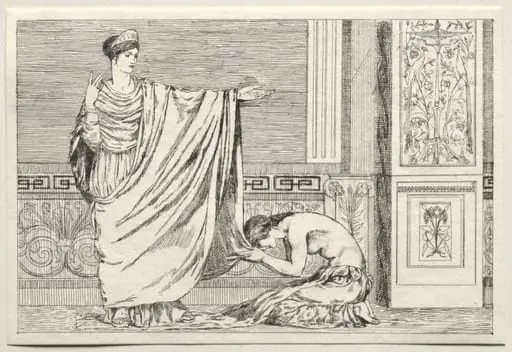 Cupid and Psyche: Psyche and Juno
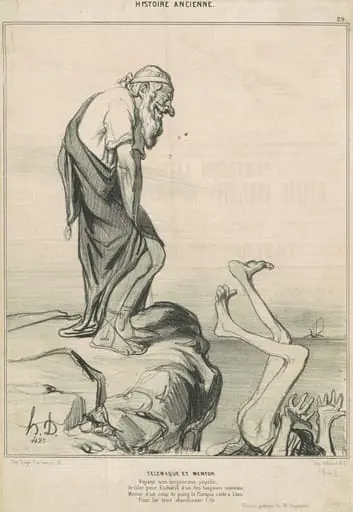 Télémaque et Mentor
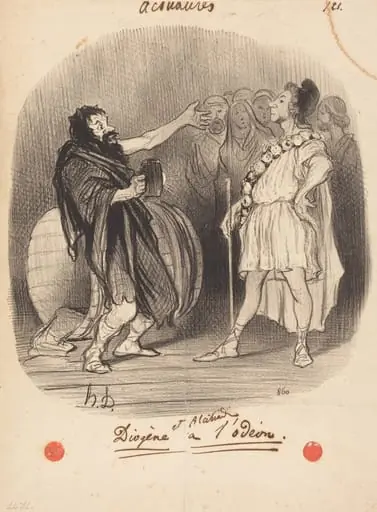 Diogène et Alcibiade a l'Odéon
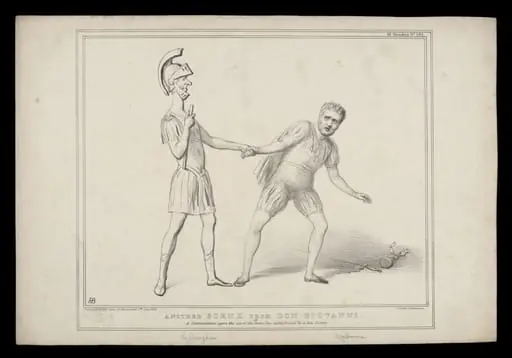 H Beard Print Collection
 H Beard Print Collection
 The Birth of Pallas Athene
 The Birth of Pallas Athene
 Oui je viens, dans son temple...
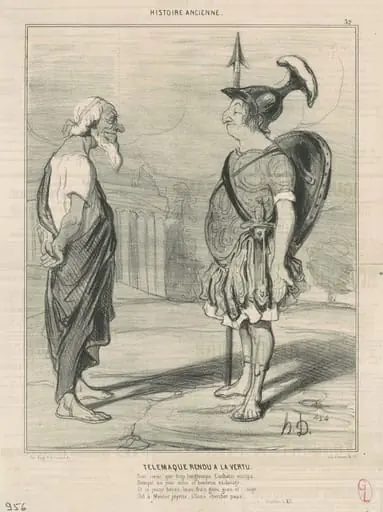 Télémaque rendu a la vertu