Artwork
Cupid and Psyche: Psyche and Juno
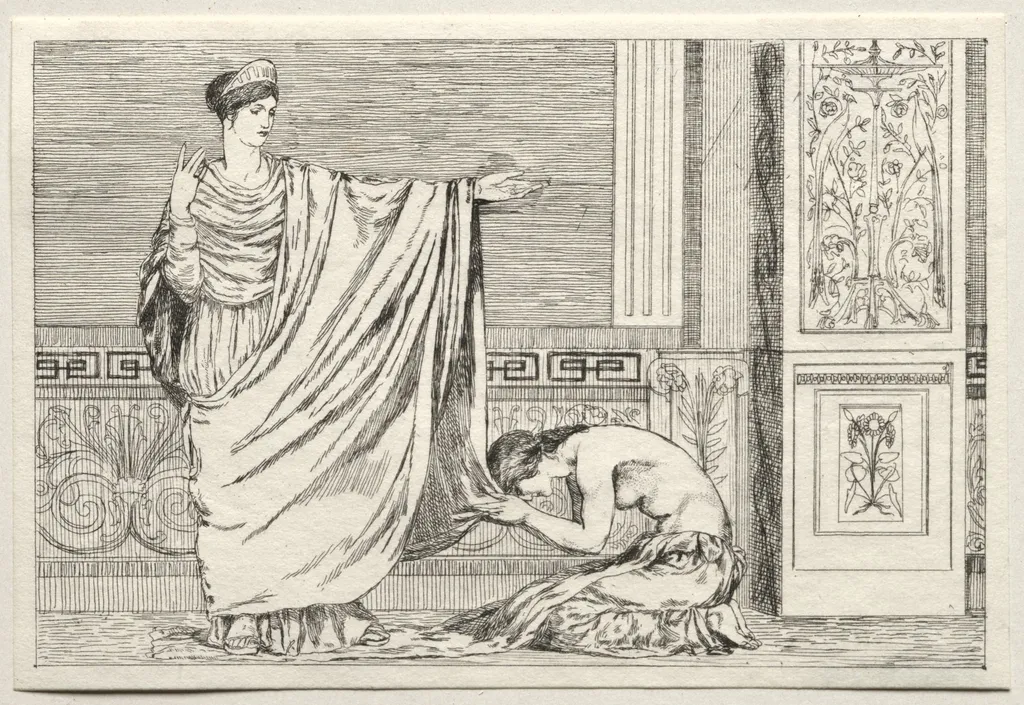
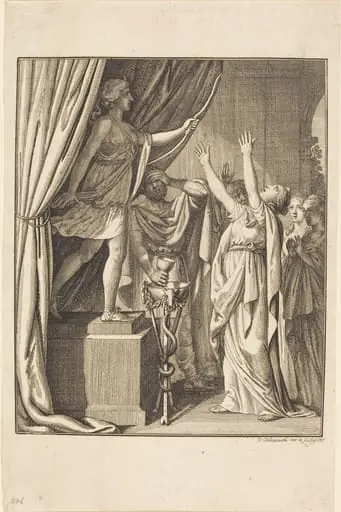
Cupid and Psyche: Psyche and Juno is a print by the Impressionist artist Max Klinger. It dates from 1880 and is held in the collection of the Cleveland Museum of Art.
About this work
Overview
Part of a larger series exploring the myth of Cupid and Psyche, the work reflects his engagement with printmaking as a vehicle for complex narratives.
Max Klinger, a German artist known for his interdisciplinary practice, produced the print *Cupid and Psyche: Psyche and Juno* in 1880. Part of a larger series exploring the myth of Cupid and Psyche, the work reflects his engagement with printmaking as a vehicle for complex narratives. Klinger’s approach bridged literary symbolism and visual form, situating this piece within late 19th-century movements like Symbolism and Jugendstil.
Subject & Meaning
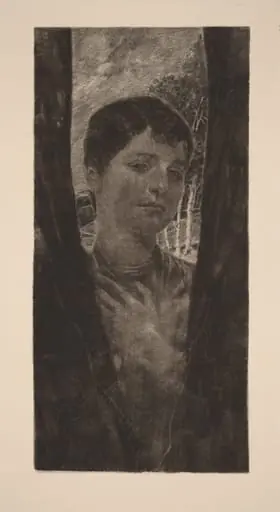
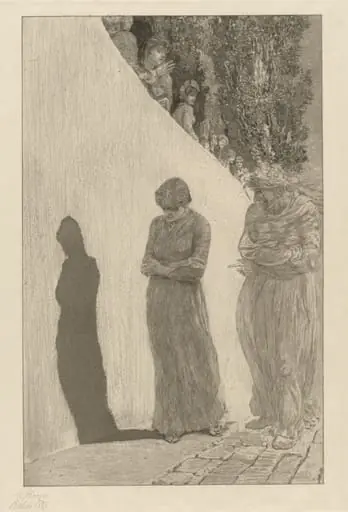
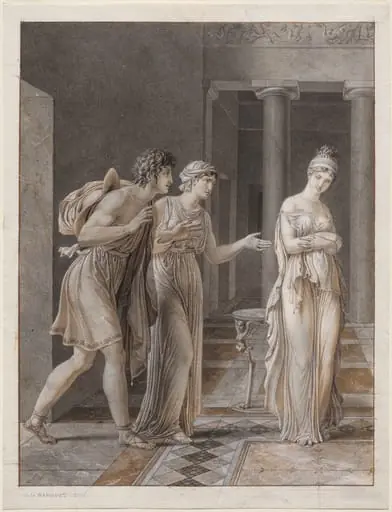
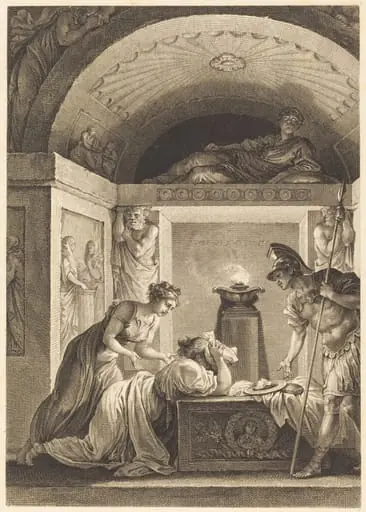
The print illustrates Psyche’s confrontation with Juno, the queen of the gods, during her trials to win Cupid’s love. Rather than depicting action, Klinger emphasizes psychological tension and emotional isolation. Juno’s imposing presence and Psyche’s vulnerable posture suggest themes of divine judgment and human endurance, aligning with Symbolist interests in inner states over literal storytelling.
Technique & Style
Klinger employed etching and aquatint to achieve rich tonal gradations and intricate textures. The composition is tightly framed, focusing on the two figures against a shadowed, ambiguous background. Delicate linework and dramatic chiaroscuro heighten the emotional weight, reflecting Klinger’s mastery of print media and his departure from naturalism toward expressive, atmospheric rendering.
History & Provenance
Created in 1880, the print was part of Klinger’s extended series on the Cupid and Psyche myth, which he developed over several years. It entered the collection of The Cleveland Museum of Art through established acquisition channels, likely during the early 20th century as interest in European graphic arts grew among American institutions.
Context
Klinger’s work emerged amid a cultural moment when classical myths were reinterpreted through psychological and spiritual lenses. His engagement with Symbolism coincided with broader European shifts away from realism, as artists sought to express inner experience. The Vienna Secession and Jugendstil shared his interest in integrating fine and decorative arts, though Klinger remained distinct in his literary and philosophical focus.
Legacy
Klinger’s *Cupid and Psyche* series influenced later generations of printmakers and Symbolist artists by demonstrating how traditional narratives could be infused with modern psychological depth. His technical innovations in etching expanded the expressive potential of the medium, securing his place as a pivotal figure in the transition from 19th-century academic traditions to early modernist experimentation.
Artist & collection
Artist
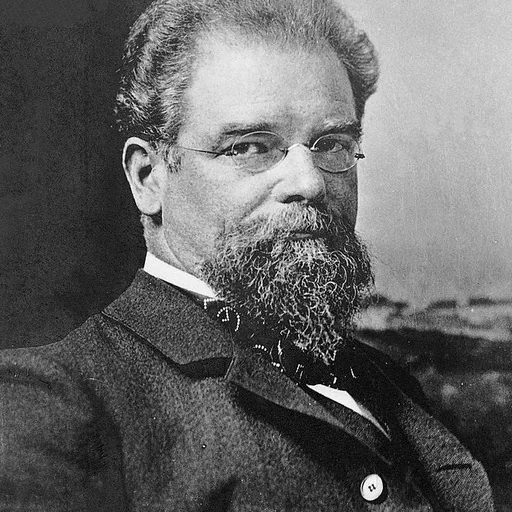
Max Klinger (18 February 1857 – 5 July 1920) was a German artist who produced significant work in painting, sculpture, prints and graphics, as well as writing a treatise articulating his ideas on art and the role of…