Artwork
Eh! bien monsieur et mes trois termes...
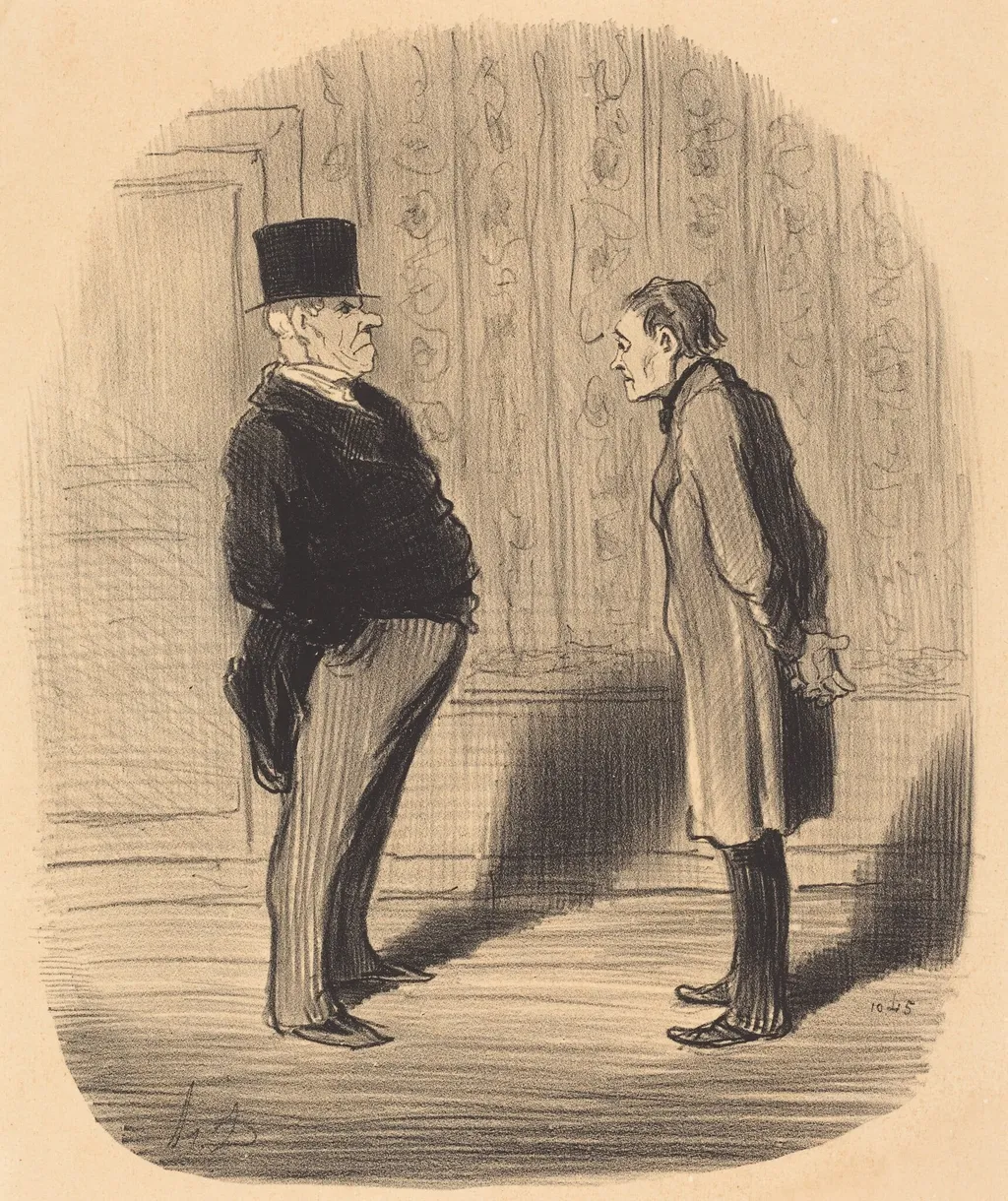
Eh! bien monsieur et mes trois termes... is an ink print by the Romanticist artist Honoré Daumier. It dates from 1848 and is held in the collection of the National Gallery of Art. Eh!
About this work
Overview
Eh! bien monsieur et mes trois termes... is a lithograph created by French artist Honoré Daumier in 1848. It is a print that showcases Daumier's skill as a satirical artist and his engagement with the social and political issues of his time.
Subject & Meaning
The lithograph depicts two men in conversation, with one wearing a tall black hat and dark attire, and the other in a lighter coat. The tense atmosphere and serious demeanor of the figures suggest a significant or confrontational discussion, likely commenting on the political climate of 1840s France.
Technique & Style
As a lithograph, Eh! bien monsieur et mes trois termes... demonstrates Daumier's proficiency in printmaking. The work is characteristic of his satirical style, which often targeted the French monarchy, aristocracy, and clergy, reflecting his republican democratic views.
History & Provenance
Created in 1848, a year of significant upheaval in France, this lithograph is a product of Daumier's contributions to publications like La Caricature and Le Charivari, where he frequently published his caricatures and social commentary.
Context
The lithograph is set against the backdrop of France's tumultuous political landscape in the mid-19th century, with Daumier's work reflecting the artist's engagement with and critique of the social and political status quo.
Own this work as a print
Artist & collection

Artist
Honoré-Victorin Daumier was a French painter, sculptor, and printmaker, whose many works offer commentary on the social and political life in France, from the Revolution of 1830 to the fall of the Second French Empire in 1870.









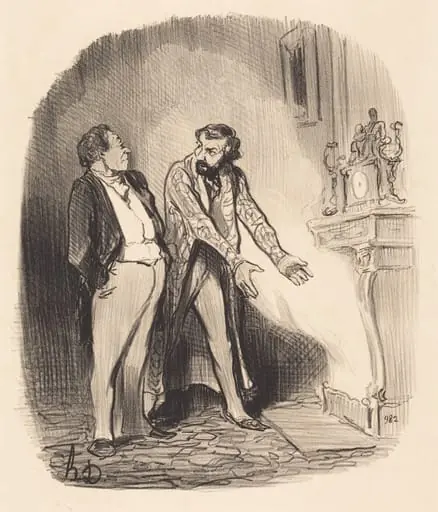 Mais monsieur le propriétaire, voyez...
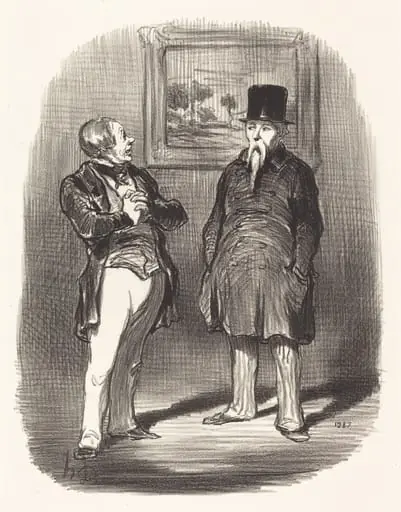 Tiens... je ne te reconnaissais pas...
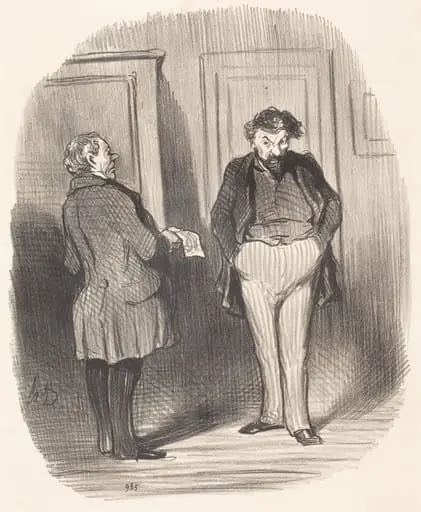 Pourriez-vous me dire...? J'ai la grippe!...
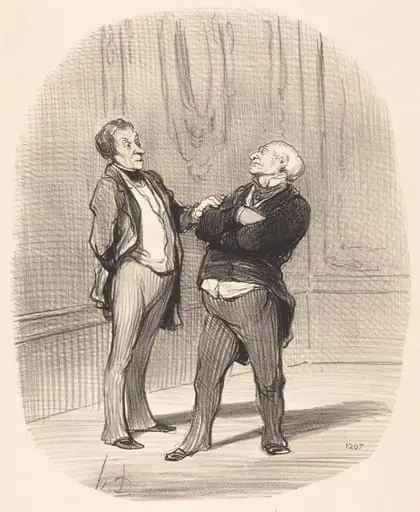 Il y a la guerre... les loyers vont... diminuer...
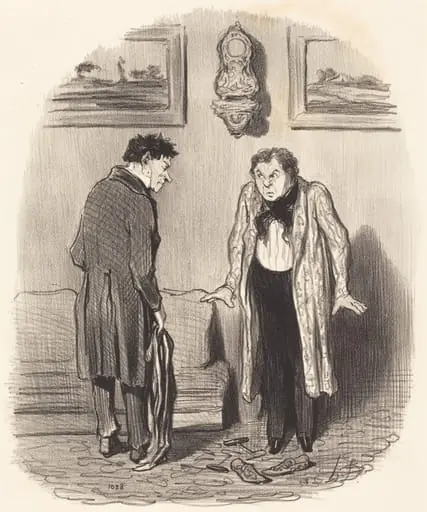 Mais quand je vous dis que je ne peux pas remuer les pieds...
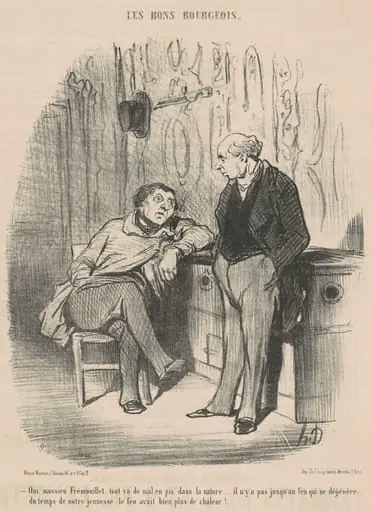 Oui, Mossieu Fremouillet, tout va de mal en pis ...
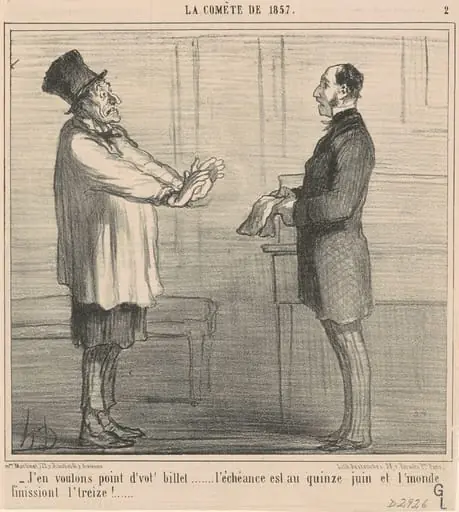 J'en voulons point d'vot' billet ...
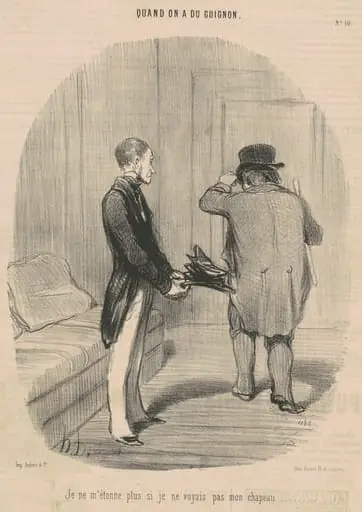 Je ne m'étonne plus si je ne voyais pas mon chapeau ...