Artwork
Trop de politesse
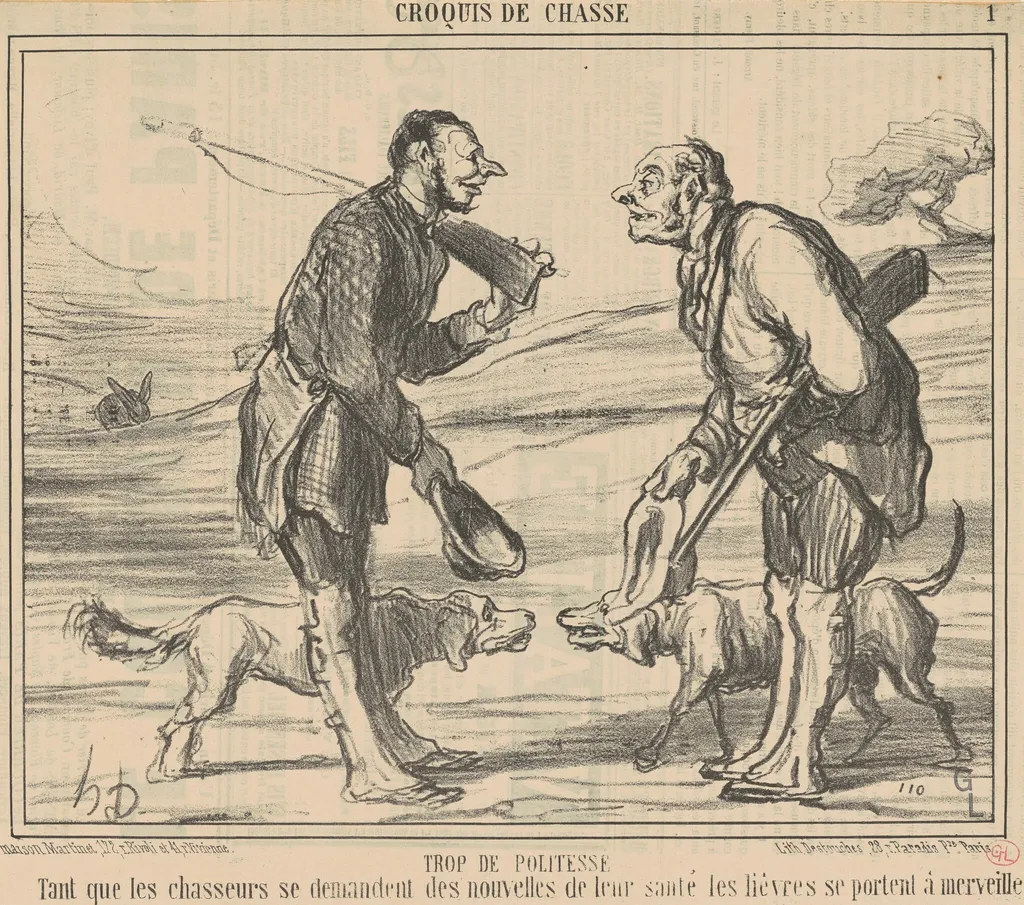
Trop de politesse is an ink print by the Impressionist artist Honoré Daumier. It dates from 1857 and is held in the collection of the National Gallery of Art.
About this work
Overview
Honoré Daumée r’s lithograph “Trop de politesse” depicts a brief, outdoor tableau in which two hunters, each accompanied by a dog, pause to exchange an overly formal greeting. A rabbit darts away in the background, underscoring the incongruity between the genteel gesture and the hunting context.
Subject & Meaning
The print satirizes the social rituals of the mid‑nineteenth‑century French countryside, exaggerating the hunters’ courtesy to the point of absurdity. By juxtaposing refined politeness with the violent purpose of the hunt, Daumée r highlights the performative nature of manners and the gap between public decorum and private intent.
Technique & Style
Executed as a lithograph, the work relies on bold, fluid lines and stark contrasts of black and white to define figures and landscape. Daumée r’s characteristic caricatural exaggeration is evident in the elongated postures and exaggerated gestures, while the simplified background keeps focus on the interaction between the two men and their dogs.
Context
Created during Daumée r’s prolific period of social satire, the print aligns with his broader interest in everyday scenes that reveal human foibles. The hunting motif was a common subject in French art, but Daumée r subverts it, turning a familiar leisure activity into a commentary on the pretensions of polite society.
Artist & collection
Artist
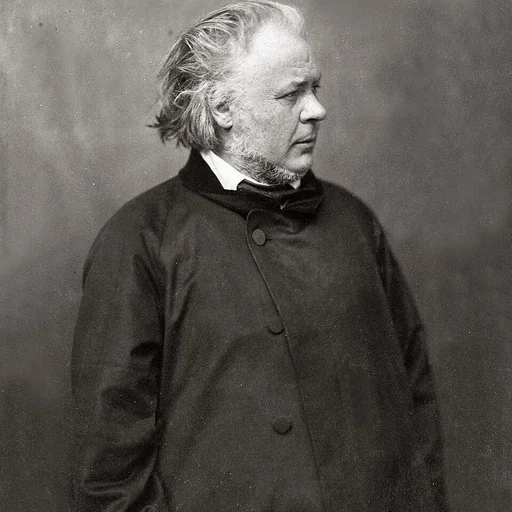
Honoré-Victorin Daumier was a French painter, sculptor, and printmaker, whose many works offer commentary on the social and political life in France, from the Revolution of 1830 to the fall of the Second French Empire in 1870.

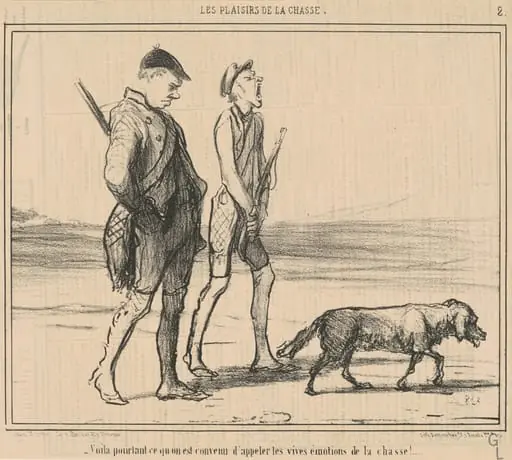 Voila pourtant ce qu'on est convenu d'appeler ...
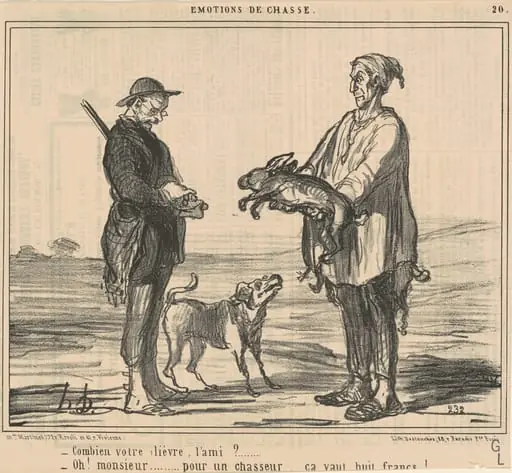 Combien votre lièvre, l'ami?
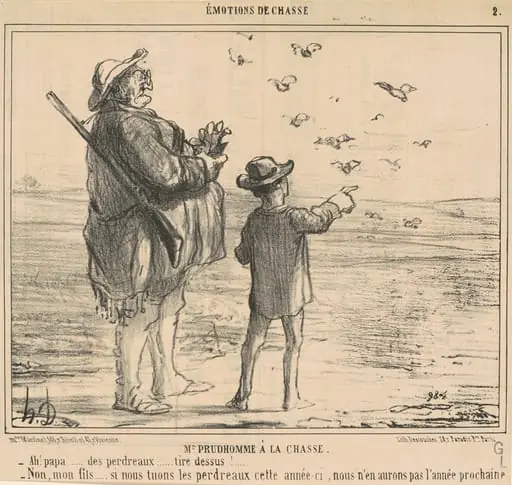 Mr 'Prudhomme a la chasse
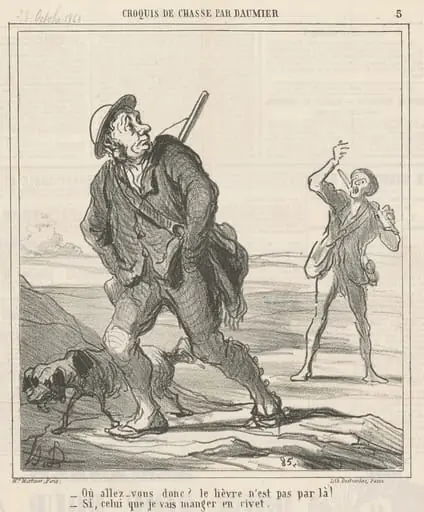 Ou allez-vous donc?
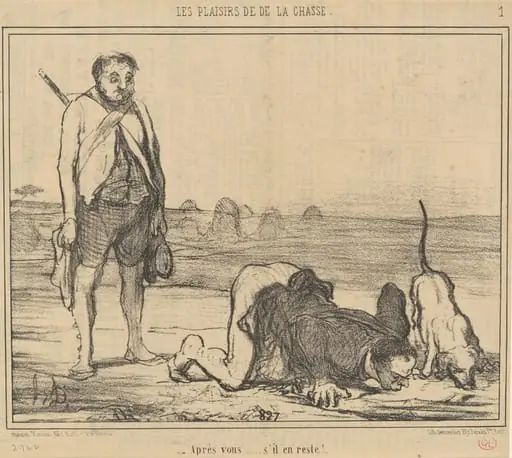 Après vous ... s'il en reste! ...
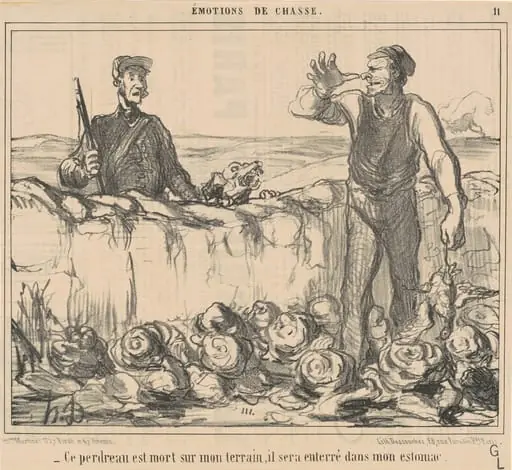 Ce perdreau est mort sur mon terrain ...
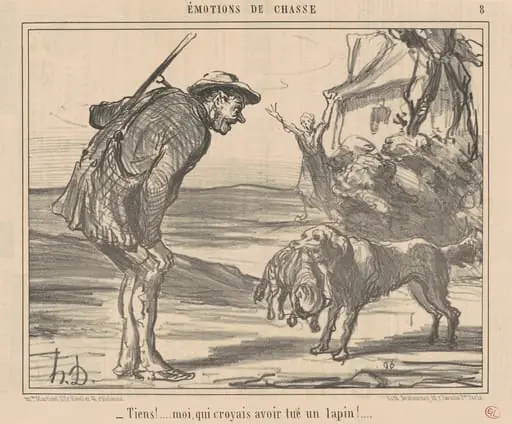 Tiens! Moi, croyais avoir tué un lapin! ...
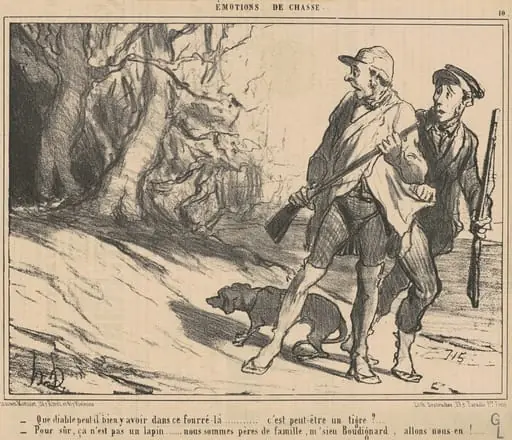 Que diable peut-il bien y avoir dans ce fourré-la? ...
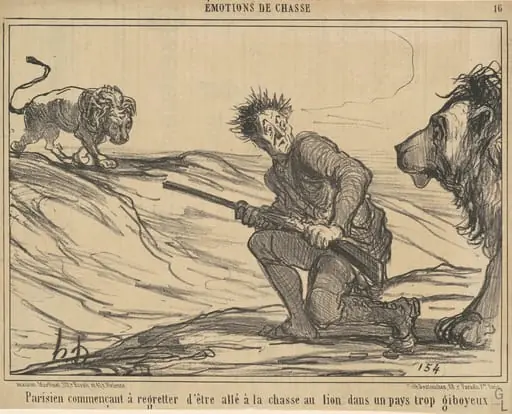 Parisien commencant a regretter ... la chasse au lion ...
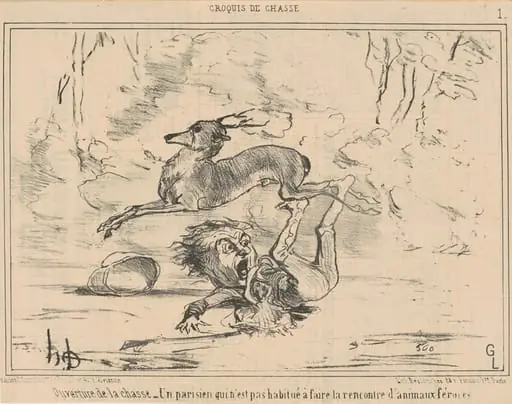 Ouverture de la chasse
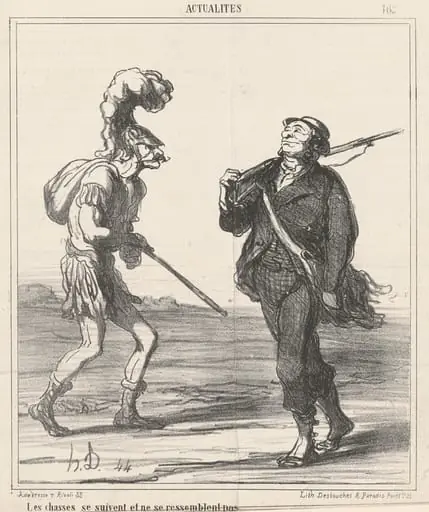 Les chasses ... ne se ressemblent pas