Artwork
Tu m'embêtes, mon épouse!... v'la une heure...
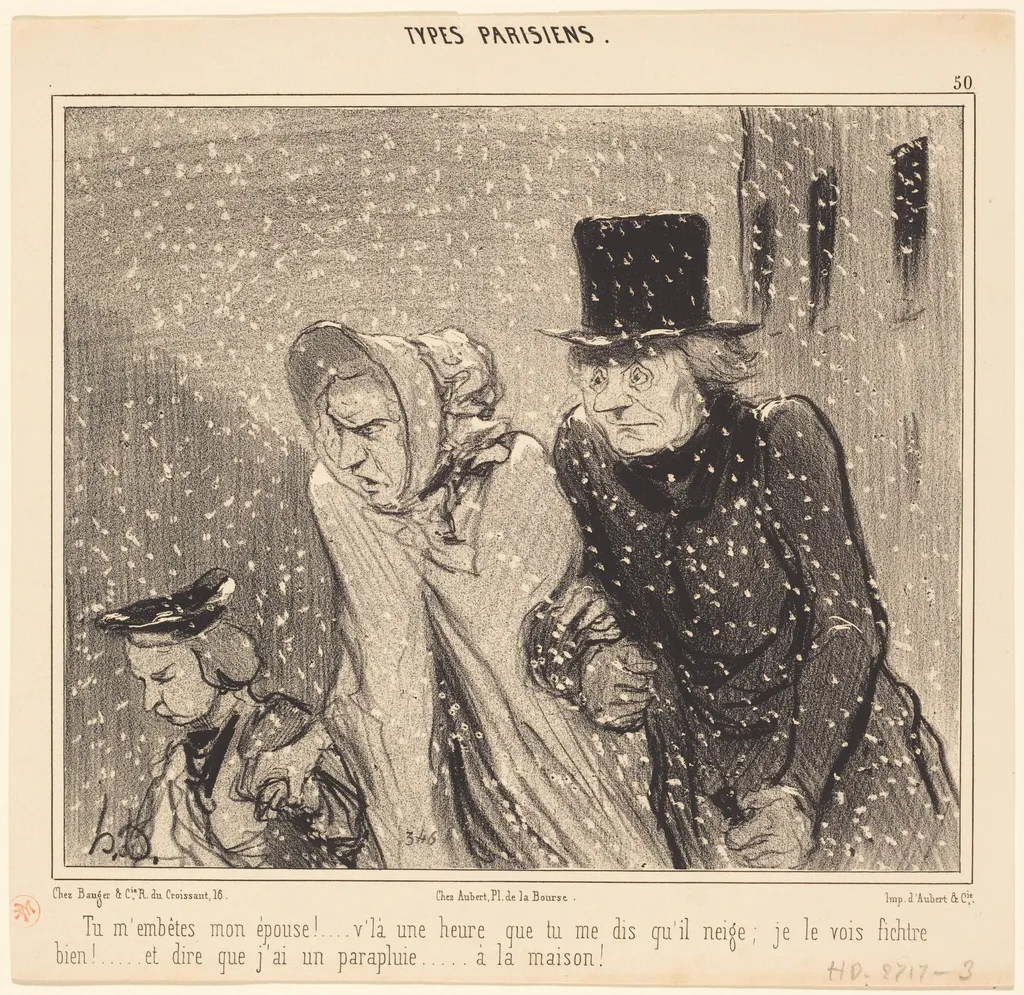
Tu m'embêtes, mon épouse!... v'la une heure... is an ink print by the Romanticist artist Honoré Daumier. It dates from 1843 and is held in the collection of the National Gallery of Art.
About this work
Overview
The scene is rendered with quick, sketch‑like lines that capture both the chill of the weather and the tension between the figures.
Honoré Daumier’s 1843 lithograph *Tu m'embêtes, mon épouse!... v'la une heure...* presents a brief, humorous encounter set in a wintry street. Two men, one in a tall black top‑hat and a coat stippled with white, the other hunched and irritable, stand amid falling snow. The scene is rendered with quick, sketch‑like lines that capture both the chill of the weather and the tension between the figures.
Subject & Meaning
The print juxtaposes a formal, well‑dressed figure with a disgruntled companion, suggesting a clash of social attitudes or a domestic dispute amplified by the harsh winter setting. The French caption, a playful remark about snow and umbrellas, adds a layer of irony, inviting viewers to read the interaction as a commentary on everyday irritation and class‑based pretensions.
Technique & Style
Executed in lithography, Daumier employed the medium’s capacity for swift, gestural drawing, allowing the artist to convey expression through loose, energetic strokes. The contrast between the crisp black of the top‑hat and the speckled white of the coat emphasizes texture, while the blurred background recedes, focusing attention on the figures’ faces and posture.
History & Provenance
Created for the satirical press that featured Daumier’s work, the lithograph circulated among a readership attuned to political and social critique in the 1840s. Though originally published in a newspaper, the print later entered private collections and eventually museum holdings, where it serves as an example of Daumier’s prolific output during the early republican period.
Context
The image belongs to a period when Daumier regularly targeted the monarchy, aristocracy, and clergy through caricature, aligning himself with republican democratic ideals. By focusing on a mundane, wintery encounter, he extended his critique from overt political scenes to the subtler dynamics of daily life, reflecting broader concerns about hypocrisy and class tension in mid‑19th‑century France.
Artist & collection

Artist
Honoré-Victorin Daumier was a French painter, sculptor, and printmaker, whose many works offer commentary on the social and political life in France, from the Revolution of 1830 to the fall of the Second French Empire in 1870.









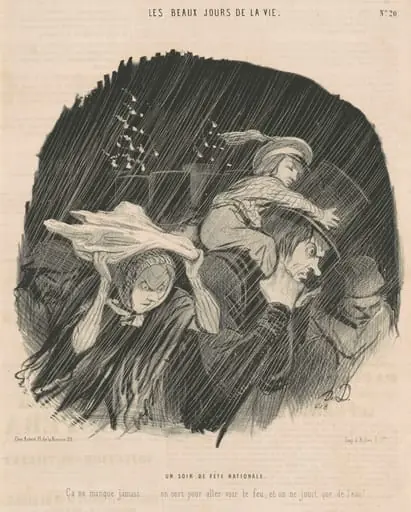 Un soir de fête nationale
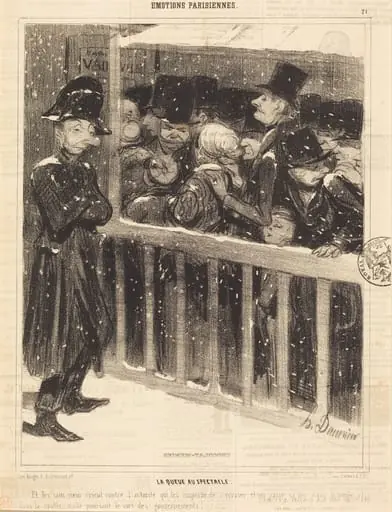 La Queue au spectacle
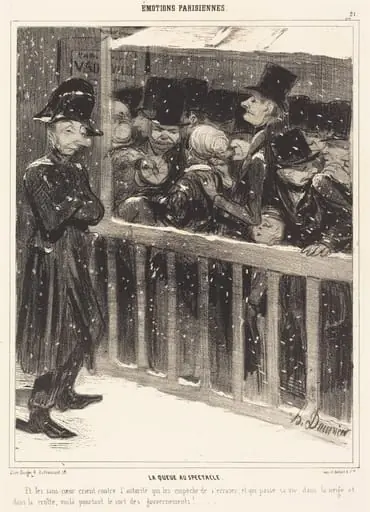 La Queue au Spectacle
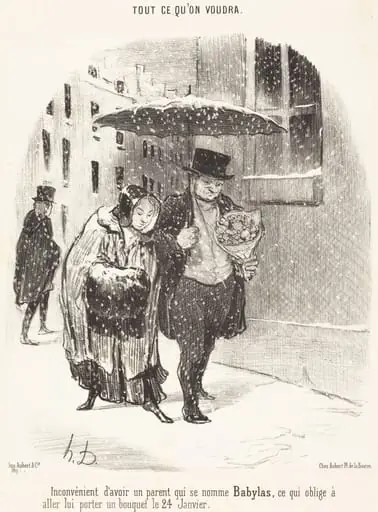 Inconvénient d'avoir un parent qui se nomme Babylas...
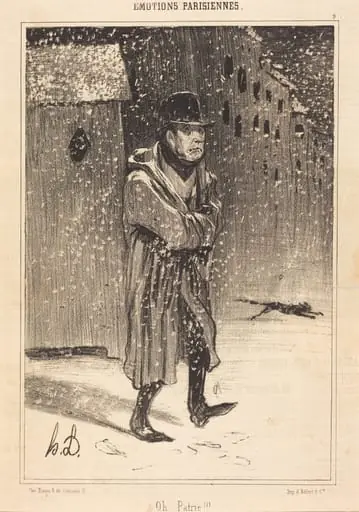 Oh Patrie!!!
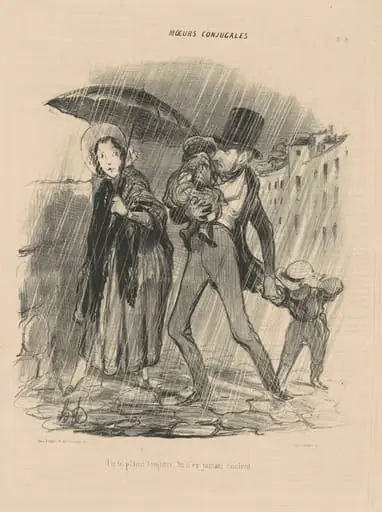 Tu te plains toujours, tu n'es jamais content.
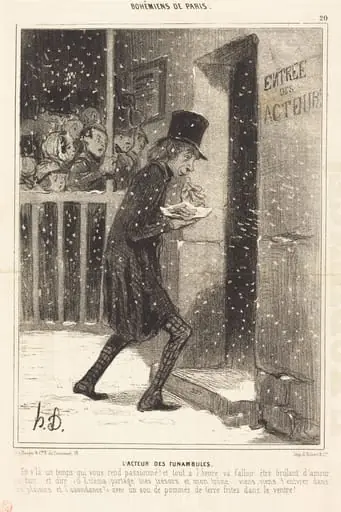 L'Acteur des Funambules
 Tu m'reprendras encore... a aller souhaiter...
 Paris grippé
 Paris grippé
 Tiens vous v'la, què que vous avez donc la
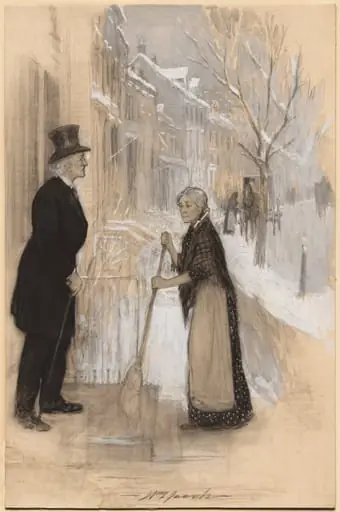 An Old Man Had Come out of One of the Houses, from "Not Honorably Discharged"