Artwork
Un Chemin dangereux
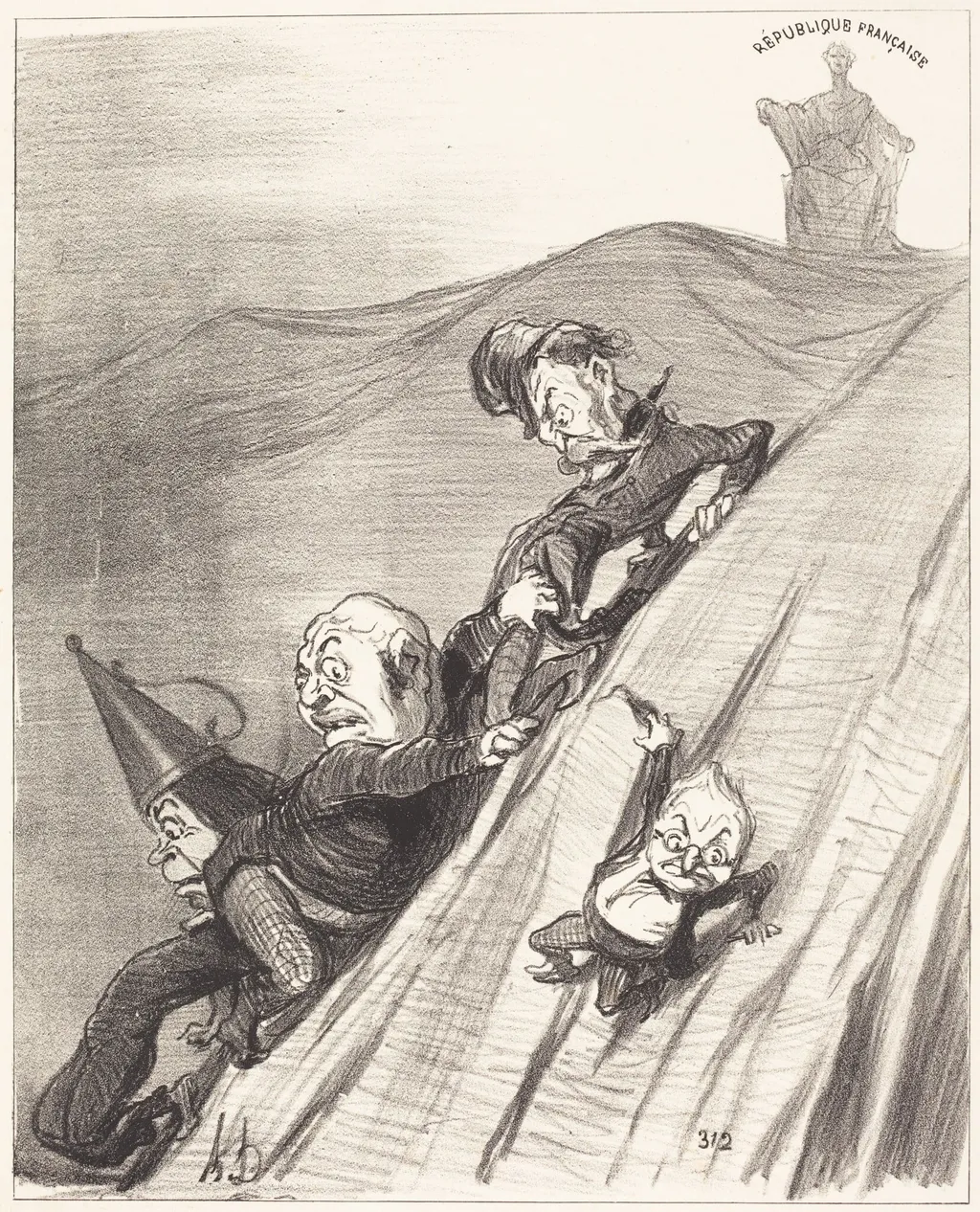
Un Chemin dangereux is an ink print by the Impressionist artist Honoré Daumier. It dates from 1851 and is held in the collection of the National Gallery of Art.
About this work
Overview
Created in 1851, *Un Chemin dangereux* is a lithograph by Honoré Daumier that uses visual satire to comment on the instability of French political life.
Created in 1851, *Un Chemin dangereux* is a lithograph by Honoré Daumier that uses visual satire to comment on the instability of French political life. As part of a broader series of prints published in periodicals like *Le Charivari*, the work translates contemporary anxieties into a comedic, exaggerated scene. Its simplicity of line and sharp composition reflect Daumier’s mastery of lithographic technique and his commitment to public critique through accessible imagery.
Subject & Meaning
The image depicts three men careening down a steep, rocky slope on a crude sled, their postures conveying panic, desperation, and absurdity. At the hill’s summit stands a statue labeled 'République Française,' suggesting the fragile state of the republic. The descent symbolizes the perilous political trajectory of post-revolutionary France, where democratic ideals teetered under the weight of corruption and mismanagement. The scene mocks those clinging to power despite their incompetence.
Technique & Style
Daumier employed lithography to achieve rapid, expressive lines that capture motion and emotion with minimal detail. The figures are rendered with loose, energetic strokes, their exaggerated gestures heightening the comedic tone. The background is sparse, focusing attention on the figures’ chaotic descent. The lack of shading and the stark contrast between dark lines and white paper enhance clarity and immediacy, typical of Daumier’s approach to political satire in print.
History & Provenance
The print was produced during the early years of the Second Republic, a period of political upheaval following the 1848 revolution and preceding Louis-Napoléon Bonaparte’s coup in 1851. Daumier had been imprisoned in 1832 for caricaturing King Louis-Philippe, and his work continued to provoke authorities. *Un Chemin dangereux* was likely published in *Le Charivari*, where his satirical prints reached a broad urban audience, though the original publication context remains undocumented.
Context
In the 1840s and 1850s, French print media flourished as a vehicle for political dissent, despite censorship. Daumier’s work emerged amid rising tensions between republicans, monarchists, and emerging authoritarian forces. His imagery tapped into public frustration with political elites who promised reform but delivered instability. *Un Chemin dangereux* reflects a society navigating uncertain governance, where the republic—symbolized by the statue—seems to be slipping out of control.
Legacy
Daumier’s lithographs, including this one, influenced later generations of political cartoonists and social realists. His ability to distill complex political conditions into visually immediate, emotionally resonant scenes set a precedent for visual journalism. Though created for ephemeral publication, these works endure as documents of public sentiment, offering insight into how ordinary citizens perceived the failures of their leaders during a turbulent era.
Artist & collection
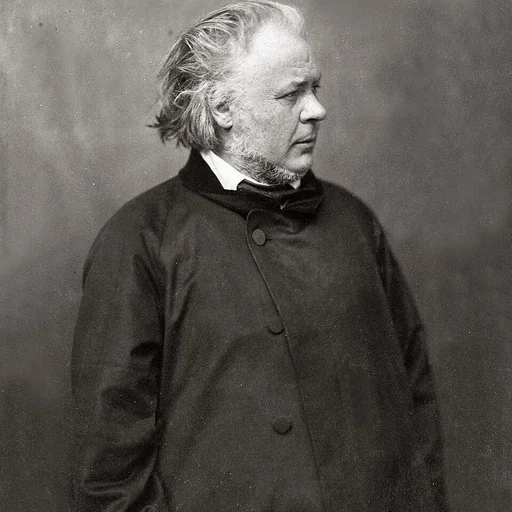
Artist
Honoré-Victorin Daumier was a French painter, sculptor, and printmaker, whose many works offer commentary on the social and political life in France, from the Revolution of 1830 to the fall of the Second French Empire in 1870.

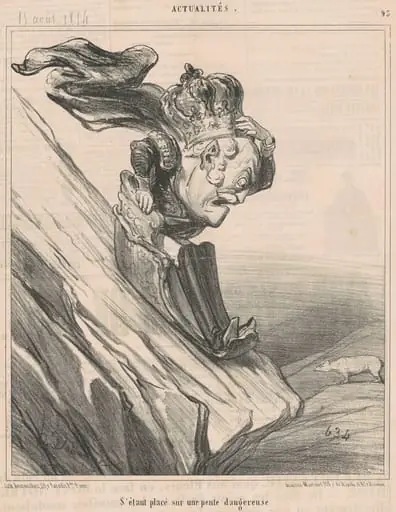 S'étant placé sur une pente dangereuse
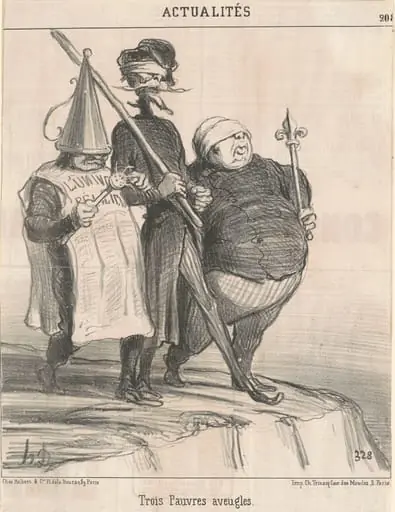 Trois Pauvres aveugles
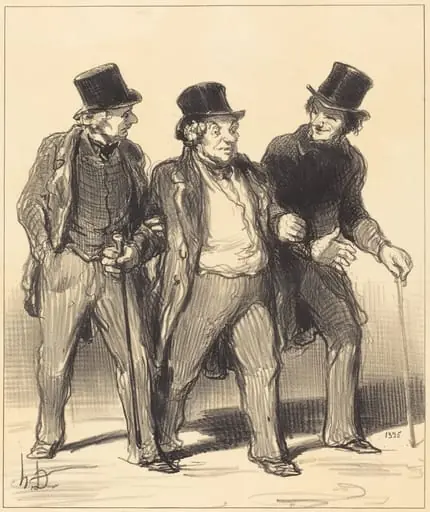 Il me semble que j'aperçois... un... chien... pas muselé!...
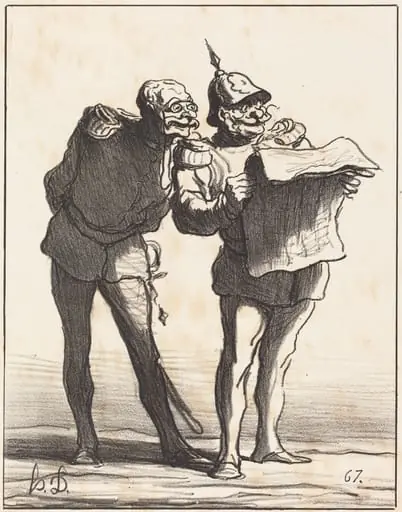 Décidément on ne peut pas...
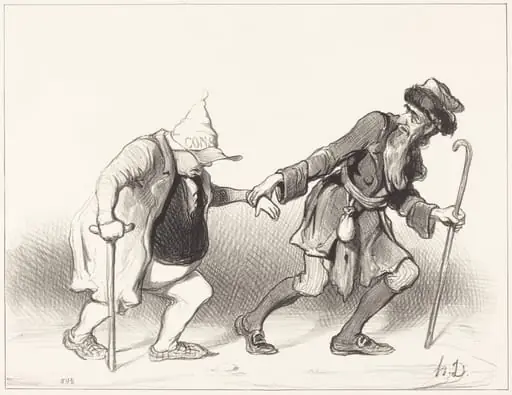 Le Constitutionnel et le Juif errant
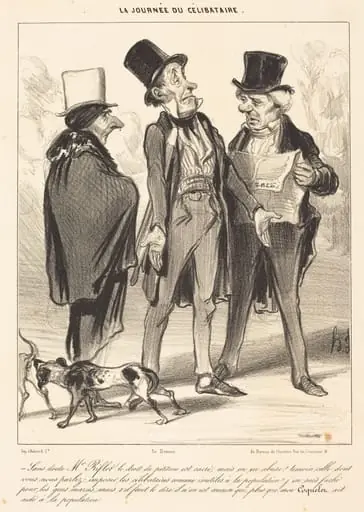 Sans doute M. Riflot le droit...
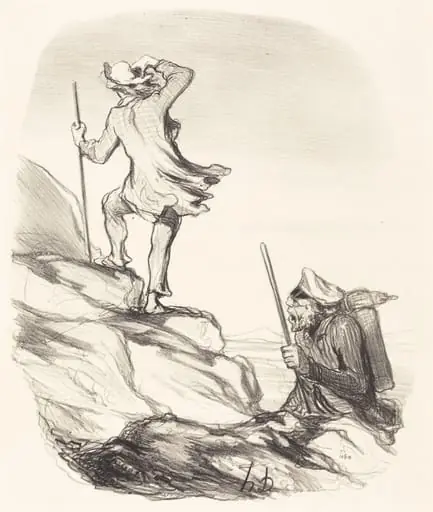 Aperçois-tu un lieu civilisé...
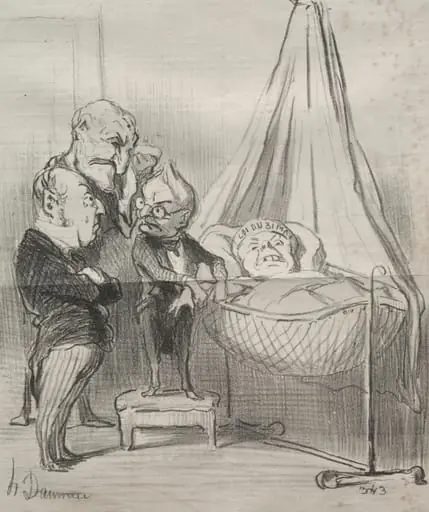 No doubt, she is very ill!...
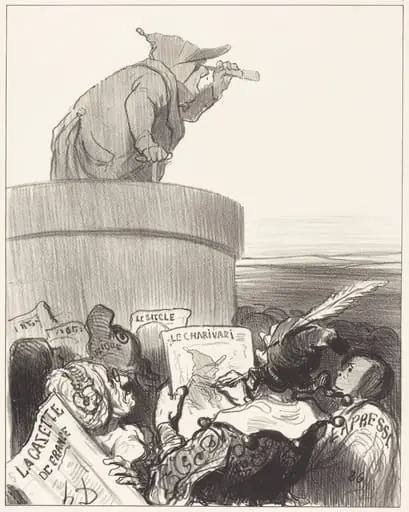 Le Constitutionnel contemplant l'horizon politique
 Le Constitutionnel contemplant l'horizon politique