Artwork
Un Enfant qui s'amuse de peu...
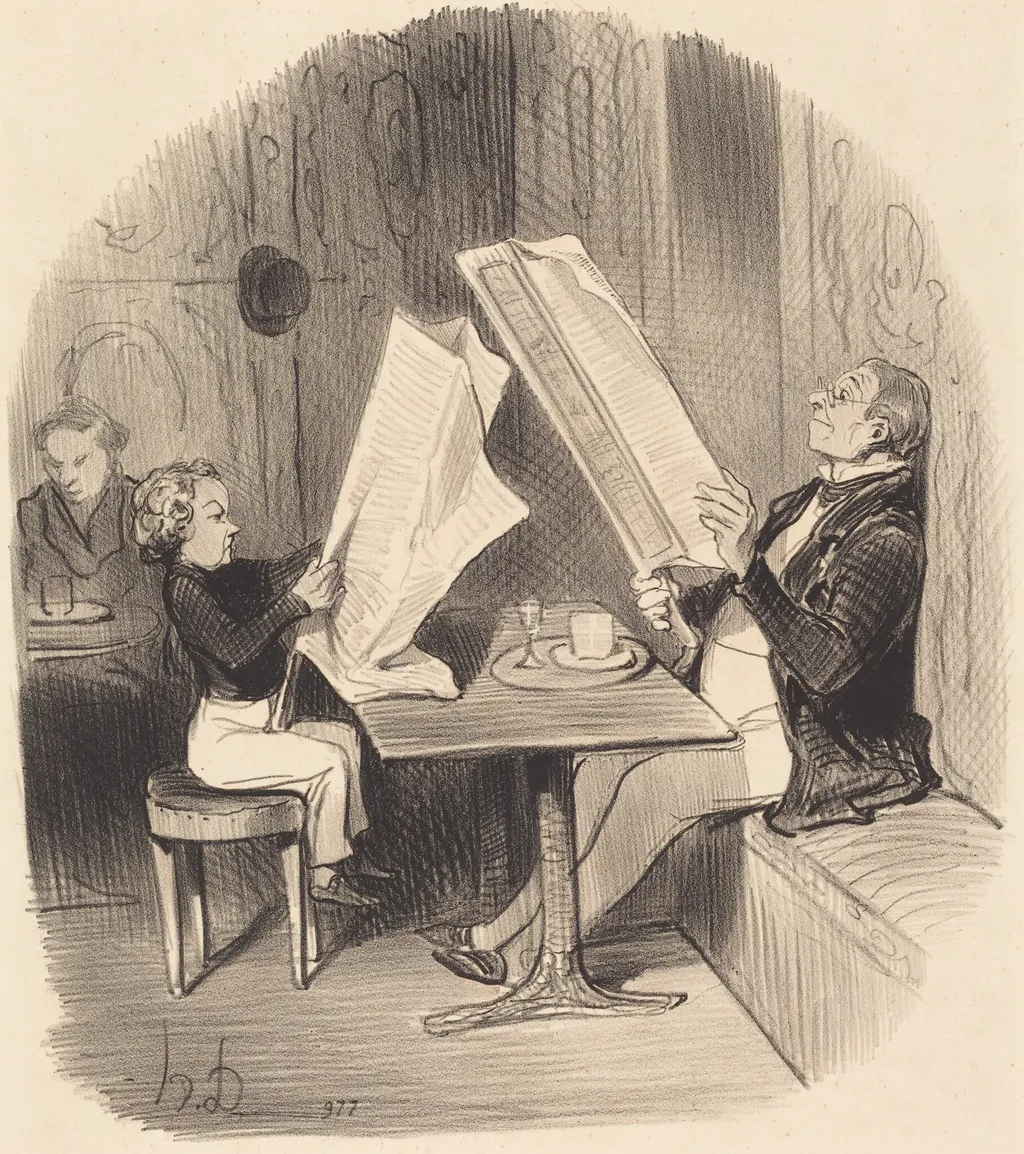
Un Enfant qui s'amuse de peu... is an ink print by the Romanticist artist Honoré Daumier. It dates from 1847 and is held in the collection of the National Gallery of Art.
About this work
Overview
Created in 1847, this lithograph by Honoré Daumier is a modestly sized black‑and‑white print that captures a quiet interior scene. The composition centers on a child absorbed in a simple pastime, while two adults observe, lending the work a narrative tension between youthful innocence and adult scrutiny.
Subject & Meaning
The image juxtaposes a carefree youngster with the attentive gestures of surrounding adults, suggesting a commentary on how society watches and interprets the purity of youth. Daumier often employed such contrasts to highlight the disparity between the unblemished perspective of children and the self‑interest of the adult world.
Technique & Style
Executed in lithography, the work relies on swift, sketch‑like lines that convey immediacy and movement. The monochrome palette emphasizes tonal contrast, while the loose rendering of figures and furnishings creates a sense of spontaneity, characteristic of Daumier’s satirical prints.
History & Provenance
The print emerged from Daumier’s prolific output for Parisian periodicals such as *La Caricature* and *Le Charivari*. Produced during a turbulent era spanning the 1830 Revolution to the collapse of the Second Empire, the work circulated among the readership of these satirical journals, reinforcing Daumier’s reputation as a visual critic of his time.
Context
Set against a backdrop of political unrest and social critique, the lithograph reflects Daumier’s broader project of using everyday scenes to expose the hypocrisies of the monarchy, aristocracy, and clergy. The modest interior and ordinary activity serve as a vehicle for broader commentary on power dynamics in mid‑nineteenth‑century France.
Artist & collection
Artist
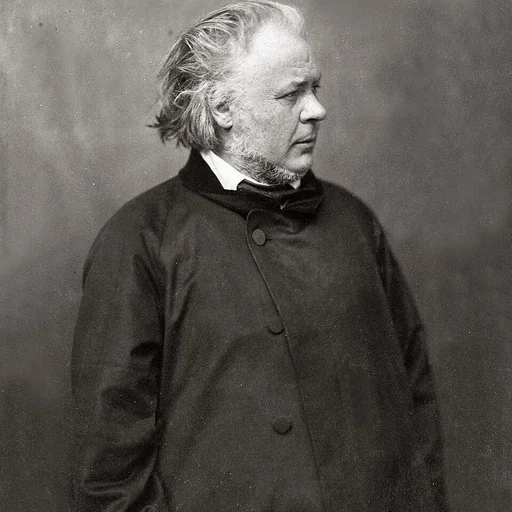
Honoré-Victorin Daumier was a French painter, sculptor, and printmaker, whose many works offer commentary on the social and political life in France, from the Revolution of 1830 to the fall of the Second French Empire in 1870.

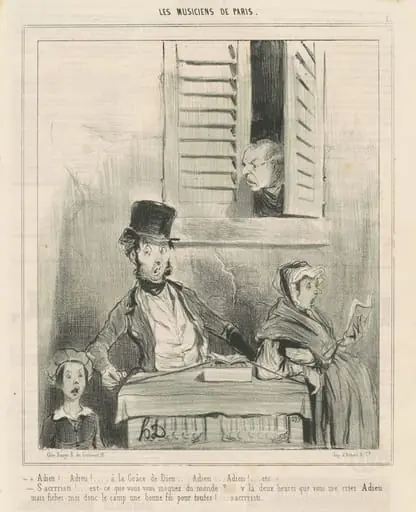 Adieu! ... A la grâce de dieu ...
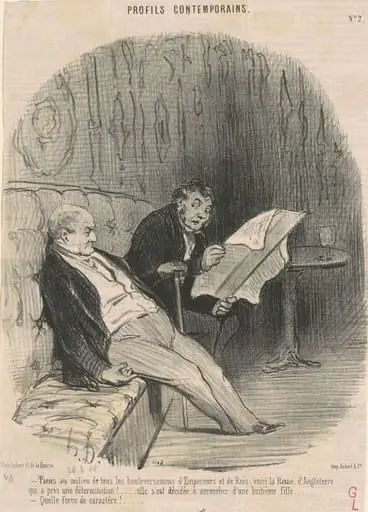 Tiens au milieu de ...bouleversemens ...
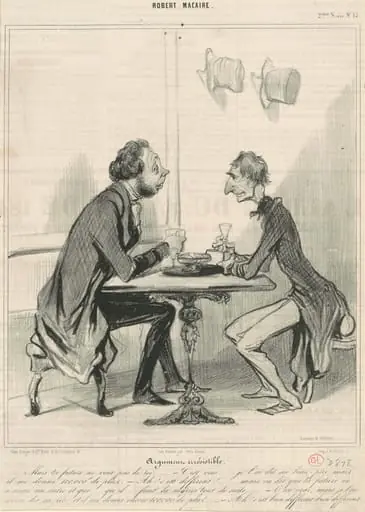 Argument irrésistible
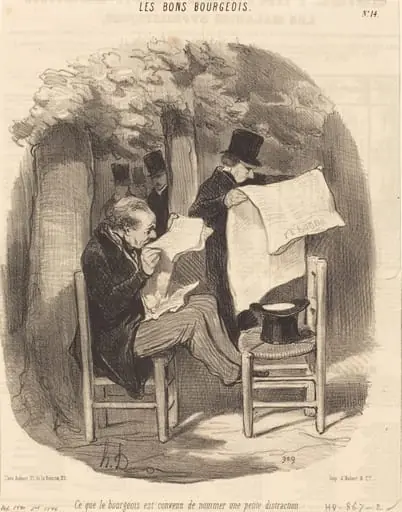 Ce que le bourgeois est convenu de nommer une... distraction
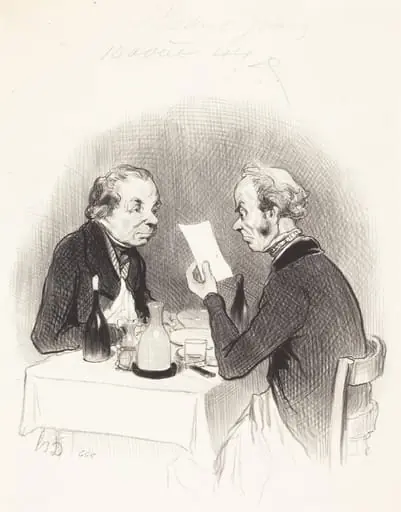 Un Diner maigre
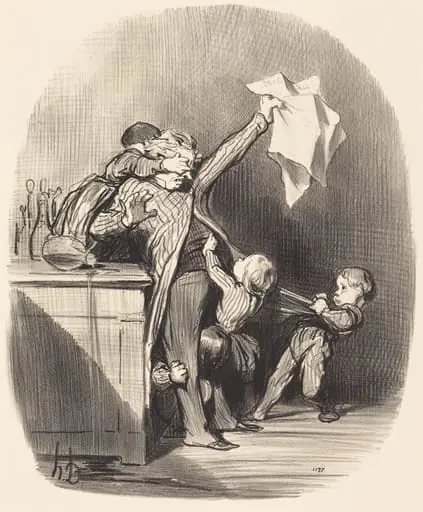 Plaisirs de la paternité
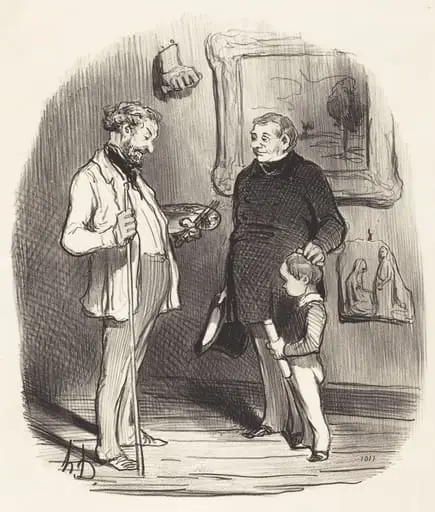 V'la mon petit... s'il n'a pas assez de moyens...
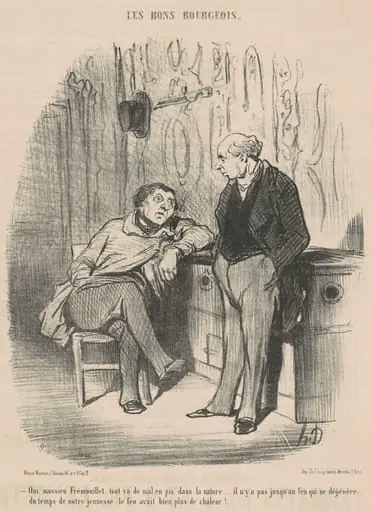 Oui, Mossieu Fremouillet, tout va de mal en pis ...
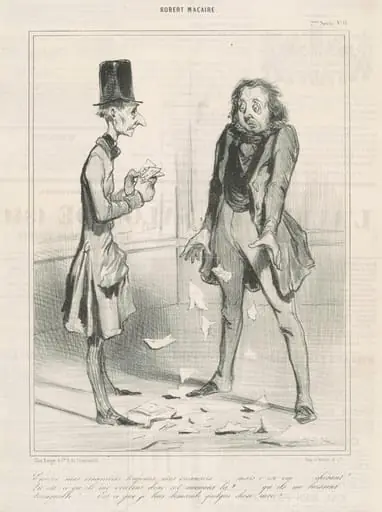 Encore mes créanciers, toujours ...
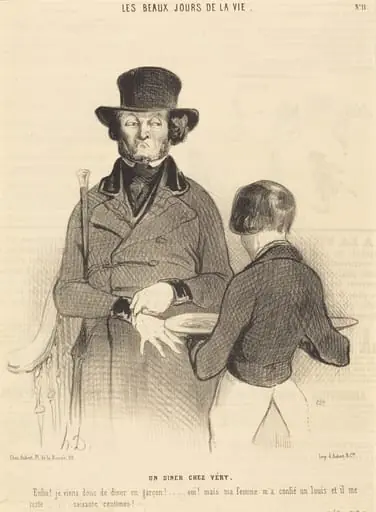 Un Diner chez Véry