Artwork
Un jour déclipse
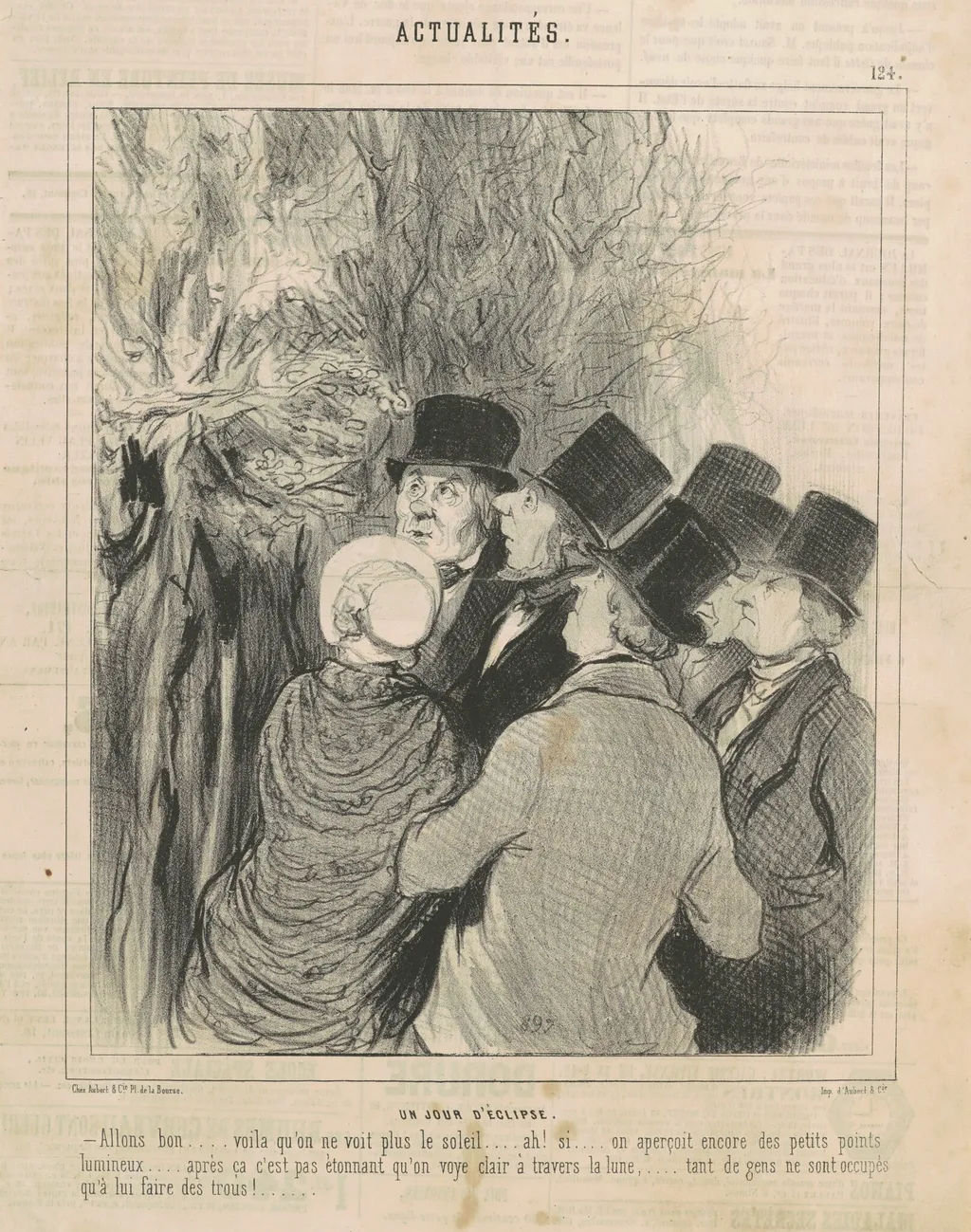
Un jour déclipse is an ink print by the Romanticist artist Honoré Daumier. It dates from 1846 and is held in the collection of the National Gallery of Art.
About this work
Overview
Created in 1846, this lithograph by Honoré Daumier presents a compact group of five figures, all turned toward the left. The composition is rendered in stark black and white, a hallmark of the medium, which emphasizes contrast and gives the scene a palpable sense of immediacy.
Subject & Meaning
The five individuals are dressed in refined attire, suggesting a middle‑class setting. One figure clutches a sizable circular object, a detail that draws attention and hints at a shared activity or event. Their collective gaze and posture convey a moment of social exchange, inviting contemplation of the fleeting nature of such encounters.
Technique & Style
Executed as a lithograph, the work relies on the direct drawing of images onto a limestone surface, later transferred to paper. Daumier’s use of monochrome tones accentuates line work and texture, while the limited palette heightens the tension between the figures and the surrounding space.
History & Provenance
The print emerged during a prolific period for Daumier, when he frequently explored contemporary life through satire and observation. Though specific ownership records are scarce, the lithograph has been catalogued among his early prints that document urban French society in the mid‑nineteenth century.
Artist & collection
Artist
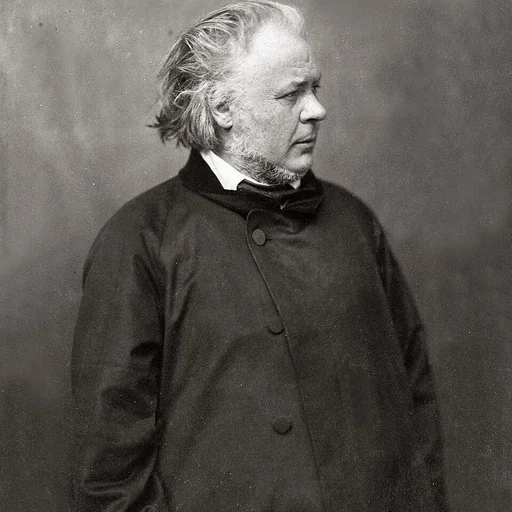
Honoré-Victorin Daumier was a French painter, sculptor, and printmaker, whose many works offer commentary on the social and political life in France, from the Revolution of 1830 to the fall of the Second French Empire in 1870.









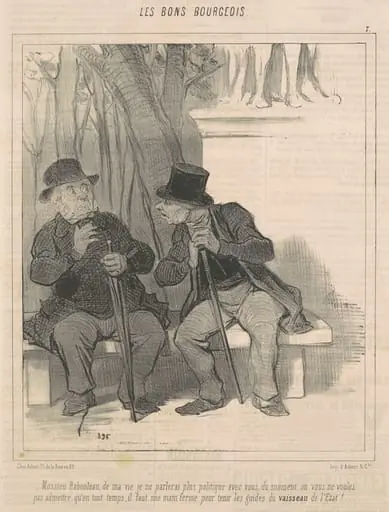 Mossieu Rabourdeau ... je ne parlerai plus politique avec vous ..
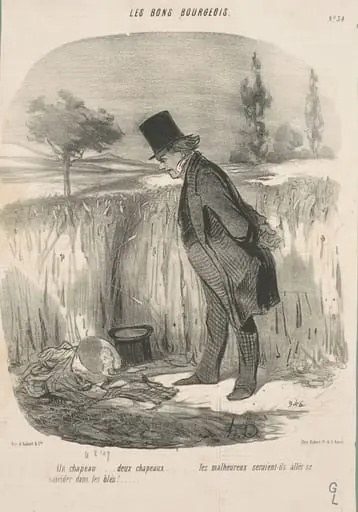 Un chapeau ... deux chapeaux ... les malheureux ...
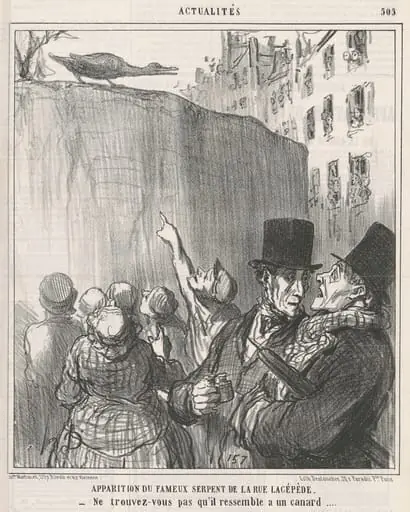 Apparition du ... serpent de la rue Lacépède
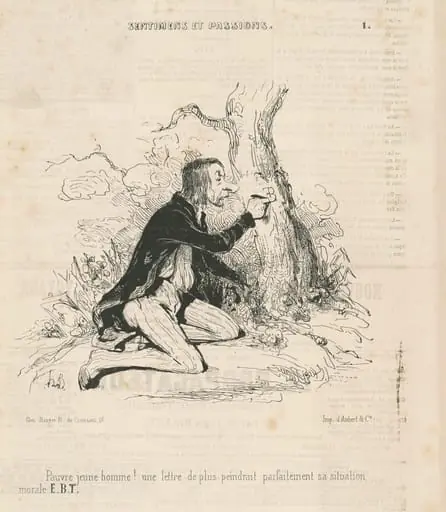 Pauvre jeune homme!
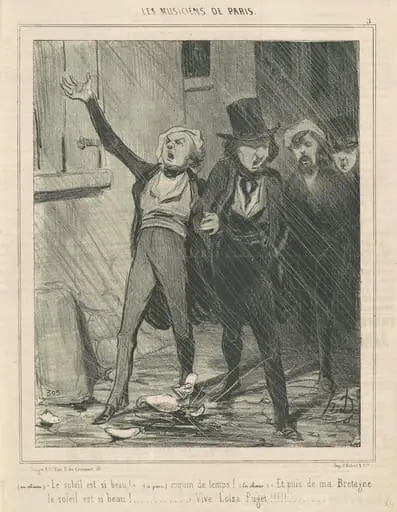 En choeur. Le soleil est si beau ...
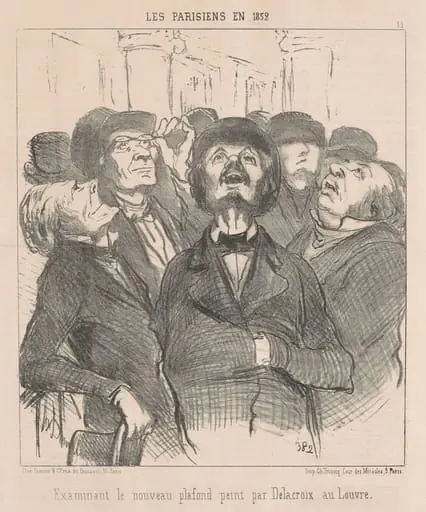 Examinant le nouveau plafond ...
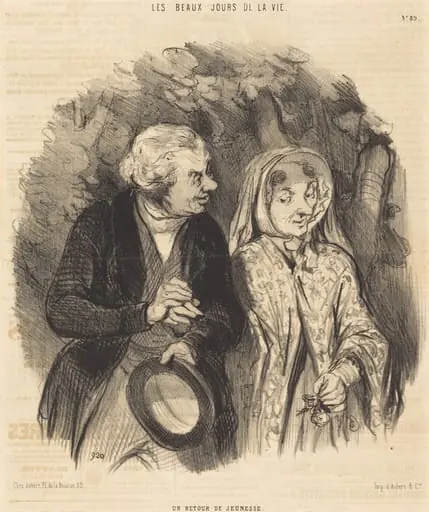 Un Retour de jeunesse
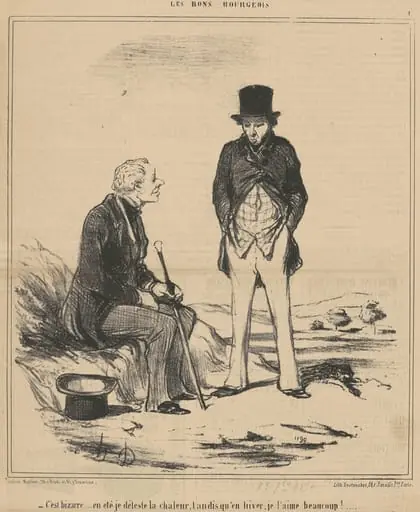 C'est bizarre ... été
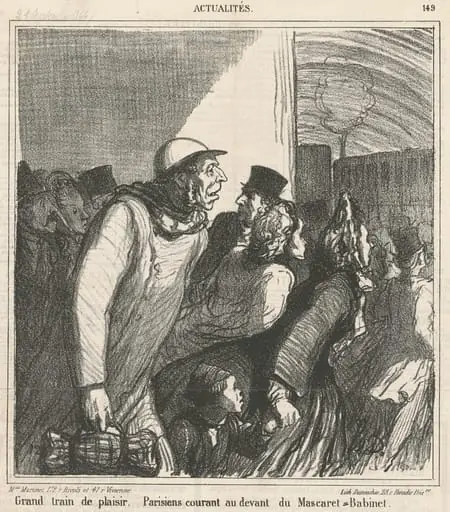 Grand train de plaisir