Artwork
Une Famille qui vient d'apprendre... un impot sur les chiens
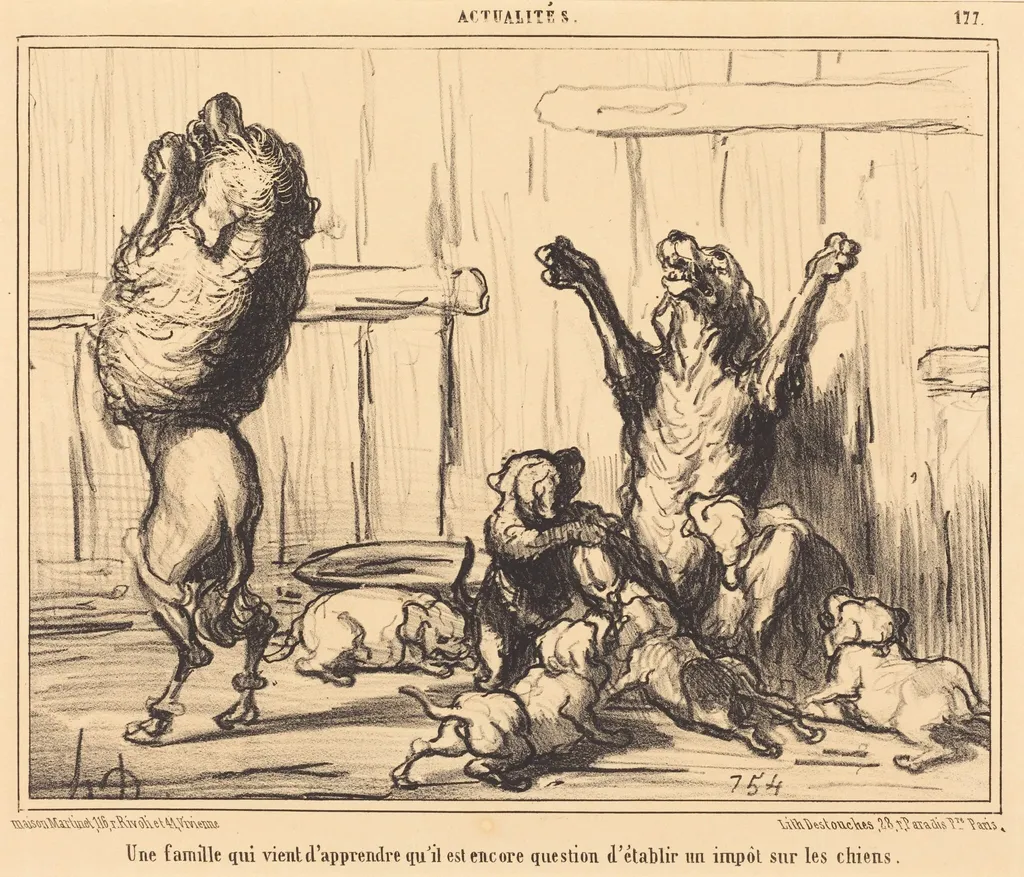
Une Famille qui vient d'apprendre... un impot sur les chiens is an ink print by the Impressionist artist Honoré Daumier. It dates from 1855 and is held in the collection of the National Gallery of Art.
About this work
Overview
Depicting a family’s reaction to a new tax on pet dogs, the work exemplifies his use of printmaking to expose the absurdities of state policy.
Honoré Daumier’s 1855 lithograph captures a domestic moment transformed by bureaucratic intrusion. Depicting a family’s reaction to a new tax on pet dogs, the work exemplifies his use of printmaking to expose the absurdities of state policy. Through sharp observation and understated drama, Daumier turns a mundane household into a stage for social commentary, leveraging the accessibility of lithography to reach a broad public audience.
Subject & Meaning
The scene portrays a working-class family overwhelmed by the news of a tax on their dogs. The father’s raised arms suggest futile protest, the mother collapses in despair, and the child watches in confusion. The dogs, depicted with expressive postures, mirror human distress, blurring the line between human and animal suffering. The work critiques the arbitrary weight of taxation on the poor, framing pets as extensions of domestic life unfairly targeted by indifferent authorities.
Technique & Style
Daumier employed lithography to achieve rapid, fluid lines and tonal contrasts that enhance emotional immediacy. His loose, energetic strokes convey movement and agitation, while dense shadows and sparse details focus attention on the figures’ gestures. The lack of fine detail in backgrounds amplifies the psychological intensity, aligning the medium’s spontaneity with the chaos of the moment.
History & Provenance
Created during the reign of Napoleon III, the print emerged from a climate of heightened censorship and public discontent. Though Daumier had faced imprisonment for earlier satires, this work avoided direct political figures, instead targeting policy through domestic satire. It was likely distributed through periodicals like *Le Charivari*, where his prints reached middle- and working-class readers familiar with such fiscal burdens.
Context
In mid-19th century France, municipal taxes on dogs were common, often enforced unevenly across classes. While the wealthy could afford to pay or ignore such levies, the urban poor relied on dogs for companionship, protection, or livelihood. Daumier’s depiction reflects broader anxieties about state overreach and the erosion of private life under bureaucratic regulation, resonating with audiences experiencing similar pressures.
Legacy
The print endures as a quiet testament to Daumier’s ability to humanize political critique. Rather than caricaturing officials, he centered ordinary people, making systemic injustice visible through intimate emotion. His approach influenced later social realists and cartoonists who used everyday scenes to challenge authority, establishing lithography as a tool for democratic commentary.
Artist & collection
Artist
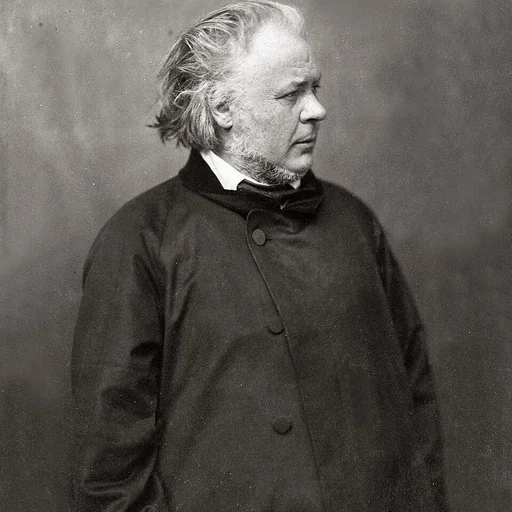
Honoré-Victorin Daumier was a French painter, sculptor, and printmaker, whose many works offer commentary on the social and political life in France, from the Revolution of 1830 to the fall of the Second French Empire in 1870.

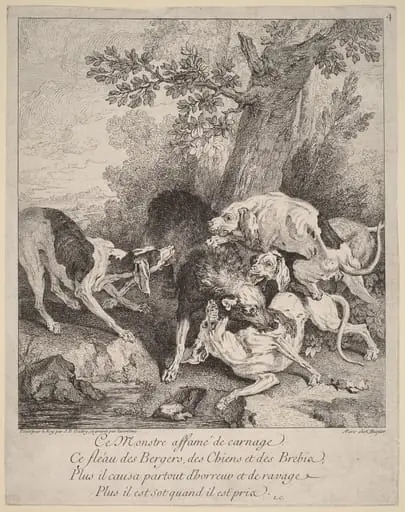 A Wolf Attacked by Dogs
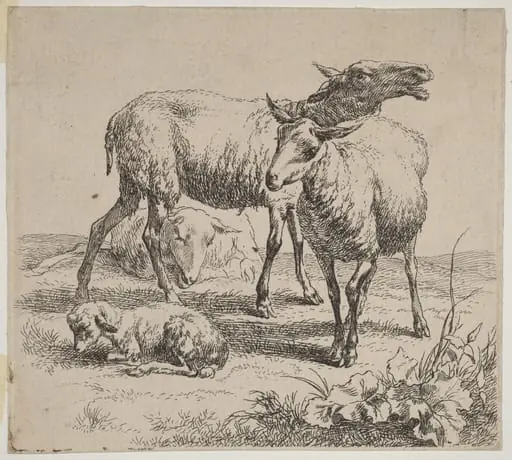 Three Sheep and a Lamb
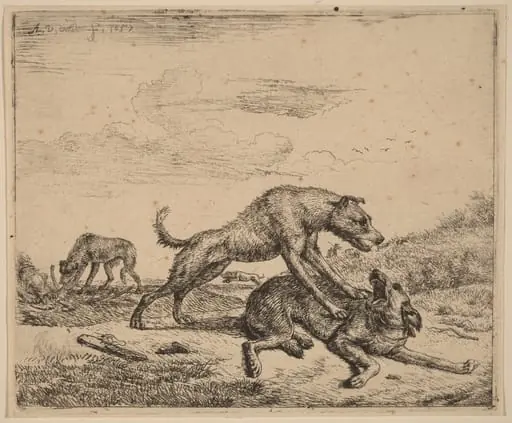 Fighting Dogs
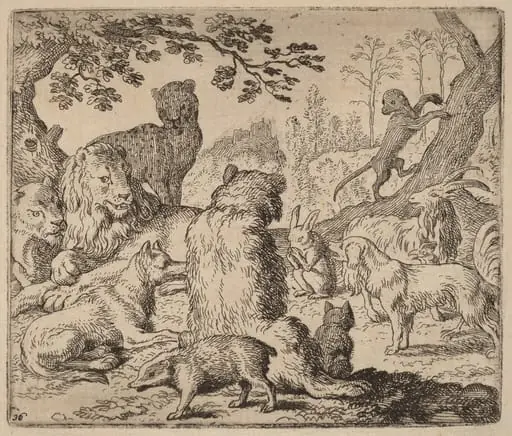 The Lion Orders a Mass Assault on Reynard
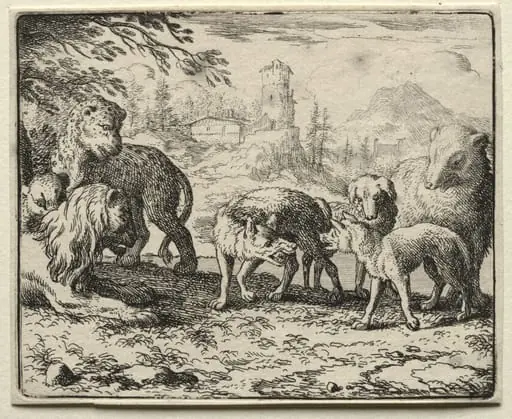 Reynard the Fox: The Condemnation of Reynard
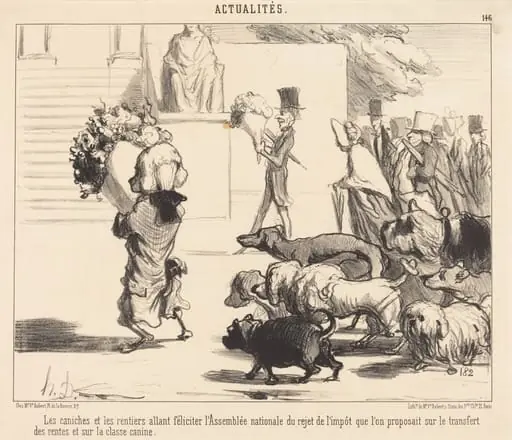 Les Caniches et les rentiers allant féliciter l'Assemblée...
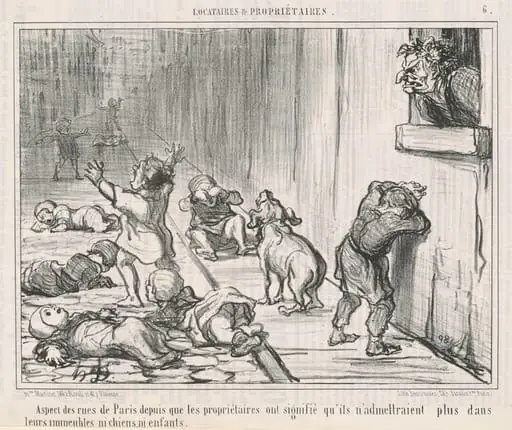 Aspect des rues de Paris depuis ...
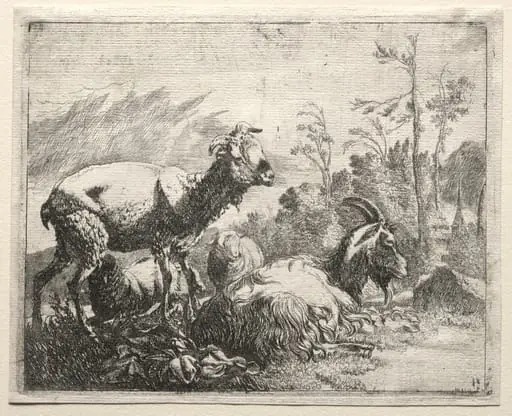 Goats
Goats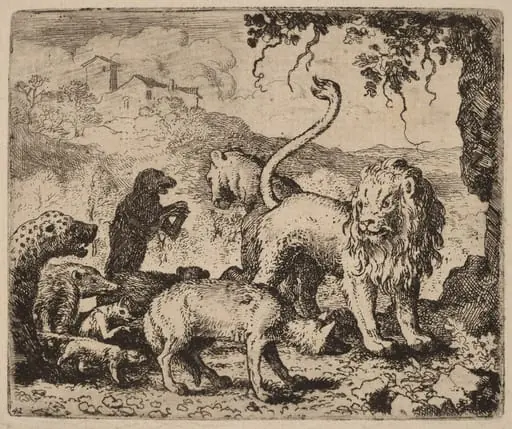 Reynard Accused
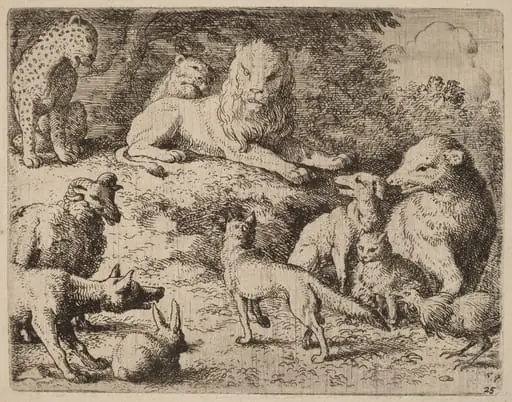 The Animals Present Their Charges Against Reynard
 The Bear Beseeches the Lion for Justice
 Qu'on dise encore que la chasse...