Artwork
Vois comme ils avaient abimè ...
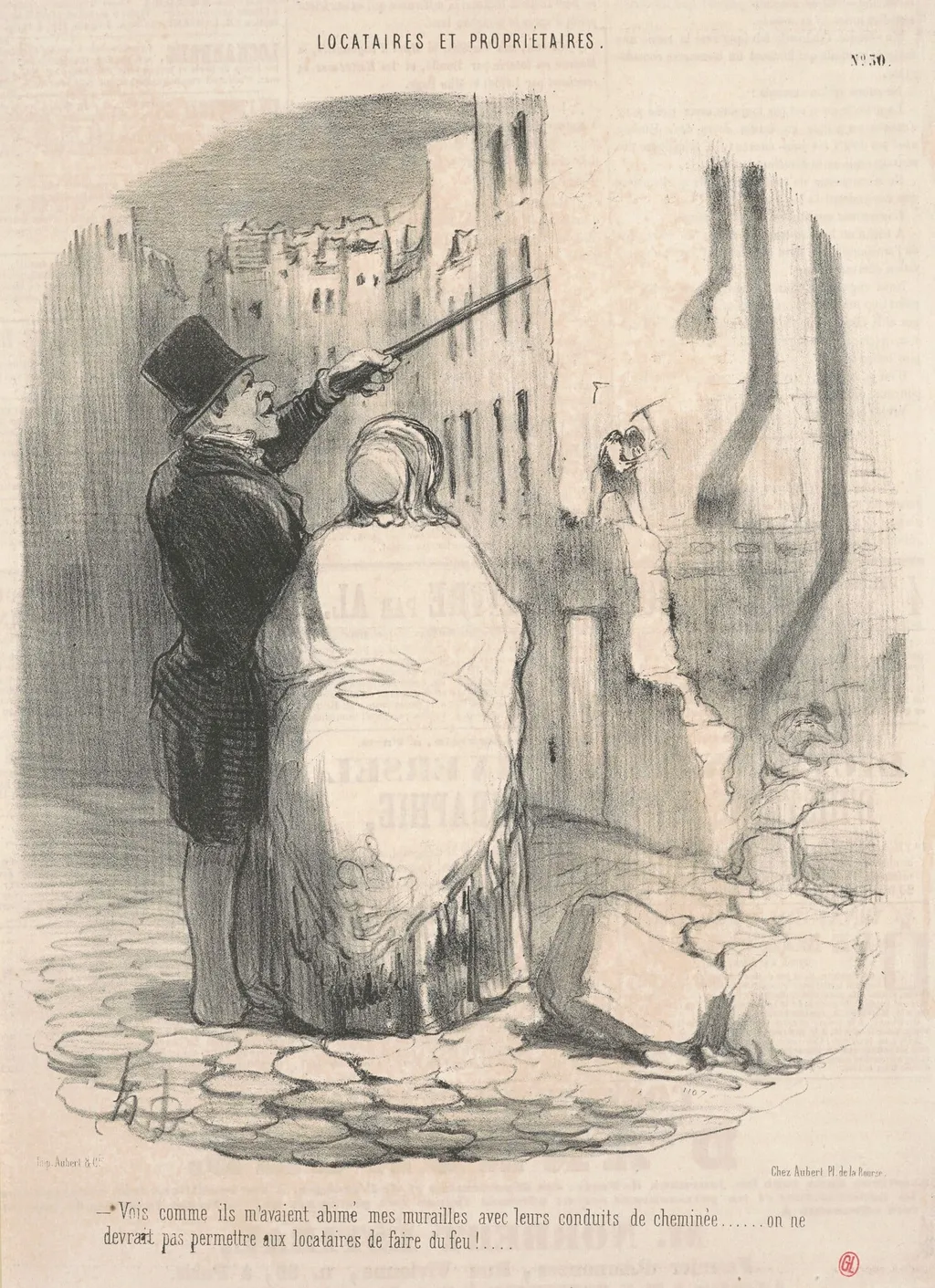
Vois comme ils avaient abimè ... is an ink print by the Romanticist artist Honoré Daumier. It dates from 1848 and is held in the collection of the National Gallery of Art.
About this work
Overview
The figures face away from the viewer, directing attention to the ruined architecture and the unspoken tension between neglect and resilience in urban life.
This lithograph by Honoré Daumier captures a quiet moment in a Parisian street, where two figures observe the deterioration of surrounding buildings. Rendered in monochrome, the scene avoids dramatic detail, focusing instead on posture and environment. The figures face away from the viewer, directing attention to the ruined architecture and the unspoken tension between neglect and resilience in urban life.
Subject & Meaning
The man in a top hat, pointing toward the damaged structures, and the woman in a patterned shawl beside him suggest a shared awareness of urban decay. Their anonymity and turned backs imply collective observation rather than individual emotion. The image conveys a quiet critique of societal indifference to the physical decline of the city, reflecting broader concerns about housing, class, and public responsibility in mid-19th-century France.
Technique & Style
Daumier employed lithography to achieve subtle tonal gradations and expressive line work. The medium allowed for rapid, spontaneous rendering, suited to his observational approach. Soft shadows and minimal detail emphasize mood over realism, with the cobblestones and rubble rendered in textured strokes that ground the scene in tactile reality. The absence of facial features universalizes the figures, reinforcing their role as symbols rather than individuals.
History & Provenance
Created during Daumier’s prolific period of social commentary, this print likely emerged from his engagement with Parisian newspapers and journals in the 1860s. Though exact publication details are uncertain, it aligns with his broader body of work documenting the lives of ordinary citizens amid urban transformation. The print was not widely circulated as a standalone piece but contributed to his reputation as a chronicler of civic life.
Context
In the decades following the 1848 revolutions, Paris underwent extensive modernization under Haussmann’s renovations, displacing many residents and leaving pockets of neglect. Daumier’s work often highlighted the human cost of these changes. This image reflects the tension between official progress and the lived reality of those left behind, capturing the quiet persistence of the urban poor amid shifting cityscapes.
Legacy
Daumier’s lithographs, including this one, influenced later realist and socially engaged artists by demonstrating how everyday scenes could carry critical weight. His use of anonymity and understated composition became a model for depicting systemic issues without melodrama. Though not widely exhibited in his lifetime, his prints gained recognition in the 20th century as essential documents of 19th-century French society.
Artist & collection

Artist
Honoré-Victorin Daumier was a French painter, sculptor, and printmaker, whose many works offer commentary on the social and political life in France, from the Revolution of 1830 to the fall of the Second French Empire in 1870.