Artwork
Volé!... Rue vide-gousset...
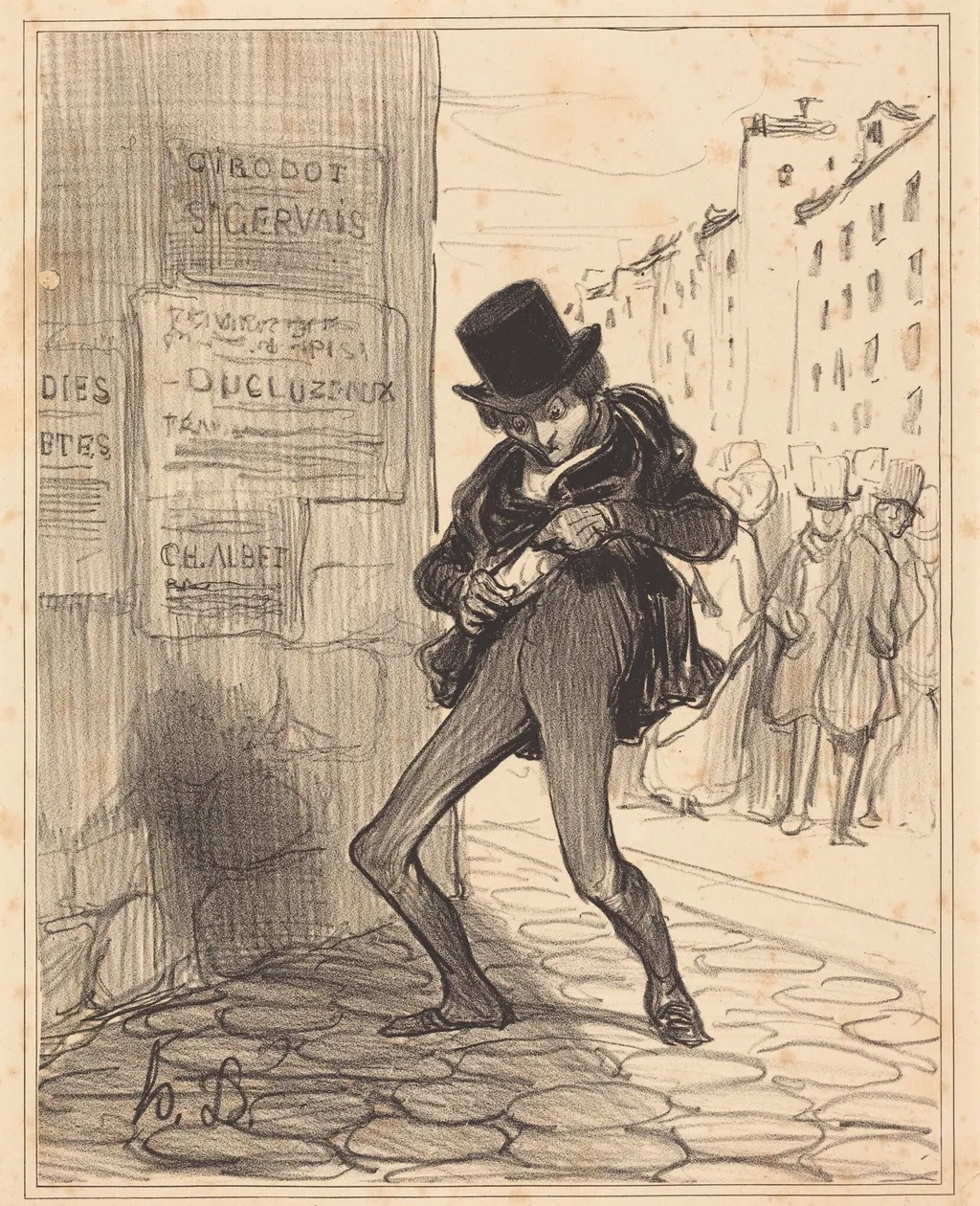
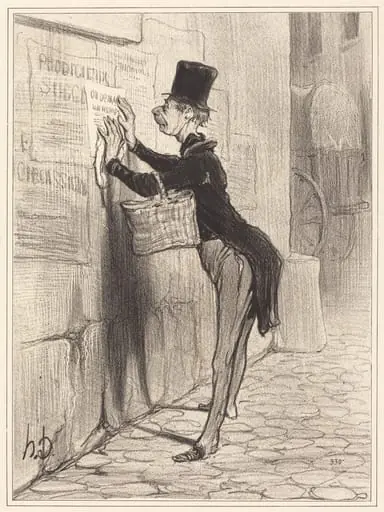
Volé!... Rue vide-gousset... is an ink print by the Romanticist artist Honoré Daumier. It dates from 1839 and is held in the collection of the National Gallery of Art.
About this work
Overview
The work’s immediacy and informal composition align with his role as a visual commentator on social inequality and petty crime.
Created in 1839, this lithograph by Honoré Daumier captures a fleeting moment of urban theft in Paris. Part of a series of satirical prints published in radical journals, it reflects Daumier’s commitment to documenting the moral ambiguities of city life under the July Monarchy. The work’s immediacy and informal composition align with his role as a visual commentator on social inequality and petty crime.
Subject & Meaning
The scene portrays a well-dressed man, possibly a thief, pausing on a rain-slicked street while clutching a small object. Behind him, two figures loiter, suggesting complicity or observation. The title, referencing a street known for petty dealings, frames the act as an ordinary, unremarkable event. Daumier implies that theft is not the exception but a symptom of systemic neglect, subtly critiquing class disparity without overt moralizing.
Technique & Style
Daumier employed rapid, expressive lines typical of lithographic sketching, exploiting the medium’s capacity for spontaneity. Wet pavement is suggested by smudged tones and diagonal streaks; figures are rendered with minimal detail, emphasizing motion over individuality. The rough texture and asymmetrical composition mimic the urgency of a news sketch, reinforcing the work’s documentary quality and rejection of academic polish.
History & Provenance
Produced during Daumier’s most prolific period as a political cartoonist, the print was likely published in *Le Charivari*, a satirical weekly known for its sharp social critique. Though the original publication context is undocumented, the work survives as part of a broader body of lithographs that led to Daumier’s imprisonment in 1832 for caricaturing King Louis-Philippe. Its preservation reflects its significance in 19th-century French graphic satire.
Context
In late 1830s Paris, rising urban poverty and weakened social safety nets fueled petty crime. Daumier’s prints responded to public anxiety over lawlessness, yet he avoided villainizing the poor. Instead, he highlighted the hypocrisy of the bourgeoisie, whose wealth often depended on the very systems that impoverished others. This image fits within a larger visual discourse on urban decay and moral ambiguity in post-revolutionary France.
Legacy
Daumier’s unidealized depictions of everyday life influenced later realist and modernist artists, including Degas and Toulouse-Lautrec. His ability to convey complex social dynamics through seemingly casual scenes redefined the potential of print media. *Volé!... Rue vide-gousset...* remains a quiet but potent example of how art can observe, rather than judge, the moral compromises of modern society.
Artist & collection

Artist
Honoré-Victorin Daumier was a French painter, sculptor, and printmaker, whose many works offer commentary on the social and political life in France, from the Revolution of 1830 to the fall of the Second French Empire in 1870.









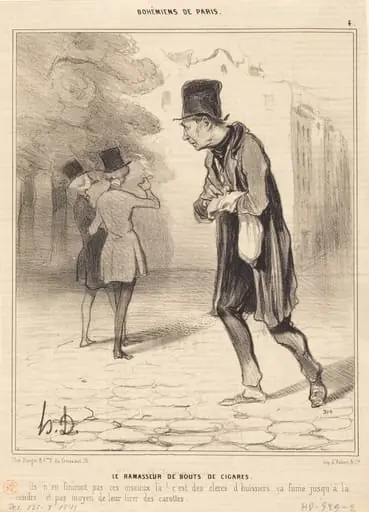 Le Ramasseur de bouts de cigares
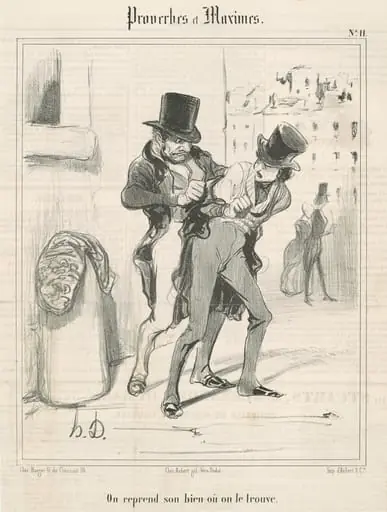 On reprend son bien ou on le trouve
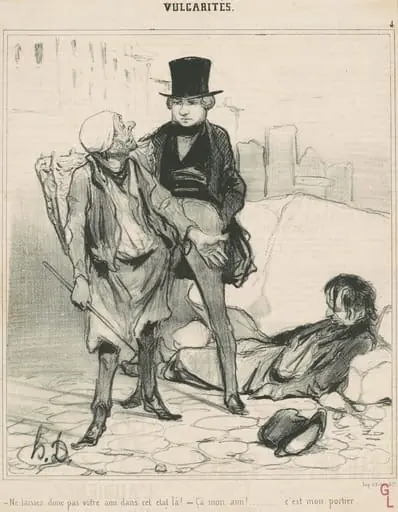 Ne laissez donc pas votre ami dans cet état la!
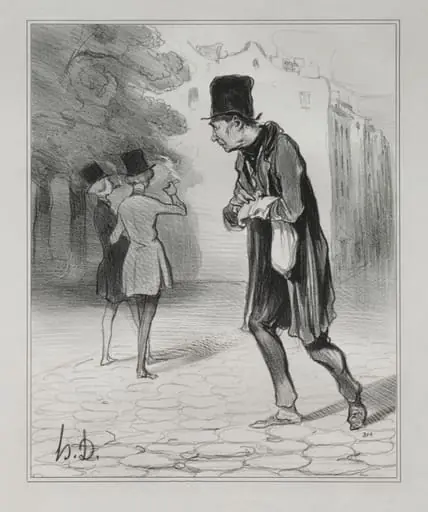 The Collector of Cigar Stubs
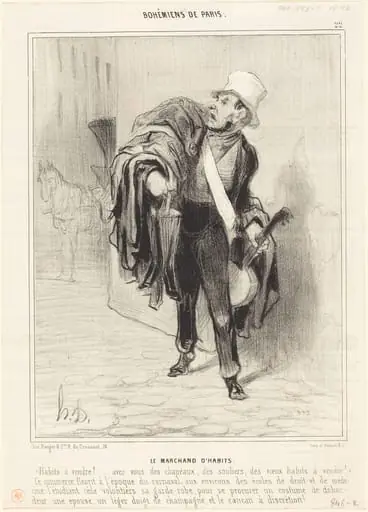 Le Marchand d'habits
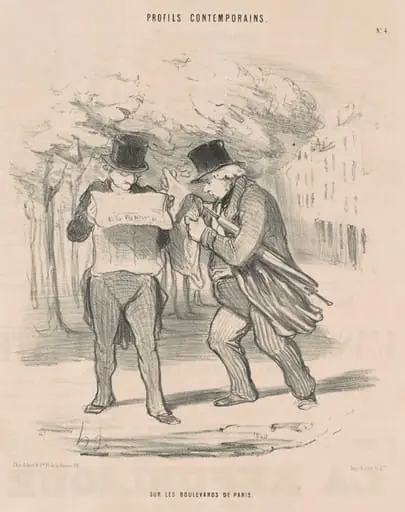 Sur les boulevards de Paris
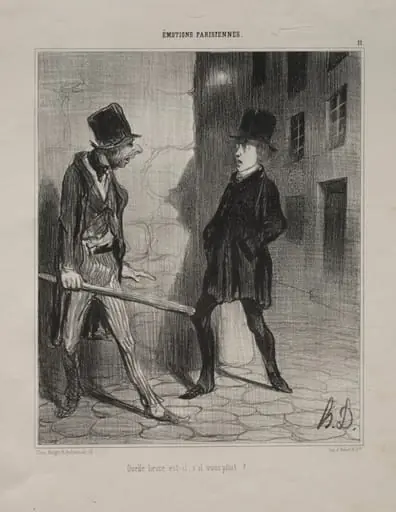 What Time is it, Please?
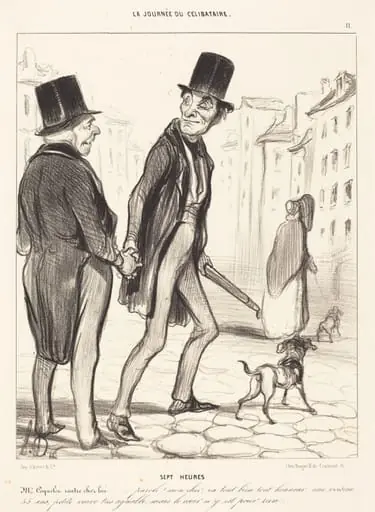 Sept heures
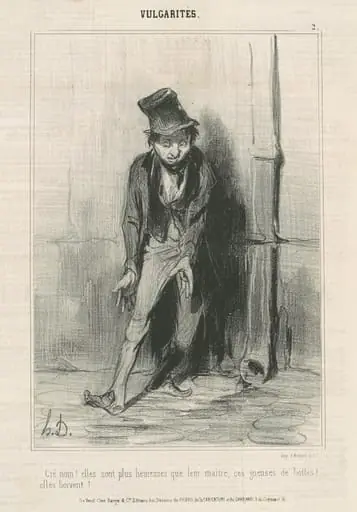 Cré nom: Elles sont plus heureuses ...
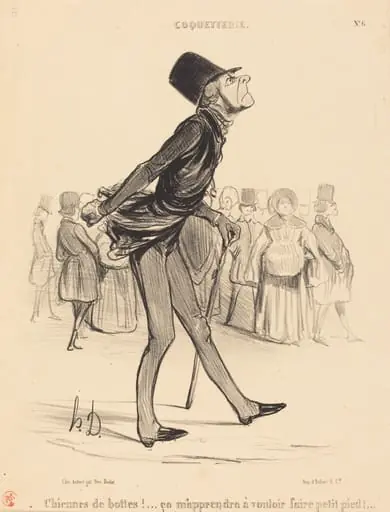 Chiennes de bottes!...
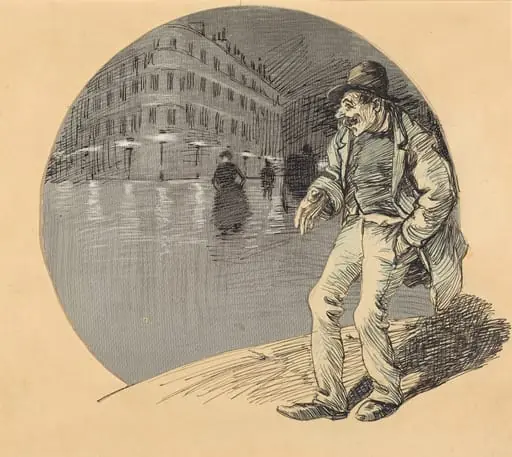 In Love (Amoureux)
 Le Placeur