Artwork
What Time is it, Please?
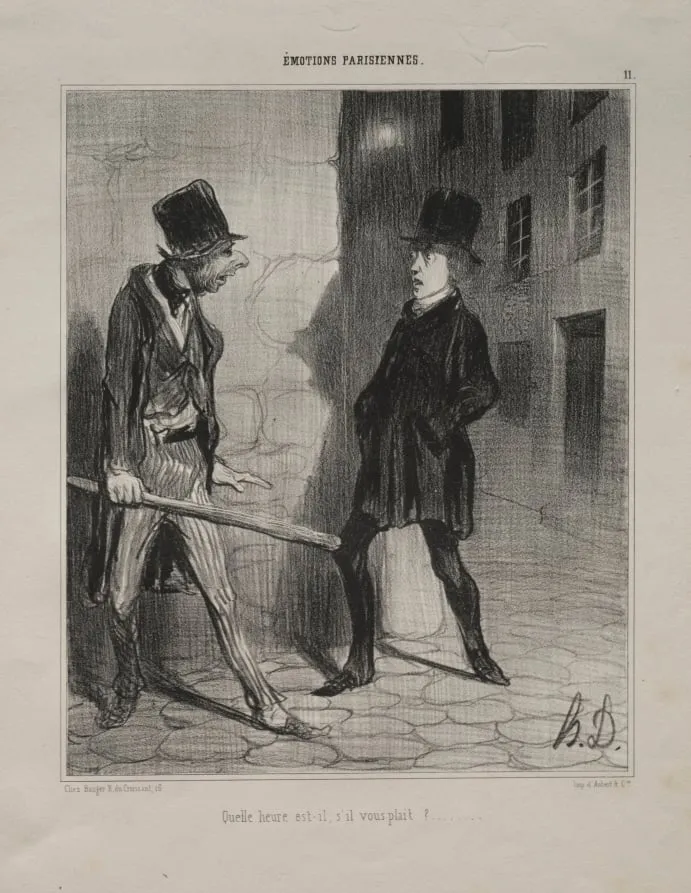
What Time is it, Please? is a print by the Romanticist artist Honoré Daumier. It dates from 1839 and is held in the collection of the Cleveland Museum of Art. This lithograph, published in Le Charivari on November 24, 1839, is the eleventh plate in the series Parisian Emotions.
About this work
You can learn more about the artist who created this, Honoré Daumier (French, 1808–1879).
You see a man looking at his pocket watch in this painting.
He's standing on a street in France.
The man is worried about being late, which makes this scene relatable.
This painting was published in a series called Parisian Emotions.
It shows how people felt in everyday life back then.
The artist observed people on the street to create this scene.
You can learn more about the artist who created this, Honoré Daumier (French, 1808–1879).
Overview
This lithograph, published in Le Charivari on November 24, 1839, is the eleventh plate in the series Parisian Emotions. Created by Honoré Daumier, it captures a fleeting moment of urban anxiety in mid-19th century Paris. The image is part of a broader journalistic project that used visual satire to reflect the rhythms and tensions of everyday life in the city.
Subject & Meaning
A man pauses on a city street, glancing at his pocket watch with visible unease. His posture suggests the pressure of punctuality in a rapidly modernizing society. The scene is unembellished, focusing on a private moment of stress that resonates with public experience. Daumier frames time as an invisible force governing behavior, not as a mechanical object.
Technique & Style
Daumier employed lithography to achieve rapid, expressive lines with strong contrasts. His brushwork is loose yet precise, emphasizing gesture over detail. The background is minimally rendered, directing attention to the figure’s tension. The style reflects the immediacy of newspaper illustration, prioritizing emotional clarity over decorative finish.
History & Provenance
The print was originally issued as part of a serialized publication in Le Charivari, a satirical weekly. It was not intended as a fine art object but as social commentary distributed widely among Parisians. Its survival in collections today reflects later recognition of Daumier’s role in elevating journalistic imagery to cultural record.
Context
In 1839, Paris was undergoing urban transformation, with new rail schedules and bureaucratic demands heightening public awareness of time. Daumier’s series responded to this shift, portraying ordinary citizens caught in the pressures of modernity. His work aligned with emerging realist tendencies, observing life without romanticization.
Legacy
Daumier’s series influenced later generations of social realists and cartoonists by demonstrating how everyday scenes could carry critical weight. His ability to distill complex social dynamics into single images established a model for visual journalism. The print remains a quiet testament to the psychological impact of urban modernization.
Artist & collection
Artist
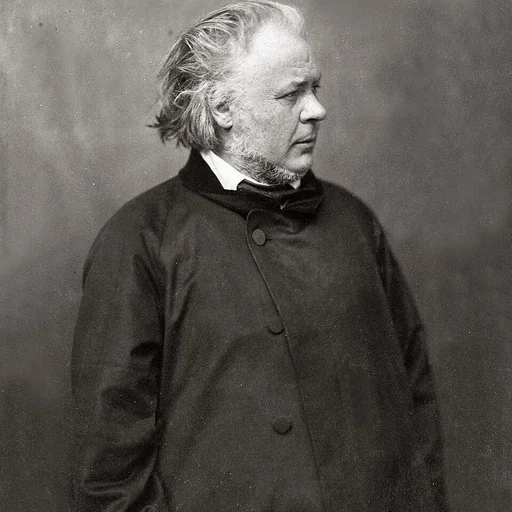
Honoré-Victorin Daumier was a French painter, sculptor, and printmaker, whose many works offer commentary on the social and political life in France, from the Revolution of 1830 to the fall of the Second French Empire in 1870.

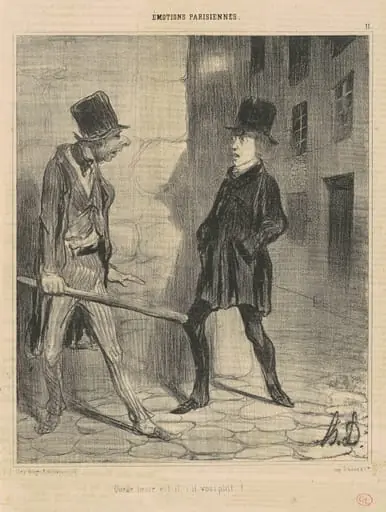 Quelle heure est'il, s'il vous plait?...
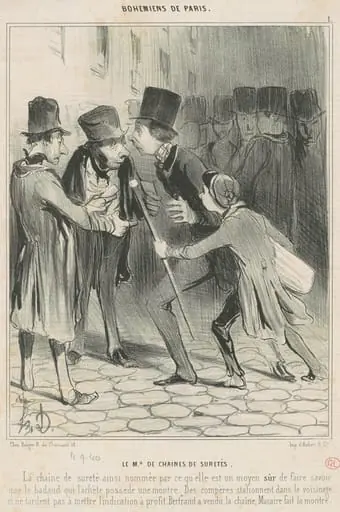 Le Md de Chaines de suretés
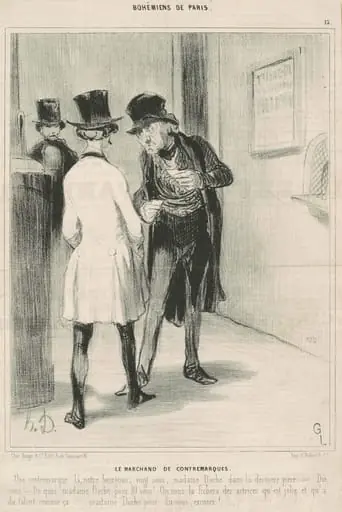 Le marchand de contremarques
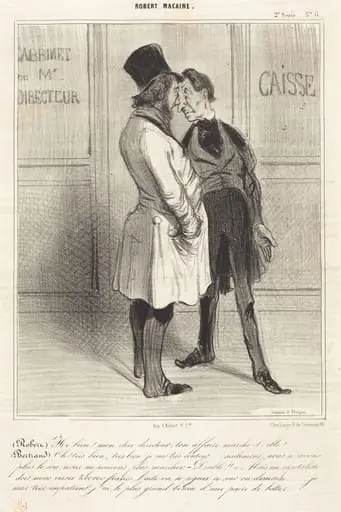 (Robert) Hé bien! mon cher directeur...
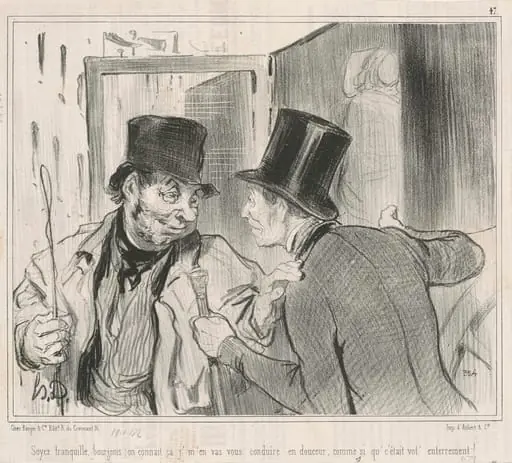 Soyez tranquille bourgeois, on connait
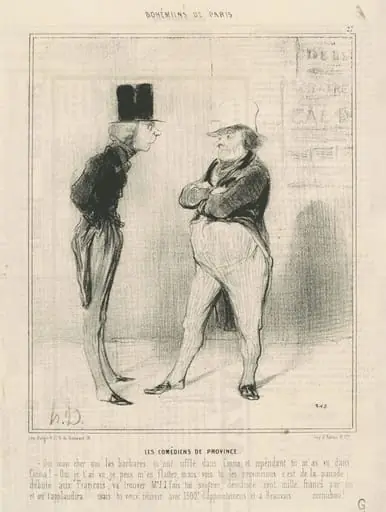 Les comédiens de province
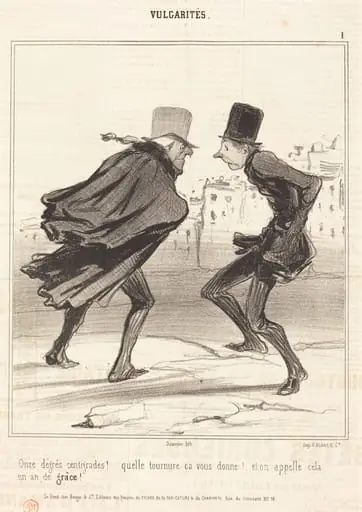 Onze degrés centigrades!
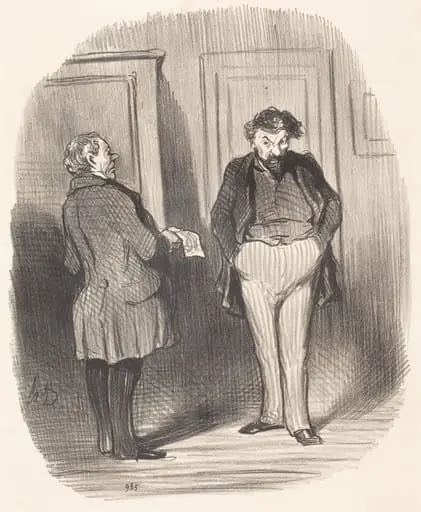 Pourriez-vous me dire...? J'ai la grippe!...
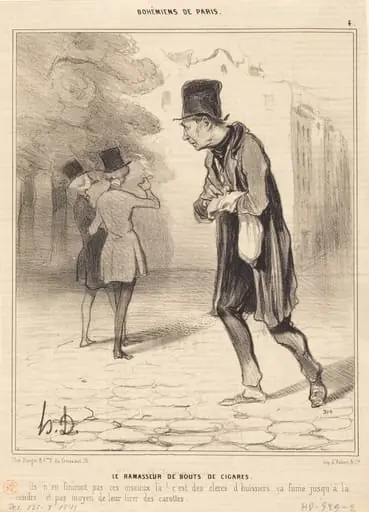 Le Ramasseur de bouts de cigares
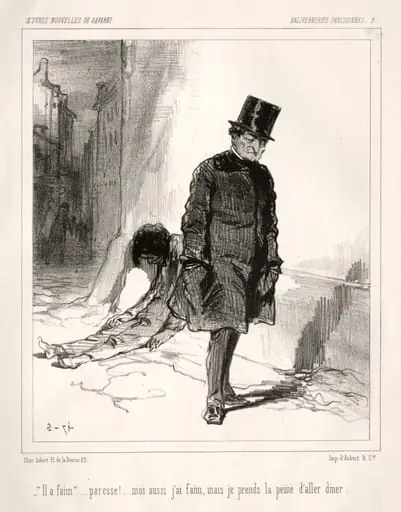 Baliverneries Parisiennes