Artwork
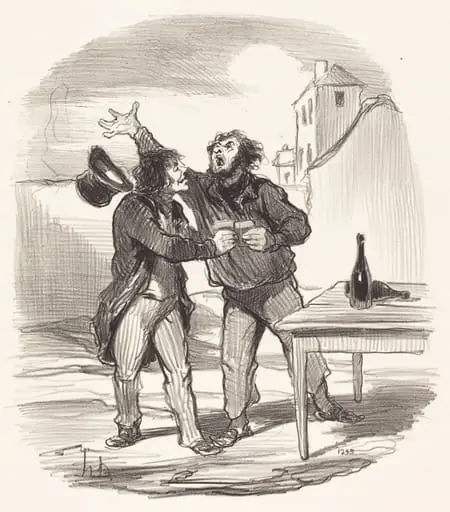
Y n'y a rien comm' ça pour le rhume...
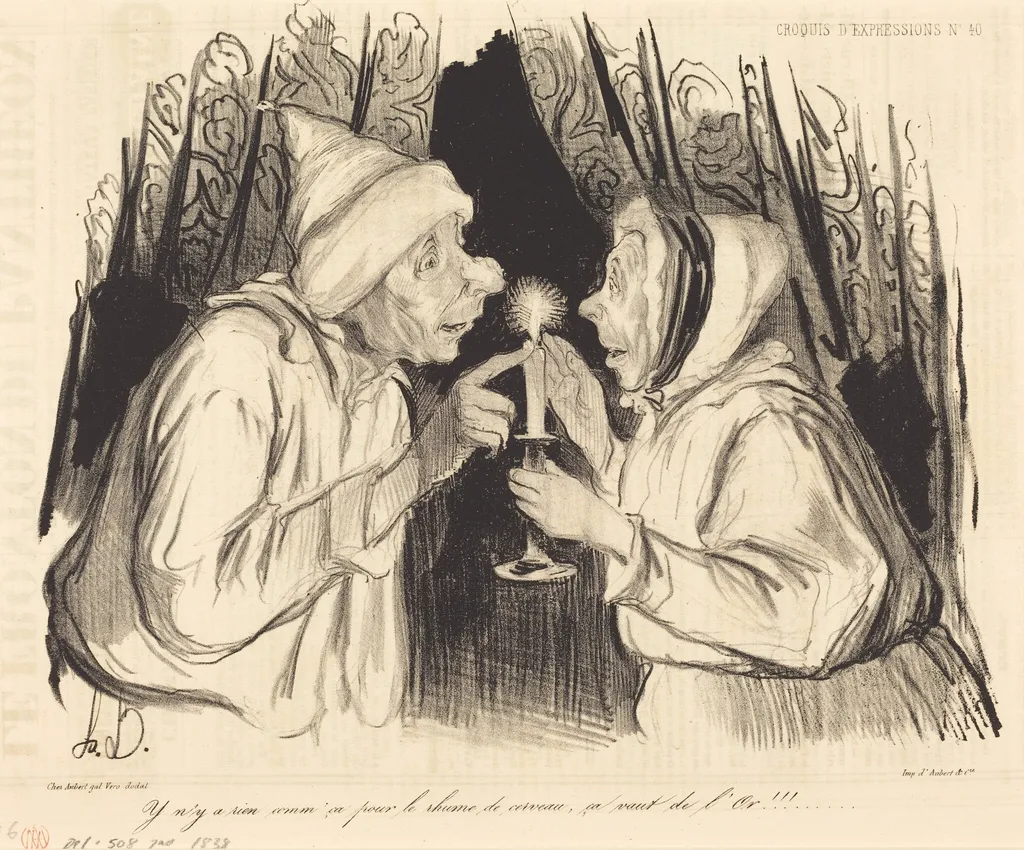
Y n'y a rien comm' ça pour le rhume... is an ink print by the Romanticist artist Honoré Daumier. It dates from 1838 and is held in the collection of the National Gallery of Art. Y n'y a rien comm' ça pour le rhume.
About this work
Overview
Y n'y a rien comm' ça pour le rhume... is a lithograph on newsprint created by Honoré Daumier in 1838. Characteristic of his work as a caricaturist for French newspapers, this print employs satire to address contemporary social and political issues.
Subject & Meaning
The lithograph depicts two older women sharing a candle's flame, their faces illuminated from below against a dark, indistinct background. The title humorously suggests a remedy for a cold, contrasting the simplicity of the scene with the implied complexity of the ailment, potentially commenting on the challenges of everyday life amid broader social upheaval.
Technique & Style
Executed in Daumier's signature quick and expressive style, the lithograph appears as a rapid sketch. The use of lithography on newsprint facilitated widespread dissemination, reflecting the artist's intention for accessible, socially engaged art.
History & Provenance
Produced during a period of political turmoil, this work was part of Daumier's contributions to publications like *La Caricature* and *Le Charivari*, aligning with his republican ideals and critique of established powers.
Context
Within 1830s France, Daumier's satire responded to the monarchy's resurgence and social inequalities. This print, with its focus on ordinary life, underscores his democratic leanings and use of art as social commentary.
Legacy
As part of Daumier's prolific output, *Y n'y a rien comm' ça pour le rhume...* contributes to his legacy as a pioneering caricaturist who effectively merged political critique with relatable, everyday subjects, influencing subsequent generations of satirical artists.
Artist & collection

Artist
Honoré-Victorin Daumier was a French painter, sculptor, and printmaker, whose many works offer commentary on the social and political life in France, from the Revolution of 1830 to the fall of the Second French Empire in 1870.









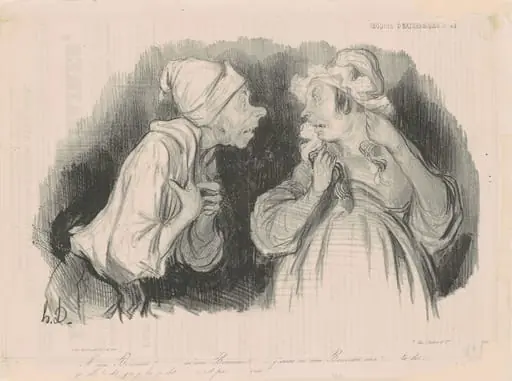 M'ame Bonneau... J'aime m'ame Bonneau moi!...
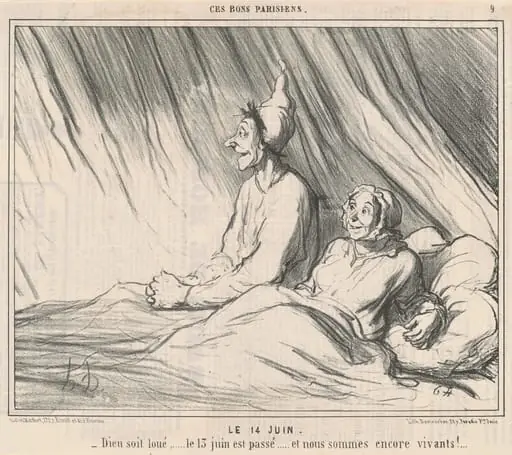 Le 14 Juin
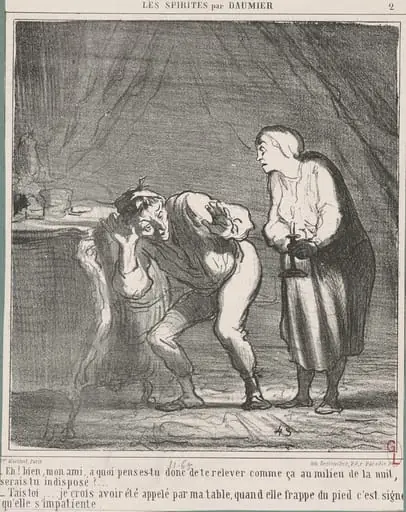 Eh! Bien ... mon ami, a quoi penses-tu? ...
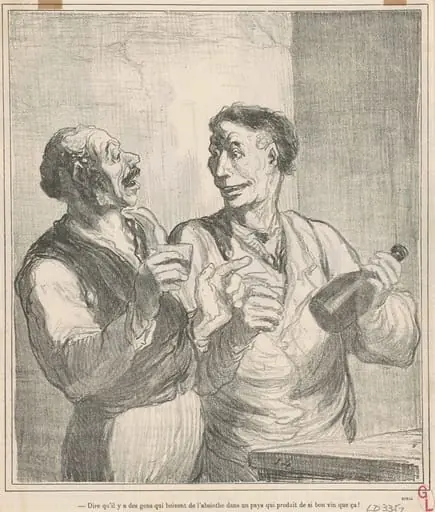 Dire qu'il y a des gens qui boivent de l'absinthe ...
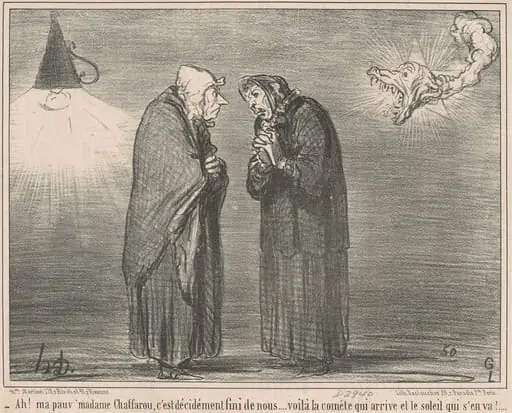 Ah! Ma pauv' Madame Chaffarou ...
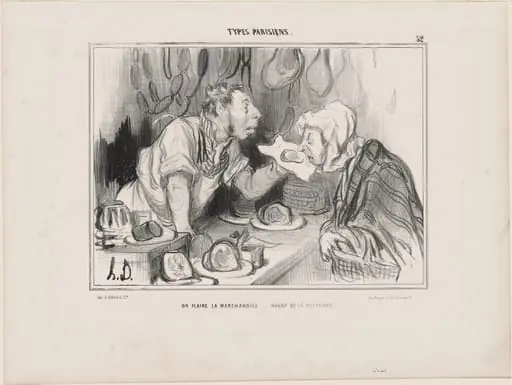 On flaire la marchandise... avant de la mécaniser!...
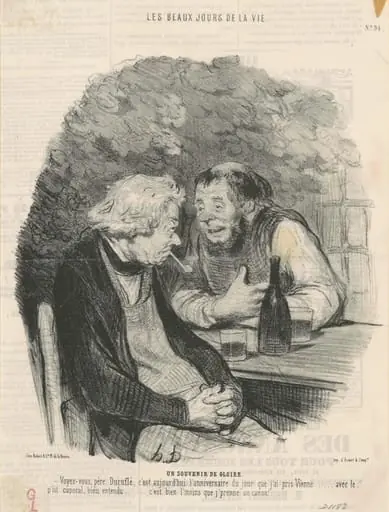 Un souvenir de gloire
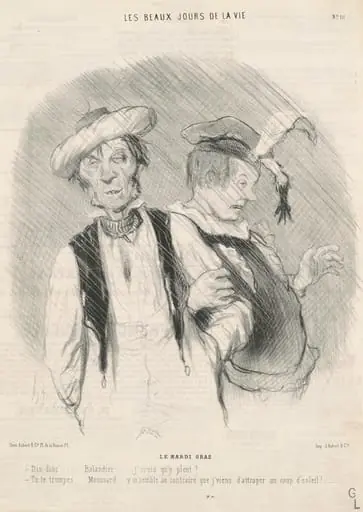 Le mardi gras
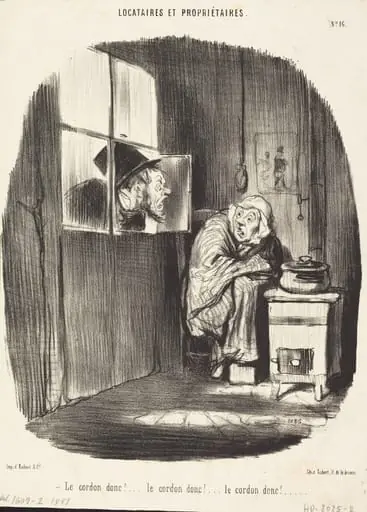 Le Cordon donc!...
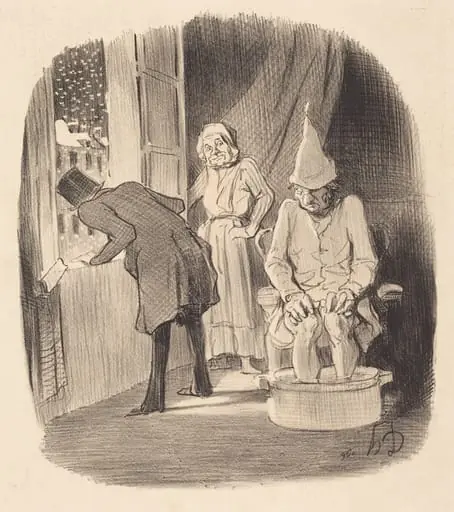 Inconvénient de mettre son logement...
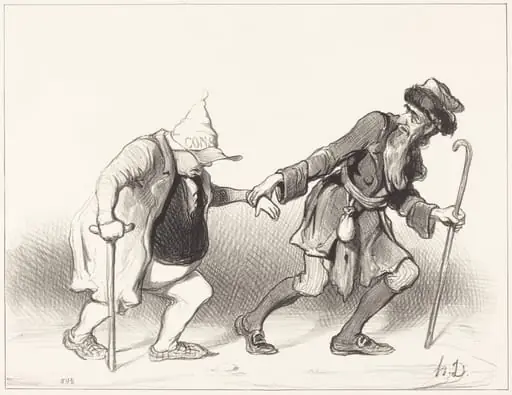 Le Constitutionnel et le Juif errant
 Membre... du dix Décembre prenant le la...