Artwork
Le mardi gras
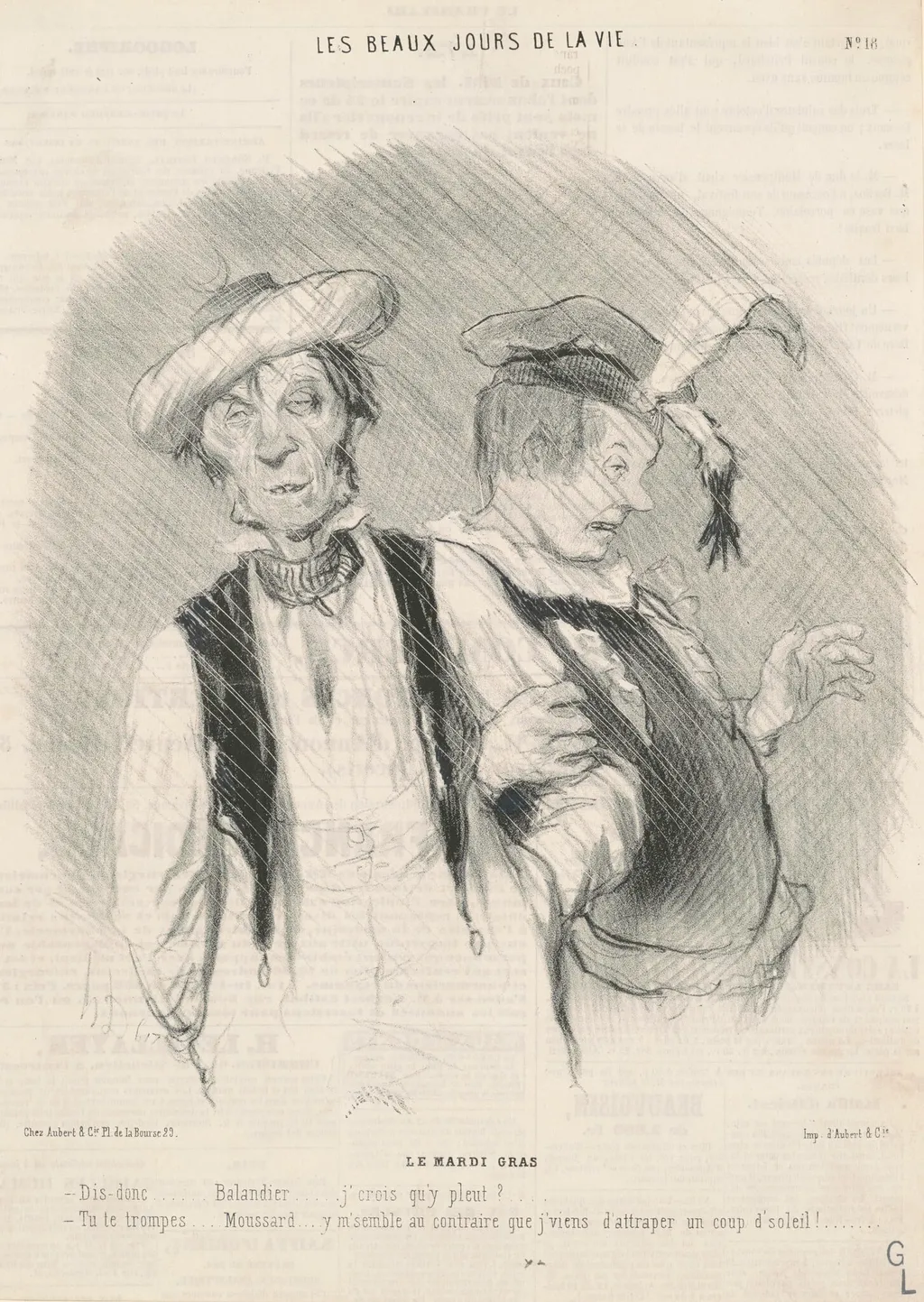
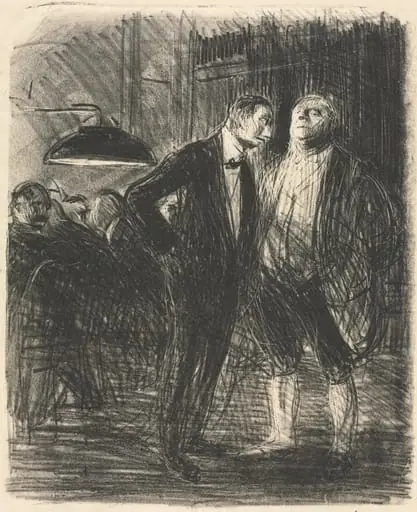
Le mardi gras is an ink print by the Romanticist artist Honoré Daumier. It dates from 1844 and is held in the collection of the National Gallery of Art.
About this work
Overview
Honoré Daumier’s 1844 lithograph Le Mardi Gras presents a brief encounter between two men amid the carnival atmosphere. The scene is rendered in a single sheet, with the figures occupying the foreground while the surrounding revelry remains implied. The work exemplifies Daumian humor and observation, using the festive setting to comment on everyday social exchange.
Subject & Meaning
The print juxtaposes a man in an elaborate costume with a weary, plainly dressed counterpart, highlighting a contrast between ostentatious display and modest fatigue. Their exaggerated facial features function like caricatured masks, suggesting that even during celebration, class distinctions and interpersonal dynamics remain pronounced.
Technique & Style
Executed in lithography, Daumier employs loose, gestural lines that convey immediacy and movement. The stark black‑and‑white palette emphasizes contour and expression, while the exaggerated physiognomy aligns with his broader satirical approach to Parisian life. The rapid, sketch‑like quality underscores the spontaneity of carnival encounters.
History & Provenance
Created in the early phase of Daumier’s career, the lithograph was produced during a period when he regularly contributed to satirical journals. Though specific ownership records are limited, the print has been catalogued among his extensive series of social commentaries on mid‑nineteenth‑century Paris.
Artist & collection
Artist
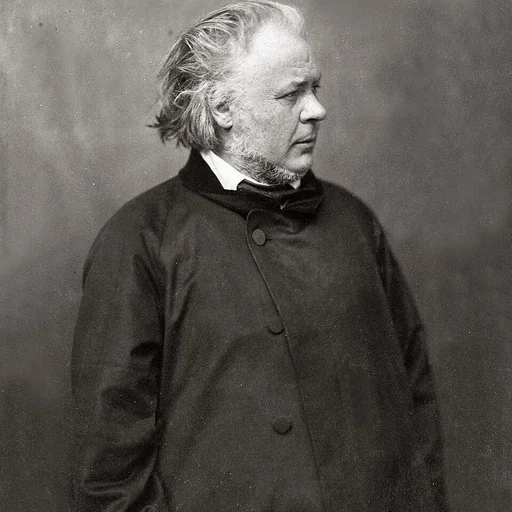
Honoré-Victorin Daumier was a French painter, sculptor, and printmaker, whose many works offer commentary on the social and political life in France, from the Revolution of 1830 to the fall of the Second French Empire in 1870.


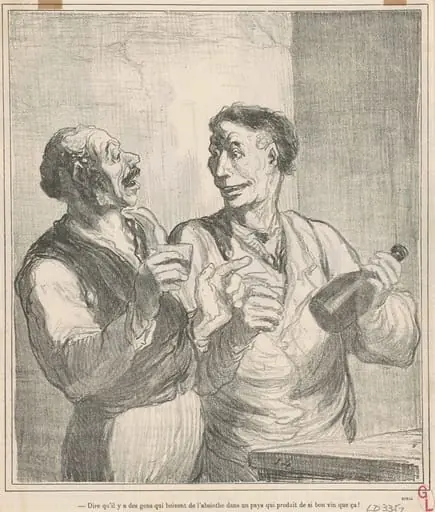 Dire qu'il y a des gens qui boivent de l'absinthe ...
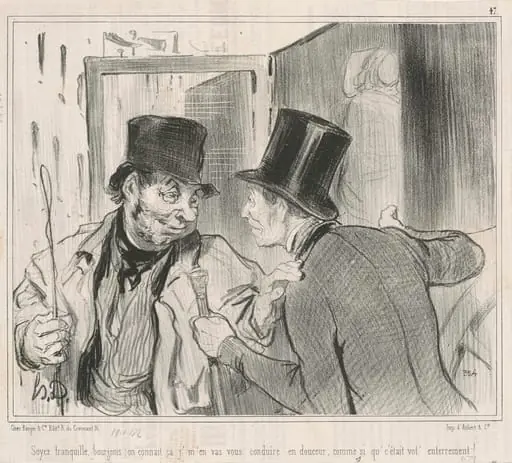 Soyez tranquille bourgeois, on connait
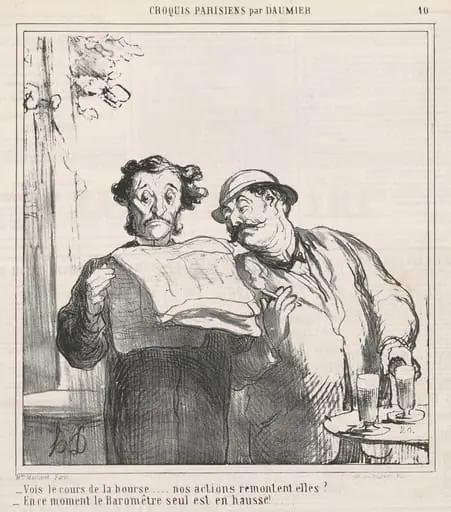 Vois le cours de la bourse
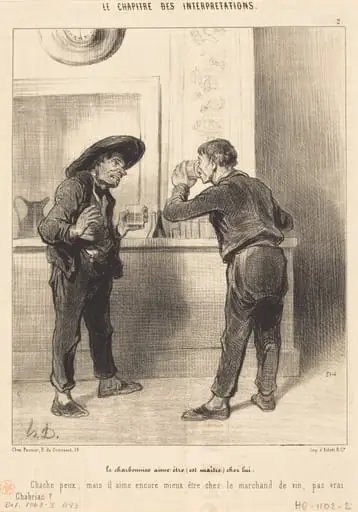 Le Charbonnier aime être (est maitre)...
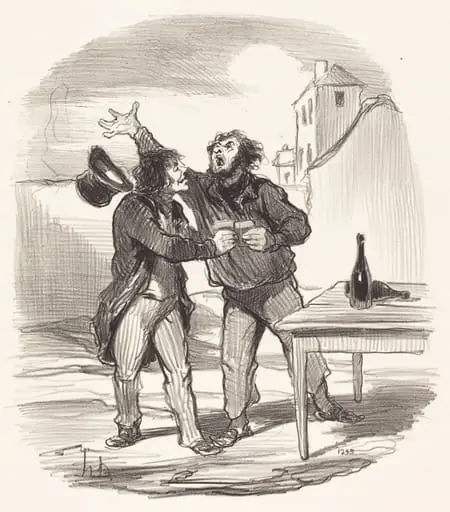 Membre... du dix Décembre prenant le la...
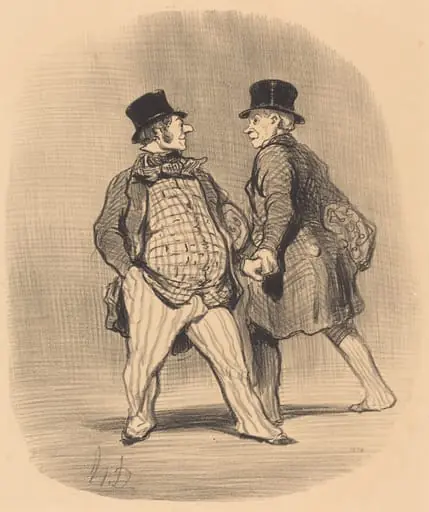 Confrère, méfiez-vous du petit baron...
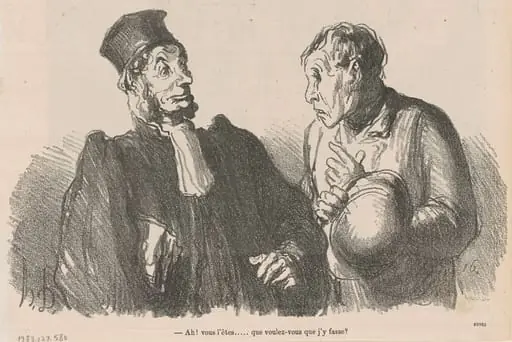 Ah! Vous l'êtes ... que voulez-vous que ...
 Le Decavé
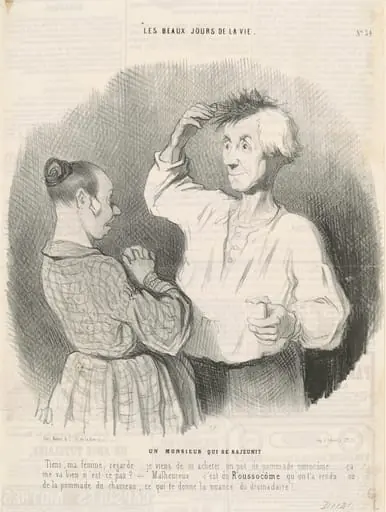 Un monsieur qui se rajeunit