Artwork
Judgement of Solomon (1 Kings 3:16–28)
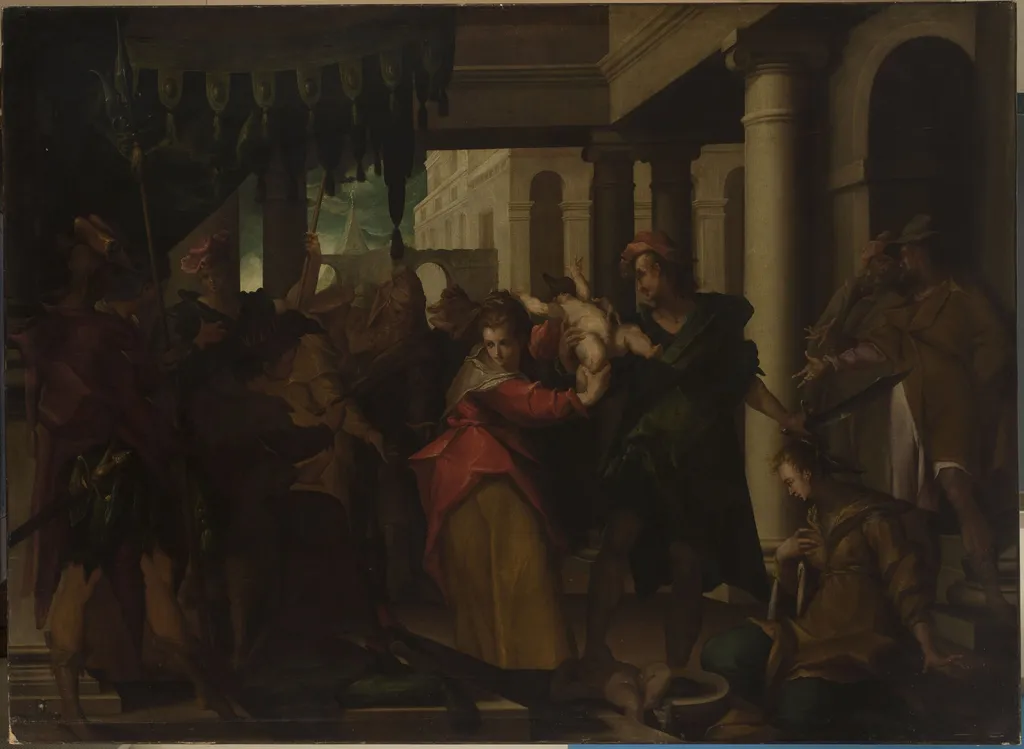
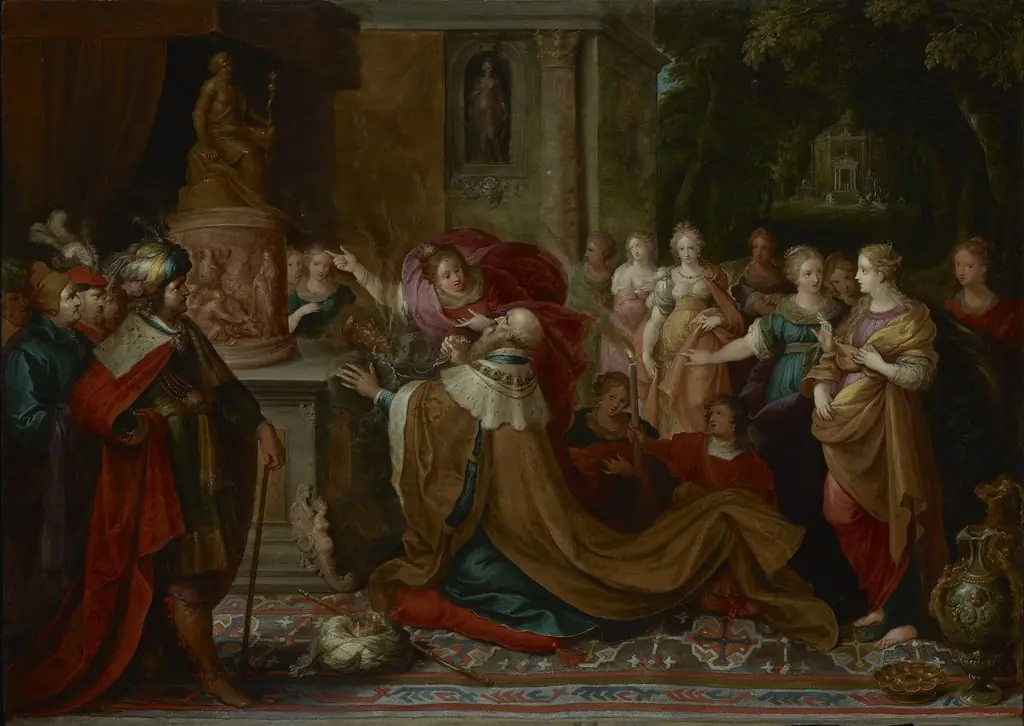
Judgement of Solomon (1 Kings 3:16–28) is an oil painting by the Dutch Golden Age artist David Colijns. It dates from 1632 and is held in the collection of the National Museum in Warsaw.
About this work
Overview
The composition centers on the king holding the infant, surrounded by witnesses, all rendered with careful attention to spatial depth and physical presence.
Painted around 1632 by Dutch artist David Colijns, this oil work illustrates the biblical story of Solomon’s wise judgment. The scene unfolds within an architectural setting evoking classical antiquity, with columns and arches framing the central drama. The composition centers on the king holding the infant, surrounded by witnesses, all rendered with careful attention to spatial depth and physical presence.
Subject & Meaning
The painting captures the moment when King Solomon proposes to divide the living child to reveal the true mother. One woman consents to the division; the other pleads for the child’s life. This pivotal gesture exposes maternal love, transforming a legal dispute into a moral revelation. The figures’ expressions and gestures underscore the tension between justice and compassion.
Technique & Style
Colijns employs chiaroscuro to model forms and heighten emotional intensity, directing light toward the king and child while shadows recede into the background. Textures in fabric, stone, and skin are rendered with precision, reflecting a commitment to realism. The figures are arranged in a balanced, theatrical grouping, typical of early Baroque narrative painting in the Dutch tradition.
History & Provenance
The painting entered the collection of the National Museum in Warsaw in the 19th century, likely through acquisitions of Dutch and Flemish works during that period. Its attribution to Colijns is supported by stylistic comparisons with his other known works. No significant alterations or restorations are documented, preserving its original condition.
Context
Created during the Dutch Golden Age, the work reflects a broader interest in biblical narratives as vehicles for moral and political reflection. Solomon’s judgment resonated with contemporary audiences concerned with justice, authority, and the limits of human wisdom. Colijns’ choice of classical architecture aligns with the era’s preference for timeless, idealized settings in religious subjects.
Legacy
Though not widely exhibited outside Poland, the painting remains a representative example of 17th-century Dutch biblical historiography. It contributes to the understanding of how Dutch artists interpreted Old Testament stories with psychological nuance and formal discipline, bridging religious themes with emerging naturalism.
Artist & collection



 Martyrium der hl. Justina
 Christus vertreibt die Händler aus dem Tempel
 Christ and the Woman Taken in Adultery
 Rebecca at the Well
 Heimkehr der Briseis
 Allegory of the wedding of Archduke Ferdinand Karl and Anna de' Medici
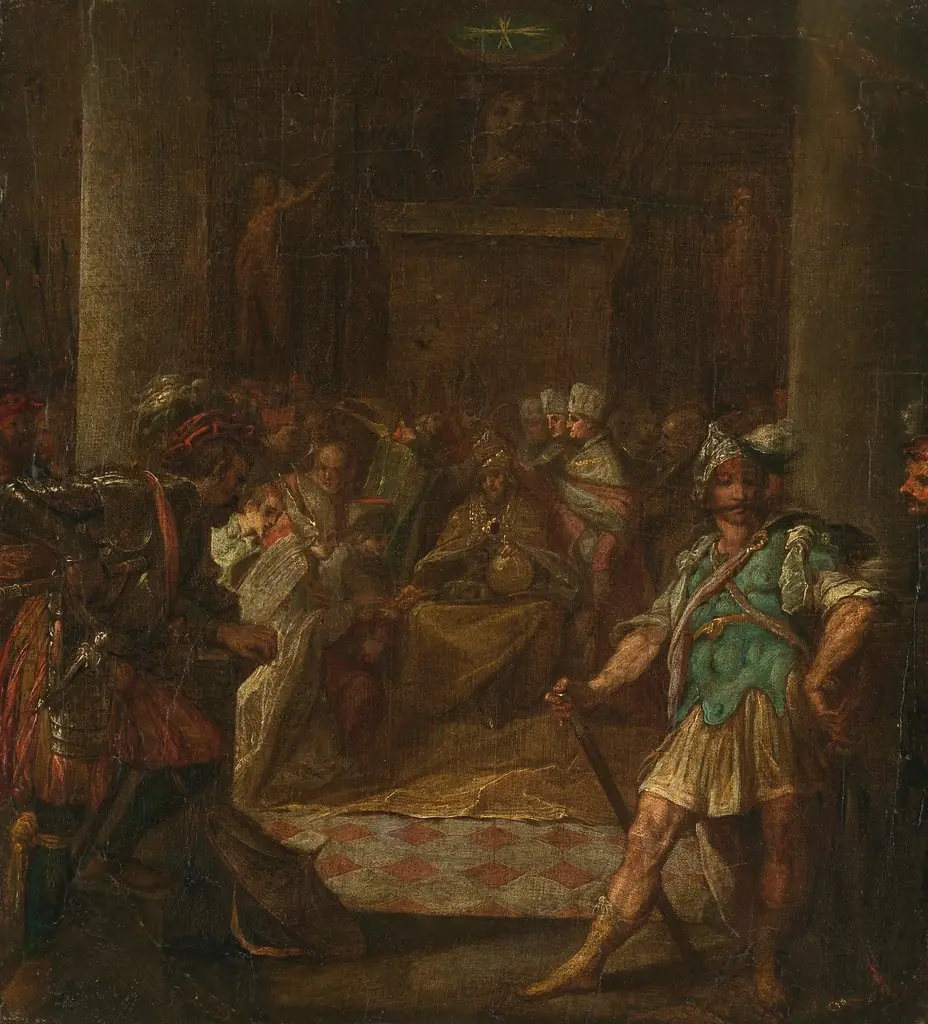 Imperial Coronation
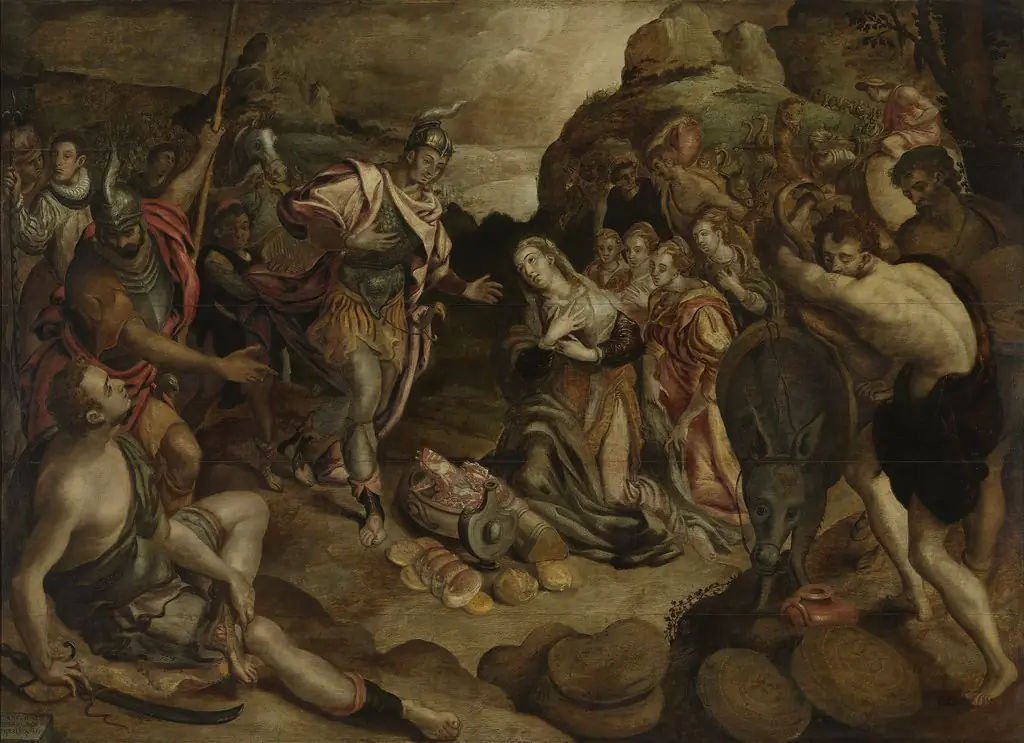 The Meeting of David and Abigail
 Femeia adulteră în fața judecătorilor
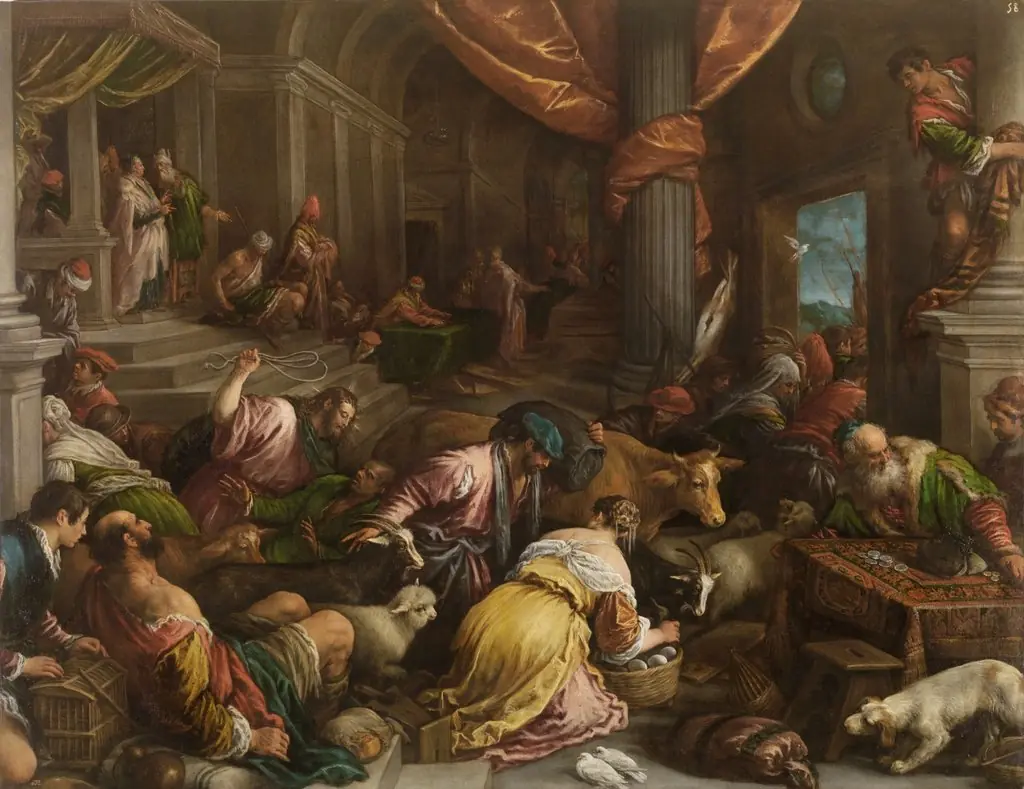 The Traders Cast out of the Temple
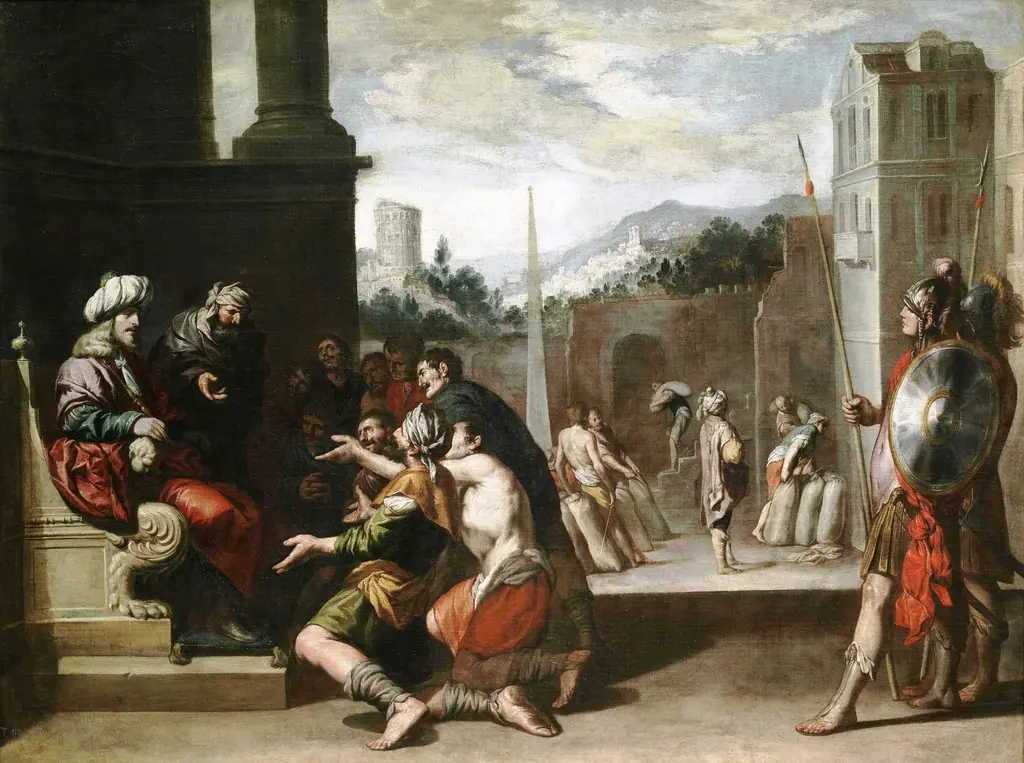 Joseph orders Simeon’s Imprisonment
 The Idolatry of Solomon