Artwork
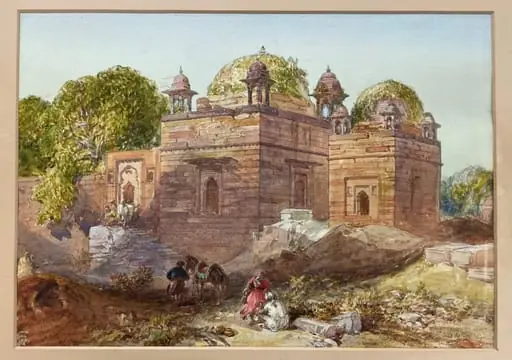
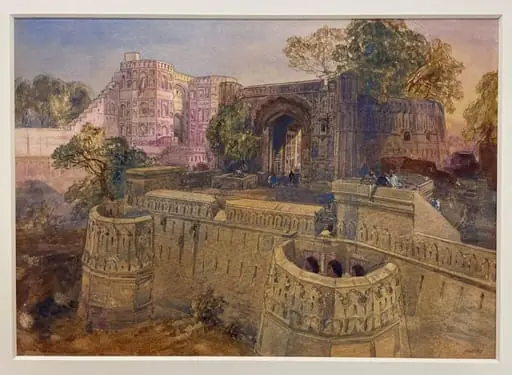
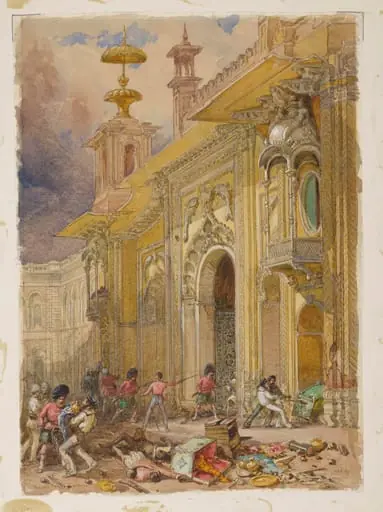
Gate of Purana Qila, Old Delhi
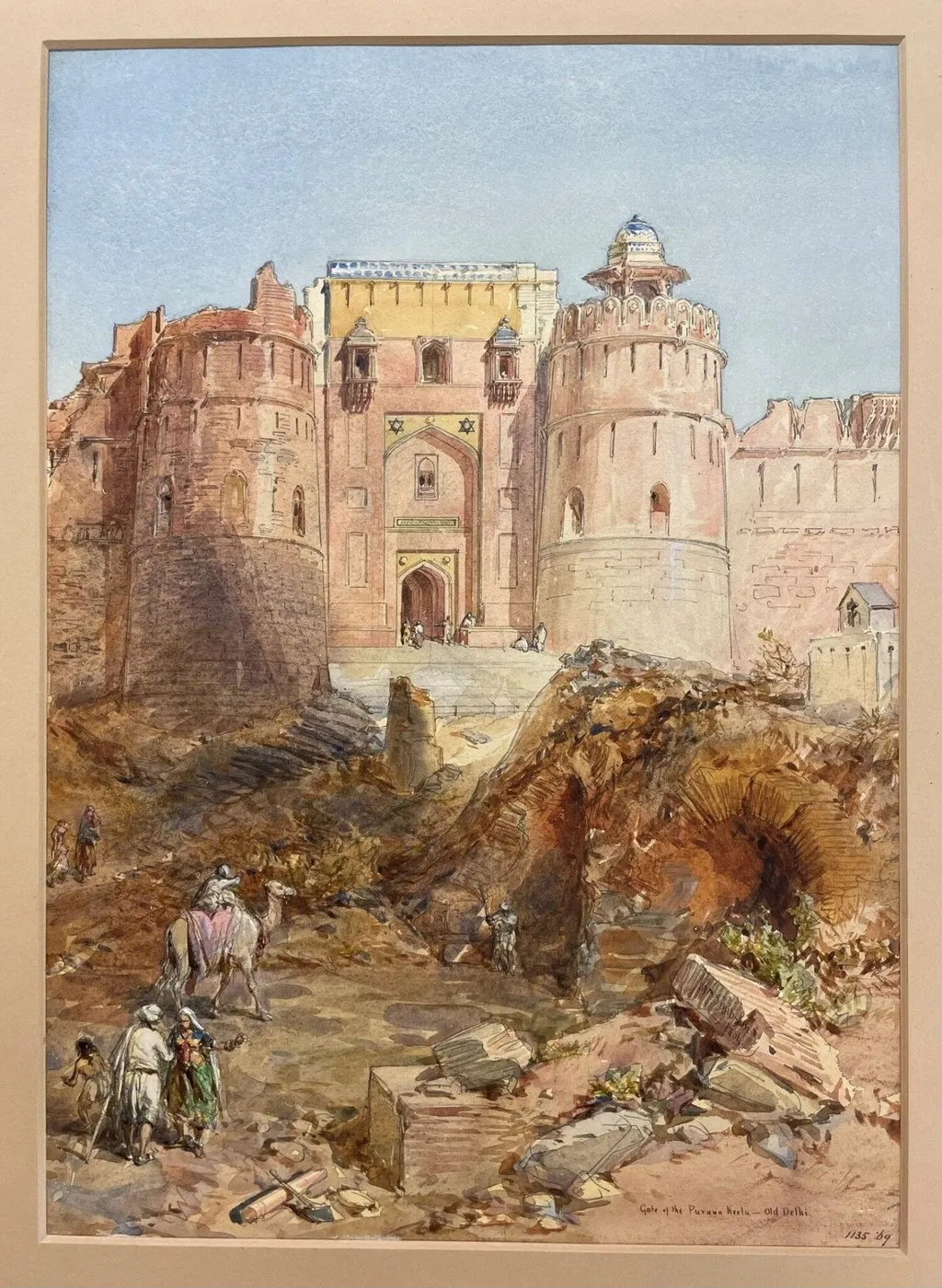
Gate of Purana Qila, Old Delhi is a paint painting by the Impressionist artist William Simpson. It dates from 1864 and is held in the collection of the Victoria and Albert Museum.
About this work
Simpson first drew the scene quickly on paper, then turned it into a colorful painting back in London.
This painting shows the grand entrance to an old fort in Delhi. It was made in 1864 by William Simpson, a British artist known for his detailed travel sketches.
Simpson first drew the scene quickly on paper, then turned it into a colorful painting back in London. He spent years traveling India, recording buildings and landscapes from the 1857 revolt.
His careful studies led to rich, vivid pictures of Indian architecture.
Next time, look up Simpson, William RI FRGS.
Overview
William Simpson, a British artist and war correspondent, created this watercolour in 1864 following extensive travel across India. Commissioned by the London lithography firm Day and Sons, the work was part of a project to document sites linked to the 1857 uprising. Simpson made rapid pencil sketches on-site during his 1859–1862 journey, later refining them into detailed watercolours after returning to England. This painting captures one of Delhi’s oldest surviving gateways, rendered with precision and atmospheric depth.
Subject & Meaning
The painting depicts the Bara Darwaza, the western entrance to Purana Qila, a 16th-century citadel originally constructed under Mughal and Afghan rulers. The gate, still in use today, symbolizes continuity amid political upheaval. Simpson’s focus on its architectural grandeur reflects an interest in India’s pre-colonial heritage, even as his work emerged from a British imperial context. The gate’s endurance contrasts with the recent violence of the 1857 revolt, subtly framing it as a monument beyond factional conflict.
Technique & Style
Simpson employed layered watercolour washes to convey the texture of sandstone and the luminosity of decorative inlays. His preparatory sketches, made swiftly in the field, informed the composition’s accuracy, while the final work in London added rich colour and refined detail. Architectural elements like jharokhas and chhatris are rendered with careful observation, and the use of blue tiles and white marble inlays enhances the gate’s visual complexity. The lighting suggests late afternoon, casting long shadows that deepen the sense of scale and stillness.
History & Provenance
Commissioned by Day and Sons in 1859, the painting was one of many produced from Simpson’s Indian travels. He arrived in Calcutta that year and journeyed across northern India, documenting sites tied to the 1857 rebellion. The finished watercolour was completed in London in 1864 and likely circulated as a lithographic print for British audiences. His journals and sketches, now held in institutional collections, confirm the work’s direct connection to his field studies and his intent to preserve architectural records of a changing subcontinent.
Context
Simpson’s work emerged during a period of heightened British interest in India’s historical monuments, following the collapse of the East India Company’s rule. While his depictions romanticized the past, they also served as documentary records at a time when colonial authorities were reassessing India’s cultural legacy. The Purana Qila, though associated with Mughal and Afghan rulers, was not a site of major revolt—making its selection an intentional turn toward enduring heritage rather than recent conflict.
Legacy
Simpson’s watercolours of Indian architecture contributed to European visual understanding of the subcontinent’s built environment. His method—rapid field sketches followed by studio refinement—became a model for later travel artists. Though his interpretations carried Victorian sensibilities, his attention to architectural detail preserved forms that might otherwise have been overlooked. Today, his works remain valuable for their precise documentation of 19th-century monuments before extensive modern alterations.
Artist & collection

 Taxali Darwaza, Lahore
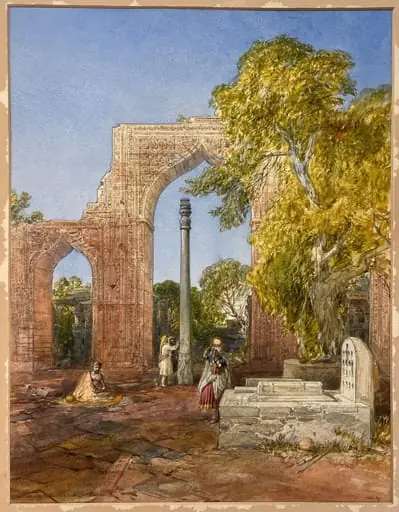 Iron Laht at the Kootub, Old Delhi
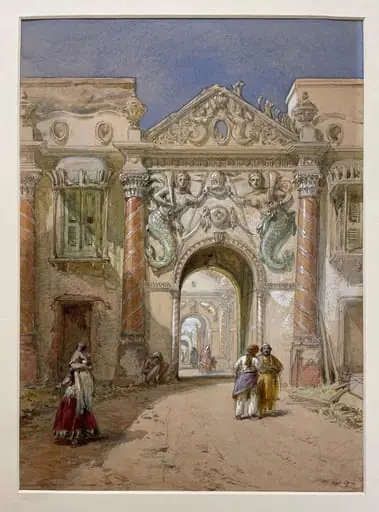 Mermaid gate, Kaiserbagh, Lucknow
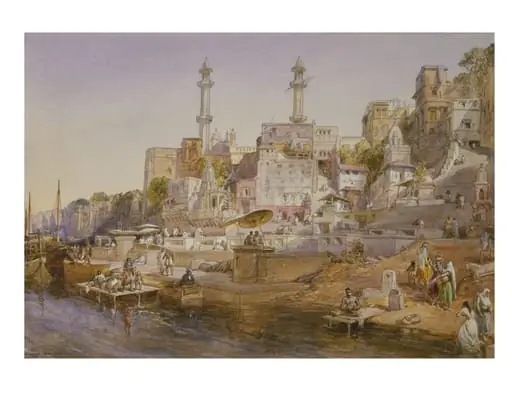 The Mosque of Aurangzeb and Panchganga Ghat from the Ganges, Benares.
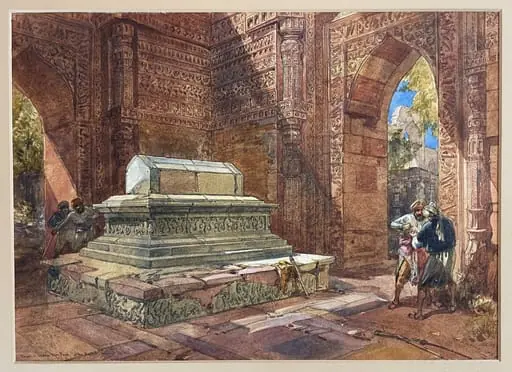 Tomb of Shams ud-Din Iltutmish at the Qutub Minar, Delhi
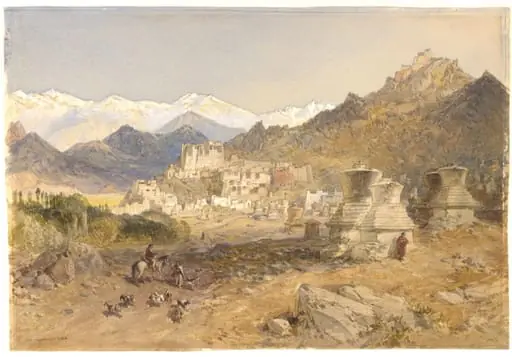 The Palace at Leh with stupas in the foreground
 View of the Kaiser Bagh in Lucknow
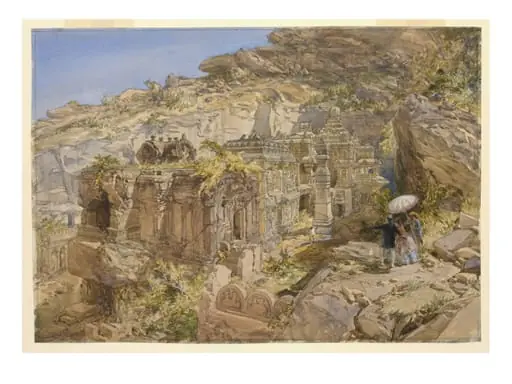 Kailasanatha temple, Ellora
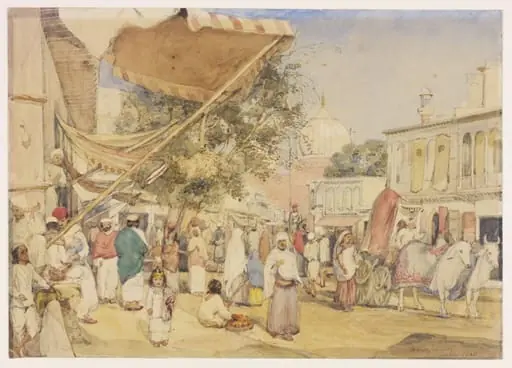 View of the bazaar at the back of the Jami Masjid, Delhi
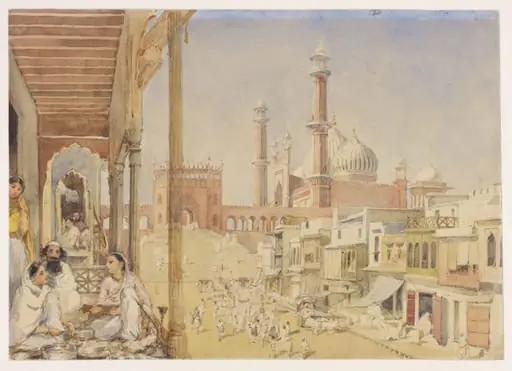 View of the Jami Masjid, Delhi