Artwork
A Fortified Town in Italy
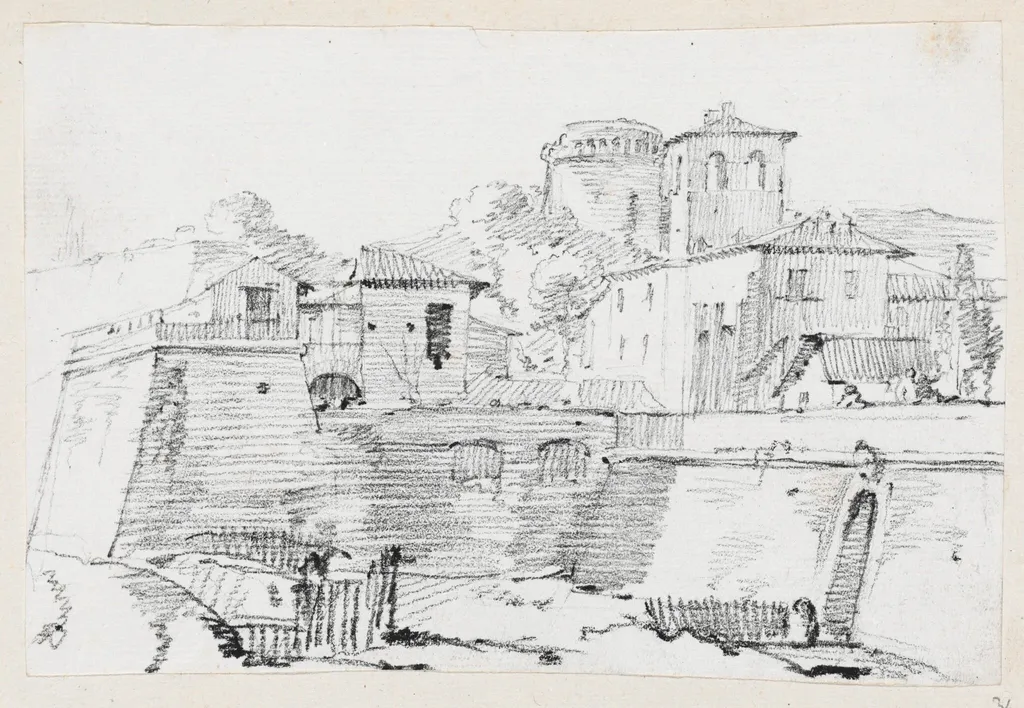
A Fortified Town in Italy is a graphite drawing by the Baroque artist Joseph-Marie Vien. It dates from 1747 and is held in the collection of the National Gallery of Art.
About this work
Overview
A Fortified Town in Italy is a 1747 drawing by Joseph-Marie Vien, a French artist who later became Premier peintre du Roi. The work is executed in graphite on laid paper.
Subject & Meaning
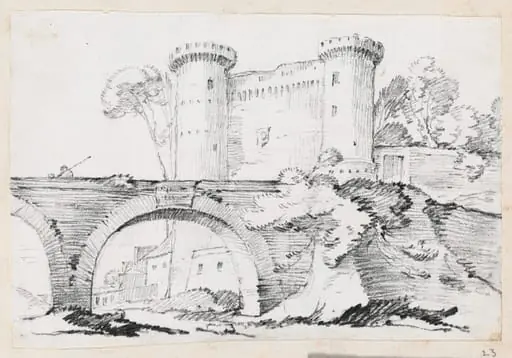
The drawing depicts a fortified Italian town with a walled enclosure, a tower, and a bridge over a watercourse, set against a backdrop of hills or cliffs. The scene is rendered in a straightforward manner, suggesting a study or observational sketch.
Technique & Style
The artist employed graphite to create a monochrome image, relying on shading to convey light and dark. The lines are loose and rapid, characteristic of a quick study. The use of graphite on laid paper was a common practice for sketching in the 18th century.
History & Provenance
Created in 1747, this drawing predates Vien's official role as Premier peintre du Roi, which he held from 1789 to 1791, and reflects an early stage in his career.
Artist & collection
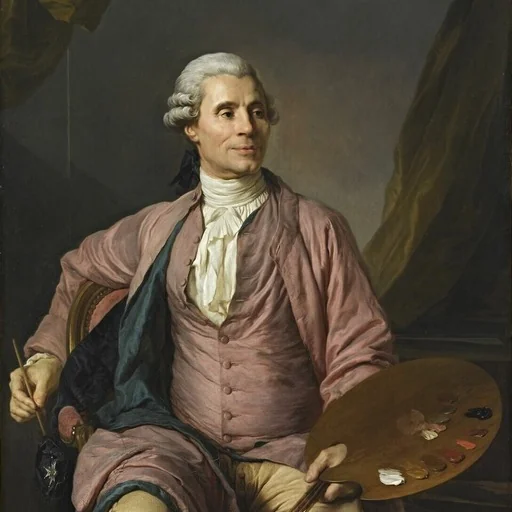
Artist
Joseph-Marie Vien (18 June 1716 – 27 March 1809) was a French painter. He was the last holder of the post of Premier peintre du Roi, serving from 1789 to 1791, before it was abolished during the French Revolution.


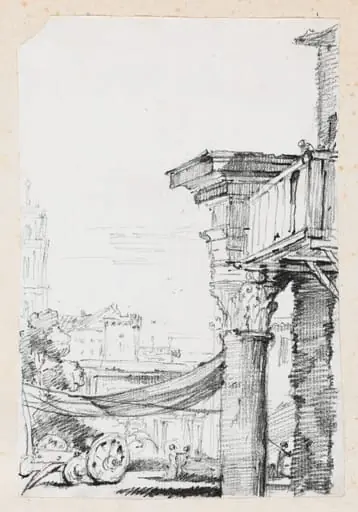
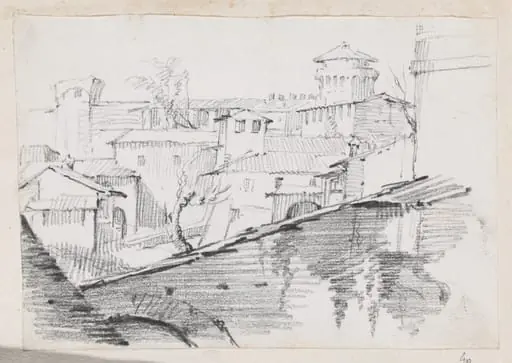 The Forno inside the Walls of the Vatican
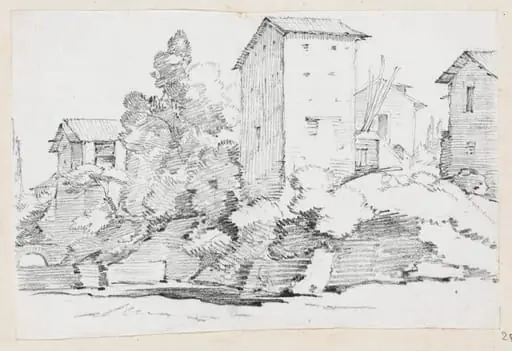 Italian Farm Buildings by a Stream
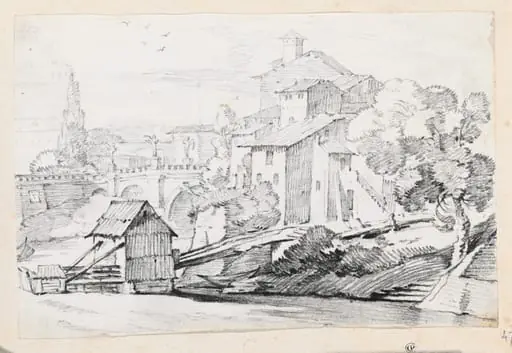 The Ponte Sant'Angelo and Houses on the East Bank of the Tiber
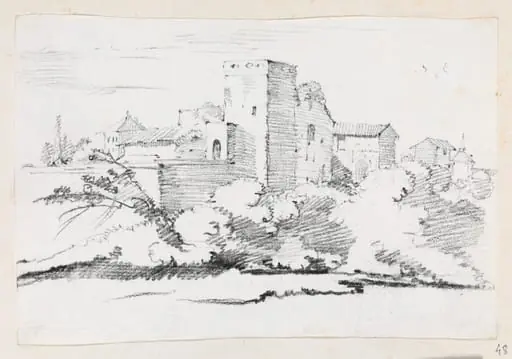 Buildings behind the Vatican
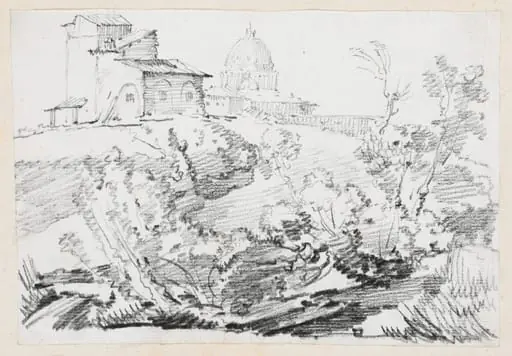 A Building on a Hill with Saint Peter's in the Distance
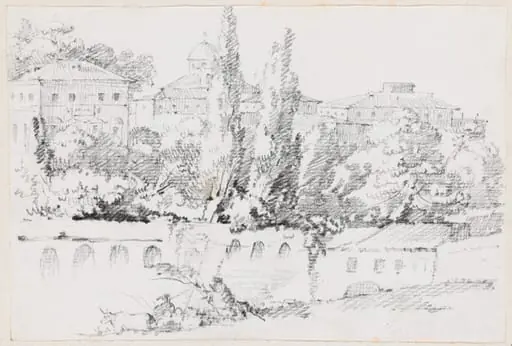 Walls of Rome with Santa Maria del Popolo in the Distance
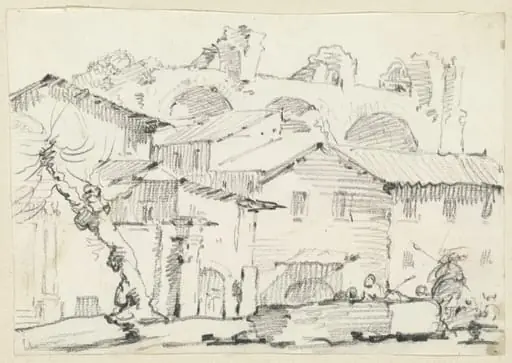 Houses on the North Side of the Forum with the Basilica of Maxentius Beyond
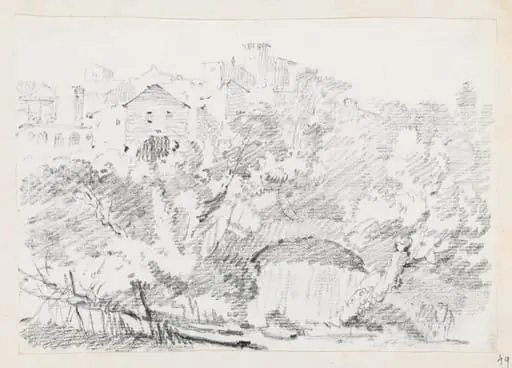 A Waterfall near a Hilltown in Italy
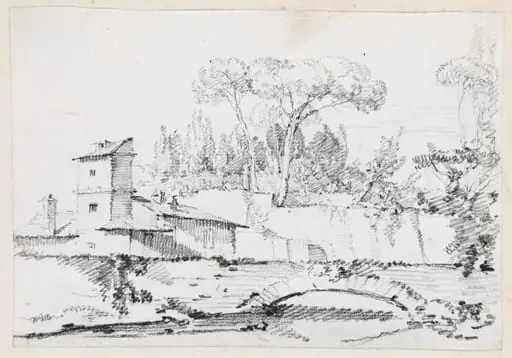 View of the Prato of the Villa Borghese