Artwork
Woman from the Villa Pamphili
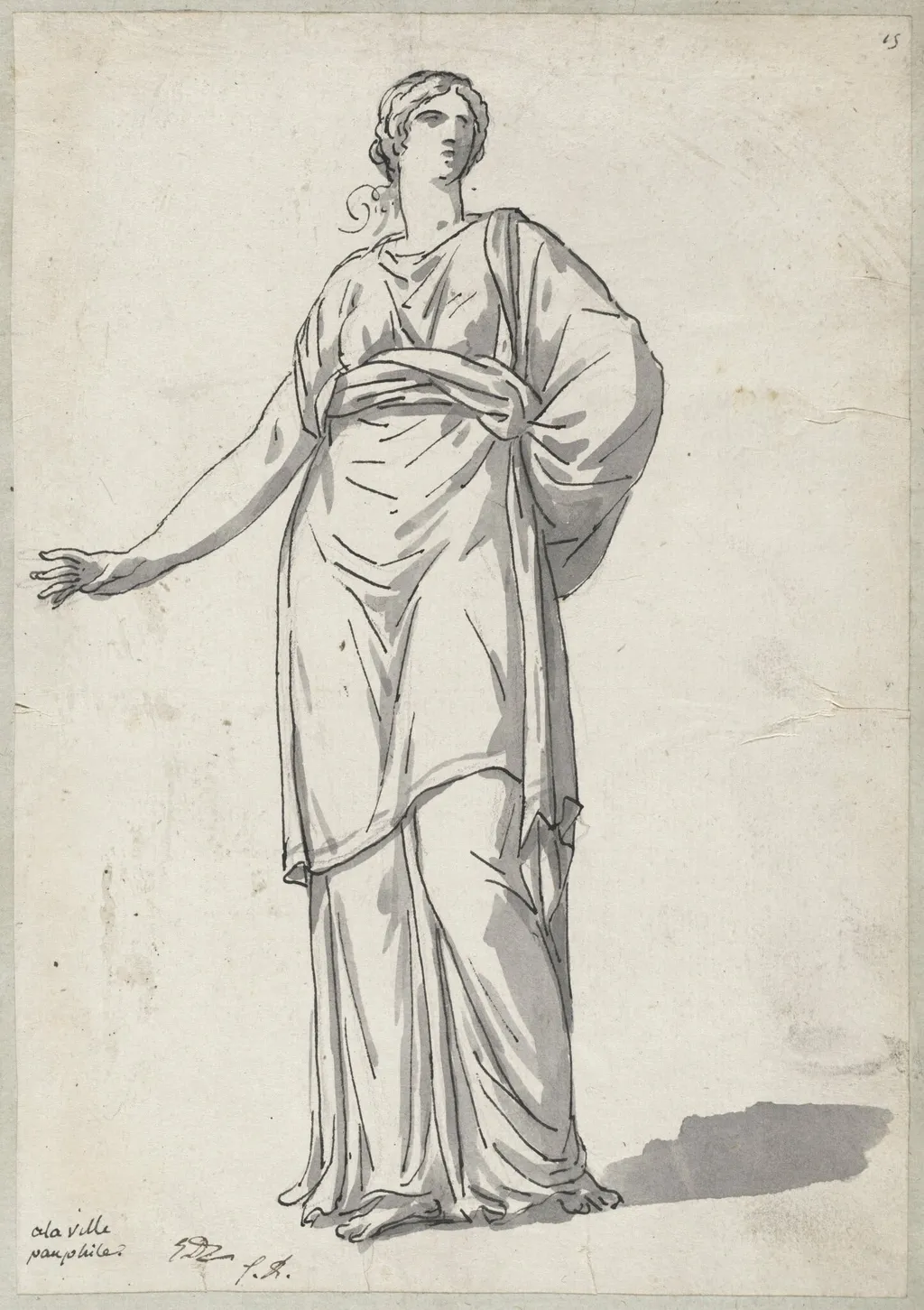
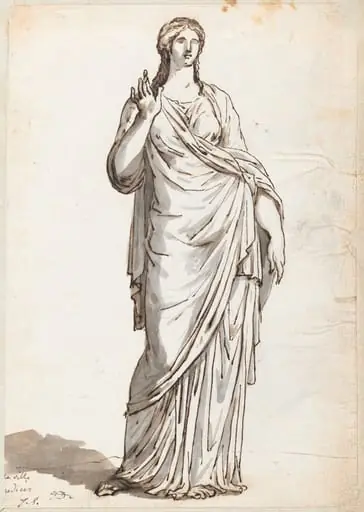
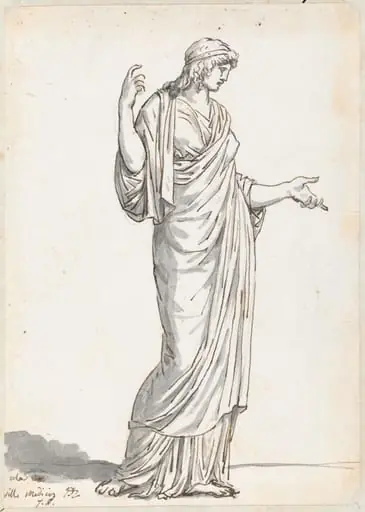
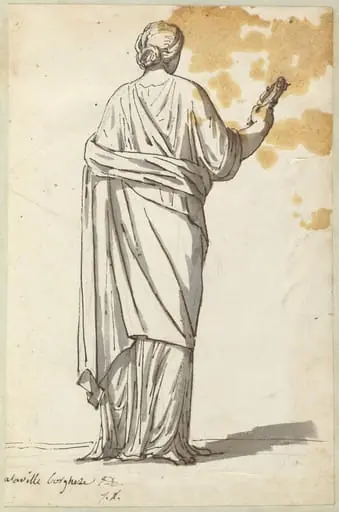
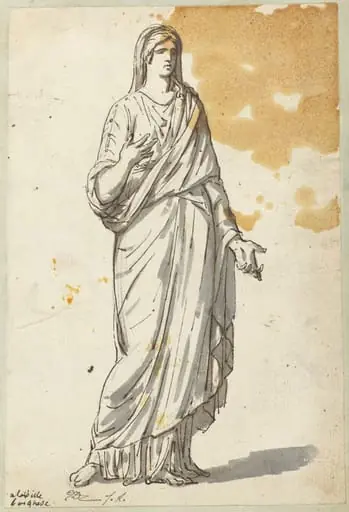
Woman from the Villa Pamphili is an ink drawing by the Neoclassicist artist Jacques-Louis David. It dates from 1778 and is held in the collection of the National Gallery of Art.
About this work
Overview
It was likely made during his time in Rome, where he studied ancient sculpture and architecture, seeking to develop a more disciplined artistic language.
Created in 1778 by Jacques-Louis David, this drawing depicts a female figure in classical attire, rendered in black ink and gray wash over graphite on laid paper. The work belongs to David’s early period, when he was refining his approach to form and drapery under the influence of classical antiquity. It was likely made during his time in Rome, where he studied ancient sculpture and architecture, seeking to develop a more disciplined artistic language.
Subject & Meaning
The figure is not a portrait of a specific individual but an idealized representation of feminine grace, inspired by ancient statuary. Her upright posture, upward gaze, and restrained gesture evoke a sense of quiet contemplation rather than narrative action. The absence of identifying attributes suggests the artist intended the figure to embody a timeless, universal ideal—perhaps a muse or a Vestal Virgin—aligned with Enlightenment values of reason and dignity.
Technique & Style
David employed subtle gradations of gray wash to model the figure’s form, using cross-hatching to define the volume of the robe and the contours of the face. The graphite underdrawing guided the ink lines, allowing for precision in the folds of fabric and the softness of skin. The contrast between the darkened areas of shadow and the lighter, airy drapery enhances the sense of three-dimensionality, demonstrating David’s growing mastery of tonal modeling over linear definition.
History & Provenance
The drawing was produced during David’s stay in Rome as a recipient of the Prix de Rome, a prestigious scholarship that enabled him to study classical art firsthand. It remained in his personal collection until his death, after which it passed through private hands before entering a public collection. Its survival as a preparatory study offers insight into David’s development as a painter committed to historical and classical themes.
Context
In the late 1770s, David was immersed in the intellectual currents of Neoclassicism, rejecting the frivolity of Rococo in favor of moral clarity and formal restraint. This drawing reflects his engagement with Roman sculpture and the writings of Winckelmann, who championed the noble simplicity of ancient art. The figure’s composure and lack of ornamentation align with broader artistic efforts to revive classical ideals as a foundation for modern aesthetics.
Legacy
Though not a finished painting, this drawing exemplifies David’s foundational approach to figure composition and drapery, which would later define his major historical works. It stands as a key example of how academic artists of the period used preparatory studies to internalize classical forms. Its preservation allows scholars to trace the evolution of his style from academic exercise to monumental history painting.
Artist & collection

Artist
Jacques-Louis David was born in Paris on 30 August 1748 into a bourgeois family; his father died in a duel when the boy was nine, and a maternal uncle guided his education.

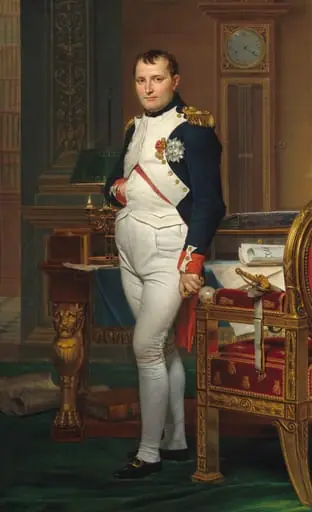 The Emperor Napoleon in His Study at the Tuileries
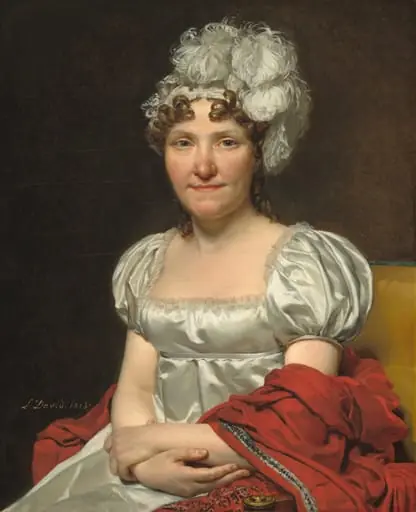 Madame David
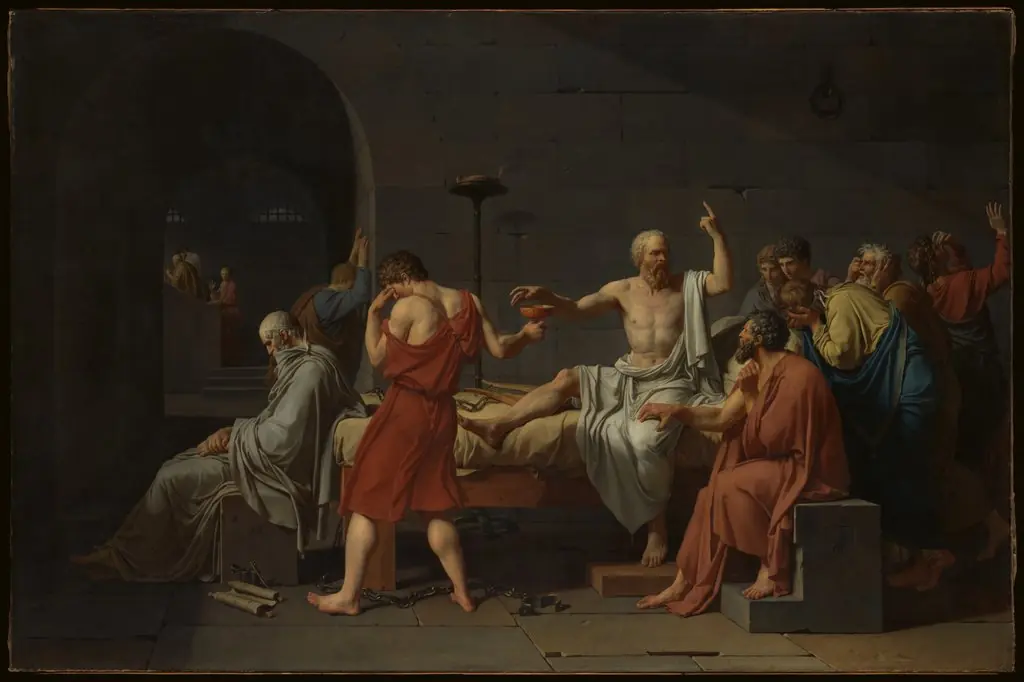 The Death of Socrates
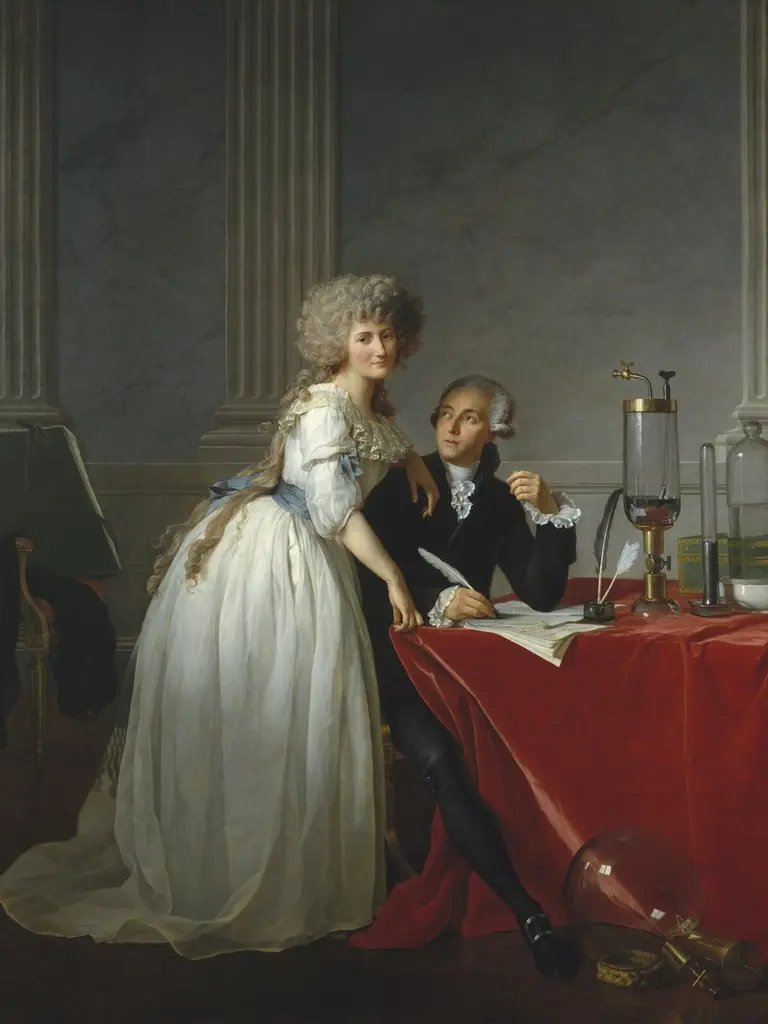 Portrait of Antoine-Laurent Lavoisier and his wife
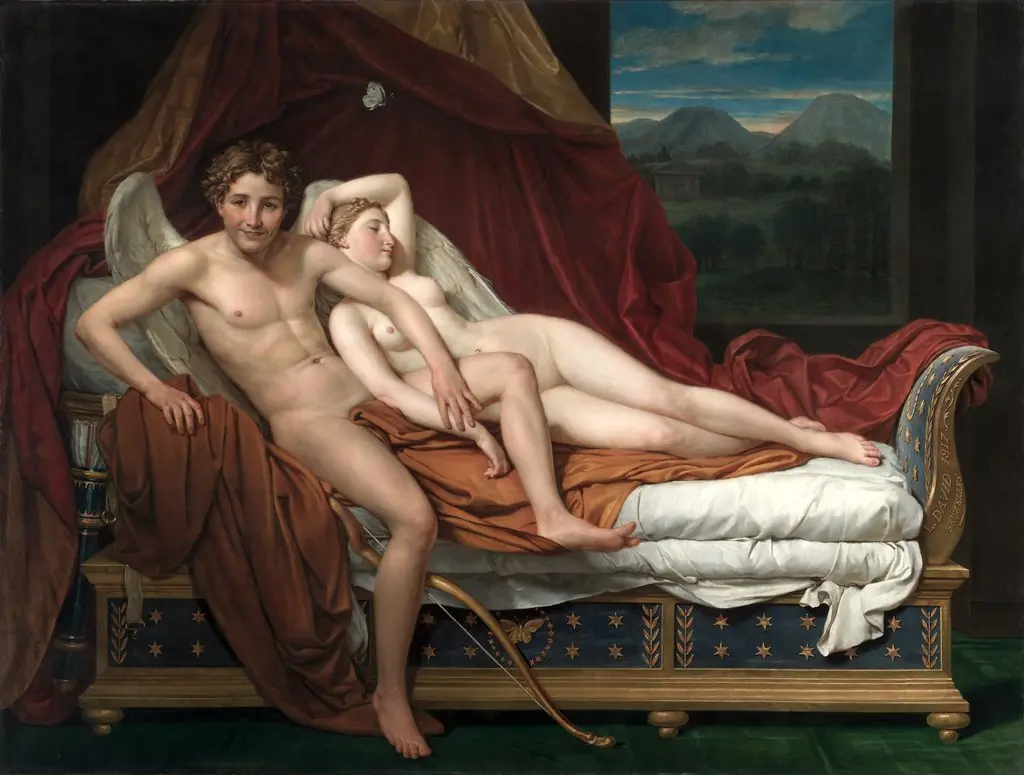 Cupid and Psyche
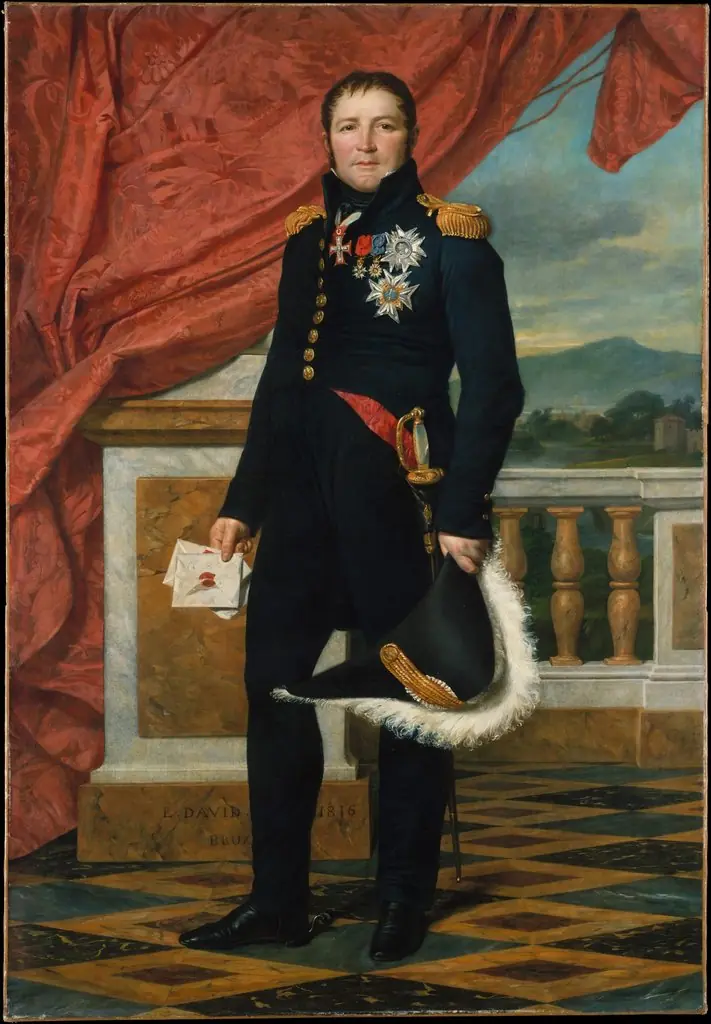 General Étienne-Maurice Gérard (1773–1852), Marshal of France
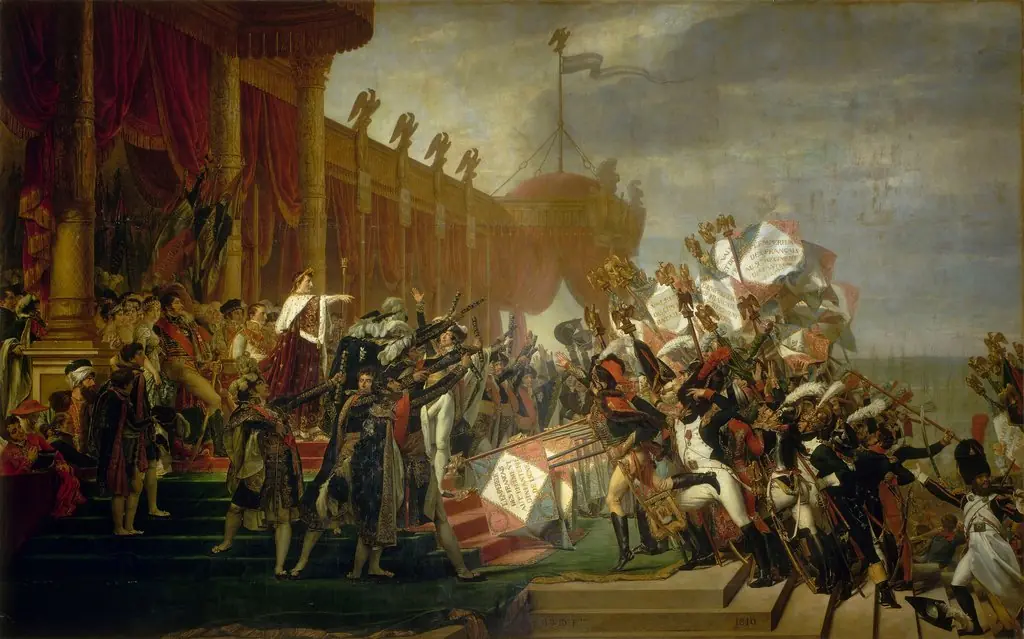 The Distribution of the Eagle Standards
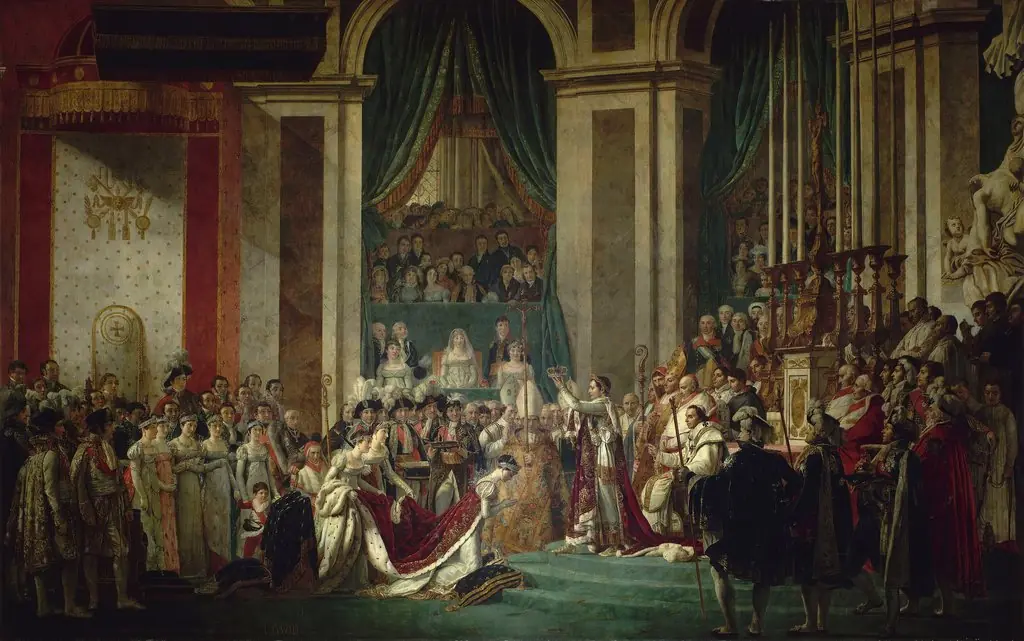 Coronation of Emperor Napoleon I and Coronation of the Empress Josephine