Artwork
Woman from the Villa Albani
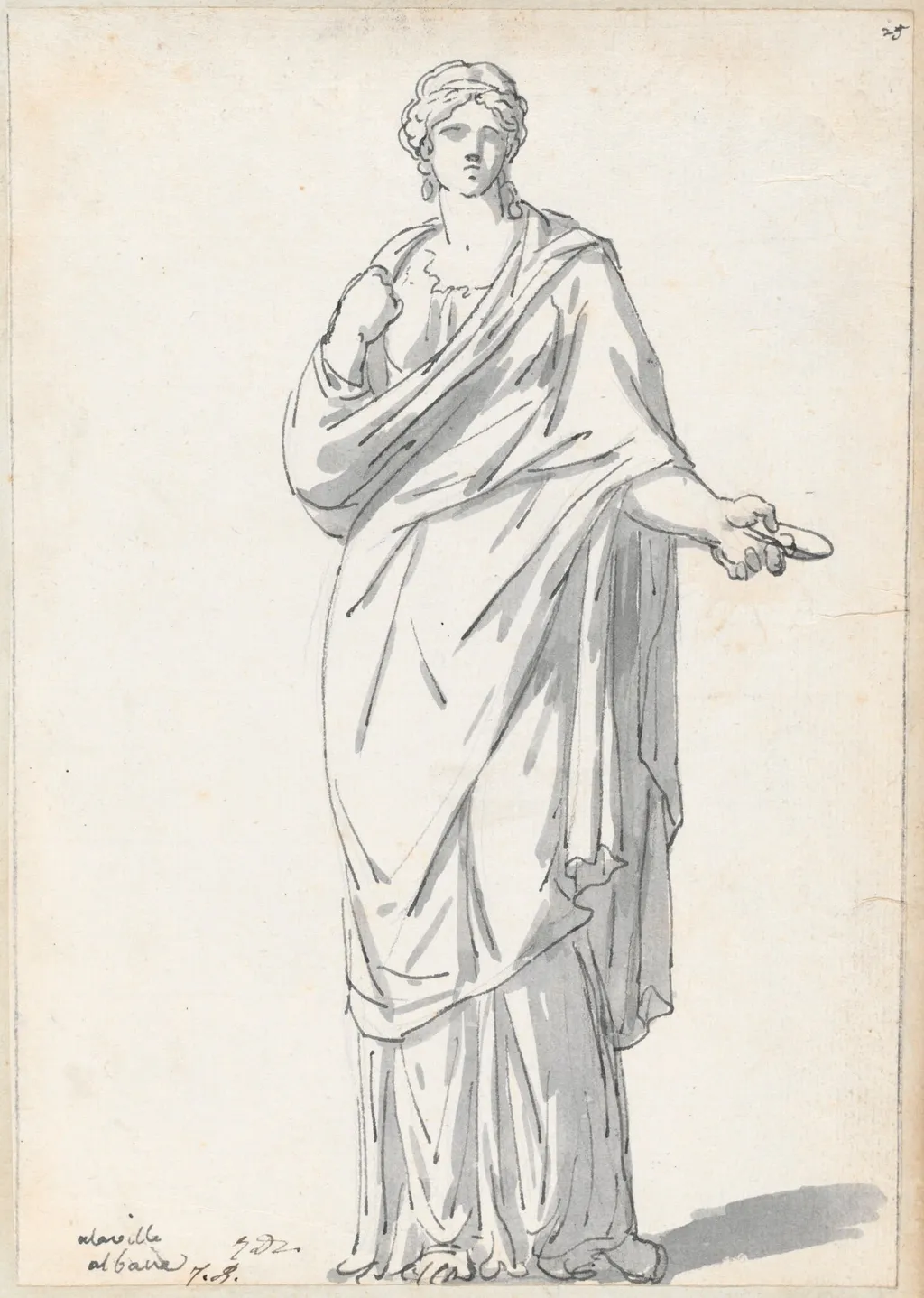
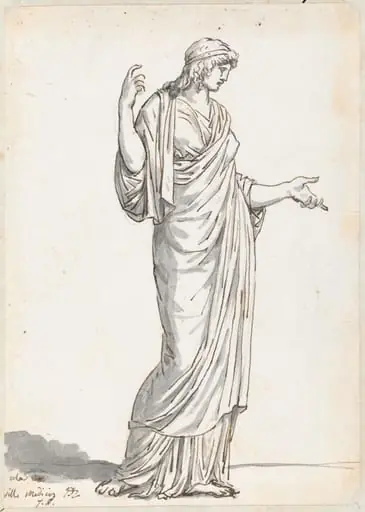
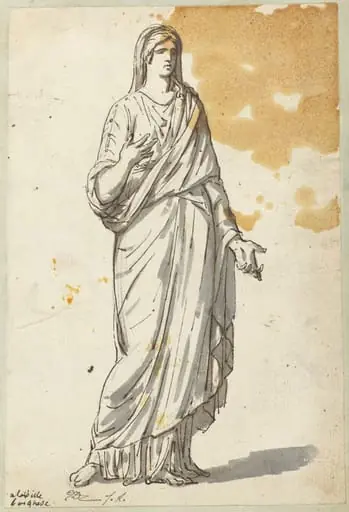
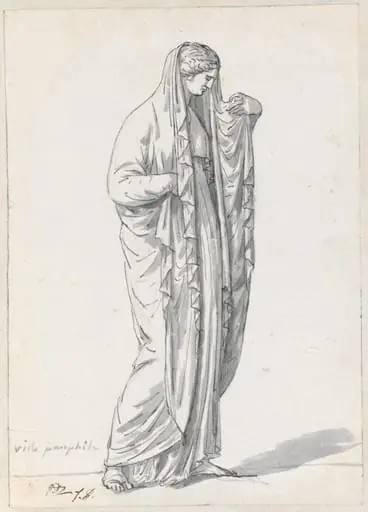
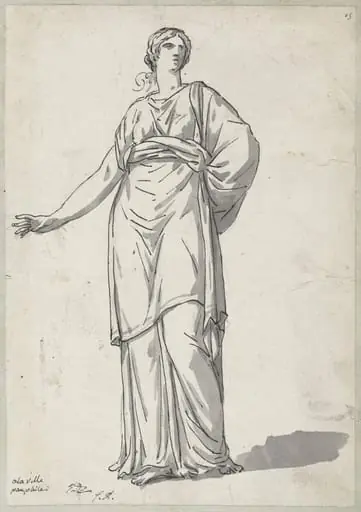
Woman from the Villa Albani is an ink drawing by the Neoclassicist artist Jacques-Louis David. It dates from 1778 and is held in the collection of the National Gallery of Art.
About this work
Overview
It demonstrates the artist's shift away from Rococo frivolity toward a severe, linear clarity that would come to define the French Neoclassical movement.
Created in 1778 during his Roman sojourn, Woman from the Villa Albani is a study by Jacques-Louis David executed in black ink with gray wash over graphite on laid paper. The work depicts a standing female figure, likely an antique statue or a model posed in classical attire, characterized by a loose, draped robe falling in soft folds and hair pulled back neatly under a headband. Her arms are crossed, with one hand holding a small, indistinct object. David employs quick, sketchy lines to define the contours and volume of the figure, utilizing the gray wash to model light and shadow against a plain background that isolates the subject. This drawing exemplifies David's rigorous engagement with antiquity while in Italy, a period crucial for the development of his Neoclassical style. The sketch reflects his method of collecting visual references from Roman sculpture and ruins to inform his later history paintings. It demonstrates the artist's shift away from Rococo frivolity toward a severe, linear clarity that would come to define the French Neoclassical movement. The work serves as a testament to his disciplined observation and the foundational role of classical study in his artistic career.
Subject & Meaning
The figure stands upright, arms crossed, one hand clutching a small object whose identity remains ambiguous. She is dressed in a loosely draped robe that falls in gentle folds, while a headband secures her hair in a restrained style. The composition suggests a quiet, contemplative presence rather than a narrative scene.
Technique & Style
David employed rapid, sketchy lines to outline the form, then layered a light gray wash to model volume and suggest shadow. The graphite underdrawing provides structural guidance, while the ink and wash combine to create a sense of immediacy. Such economical handling of line and tone was typical of preparatory studies used to explore posture and drapery.
History & Provenance
Created during David’s early career, the drawing is linked to the Villa Albani collection, a notable 18th‑century Roman gathering of antiquities and artworks. Its provenance traces back to that estate, though details of subsequent ownership are sparse. The piece remains an example of David’s formative practice before his later historical canvases.
Artist & collection

Artist
Jacques-Louis David was born in Paris on 30 August 1748 into a bourgeois family; his father died in a duel when the boy was nine, and a maternal uncle guided his education.

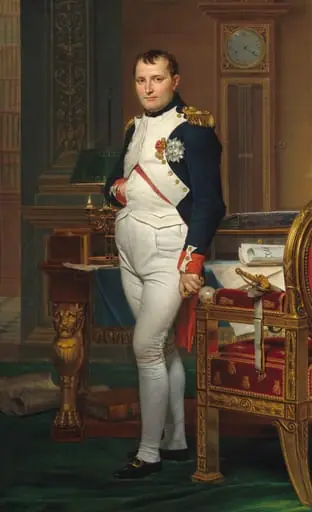 The Emperor Napoleon in His Study at the Tuileries
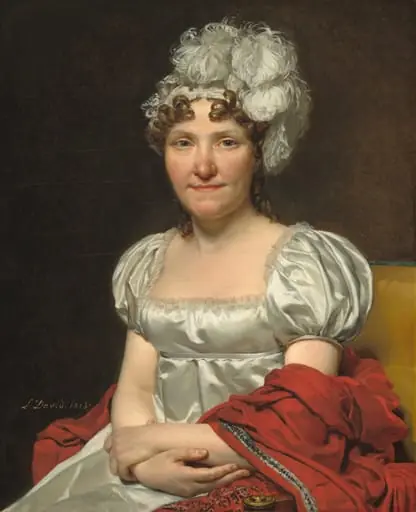 Madame David
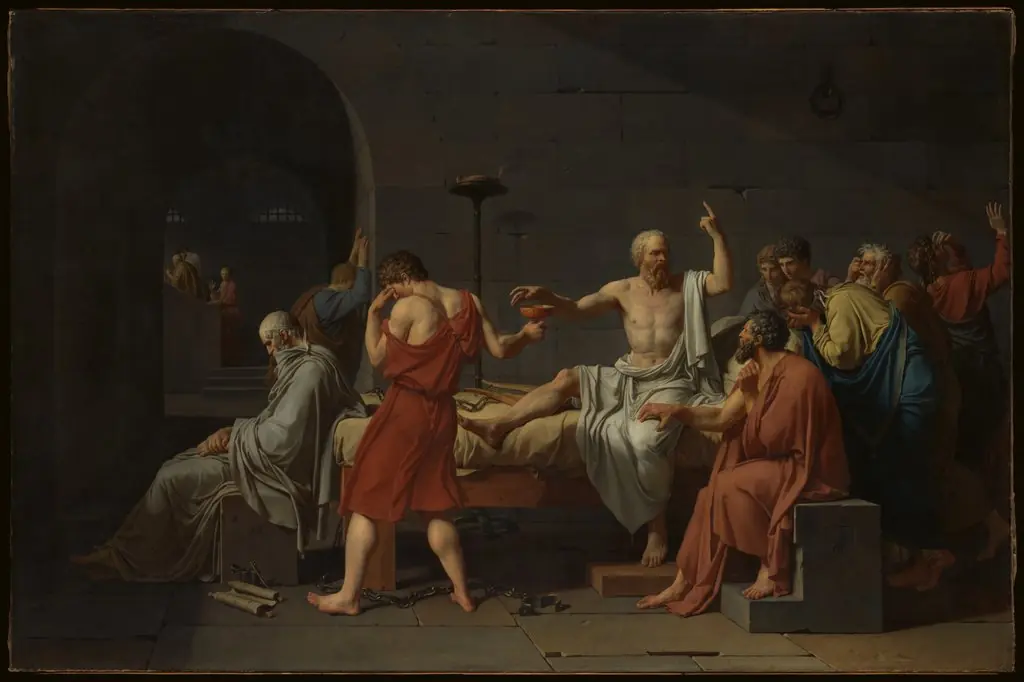 The Death of Socrates
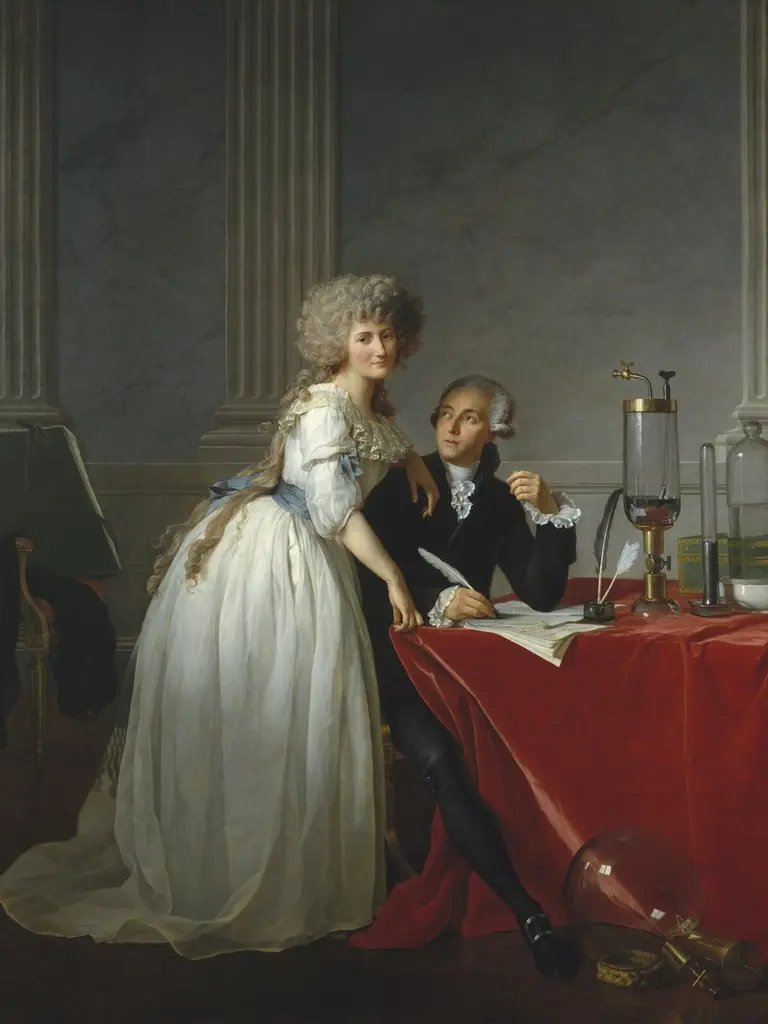 Portrait of Antoine-Laurent Lavoisier and his wife
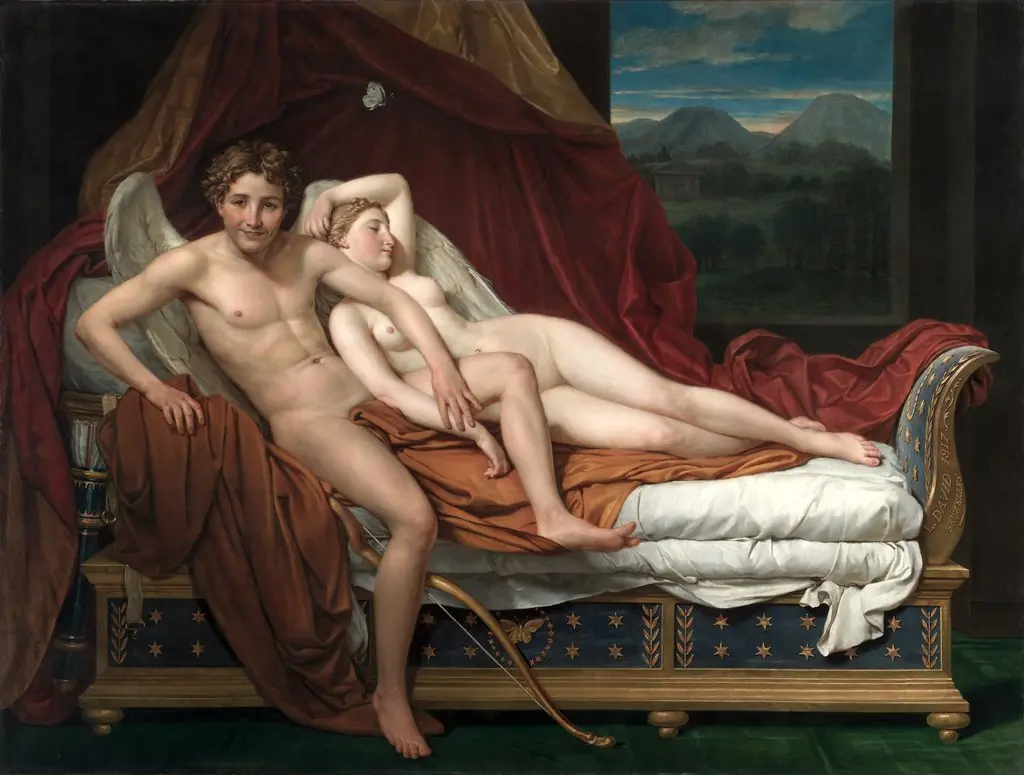 Cupid and Psyche
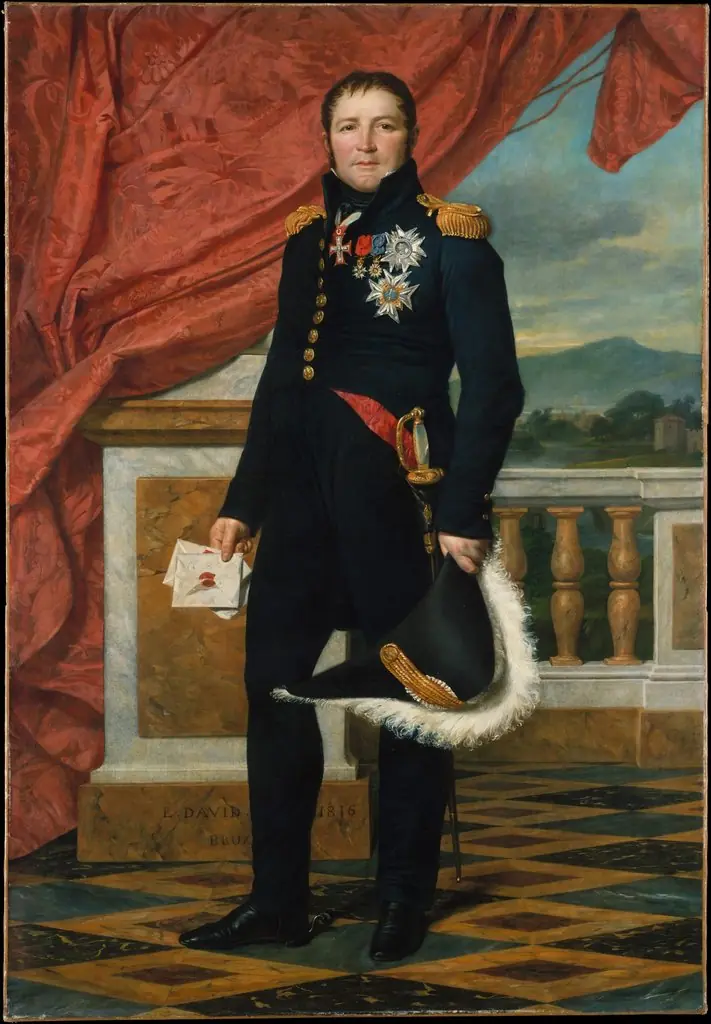 General Étienne-Maurice Gérard (1773–1852), Marshal of France
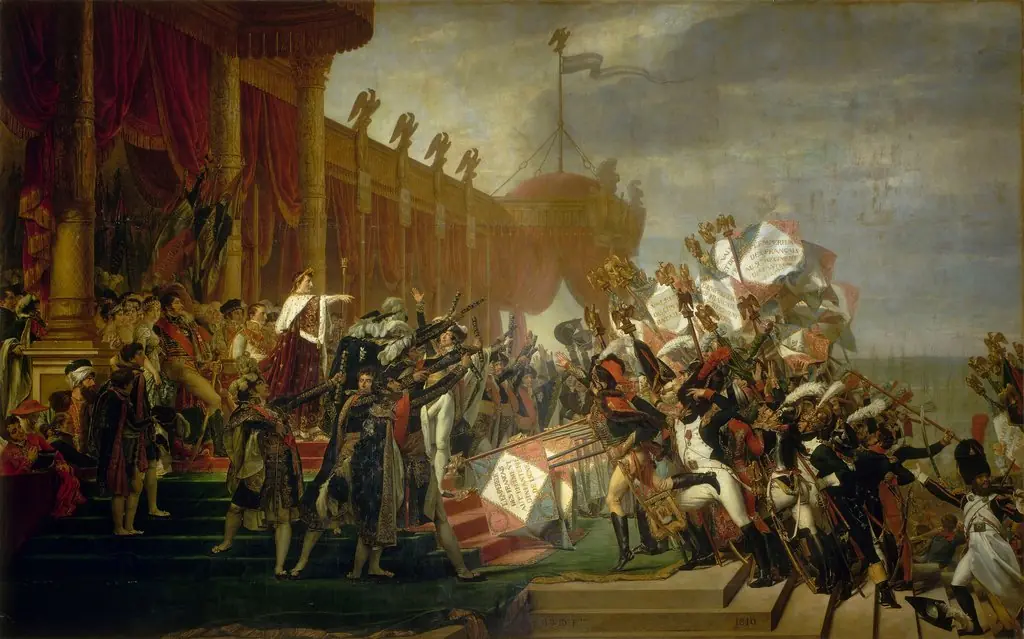 The Distribution of the Eagle Standards
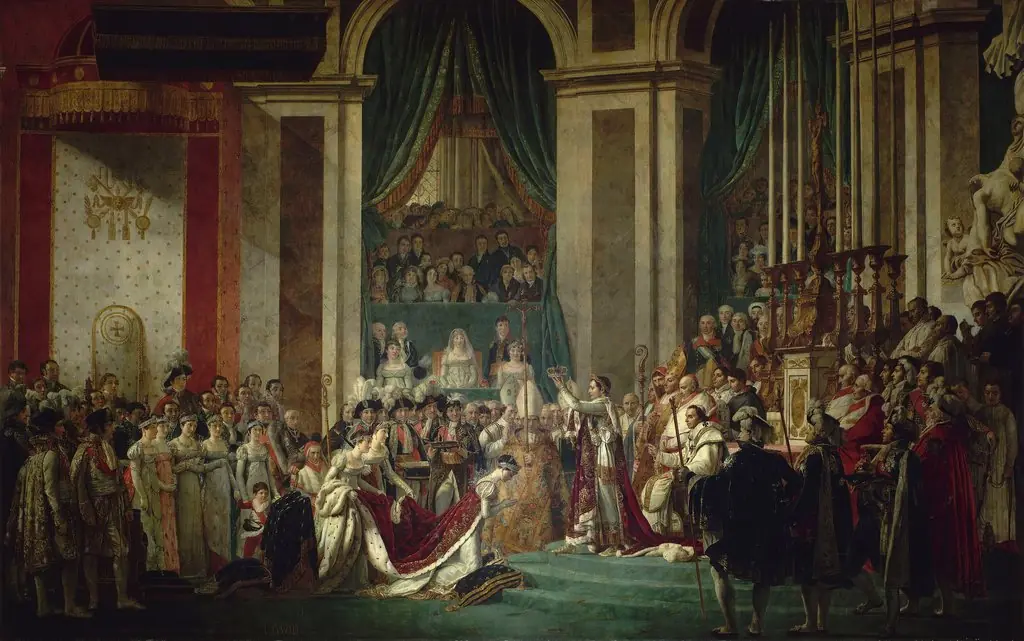 Coronation of Emperor Napoleon I and Coronation of the Empress Josephine