Artwork
Woman from the Villa Medici
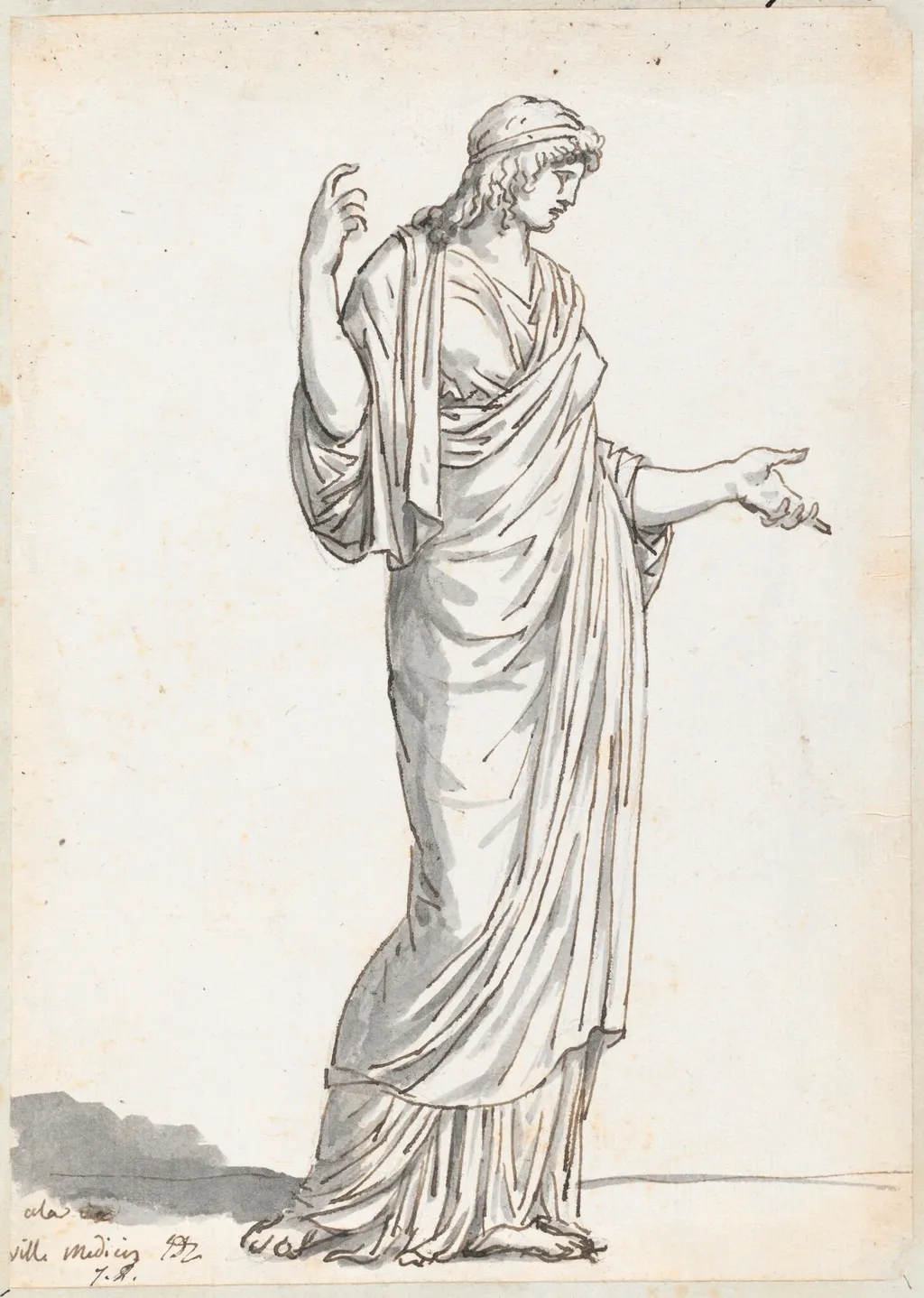
Woman from the Villa Medici is an ink drawing by the Neoclassicist artist Jacques-Louis David. It dates from 1778 and is held in the collection of the National Gallery of Art.
About this work
Overview
Executed in brown ink with subtle gray tonal layers, it captures a standing female figure with minimal yet deliberate lines.
Created in 1778 by Jacques-Louis David, this drawing is a study in monochrome ink and wash on laid paper. Executed in brown ink with subtle gray tonal layers, it captures a standing female figure with minimal yet deliberate lines. Traces of graphite beneath the ink reveal the artist’s preliminary planning, offering insight into his working process. The composition is restrained, focusing on form and posture rather than detail.
Subject & Meaning
The figure is depicted in a draped garment, her posture suggesting gesture or instruction—one arm raised, the other extended forward. Her head is wrapped, possibly indicating a classical or allegorical role, though no specific identity is confirmed. The pose evokes a sense of quiet authority, common in David’s early studies of idealized human forms, likely intended as an exercise in expressive anatomy rather than a portrait.
Technique & Style
David employed brown ink with diluted gray washes to model volume and depth, avoiding sharp outlines in favor of soft transitions. The underlying graphite lines, faintly visible, show his method of refining form before committing to ink. Cross-hatching and light stippling suggest shadow without heavy detail, reflecting a disciplined approach to tonal gradation characteristic of academic training at the time.
History & Provenance
The drawing originates from David’s time in Rome, where he studied classical sculpture and Renaissance art. It was likely produced during his stay at the Villa Medici, the French Academy’s residence, as part of his preparatory work for larger historical compositions. Its survival suggests it was retained as a working study rather than discarded after use.
Context
In the late 1770s, David was immersed in the Neoclassical revival, seeking to revive the dignity of ancient art through disciplined draftsmanship. This drawing reflects his focus on the human figure as a vessel for moral and aesthetic expression. Such studies were essential for artists training under the French Academy, which prioritized anatomical precision and compositional clarity.
Legacy
Though not a finished work, this drawing exemplifies David’s foundational approach to figure drawing—economy of line, attention to gesture, and control of tone. It influenced later generations of academic artists who valued preparatory studies as vital to large-scale painting. Its preservation underscores the importance placed on drawing as the core discipline of artistic training in 18th-century Europe.
Artist & collection
Artist
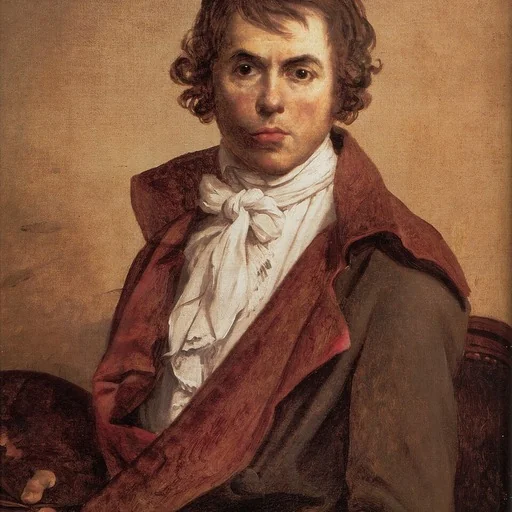
Jacques-Louis David was born in Paris on 30 August 1748 into a bourgeois family; his father died in a duel when the boy was nine, and a maternal uncle guided his education.

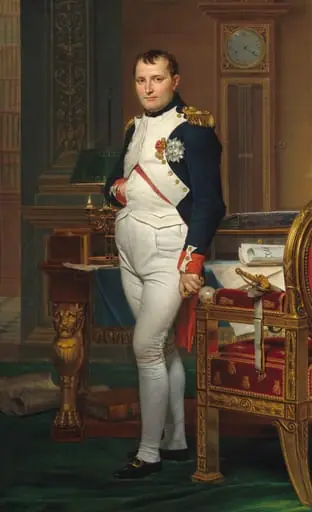 The Emperor Napoleon in His Study at the Tuileries
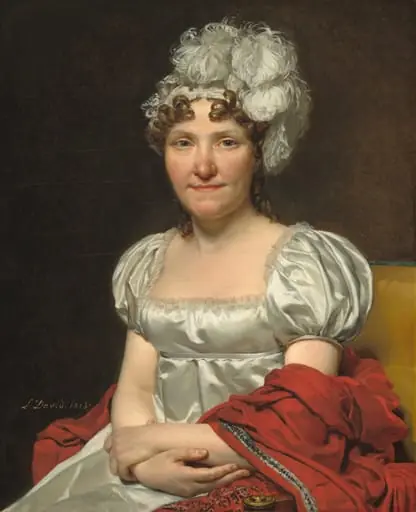 Madame David
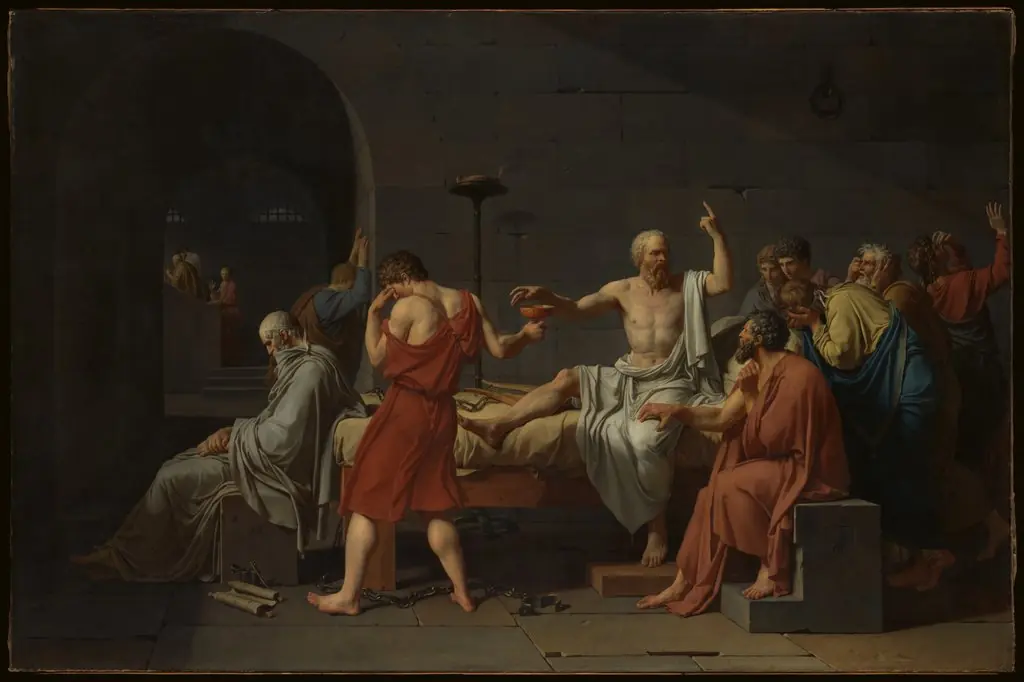 The Death of Socrates
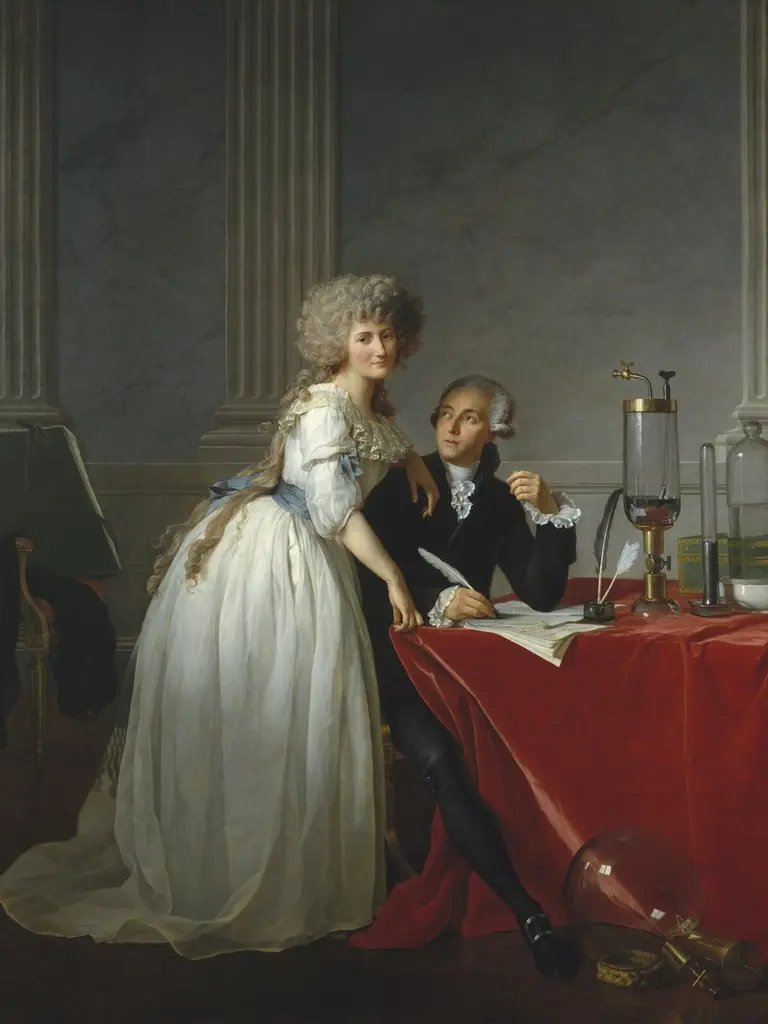 Portrait of Antoine-Laurent Lavoisier and his wife
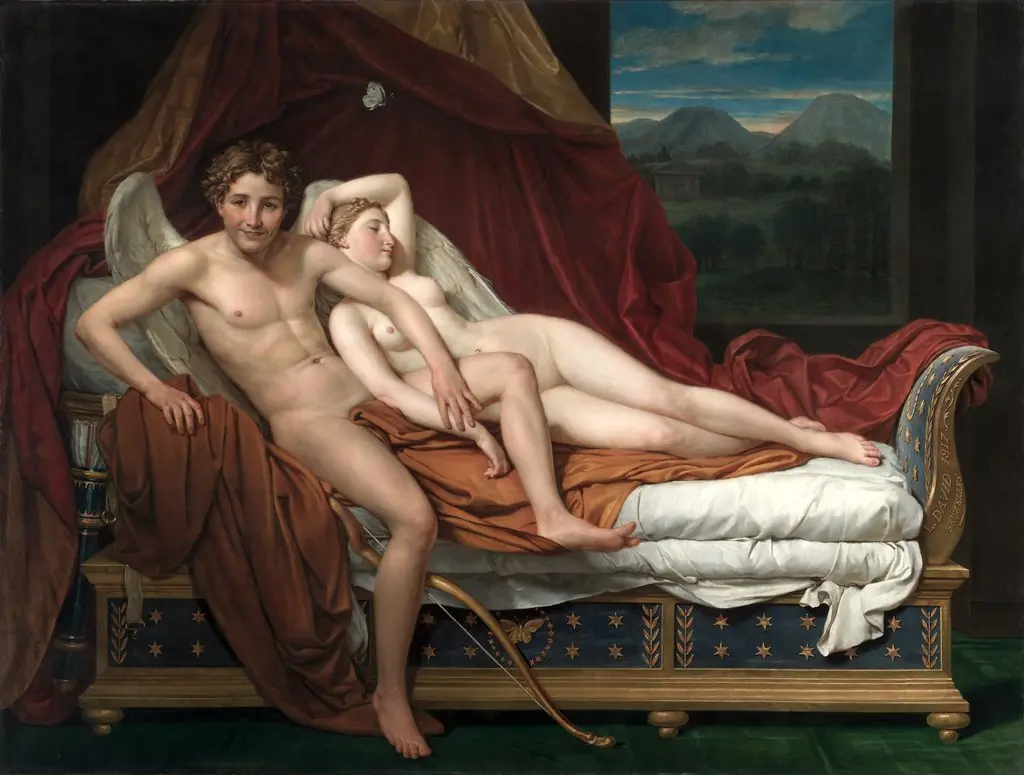 Cupid and Psyche
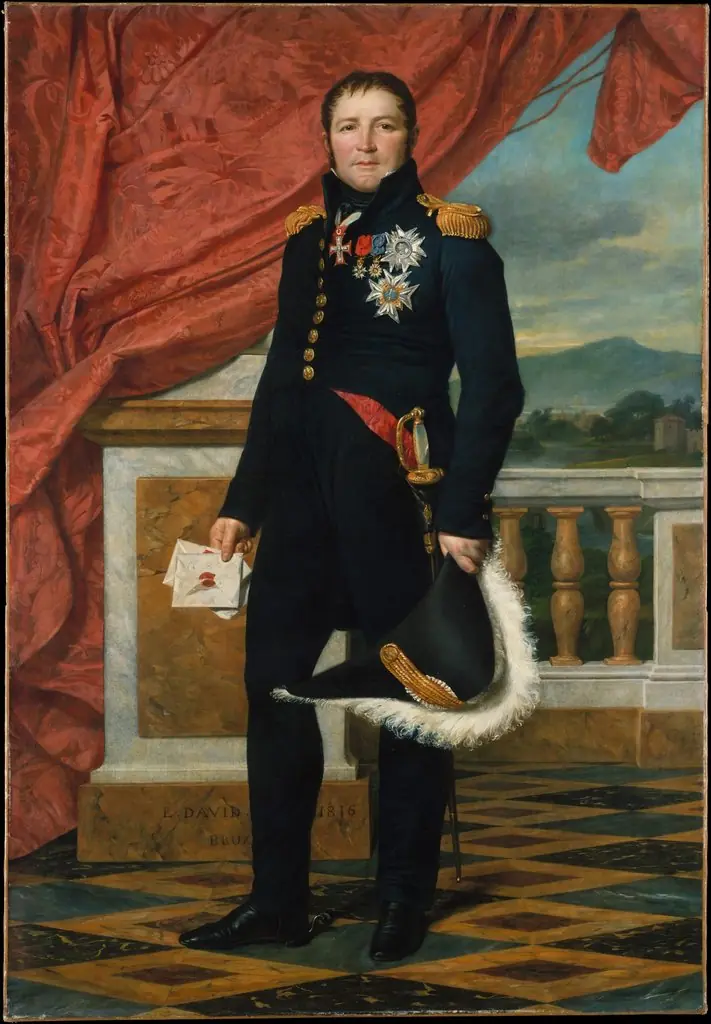 General Étienne-Maurice Gérard (1773–1852), Marshal of France
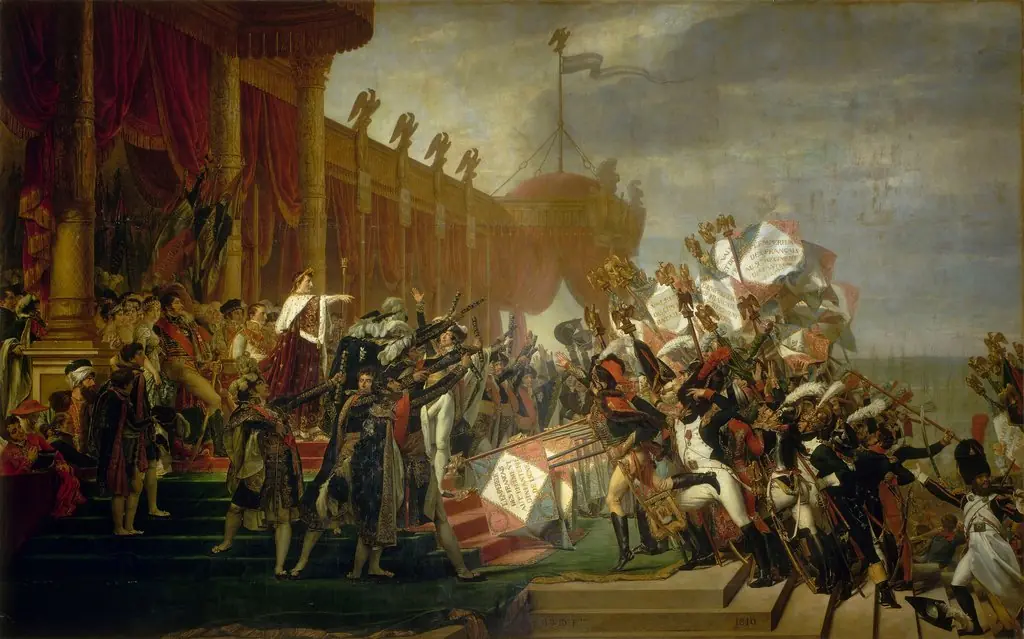 The Distribution of the Eagle Standards
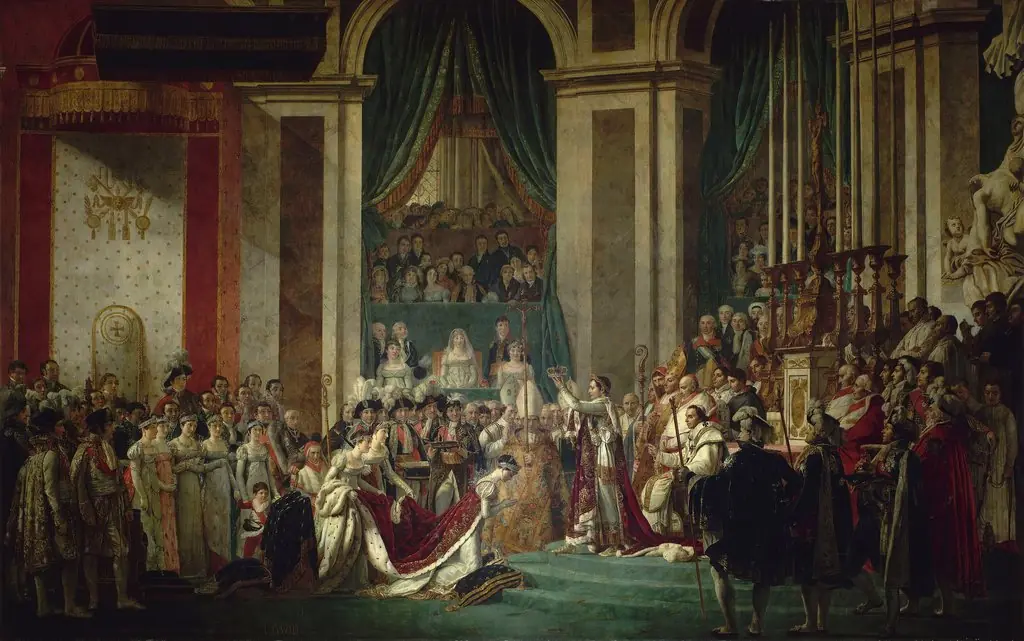 Coronation of Emperor Napoleon I and Coronation of the Empress Josephine
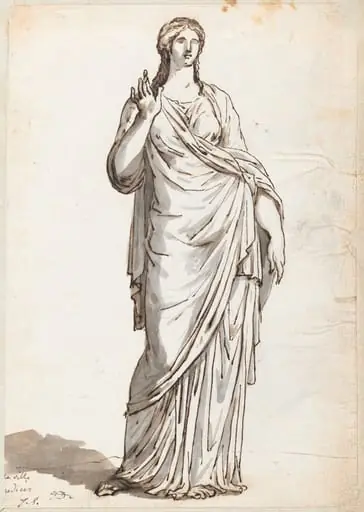 Woman with a Raised Hand, from the Villa Medici
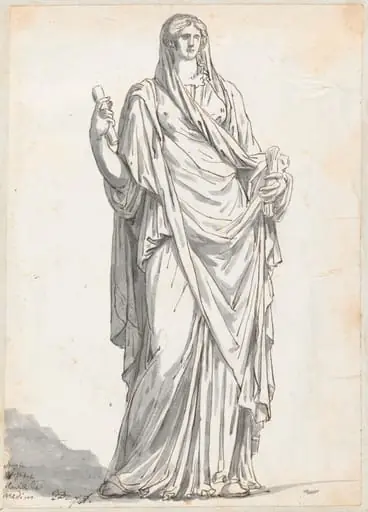 Orante from the Villa Medici
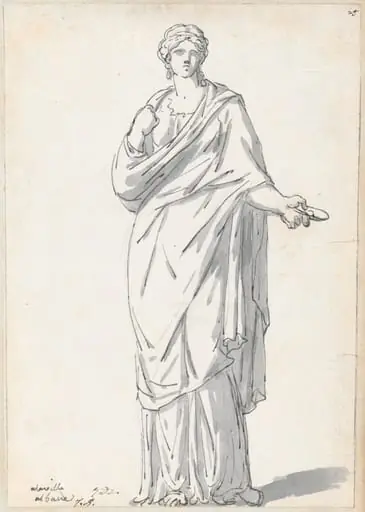 Woman from the Villa Albani
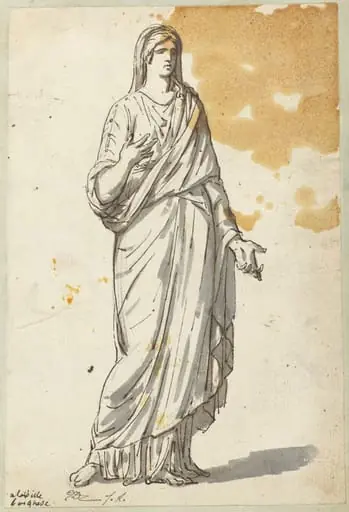 Woman from the Villa Borghese
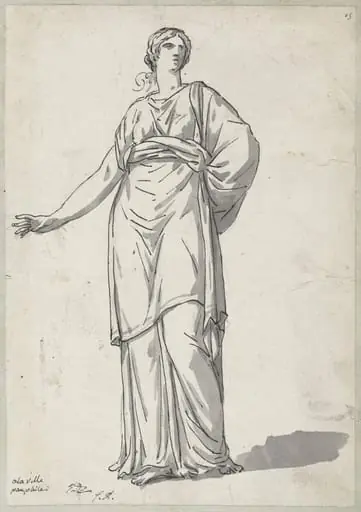 Woman from the Villa Pamphili
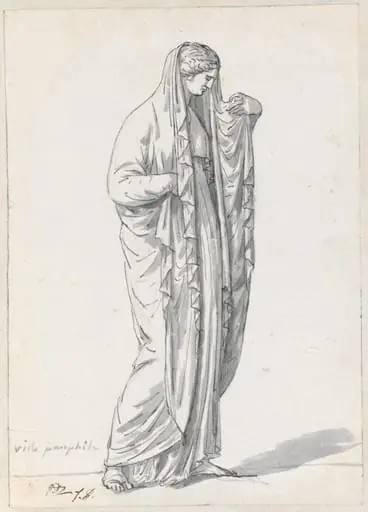 Draped Woman from the Villa Pamphili
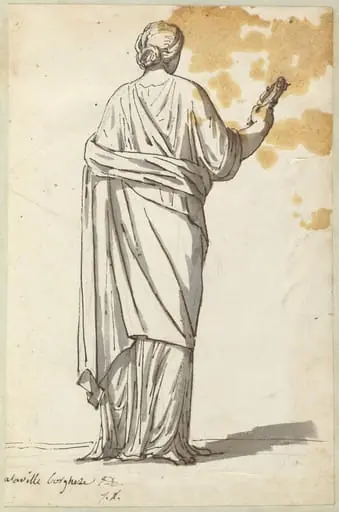 Woman with a Mirror, from the Villa Borghese
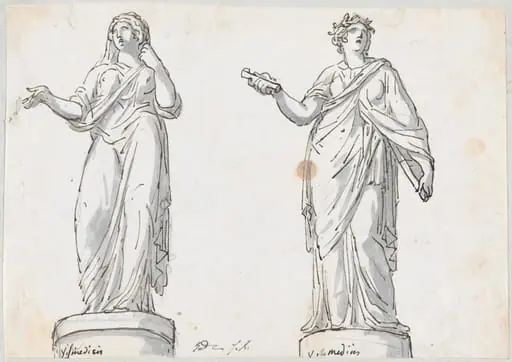 Two Female Figures from the Villa Medici
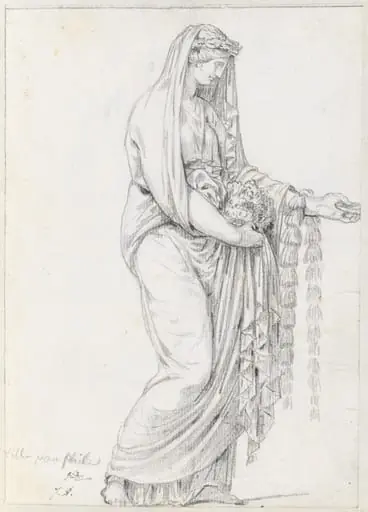 Woman with a Garland, from the Villa Pamphili