Artwork
Ashdod
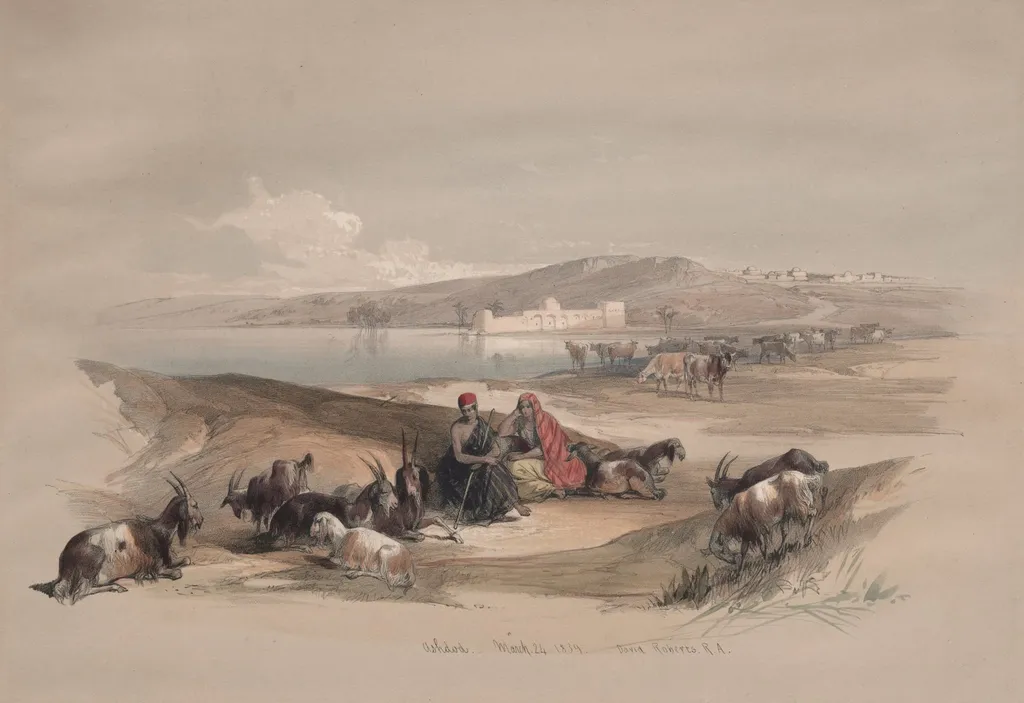
Ashdod is a print by the Romanticist artist David Roberts. It dates from 1839 and is held in the collection of the Cleveland Museum of Art.
About this work
Overview
The image captures a tranquil moment in a pastoral setting, emphasizing observation over narrative, and reflects Roberts’ commitment to topographical fidelity.
Created in 1839 by Scottish artist David Roberts, *Ashdod* is a lithographic print derived from sketches made during his travels in the Levant. It belongs to a series of works documenting architectural and rural scenes across Egypt and the Near East, produced after his return to Europe. The image captures a tranquil moment in a pastoral setting, emphasizing observation over narrative, and reflects Roberts’ commitment to topographical fidelity.
Subject & Meaning
The scene depicts two figures seated on a gentle slope beside a body of water, accompanied by grazing livestock. Their modest attire and relaxed posture suggest ordinary rural life rather than ceremonial or historical events. The inclusion of a domed structure in the distance hints at local habitation without imposing symbolic weight. The composition invites contemplation of quiet human presence within a broader natural environment.
Technique & Style
Roberts employed loose, fluid lines and muted, soft tones to convey atmosphere rather than sharp detail. The lithographic medium allowed for subtle gradations of light and shadow, enhancing the sense of calm. Unlike his more architectural works, this piece prioritizes mood and spatial depth over precision, aligning with Romantic sensibilities that valued emotional resonance in landscape.
History & Provenance
The print originated from Roberts’ 1838–39 journey through the Eastern Mediterranean, during which he made hundreds of on-site sketches. These were later translated into lithographs for publication, forming part of a widely circulated visual record of the region. *Ashdod* was produced before his election as a Royal Academician in 1841, marking a phase in his career focused on translating travel documentation into accessible prints.
Context
Roberts’ work emerged during a period of heightened European interest in the Near East, fueled by archaeological exploration and colonial expansion. While his images were often framed as ethnographic records, *Ashdod* avoids exoticism, instead presenting a restrained, unembellished view of daily life. This distinguishes it from more theatrical Orientalist depictions of the era.
Legacy
Though less celebrated than his monumental architectural views, *Ashdod* exemplifies Roberts’ ability to capture intimate, unguarded moments with sensitivity. Its quiet realism contributed to a broader shift in 19th-century print culture, where travel sketches gained value not only as documentation but as expressions of personal observation and natural harmony.
Artist & collection
Artist
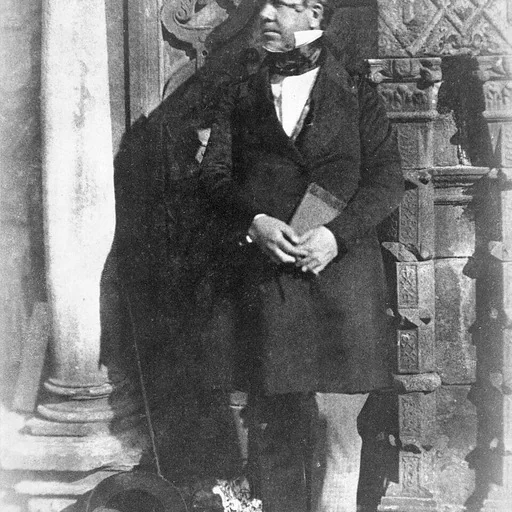
David Roberts (24 October 1796 – 25 November 1864) was a Scottish painter. He is especially known for The Holy Land, Syria, Idumea, Arabia, Egypt, and Nubia, a prolific series of detailed lithograph prints of Egypt and…

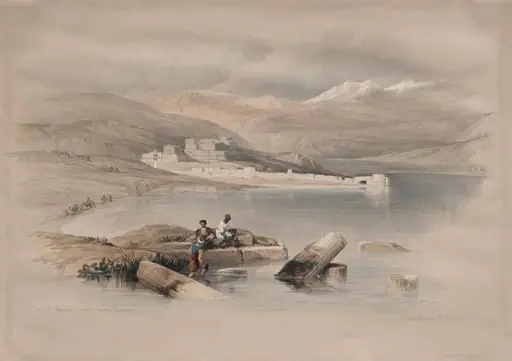 Town of Tiberias Looking Towards Lebanon
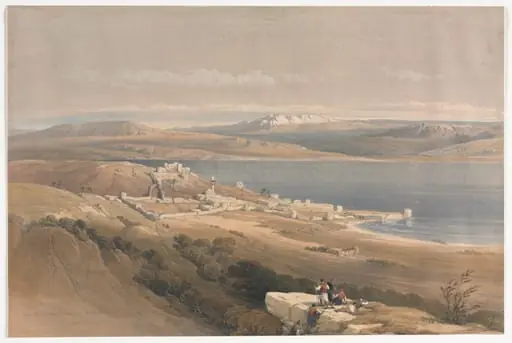 City of Tiberias on the Sea of Galilee, looking towards Hebron
 Bethany
 Approach to Petra, an Ancient Watch Tower Commanding the Valley of El Chor
 The Convent of St. Catherine, Mount Sinai, Looking towards the Plain of the Encampment
 Jaffa
Jaffa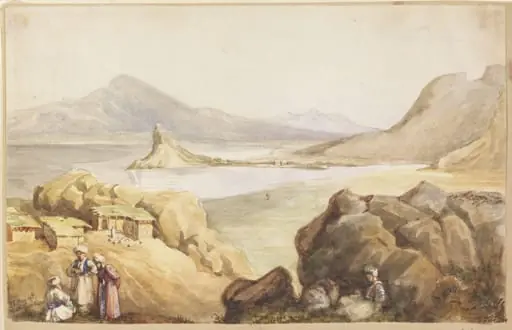 Gule-Hissa Ovassy in the Northern part of Lycia
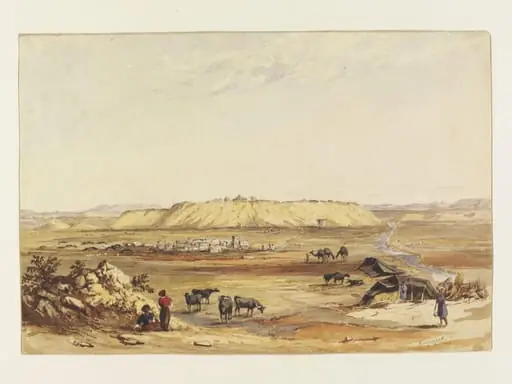 Kouyunjick
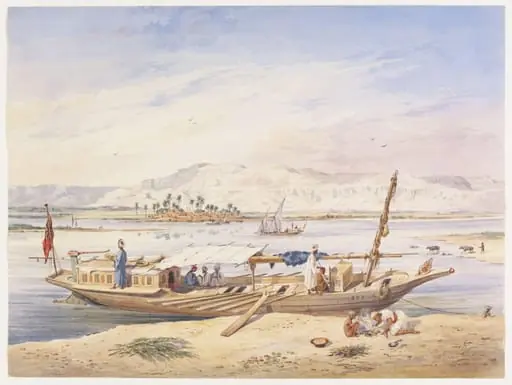 J.W.P.'s Kanja moored beside the East bank of the Nile at Luxor
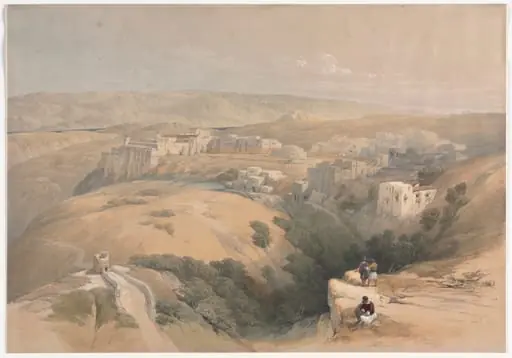 Bethlehem