Artwork
Hebron
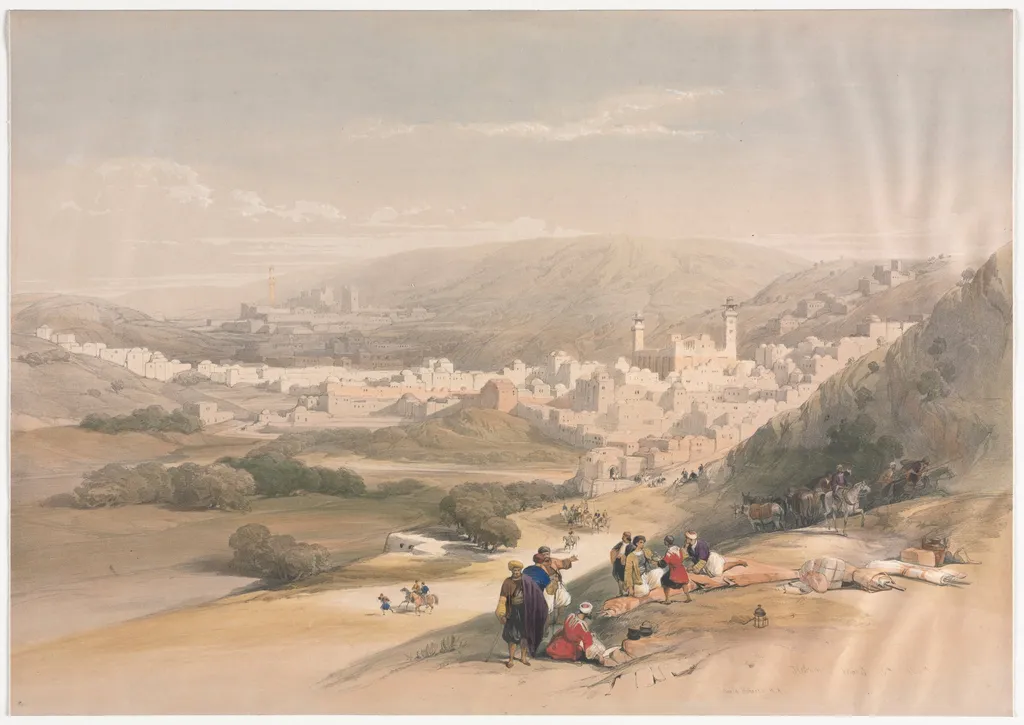
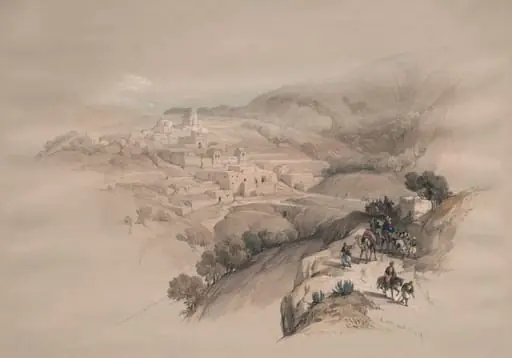
Hebron is a print by the Romanticist artist David Roberts. It dates from 1839 and is held in the collection of the Cleveland Museum of Art.
About this work
Overview
Hebron, a print by Scottish artist David Roberts, dates to 1839 and is characteristic of his Orientalist oeuvre, capturing scenes from the Near East based on his travels between 1838 and 1840.
Subject & Meaning
The print depicts a desert town nestled in rocky hills, with daily life in the foreground (people in colorful robes, animals, tents) contrasting with the sprawling, whitewashed architecture and winding streets beyond.
Technique & Style
Roberts employs chiaroscuro to create depth, juxtaposing darker shadows on the hills with brighter, lighter areas in the foreground, guiding the viewer's eye through the scene.
History & Provenance
Created during Roberts' Near Eastern travels, 'Hebron' is now part of the Cleveland Museum of Art's collection. Roberts' work from this period led to his election as a Royal Academician in 1841.
Context
Part of a broader series of lithographs from his travels, 'Hebron' reflects 19th-century European fascination with the Orient, while also showcasing Roberts' unique blend of observational detail and artistic interpretation.
Legacy
While 'Hebron' contributes to the broader legacy of Orientalist art, its significance also lies in demonstrating Roberts' technical skill, particularly in capturing light and depth, influencing subsequent artistic approaches to landscape and scene composition.
Artist & collection
Artist
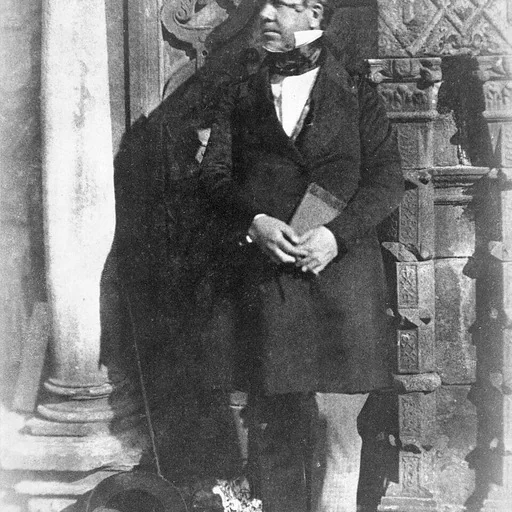
David Roberts (24 October 1796 – 25 November 1864) was a Scottish painter. He is especially known for The Holy Land, Syria, Idumea, Arabia, Egypt, and Nubia, a prolific series of detailed lithograph prints of Egypt and…

 Bethany
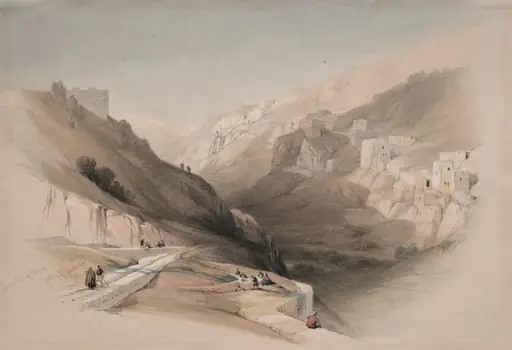 Lower Pool of Siloam, Valley of Jehoshaphat
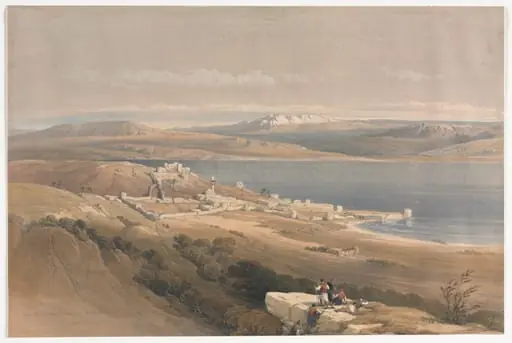 City of Tiberias on the Sea of Galilee, looking towards Hebron
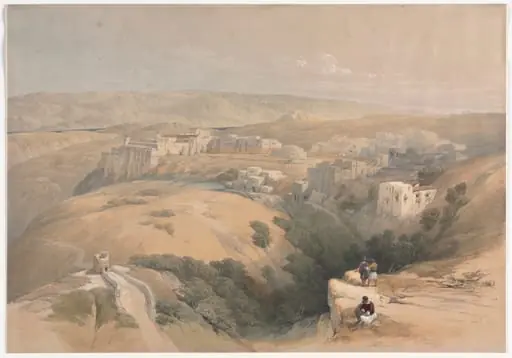 Bethlehem
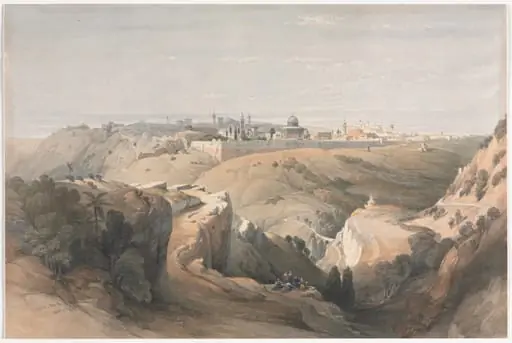 Jerusalem from the Mount of Olives
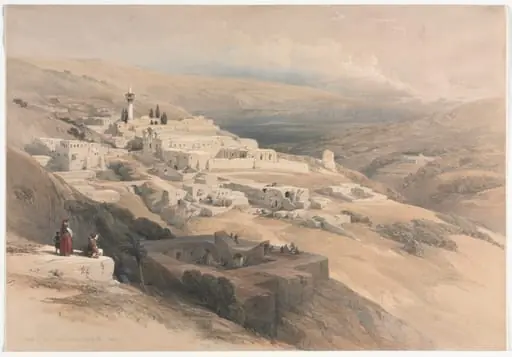 Convent of the Terra-Santa, Nazareth
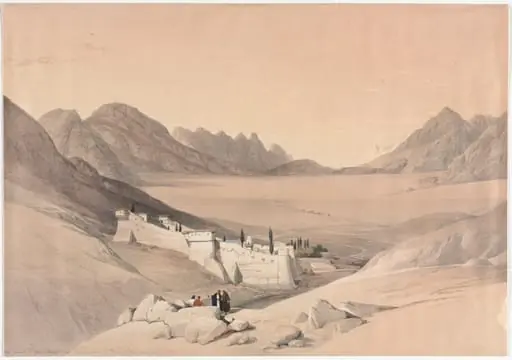 The Convent of St. Catherine, Mount Sinai, Looking towards the Plain of the Encampment
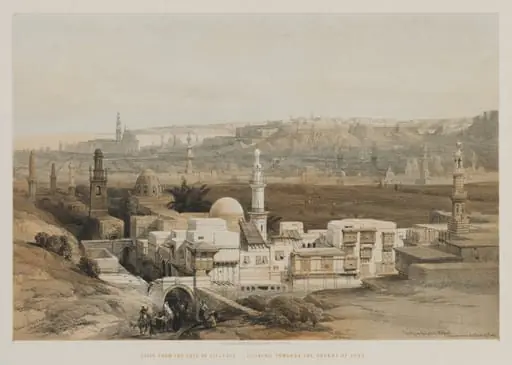 Egypt and Nubia, Volume III: Cairo from the Gate of Citzenib, Looking towards the Desert of Suez
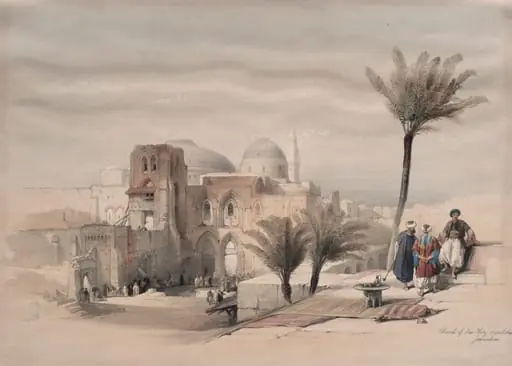 Church of the Holy Sepulchre, Jerusalem
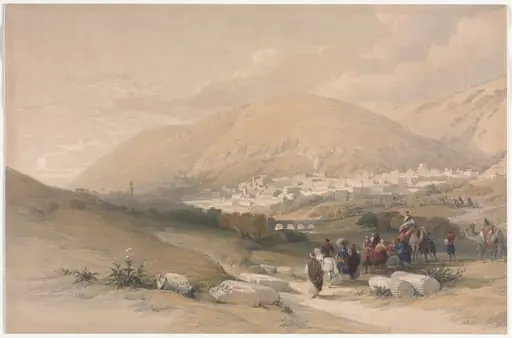 Nablus Ancient Shechem